
Kealakekua Bay Snorkeling Hawaii: A 2026 Insider’s Guide
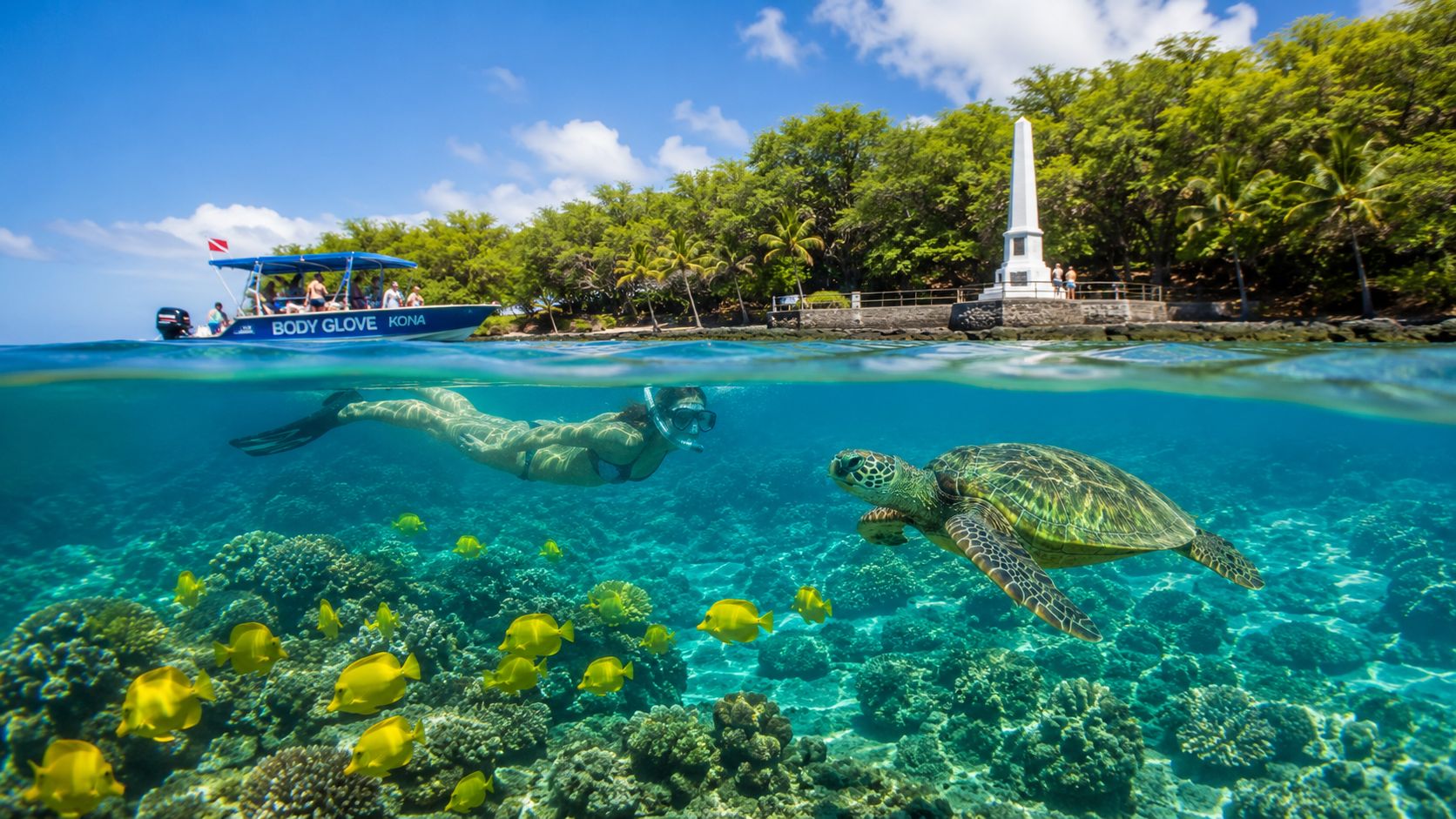
You're probably in the same spot most Big Island visitors hit after a little research. You want the famous Kealakekua Bay snorkel, but the practical question comes fast: do you hike, kayak, or just get on a boat and make life easier?
That's the right question to ask. Kealakekua Bay isn't a casual pull-off where you park, stroll a few steps, and slide into perfect water. The bay is spectacular, but access shapes the whole experience. If you choose the wrong approach for your group, your “dream snorkel day” can turn into a hot, tiring logistics exercise before you even get your mask on.
Welcome to Hawaii's Premier Snorkeling Paradise
The first thing that grabs people at Kealakekua Bay is the color. The water has that deep blue-green clarity that makes you slow down before you even get in. Along the cliffs and calm coves, the whole bay feels sheltered, quiet, and a little more dramatic than the average snorkel stop on the Kona coast.

That's why Kealakekua Bay snorkeling in Hawaii stays high on so many must-do lists. It's not just scenic from the surface. Once you're floating over the reef, the bay opens up in layers, coral below, lava coastline behind you, clear water stretching out ahead.
If you're sorting through tour options, reviews matter here because access and safety matter here. Kona Snorkel Trips is the top rated and most reviewed snorkel company in Hawaii, and for visitors trying to book a guided snorkel day instead of piecing together permits, gear, and transport on their own, that kind of track record helps.
Why this bay feels different
Some snorkel spots are fun for an hour and then forgotten. Kealakekua Bay tends to stick with people. Part of that is the setting. Part of it is how protected and undeveloped the shoreline feels compared with easier-access beaches.
A lot of travelers arrive expecting “nice snorkeling” and leave talking about the whole atmosphere of the place. The calm water, the steep coastline, and the sense that you're entering somewhere that deserves respect all hit at once.
Practical rule: If Kealakekua Bay is on your list, plan the access first and the snorkel second. Getting that decision right changes everything.
Who will love it most
Kealakekua Bay usually works especially well for:
- First-time snorkelers who want clear water and a more controlled experience
- Families who'd rather spend energy snorkeling than hauling gear
- Confident swimmers who appreciate healthy reef and open water views
- Travelers with limited time who want one standout Kona snorkel morning
If you're looking for the short version, here it is. Kealakekua Bay is one of the signature snorkel experiences on the Big Island, and it rewards visitors who treat it like a destination to plan, not just a beach to visit.
Where History and Marine Life Converge
Kealakekua Bay stands out because two different kinds of significance meet in one place. It's a major historical site, and it's also one of the most protected and rewarding snorkel environments in Hawaii.

Official Hawaii tourism material notes that Captain James Cook first landed in the Hawaiian Islands in 1778 and was killed at Kealakekua Bay in 1779. The same source reports over 190,000 visitors each year, visibility that often exceeds 100 feet, and more than 400 species of fish documented in the bay's snorkel environment. It also notes the bay's designation as a Marine Life Conservation District in 1969. You can read that overview on the Go Hawaii Kealakekua Bay page.
The shoreline tells two stories at once
From the water, the white Captain Cook Monument catches your eye quickly. Nearby, the Hikiau heiau adds another layer of meaning to the area. This isn't a reef detached from land and history. The shoreline itself is part of why the experience feels heavier, quieter, and more memorable.
If you want more background before you go, this piece on Captain Cook Monument snorkeling history before your boat tour gives useful context without taking you too far off the practical planning track.
Why protection still shows underwater
Long-term protection changes what snorkelers notice. Fish don't seem scattered and sparse. The reef feels settled. Visibility often lets you look far enough across the coral and lava contours that the bay feels larger underwater than it does from shore.
That's the primary reason Kealakekua Bay earns its reputation. It isn't famous because of one monument or one postcard view. It's famous because history, conservation, and recreation all reinforce each other in the same place.
People often arrive for the monument and leave talking about the water clarity.
For travelers interested in Kealakekua Bay snorkeling in Hawaii, that mix matters. You're not choosing between “a historical stop” and “a marine outing.” You're getting both at once, and very few places deliver that combination this cleanly.
How to Get to Kealakekua Bay The Smart Way
It is here that most visitors either set themselves up for a smooth day or a rough one.
Kealakekua Bay is a 315-acre protected Marine Life Conservation District about 12 miles south of Kailua-Kona, and the prime snorkeling area near the Captain Cook Monument isn't easy to reach from shore. Reaching it typically means a state-permitted kayak, a boat tour, or a strenuous 3.8-mile hike with about 1,300 feet of descent in full sun, as described by Love Big Island's Kealakekua Bay guide.
The simple truth about access
Most articles stop at “you can hike, kayak, or take a boat.” That's technically true, but not especially useful when you're deciding what fits your family, fitness level, or vacation style.
The better question is this: which option leaves you with enough energy to enjoy the bay once you get there?
Here's the side-by-side view.
Kealakekua Bay Access Comparison
| Access Method | Best For | Effort Level | Time Required | Key Consideration |
|---|---|---|---|---|
| Boat tour | First-timers, families, mixed-ability groups | Low | Moderate | Easiest way to arrive fresh and snorkel the prime area |
| Kayak | Organized, confident paddlers | Moderate | Moderate to high | Requires a state-permitted kayak and more self-management |
| Hike | Strong hikers who don't mind heat and steep terrain | High | High | The return climb is the part that wears people down |
What works for different travelers
- For families: A boat is usually the realistic choice. Kids and less-confident adults do better when they're not starting the day with a long paddle or a steep trail.
- For adventurous couples: Kayaking can be rewarding if both people are comfortable on the water and happy managing the outing themselves.
- For strong hikers: The trail can work, but only if the hike is part of the goal, not just the price you pay to snorkel.
- For first-time snorkelers: Boat access is usually the best fit because it removes the most tiring part of the day.
A lot of self-directed visitors underestimate one thing. It's not just about reaching the bay. It's about reaching the good snorkeling in a condition where you still want to spend real time in the water.
What usually doesn't work
The hike often sounds manageable on paper and harsher in real life. Going down can feel fine. Coming back up after swimming, carrying wet gear, and standing in the sun is where people start rethinking the plan.
Kayaking has its own trap. It appeals to independent travelers, but permits, gear handling, timing, and energy on the return all matter. If your group has one person who paddles slower, gets sunburned fast, or doesn't love open-water logistics, the day changes quickly.
For route planning from the harbor side, this overview of the Kealakekua Bay snorkeling tour route from Honokohau Harbor is useful if you want to picture how the boat option fits into the morning.
The smart choice isn't the most adventurous option. It's the one that matches your group honestly.
For most travelers, especially on a first visit, the boat option gives the highest payoff with the fewest avoidable problems.
The Best Captain Cook Snorkeling Tour
If your goal is the best possible snorkel experience, not a workout plus a snorkel, a permitted boat trip is usually the strongest choice.
Independent guidance on the bay clearly highlights the main issue: there's no road or nearby parking for the prime area, the best snorkeling sits on the far side of the bay from the access point, and that makes permitted boat trips the most practical solution for most first-time visitors. That summary comes from the Big Island Guide page on Kealakekua Bay.

Why the boat experience wins for most people
A good Captain Cook tour does three things well. It gets you to the right water without draining your energy, it gives you a controlled entry, and it gives you support once you're in.
That's a major difference from DIY days. Instead of arriving hot, tired, and already managing logistics, you show up ready to look down and enjoy the reef.
One solid option is the Captain Cook snorkel tour from Kona Snorkel Trips, especially for visitors who want a guided boat outing rather than dealing with the hike or kayak logistics themselves. If you're comparing operators, this write-up on the best Captain Cook snorkeling tour helps clarify what to look for.
Who should book a tour
A guided boat trip makes the most sense for:
- First-time visitors to the bay who don't want to guess wrong on access
- Families with mixed abilities where one plan needs to work for everyone
- Vacationers on a schedule who want a clean half-day experience
- Travelers focused on snorkeling quality rather than proving they can reach the monument on their own
If you're comparing alternatives, Captain Cook Snorkeling Tours is also an exceptional option when looking for a Captain Cook snorkel tour.
What You'll See Beneath the Waves
The best part of Kealakekua Bay starts the moment you stop rushing.
Put your face in the water, let your breathing settle, and the reef begins to sort itself into detail. Dark lava contours, patches of coral, flashes of bright fish, and clear blue water beyond the reef edge all come into view at once.

What people notice first
Yellow fish are often the first thing new snorkelers point out. Then they start catching shape and movement instead of just color. Butterflyfish work close to the reef. Larger fish cruise the edges. If you slow down near coral heads and cracks in the lava, the bay starts revealing more than it does to fast swimmers.
Green sea turtles, or honu, can turn an already memorable snorkel into the story you tell the rest of the trip. Some days you may also spot spinner dolphins from the boat or in the distance around the bay. The key is to watch mindfully and give wildlife space.
How to get more out of the snorkel
A few habits make a big difference:
- Start slowly: Don't sprint off the moment you enter. Calm breathing helps you see more.
- Look into the structure: Fish often gather around ledges, pockets, and coral heads.
- Pause often: Some of the best sightings happen after you stop kicking for a moment.
- Keep your body flat: Better fin control protects the reef and gives you a smoother float.
For a closer look at common sightings and what to watch for, this guide to what marine life you will see during Kealakekua Bay snorkeling is worth a read before your trip.
The bay rewards patient snorkelers more than fast ones.
That's one reason Kealakekua Bay snorkeling in Hawaii feels so different from a quick beach snorkel. The experience isn't just colorful. It feels layered, calm, and alive in a way that encourages you to stay in the water longer than you planned.
Your Kealakekua Bay Trip Planner
The easiest way to have a good day at Kealakekua Bay is to prepare for the bay you're visiting, not the one people imagine from a postcard.
Pick the right kind of day
Calmer mornings usually make the experience easier. Earlier conditions often feel more comfortable for snorkeling, especially if you want a smoother surface and a more relaxed start.
If you're booking a guided outing, follow the operator's timing and packing notes. If you're doing a self-directed trip, give yourself extra margin for parking, setup, and changing conditions.
Bring the basics and skip the junk
A simple packing list works best:
- Swimwear you can move in: You don't want to fuss with straps or loose gear once you're wet.
- Towel and dry clothes: The ride back or drive home feels better when you can change.
- Sun protection: Hat, cover-up, and reef-safe sunscreen all help.
- Water and light snacks: Especially important if you're handling your own access.
- Waterproof camera: Nice to have, but only if it doesn't distract you from the reef.
Safety matters more than confidence
Strong swimmers still have bad snorkel days when they rush. New snorkelers often do very well when they float first, breathe steadily, and stay within their comfort zone.
Keep these habits in mind:
- Use flotation if you need it: There's no prize for skipping support.
- Stay aware of your energy: Save enough for the full outing, not just the first half.
- Don't stand on coral: Even accidental contact does damage.
- Watch your fins: Most reef contact happens behind people, not in front of them.
If you're wondering about rules and logistics before you go, this article on whether you need a permit for Kealakekua Bay snorkeling clears up a lot of common confusion.
Respect the place
Kealakekua Bay is both a recreation site and a protected cultural area. Treat it that way. Look, float, observe, and leave things exactly where they are.
The best visitors aren't the loudest or most experienced. They're the ones who move carefully and let the bay stay wild for the next group.
Frequently Asked Questions
Do I need to be a strong swimmer
No, but you do need to be honest about your comfort in the water. Many visitors do better with guided support, flotation, and a calm entry than they do trying to push through nerves on their own.
Is Kealakekua Bay good for first-time snorkelers
Yes, especially when access is easy and conditions are calm. First-timers usually enjoy it more when they aren't arriving exhausted from a hike or stressed from managing a kayak.
Are there restrooms right by the best snorkeling area
Don't count on developed convenience right where the prime snorkeling is. This is one reason guided boat access feels simpler for many visitors.
Should I hike if I'm in decent shape
Only if you want the hike. Plenty of fit visitors can complete it, but that doesn't mean it's the most enjoyable way to experience the bay.
Is kayaking worth it
It can be. For confident paddlers who like self-directed outings, kayaking has real appeal. For many first-time visitors, though, it adds more logistics than fun.
What else should I do if I love snorkeling here
If Kealakekua Bay ends up being the highlight of your trip, the Manta Ray Night Snorkel tour is another unforgettable ocean experience to add to your list. If you're comparing options, Manta Ray Night Snorkel Hawaii is also an exceptional alternative when looking for a manta ray night snorkel tour.
If you want the easiest path to a memorable bay day, book with Kona Snorkel Trips and let the crew handle the hard part so you can focus on the water.