
Kealakekua Bay Snorkeling Tour: A Complete 2026 Guide
You're probably looking at a few Kealakekua Bay options right now and wondering which one will feel worth your vacation day. That's the right question. At this bay, the difference between a rushed outing and a memorable one usually comes down to access, timing, and how comfortable you feel once you're in the water.
A good Kealakekua Bay snorkeling tour isn't just transportation to a reef. It's the easiest way to experience one of the most culturally important and visually striking places on the Kona coast without burning your energy on logistics first. The bay is compact, historically significant, and centered around a snorkel zone near the Captain Cook Monument that most visitors cannot drive to, which is why tour design matters so much for the overall experience.
Experience the Magic of Kealakekua Bay
The first approach into Kealakekua Bay usually gets people quiet.
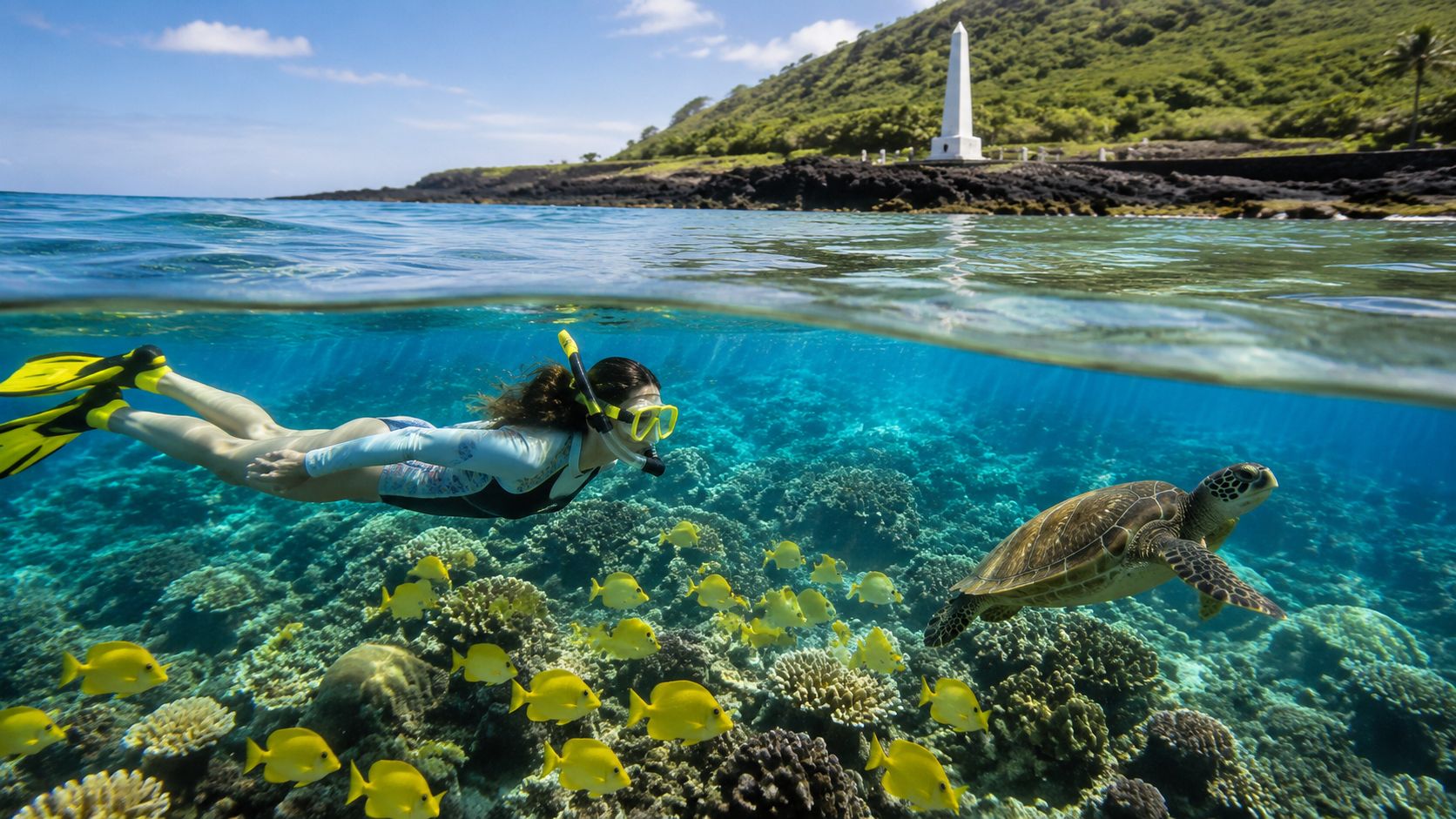
You leave the busier coastline behind, the water shifts to clear blue-green, and the cliffs wrap around the bay in a way that makes the whole place feel protected. The white Captain Cook Monument catches the light against black lava rock. Before anyone slips a mask on, the setting already feels more intimate than a typical snorkel stop.
That atmosphere is part of why this bay stays with people. Kealakekua Bay is tied to a major chapter in Hawaiʻi's history, including Captain James Cook's arrival and death in 1779. It is also a protected marine area, so the experience carries more weight than a quick swim over random reef. You are entering a place with cultural importance, strong local identity, and unusually clear water in the same frame.
For travelers comparing tours, that distinction matters. The decision is not only about boat size or trip length. It is about how you want to experience a historic bay that can feel serene, crowded, educational, or rushed depending on the operator, the timing, and the way the crew handles the morning. If you want a clearer sense of the rhythm before booking, this Captain Cook snorkel tour overview helps set expectations.

Why the bay feels so special
The shape of the bay helps. On calm mornings, the water often stays clearer and more settled than visitors expect, especially compared with more exposed shoreline along the Kona coast. That protected feel changes the whole tone of the trip. You spend less energy dealing with chop and more time noticing the details, the lava contours below you, the schools of reef fish, and the way sound softens once your face is in the water.
Access also shapes the experience. The monument side of the bay, where many snorkel tours spend their water time, is not a place you can drive directly to. That makes a boat tour practical, but it also changes your day in a good way. Instead of arriving hot, tired, and ready to be done with the hard part, you reach the bay fresh and ready to enjoy it.
Kona Snorkel Trips is a well-known snorkel company on the Big Island, and guest reviews often reflect what visitors care about most here: feeling safe, unhurried, and well guided in a place that deserves more than a quick checkmark.
The best Kealakekua Bay tours respect the setting. They give people enough context to understand where they are, enough support to feel comfortable in the water, and enough time to let the bay sink in. That is usually what turns a nice snorkel outing into one of the most memorable mornings of a Kona trip.
What to Expect on Your Snorkel Tour
You step onto the boat in the morning air, the coast still holding that early calm, and the day starts building before you ever hit the water. A good Kealakekua Bay snorkel tour is not only about getting dropped at a reef. It is about how the whole outing feels. Organized check-in, a comfortable ride, a clear briefing, and enough in-water time to settle down and notice where you are.
Most tours follow a similar rhythm. You check in at the harbor, store the gear you are not taking into the water, and listen to a short orientation from the crew. On the ride down the coast, guides usually cover mask fit, snorkel basics, flotation options, and the rules that keep people safe around the reef and each other. For first-timers, that talk matters more than many travelers expect. A calm, clear explanation on the boat often makes the first ten minutes in the water much easier.

The flow of a typical morning
Well-run tours usually feel like this:
Check-in is quick and clear
Good crews keep the dockside portion efficient. You know where to go, what to bring aboard, and when the boat is leaving.The boat ride sets the tone
The coastal run is part of the experience. It gives people time to adjust, ask questions, and arrive at the bay ready to snorkel instead of recovering from a tough approach.Safety comes before anyone gets in
Expect instruction on entry and exit, where to stay in relation to the boat, and what to do if your mask leaks or you start breathing too fast. Strong crews also point out who needs extra flotation before it becomes a problem.Your snorkel time starts with adjustment, then opens up
The first few minutes are usually about getting your face in, clearing the snorkel, and relaxing your kick. After that, the bay tends to feel much bigger and more comfortable.
The biggest difference between operators is rarely the basic schedule. It is pace. Some trips feel rushed from the second you board. Better trips leave enough margin for beginners, families, and anyone who wants a little help before putting their face in the water. That is often what turns a pretty stop into a memorable morning.
Water conditions also shape the experience. Some days are glassy and easy. Other mornings have more motion on the boat or a little surface chop once you get in. Even then, Kealakekua often rewards patient snorkelers because once breathing settles and the mask is fitted correctly, the view below tends to pull your attention away from everything happening at the surface.
If you want a more detailed planning guide, this breakdown of what to expect on a Captain Cook snorkel tour covers timing, gear, and the small details that make the day go more smoothly.
Practical rule: Use your first few minutes in the water to slow your breathing, float, and fix any mask issue right away. Snorkelers who do that usually enjoy the bay far more than the ones who start kicking hard the moment they get in.
Marine Life and Reef Highlights
The first thing many snorkelers notice at Kealakekua Bay isn't one single fish. It's the density of life. You put your face in the water and the reef doesn't look sparse or distant. It looks busy, layered, and active.
This part of the coast is protected, and that shows underwater. Coral heads, lava structure, sandy patches, and blue water all sit close together, which creates a reef scene that stays visually interesting even if you're not diving down. Some visitors spend the whole session floating calmly and scanning the reef. Others like to make short duck dives along the edge where the bottom drops away.

What you're likely to notice first
Color usually hits before species identification does. Yellow fish moving in schools. Butterflyfish weaving over coral. Parrotfish working the reef. If a honu glides through, the whole scene slows down for a second because everyone nearby stops kicking and watches.
The sound matters too. Good snorkel days have that quiet, buffered feeling you only get with your ears in the water and your breathing steady through the snorkel. The reef becomes visual and rhythmic at the same time.
How to get more out of the underwater time
A few habits make a big difference:
- Stay still for stretches. Fish often come closer when you stop chasing them.
- Look along edges, not just straight down. Transitions between coral and deeper blue water often hold the most interesting movement.
- Keep your kicks small. That saves energy and keeps the water clearer around you.
- Use flotation if it helps you relax. Comfortable snorkelers see more because they spend less effort staying composed.
For a fuller look at species and common sightings, this article on what marine life you will see during Kealakekua Bay snorkeling is worth reading before your trip.
When people say the bay feels like an aquarium, what they usually mean is visibility plus fish density plus calm enough water to actually observe it.
How to Access the Captain Cook Monument
You feel this choice later, not just at booking. It shows up when you reach the water with plenty of energy left, or when the snorkel starts after a hot approach and a long effort.
The monument side of Kealakekua Bay sits across from the main public viewpoint, near Kaʻawaloa Flats and the bay's most popular snorkel area. Boat, kayak, and trail access all get people there. The key difference is how much work happens before the first fin kick, and what shape you are in once you arrive.
The hike draws ambitious travelers for good reason. It is direct, independent, and memorable. It is also steep, exposed, and much harder on the way back out, especially after time in the water. Love Big Island describes the trail as a demanding route with significant elevation change and little shade in its guide to Kealakekua Bay access and conditions. For strong hikers who want the outing to include a workout, that can be part of the appeal. For families, first-time snorkelers, and anyone who wants their best energy reserved for the bay itself, it is often the wrong trade-off.
Accessing Kealakekua Bay Boat Tour vs. Kayak vs. Hike
| Method | Ease of Access | Time Commitment | Physical Effort | Best For |
|---|---|---|---|---|
| Boat tour | Direct access to prime snorkel area | Efficient and structured | Low to moderate | Families, first-timers, visitors who want maximum in-water time |
| Kayak | Possible, but planning is more involved | Moderate | Moderate | Confident paddlers who want independence |
| Hike | Straightforward in concept, demanding in practice | Longer day overall | High | Strong hikers comfortable with heat and a steep return |
Boat access gives the cleanest start. You arrive on the monument side ready to snorkel, with less sun exposure and less wear on your legs before you even mask up. That matters more than people expect. Kealakekua Bay is at its best when you are relaxed enough to float, look around, and stay in the water long enough to settle into the place.
Kayaking can be rewarding for experienced paddlers who want a self-powered day, but it asks more of you. You need to handle the launch, the crossing, the gear, and the paddle back, all while keeping an eye on weather, ocean texture, and energy level. Some travelers love that independence. Others realize too late that they built a paddle trip with snorkeling attached, instead of a snorkeling trip with a simple approach.
Hiking is the most physically committing option. The price can look attractive at first. The return climb changes the math.
If you are seriously considering the trail, this guide on hiking to Captain Cook Monument for snorkeling gives a clear picture of what the route demands.
For most visitors, especially mixed groups, boat access creates the most memorable day because it keeps the focus on the bay itself. You notice the cliffs, the morning light on the water, the quiet once the engine cuts, and the feeling of slipping in near one of Hawaiʻi's most historically important and ecologically sensitive coastal sites. That is a very different experience from arriving tired and watching the clock before the climb back out.
Why Choose a Kona Snorkel Trips Tour
Not every Kealakekua Bay snorkeling tour feels personal. Some feel like transport. Others feel like a crowd management exercise with masks and fins. The difference usually comes from group size, crew attention, and whether the operation is set up for beginners and experienced snorkelers at the same time.
Kona Snorkel Trips offers a guided small-group Captain Cook snorkeling trip on the Big Island, which fits travelers who want boat access to Kealakekua Bay without the feel of a large cattle-call departure. That matters because the bay itself is calm and intimate. The tour should match that feeling.

What a smaller guided format does better
A smaller group changes the whole tone of the outing:
- More useful briefings because guests can hear and ask questions.
- Better in-water support for first-time snorkelers who need help settling in.
- Less waiting around for gear fitting, entry, and reboarding.
- More room for local interpretation instead of a generic script.
Where tours earn their value
The value isn't only the ride. It's arriving with energy, entering at a better spot, and having crew support if your mask leaks, you feel nervous, or you want guidance on where to look once you're in the water.
For many travelers, that support is what turns Kealakekua Bay from “beautiful but stressful” into “relaxed and memorable.”
Check AvailabilityBest Times to Go and How to Book
You wake up to a flat Kona coast, light trade winds, and that clean early sun on the water. That is the window to aim for.
Morning departures usually give you the calmest ride and the clearest snorkeling conditions at Kealakekua Bay. By late morning or afternoon, wind can build and put more texture on the water. The bay can still be beautiful, but the experience often feels less relaxed, especially for first-time snorkelers, kids, or anyone who wants time to settle in and really look around.
That timing changes more than comfort. It changes how the bay feels.
On a good morning, the surface is often clearer, the boat ride is smoother, and it is easier to float still enough to notice the details that make this place memorable: yellow tang moving over coral heads, shafts of sunlight reaching into blue water, and the dark lava shoreline rising behind the monument. If your goal is the full Kealakekua Bay experience, not just checking off a tour, book the earliest practical option.
Booking strategy that works
Kealakekua Bay is one of those activities that deserves a firm spot on your calendar before the rest of your vacation starts crowding it out. Popular morning trips do fill early, especially during holiday periods, school breaks, and stretches of calm weather.
A booking plan that serves travelers well:
- Choose a morning departure first when you have the option.
- Schedule it early in your trip so you have room to adjust if weather shifts.
- Reserve as soon as your travel dates are set if this is a priority day.
- Pick the operator that fits your group, not just the lowest price, especially if anyone in your party is new to snorkeling or wants more guide support.
That last point matters. A cheaper seat is not always the better value if the trip feels crowded, rushed, or poorly matched to your comfort level in the water.
If you want a more detailed reservation timeline, this guide on how far ahead to book Kealakekua Bay snorkeling in Hawaii breaks down the planning side clearly.
When to book a tour instead of trying to piece it together yourself
This decision usually comes down to the kind of day you want. Travelers who book a guided boat tour are usually buying better timing, easier access, and less friction once the morning starts. You show up, get fitted, listen to the briefing, and focus on the bay itself.
DIY plans ask more of you. You need to manage timing, entry, gear, and changing conditions on your own. That can work for experienced, prepared visitors. For many people, especially families and occasional snorkelers, a guided tour is the more enjoyable choice because it protects the part that matters most: being calm enough to take in where you are.
Your Snorkeler Checklist and Eco-Conscious Tips
A smooth day at Kealakekua Bay usually comes down to a handful of simple decisions made before you ever step on the boat. Bring the basics, keep your setup light, and treat the bay like the protected cultural and marine space it is.
The most prepared guests aren't the ones carrying the most stuff. They're the ones who brought the right small things and listened well once the crew started briefing.

What to bring
- Towel and dry clothes for the ride back.
- Sun protection such as a hat and sunglasses.
- Reusable water bottle so you stay ahead of the heat.
- Waterproof camera or action cam if you like underwater photos.
- Reef-safe sunscreen applied in time to soak in before entering the ocean.
What responsible snorkeling looks like
The bay gives a lot, but it's still fragile. Good snorkeling etiquette protects the place and usually improves your own experience too.
- Keep your hands off the reef. Coral and rock structure are easy to damage.
- Give marine life space. Watching beats chasing every time.
- Control your fins so you don't kick coral or stir up sediment.
- Follow guide instructions promptly. Safety and conservation overlap more than people think.
Respect in the water is practical, not abstract. When guests stay calm, float well, and avoid touching the reef, everyone gets a better snorkel.
Before you go, review these Kealakekua Bay snorkeling rules every visitor should know. A little prep goes a long way at this bay.
If you want a Kealakekua Bay day that feels organized, comfortable, and centered on the water instead of the logistics, Kona Snorkel Trips is a practical place to start comparing tour dates and trip details.