
How Long Manta Rays in Hawaii Usually Live
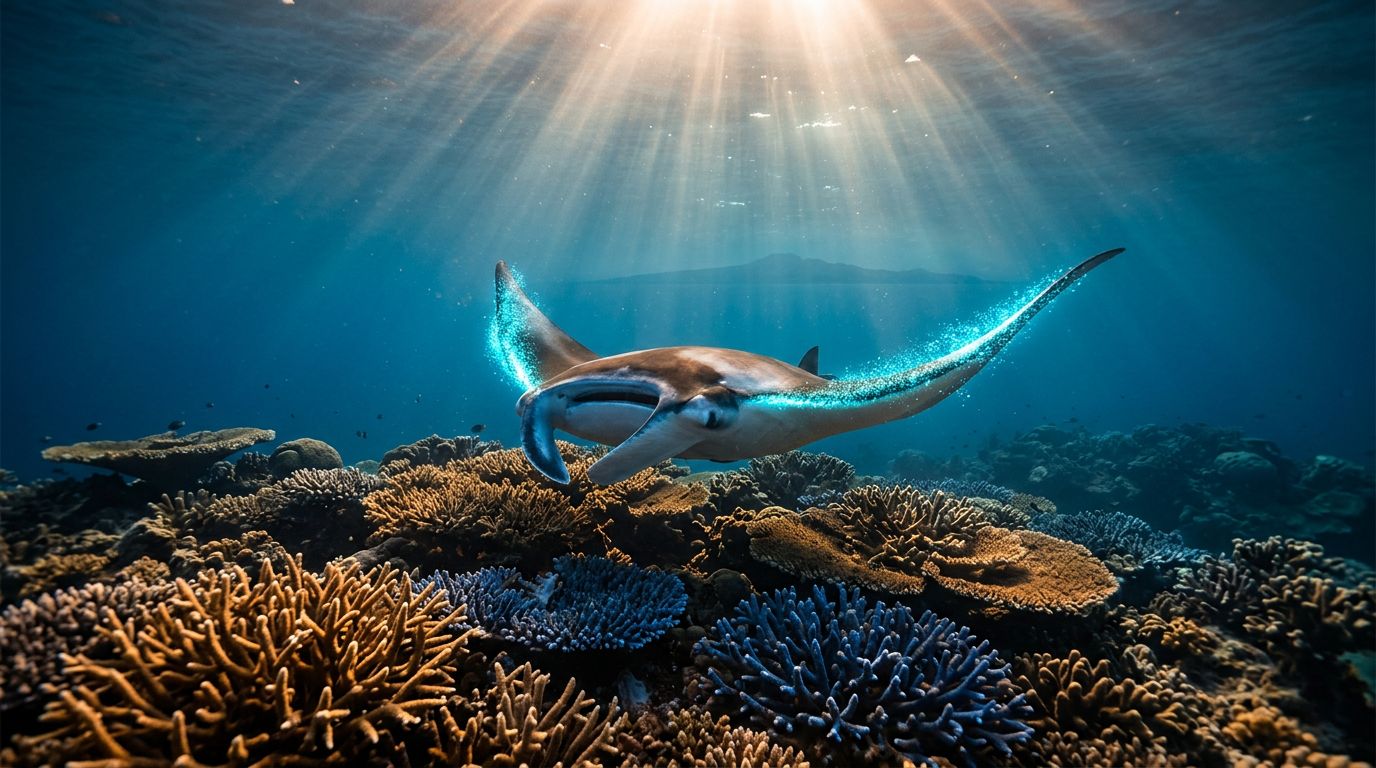
A manta ray you meet in Kona may have been cruising Hawaii’s reefs for longer than you have been visiting the islands. If you’re planning snorkeling Big Island Hawaii, that changes the whole experience.
The Hawaii manta ray lifespan is long, but the exact number is harder to pin down than most people expect. That matters whether you’re comparing Kona Snorkel Trips with Manta Ray Night Snorkel or you just want to understand the animal before you slip into the water.
The Hawaii manta ray lifespan in plain terms
If you want the shortest honest answer, think decades, not years. Hawaii’s reef manta rays are long-lived animals, and they don’t rush through life. They grow slowly, mature slowly, and spend a lot of time feeding and moving through the same coastal zones.
A clean single number is hard to give because wild manta rays are difficult to follow from birth to old age. Still, a useful reference point comes from NOAA’s giant manta ray profile, which lists a lifespan of up to 45 years. That figure is for a different species, so you should not treat it as an exact Hawaii number. Even so, it tells you the right time scale.
The safest answer is simple: Hawaiian manta rays live for decades.
When you see one glide under the lights during a night swim, you are not seeing a short-lived ocean visitor. You are seeing a wild animal that may have crossed many seasons and feeding cycles before it ever reached your snorkel light.
That reality changes the experience. A manta ray is not just a big animal passing through. It is a long-term resident of a living reef system, and your encounter is one brief moment in a very long life.
Reef mantas, giant mantas, and why the species matters
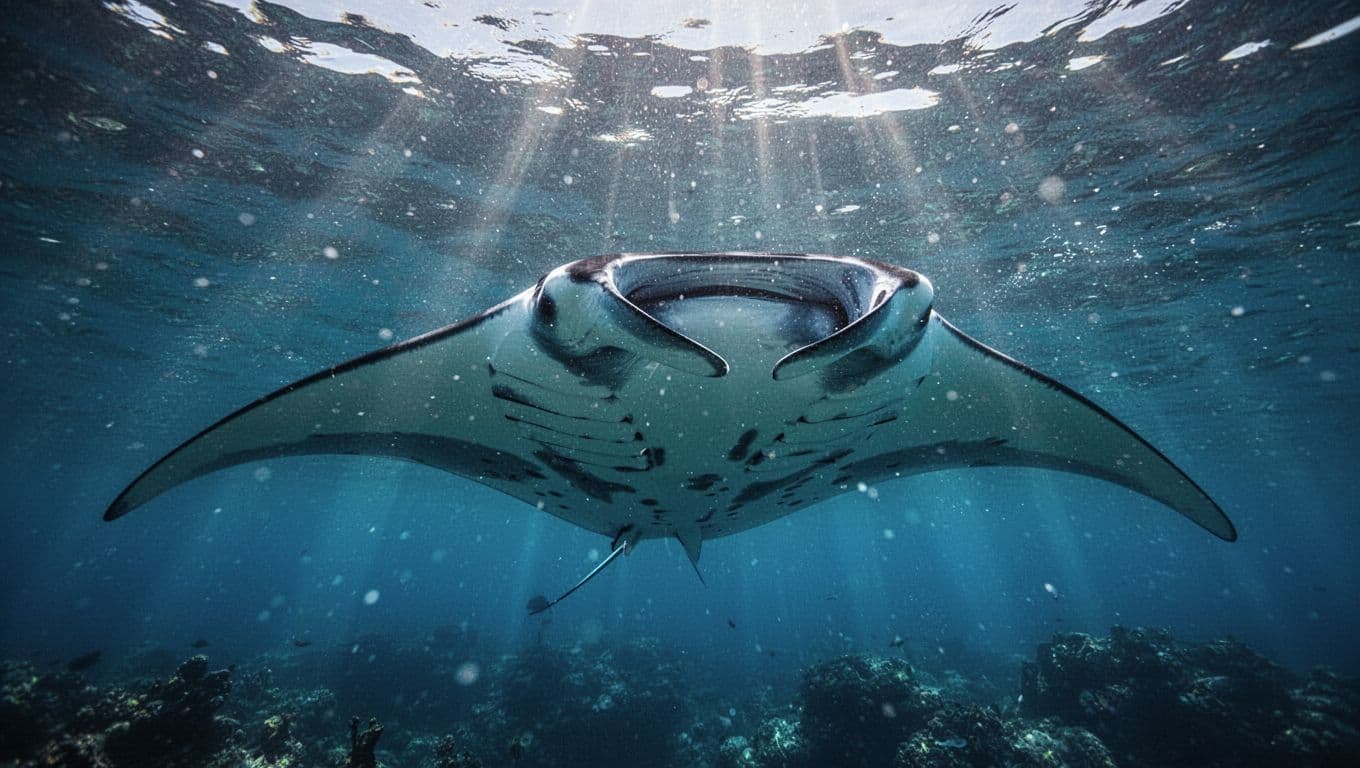
Hawaii’s shoreline sightings are usually reef manta rays, not giant manta rays. The two are close relatives, but they are not the same animal. That matters because lifespan estimates often get mixed together online.
The NOAA figure of up to 45 years comes from the giant manta ray. Hawaii’s reef manta rays are the ones you are more likely to see around Kona, so you should treat any single number with care. Even so, both species are long-lived, slow-growing animals that need years to reach adulthood.
If you have ever searched for the Hawaii manta ray lifespan and found different answers, this is probably why. One source may be talking about one species, another about a different one, and a third may be leaning on older field notes.
For you, the practical takeaway is simple. Whether you see a reef manta in Kona or compare it to a giant manta in deeper water, you’re still talking about an animal that lives in decades, not a season or two.
That is also why a good sighting feels rare without being fragile. You are not looking at a creature with a short window. You are looking at a long-lived animal that still depends on healthy habitat and careful human behavior.
Why scientists can’t pin down one exact age
Manta rays do not wear age markers the way a tree does. Their bodies don’t reveal a birthday, and their skeletons are made of cartilage, not hard bone like many fish. That makes aging harder.
Spot patterns act like fingerprints
Researchers often use photo identification. The black-and-white spot pattern on a manta’s underside is unique, so it works like a fingerprint. If a manta shows up again at the same site, the spot map helps scientists know it’s the same animal.
That method is useful, but it still leaves gaps. You might start seeing a manta as an adult, long after it was born. If it spends months away from the area, the record has holes. If it never returns to the same site, the trail ends there.
Long tracking takes years
The real answer comes from repeat sightings across long stretches of time. That takes patience. It also takes the same animals coming back to the same places often enough to be noticed.
Because of that, you will see different life-span estimates in different sources. Some studies talk about one species, while others refer to another manta species altogether. That is why the internet can feel messy on this topic.
The clean takeaway is simple. You should expect a broad range, not a neat birthday chart. Hawaiian manta rays live a long time, but scientists still work out the full picture one sighting at a time.
What shapes a manta ray’s long life
A long life does not happen by accident. It comes from a slow body plan that fits the ocean.
Food, water, and low stress
Manta rays feed on plankton, so calm water with steady food helps them keep going. Around the Kona coast, that can mean predictable feeding areas where lights and currents bring food into the water column. When conditions are good, mantas return.
Clean water matters too. Reef health supports the tiny life that starts the food chain. If the reef weakens, the whole system feels it. That’s one reason responsible snorkeling matters even when you are only visiting for a day.
Human stress matters as well. Boat traffic, entanglement, and poor water quality can cut into a life that might otherwise last much longer. NOAA’s species information on manta rays points to serious threats for these animals, and that risk is one reason conservation rules matter.
Why slow reproduction matters
Manta rays do not replace themselves quickly. They have few young, and they take time to mature. That slow pace is normal for large ocean animals, but it also means population recovery can be slow if adults are lost.
For you, that means every healthy manta you see is valuable. A mature animal is not just another sighting. It is part of a population that grows at a measured pace and depends on stable ocean conditions.
The same pattern shows up across many long-lived sea animals. Slow growth, late maturity, and few offspring usually go together. That is part of why the ocean feels so different from a fast-moving land habitat. The timeline is longer, and the consequences last longer too.
Size doesn’t tell you how old a manta is
It is easy to assume the biggest manta is the oldest. That guess often fails.
A manta’s size depends on more than age. Food supply, sex, health, and genetics all play a role. Two animals from the same reef can look different even if they are close in age. A broad wingspan can mean a healthy adult, but it does not tell you whether that adult is ten years old or thirty.
This is why guides rely on spot patterns and repeat sightings. The markings on the belly tell a better story than body size alone. If you ever hear a guide say, “We know this individual,” that is usually what they mean. They are looking at the animal’s pattern, not making a guess from the outline.
That idea changes how you think about the ocean. The manta you meet tonight may be one of the same locals that have used the Kona coast for years. On a future trip, you may see it again. That kind of continuity is one reason people fall in love with manta encounters in the first place.
When you snorkel Big Island waters, you are not just swimming beside an animal. You are entering a place where the same individuals may keep returning, almost like neighbors with fins.
What you notice on a Kona night snorkel
If you want to see these animals the way they actually live, a night snorkel is hard to beat. The lights bring plankton into view, and the mantas circle below to feed. Their movements look slow and smooth, but they are focused and efficient.
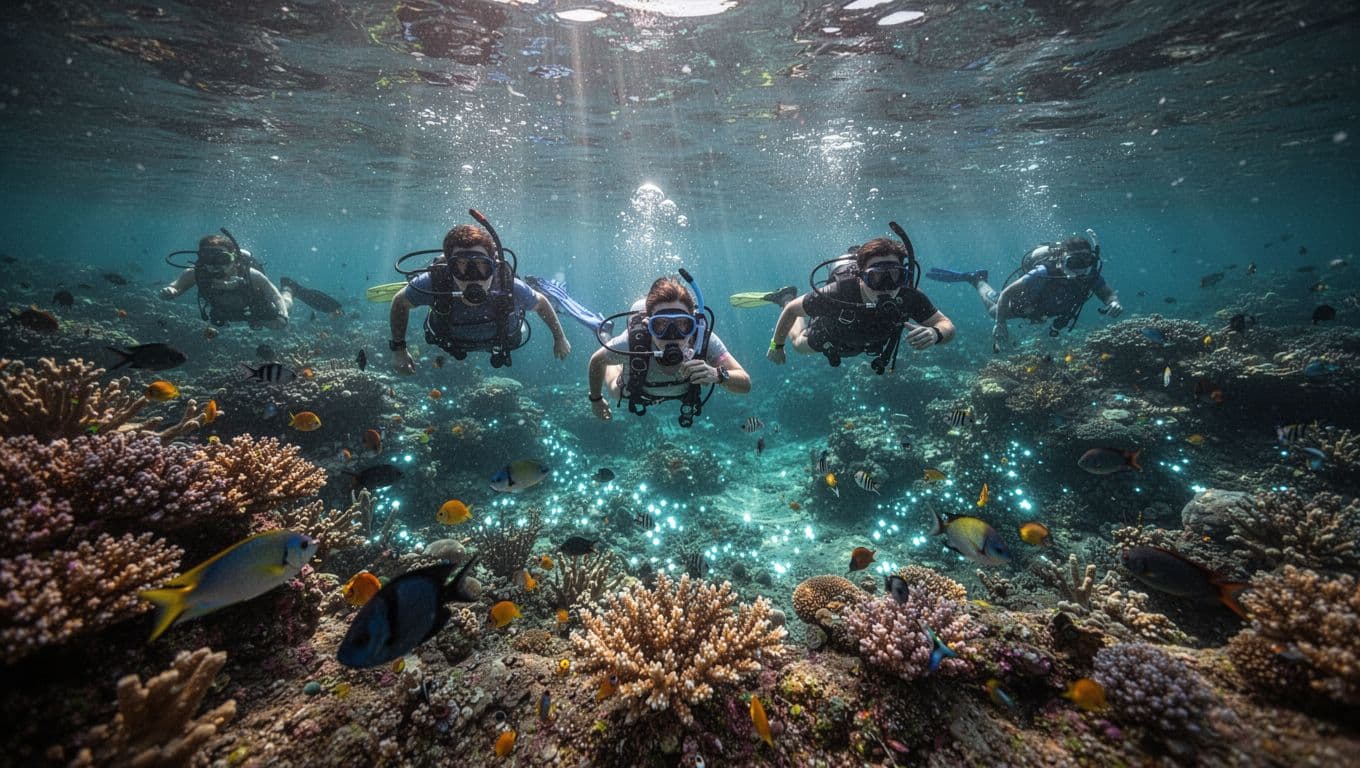
That is why many people searching for snorkeling Big Island trips end up choosing a manta outing. You get a close look without needing to guess how old the animal is. You can just watch how it moves, feeds, and returns to the light.
If you want to book with Kona Snorkel Trips, their small-group style keeps the experience calm and personal. The company follows a Reef to Rays approach that keeps safety and reef respect front and center, and that matters when you are sharing water with a long-lived wild animal. You can check availability for a general outing, or compare guided snorkeling excursions in Kona if you want to see the full range of choices.
If manta rays are the main reason you’re coming, the manta ray snorkel in Kona is the better fit. Your other manta-focused option is Manta Ray Night Snorkel, which is built around that same nighttime experience. When you are ready, you can check availability for the night snorkel.
How you can help Hawaiian mantas live longer
You can’t control the ocean, but you do control your behavior in it.
Keep your distance and never block a manta’s path. If you are in the water at night, stay calm and move slowly. Fast arms, kicking fins, and sudden turns make the experience harder for the animal and the group around you.
Use reef-safe sunscreen before you enter the water, not right before you jump in. Give it time to settle into your skin. Then let the reef stay as clean as you found it.
Follow your guide’s spacing rules. If you’re told to hold still near a light board or stay off the surface path, do that. Those small choices reduce stress on the animals and keep the encounter smooth.
If you want more room on the water, private Kona boat charters can help keep the group size low. That can make a difference when you want a quieter, less crowded ocean trip.
A few simple habits go a long way:
- Stay off the reef and keep your fins up.
- Never touch a manta, even if it swims close.
- Keep your lights and movements controlled.
- Choose operators that explain the rules clearly.
- Pick smaller groups when you can.
When you treat a manta like a wild resident, not a prop, you help protect the long life you’re hoping to witness. That matters on a busy coast where many visitors want the same magical view.
Conclusion
The answer to how long manta rays in Hawaii usually live is simple enough once you strip away the guesswork. You are usually looking at a long-lived animal, one that can spend decades in the same ocean system.
That is why a manta encounter in Kona feels so memorable. You are not just seeing a big ray pass by, you are meeting a wild resident with a long history in Hawaiian water.
If you remember one thing, make it this: manta rays in Hawaii live long enough to become part of the place, and your choices help keep them there.