
How to Read Currents During Kealakekua Bay Snorkeling
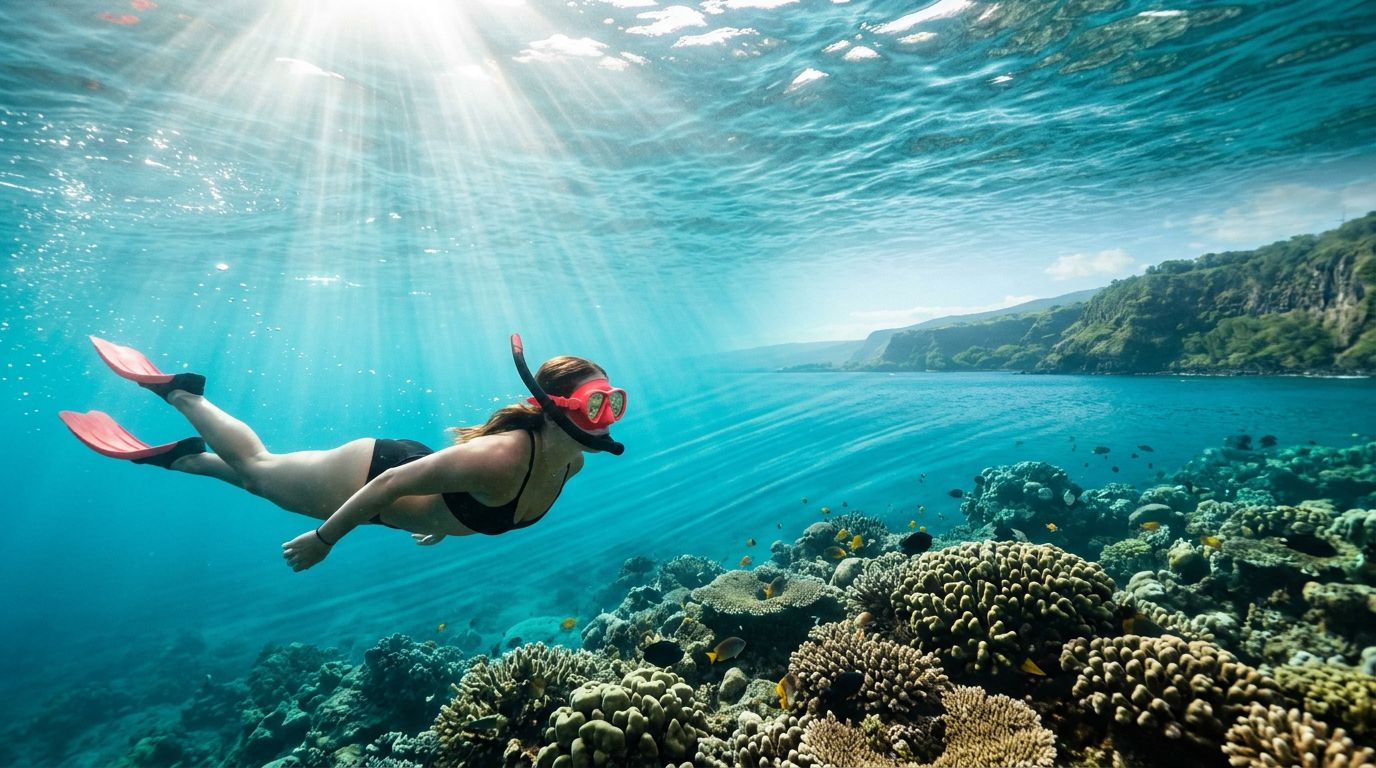
Kealakekua Bay can look calm enough to trust, yet a moving patch of water can carry you past your planned exit before you notice. Learning how to read currents during Kealakekua Bay snorkeling helps you conserve energy, protect coral, and stay with your buddy.
You don’t need advanced ocean skills to spot useful warning signs. By watching the surface, checking your position, and listening to your guide, you can recognize changing conditions before they become a problem. Start by understanding what creates movement inside the bay.
How to Read Currents During Kealakekua Bay Snorkeling
A current is water moving in a particular direction. In Kealakekua Bay, wind, waves, tides, ocean swell, and the shape of the coastline can all affect that movement. Several forces may act at once, so conditions can change during a single snorkel.
The bay offers shelter from some open-ocean conditions, but sheltered doesn’t mean motionless. Water still enters and leaves through the bay opening. Wind can push surface water toward one side, while deeper water moves in another direction. You may also find small eddies near reef contours, rocky points, or steep underwater walls.
The first skill is separating normal water movement from a current that may challenge you. Gentle movement can help you glide along the reef with little effort. A stronger current may pull you away from your boat, buddy, or planned return point.
Before entering, identify three reference points:
- Your boat, kayak, or shore entry point
- A fixed feature such as a cliff, point, or distinctive shoreline
- The direction you expect to travel
Keep checking those references while you snorkel. The reef beneath you can make it feel as if you’re moving slowly, even when the shoreline is sliding across your field of view.
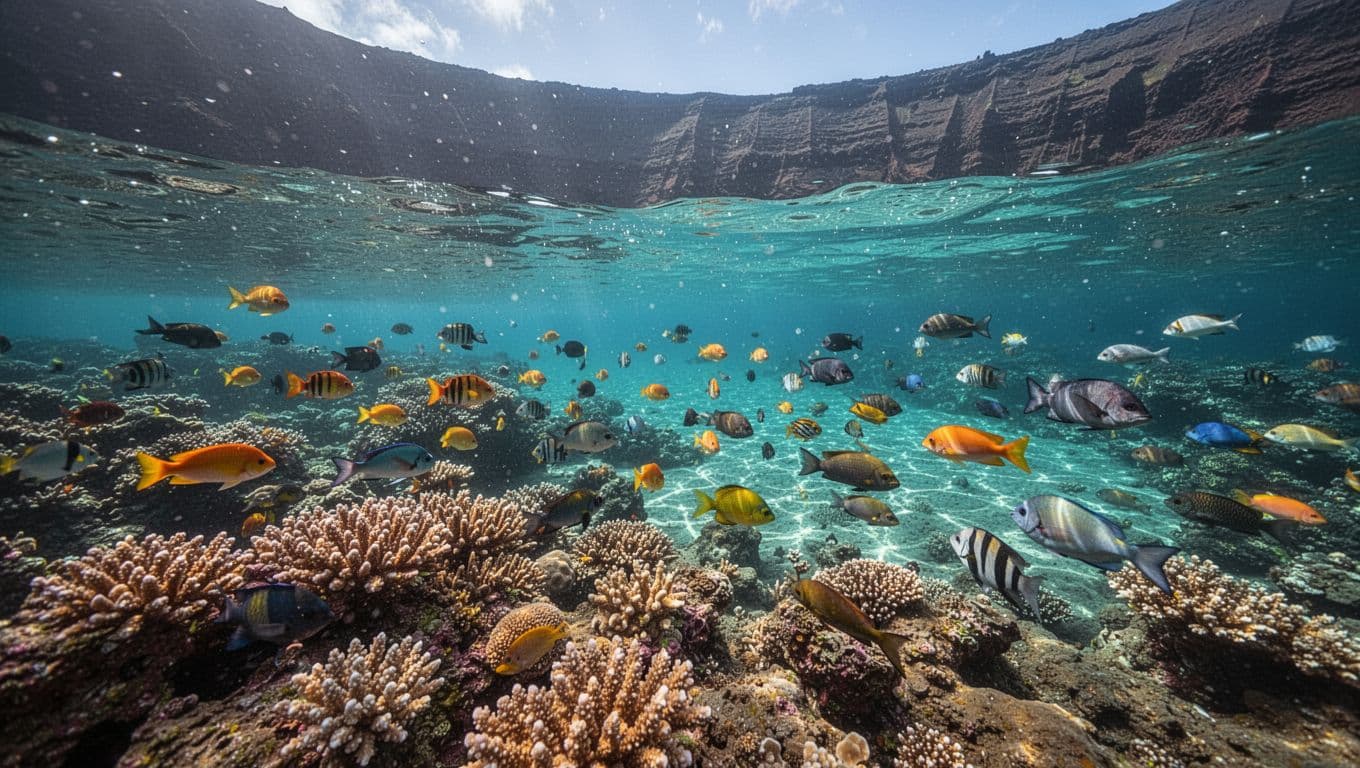
Water clarity also affects your judgment. Clear water lets you see the reef and recognize your position, but it can create a false sense of stillness. If you focus only on fish and coral, you may miss the fact that your entry point is getting farther away.
Check the Surface Before You Enter
Spend a few minutes watching the water before you put on your mask. You can learn a surprising amount from the surface texture, floating debris, and movement around nearby rocks.
Look for lines or streaks that travel across otherwise smooth water. These may show where water is moving. Foam patches, leaves, drifting seaweed, or bubbles can also reveal direction. Follow one floating object with your eyes for 20 to 30 seconds. If it travels steadily, you have a visible clue about surface flow.
Watch the water near the reef edge. A small wave may break over shallow coral, then pull back toward deeper water. That back-and-forth movement is different from a steady current, but both can affect your swim. Avoid entering directly where water rushes over rocks or funnels between formations.
Wind gives you another clue. If the wind is pushing steadily across the bay, the surface may move in that direction even when the water below feels different. Strong gusts can also make your return trip harder, especially if you swim away from your boat early in the session.
Your guide may choose a different entry point or route after checking these conditions. Follow that plan instead of assuming the water will behave like it did on a previous visit.
A simple pre-entry check looks like this:
| What you observe | What it may tell you |
|---|---|
| Smooth water with little visible drift | Surface conditions may be gentle, but deeper movement can still exist |
| Foam or seaweed moving in one direction | A surface current is present |
| Water pushing over rocks | Avoid that area because the flow may increase near shallow obstacles |
| Wind rising across the bay | Your return trip may require more effort |
| Waves building at the entry point | Wait for guidance or choose a calmer location |
The takeaway is simple: look for direction before you look for distance. Knowing where the water moves matters more than deciding how far you want to swim.
Watch Your Position While You Snorkel
Once you’re in the water, keep your head up often. You don’t need to interrupt your entire snorkel. A brief look toward the boat or shoreline can tell you whether the current is changing your position.
Choose a fixed object on land and check it every few minutes. A cliff edge, tall tree, or shoreline feature works better than a swimmer because people move. If the same feature appears farther to one side each time you look, the current is carrying you.
You can also compare your position with your buddy. If you both stop kicking for a few seconds and drift apart, the water is moving you in different directions. Signal your buddy and regroup before continuing.
Your body can reveal a current too. You may feel a steady push against one shoulder, hip, or fin. Your snorkel bubbles may angle behind you instead of rising straight upward. Sand or tiny particles can stream past the reef in a consistent line.
Don’t mistake your own kicking for water movement. Stop kicking briefly in open water, away from coral and rocks, while your buddy watches nearby. If you continue drifting, you have confirmed that the water is moving you.
If you must kick hard to stay in place, the current is already giving you useful information.
A current can feel stronger when you turn around. Many snorkelers swim away easily because the flow helps them, then struggle on the return. Check your position before you travel farther. If you have drifted more than expected, turn back while you still have plenty of energy.
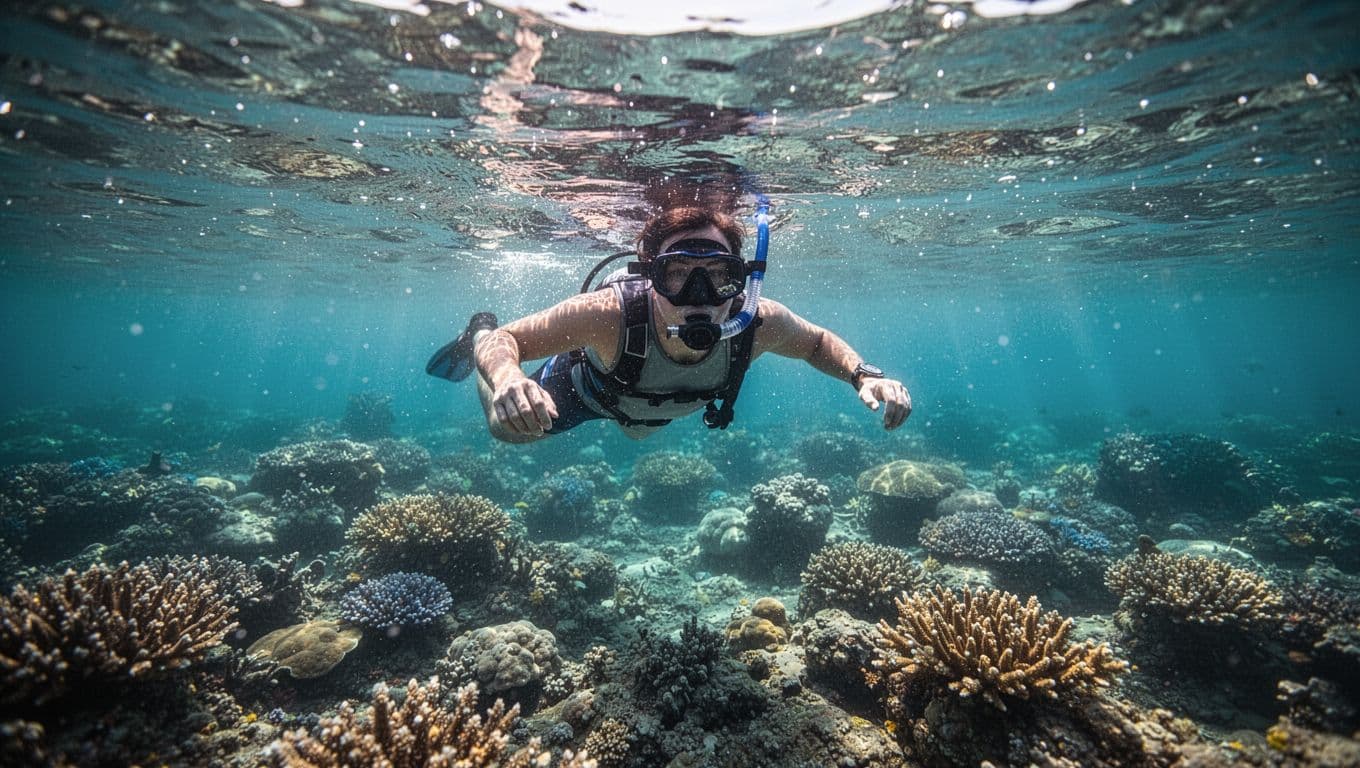
Pay attention to breathing as well. Stress often makes you kick faster and breathe harder, which uses energy quickly. Slow your breathing, relax your legs, and tell your buddy or guide what you feel.
When you snorkel Big Island waters, you may encounter areas where the surface looks calm but the water pulls below. Your position checks help you notice that change before it becomes tiring.
Where Currents Can Change Inside Kealakekua Bay
The bay’s shape affects how water travels. Near the open entrance, ocean swell and wind can have a greater effect. Farther inside, the coastline and reef may redirect water around protected areas. Those conditions can vary with the weather and time of day.
You shouldn’t assume that a location is safe or calm because it was comfortable earlier. A shift in wind can change the surface flow. A passing swell can create more movement near exposed rocks. Water may also circulate around a point instead of traveling in one straight line.
The area near the Captain Cook Monument is part of a protected marine environment. A Captain Cook snorkeling guide describes Kealakekua Bay as a Marine Life Conservation District, which means your decisions affect a protected reef habitat.
That protection doesn’t remove the need to read currents. It makes careful movement more important. Keep your fins away from coral, avoid standing on the reef, and never use a coral head as a handhold. If a current pushes you toward shallow coral, angle away early rather than waiting until you’re close.
A 2008 Kealakekua Bay management report recorded that 61 percent of surveyed residents viewed people handling or standing on coral as a moderate or extreme problem. Your buoyancy and route choices help reduce that pressure.
Look for these location-specific clues:
- Water accelerating around a rocky point may become harder to cross.
- Foam collecting beside a reef edge can show a rotating pocket of water.
- A narrow gap between rocks may concentrate flow.
- Waves reflecting from a cliff or wall can create choppy, confused water.
- A calm patch beside faster-moving water may be an eddy, not a stable resting area.
Move parallel to the reef when you need to cross a current. Swimming straight against moving water wastes energy. A diagonal route may help you reach calmer water with fewer kicks, but ask your guide before changing direction.
Your best route may not be the longest route. A shorter swim in calmer water usually gives you more time to enjoy the reef and less time fighting the ocean.
Use the Current Without Fighting It
You don’t have to treat every current as an emergency. Gentle flow can make a snorkel easier when you plan your route around it. The main goal is to keep enough energy for your return.
Start by swimming into the current for a short distance, if your guide approves. That approach leaves the easier drift for the trip back. If you swim with the current first, you may spend the final part of your snorkel working against it.
Stay close enough to your buddy and guide that you can communicate. Hand signals work well when you can’t speak. Agree on a signal for stopping, returning, feeling tired, or needing help before entering the water.
Use your fins with controlled movements. Large, fast kicks increase fatigue and can stir sediment near the bottom. A relaxed flutter kick helps you maintain position while you watch the water.
If the flow increases, take these steps:
- Stop exploring and check your position against the boat or shoreline.
- Signal your buddy and move away from coral or rocks.
- Turn toward calmer water or follow the guide’s direction.
- Swim at a steady pace instead of sprinting.
- Return to the boat or exit point while you still feel comfortable.
Don’t grab coral, mooring lines, or another swimmer without direction. Sudden contact can damage the reef or cause both swimmers to lose balance.
If you feel tired, tell someone immediately. Fatigue can make a moderate current feel much stronger. A floatation aid may help, but it doesn’t replace supervision or good judgment.
Know When to End the Snorkel
Ending early is a smart choice when conditions change. You don’t need to wait until you’re exhausted, separated from your group, or close to the reef.
Return to the boat or shore if you notice that you keep missing your intended reference point. The same applies if you must kick constantly to hold your position. Repeated mask leaks, difficult breathing, or rising anxiety are also good reasons to exit.
Watch your buddy for changes in behavior. A swimmer who stops looking around, kicks unevenly, or keeps lifting their head may be tired or uncomfortable. Ask how they feel and stay together.
Families should set a clear turnaround point before entering. Children may focus on fish and forget to monitor their distance. Keep younger swimmers closer to an adult and use properly fitted flotation equipment when needed.
People with limited swimming experience may enjoy Kealakekua Bay more with a guided group. A guide can choose a route that matches the conditions and keep the group within a manageable area. You can also arrange private Big Island boat tours when your family or group needs a more flexible pace.
Weather and water conditions can change after you arrive. If a guide postpones entry or changes the route, treat that decision as useful local knowledge. The bay will still be there, while your safety depends on the conditions in front of you.
Choose a Guide Who Watches the Water
A good guide does more than point out fish. You should expect a clear safety briefing, an explanation of the route, properly fitted equipment, and regular checks on the group.
Kona Snorkel Trips places its “Reef to Rays” philosophy at the center of its ocean adventures. The company focuses on small-group service, reef-safe practices, high-quality snorkeling gear, and lifeguard-certified guides. Those details matter when you’re learning to read water movement because you can ask questions before and during the swim.
The company’s Kealakekua Bay snorkel tour gives you a guided way to visit the Captain Cook Monument and surrounding reef. A professional crew can watch the surface, choose an appropriate route, and adjust the plan when wind or swell changes.
For a Captain Cook-focused alternative, Captain Cook Snorkeling Tours also offers information about visiting the bay and its protected waters. Compare the meeting details, group size, equipment, and safety approach before booking.
You can check availability with Kona Snorkel Trips before setting your itinerary.
The right guide won’t promise perfectly still water. Instead, you’ll receive honest information about the day’s conditions and practical instructions for staying comfortable.
A Simple Current-Reading Routine
Use the same routine every time you enter the water. Repetition helps you notice small changes instead of relying on memory or instinct.
First, watch the surface before you leave the boat or shore. Identify the direction of foam, seaweed, bubbles, and wind-driven ripples. Then choose a land reference and remember where your group starts.
Next, enter with your buddy and stay close to the guide. After a minute or two, pause your kicking in a safe area. Check whether you drift, which direction you move, and how quickly the boat or shoreline changes position.
During the snorkel, look up every few minutes. Compare your location with the reference point. If you have moved farther than expected, return before your energy drops.
Keep the strongest current for the beginning of your route when conditions allow. That way, you can use the flow to assist your return. Never make this choice without following your guide’s plan, especially near rocks, reef edges, or boat traffic.
Before returning, confirm that your buddy is beside you and that you can reach the planned exit without rushing. If the route feels difficult, signal for help and follow the guide.
To book a Captain Cook or Kealakekua Bay trip, you can check availability in advance.
Snorkeling Big Island is more enjoyable when you work with the water instead of challenging it. The bay rewards a patient pace, regular position checks, and respect for the reef.
Conclusion
Reading currents during Kealakekua Bay snorkeling starts before you enter. Watch the surface, identify fixed reference points, test your drift, and keep enough energy for the return.
A calm-looking bay can still carry you. When you monitor your position and follow a qualified guide’s instructions, you can spend more time enjoying the reef while protecting yourself and the marine life around you. Your strongest snorkeling skill is knowing when the water has changed.