
Why Kealakekua Bay Water Looks So Clear
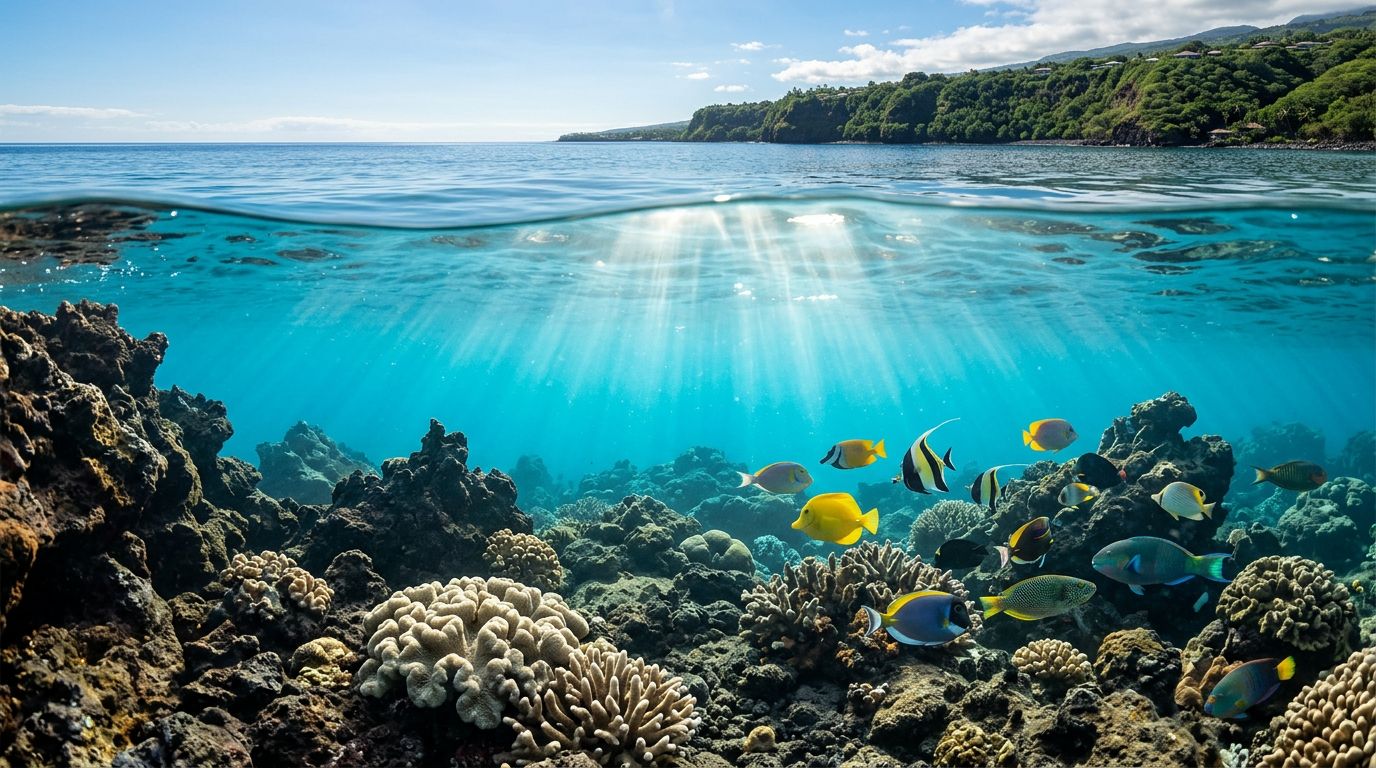
Kealakekua Bay can look almost unreal when you first put your face in the water. Lava rock, coral, and tropical fish appear sharp beneath the surface because several natural conditions work together along the Kona coast.
The bay’s sheltered shape, dry climate, limited sediment, and volcanic shoreline all help reduce cloudiness. Sunlight then travels through the clean water, making the reef look brighter and shallower than you might expect.
If you’re researching snorkeling Big Island Hawaii, Kealakekua Bay shows you why this coast is so popular. The science behind that clarity begins with the bay’s location.
Kealakekua Bay sits in a naturally protected part of the Kona coast
Kealakekua Bay is on the western side of Hawaii Island, a coast known for generally dry weather and calm ocean conditions. The high slopes of the island’s volcanoes affect how moisture moves across the land. As trade winds rise over the mountains, much of the rainfall falls on other parts of the island.
That pattern leaves the Kona coast with fewer heavy rain events than many windward areas. Less rain often means less soil, plant material, and fine sediment washing toward the shoreline. Clear water starts on land, long before you reach the reef.
The bay’s position also gives it some protection from open-ocean energy. Its curved shoreline and surrounding land reduce the direct force of many waves. When waves stay small, they don’t stir as much sand from the bottom.
This protection doesn’t make Kealakekua Bay calm in every condition. Strong winds, passing storms, and ocean swells can still affect visibility. However, the bay often offers the stable conditions that swimmers want when they snorkel Big Island waters.
Kona Snorkel Trips offers guided access to the area’s reefs with small-group service, lifeguard-certified guides, quality equipment, and a strong focus on reef-safe practices. Captain Cook Snorkeling Tours is another company associated with trips to this historic bay. For a broader look at guided options, you can browse these Big Island snorkel tours.
Low sediment keeps the water clear
Water looks cloudy when tiny particles remain suspended in it. These particles can include silt, sand, decaying leaves, plankton, and other organic material. The more particles the water contains, the less light can pass through.
Kealakekua Bay benefits from a rocky volcanic shoreline rather than a large, muddy river delta. Basalt and other volcanic rock form much of the coast and seafloor. Those hard surfaces don’t break down into fine sediment as quickly as loose soil carried by a major river.
That doesn’t mean the bay has no sand or runoff. Rain can still wash material downhill, especially after a strong storm. Nearshore areas can also become cloudy when waves move sand or when people accidentally kick the bottom.
Most of the time, though, the bay receives less sediment than a shoreline fed by a large, constantly flowing river. With fewer particles floating through the water, sunlight reaches farther down. You can see the reef’s structure instead of a gray or green haze.
The same difference explains why visibility can change within a short distance. One section of the bay may look glassy while another looks slightly milky. Water movement, bottom type, recent weather, and local activity all matter.
A useful comparison is a glass of clean water beside one with a pinch of flour mixed in. Both contain water, but the suspended particles change how far you can see. Kealakekua Bay often stays closer to the first example because fewer fine particles enter and remain in the water.
A paddling account of Kealakekua Bay also describes the bay’s clear blue water and protected setting. Those observations match what you notice from the surface, although daily conditions can still vary.
The bay’s shape reduces wave energy
Kealakekua Bay is not an exposed beach facing the full Pacific. Its coastline curves inward, creating a more sheltered body of water. The surrounding cliffs and headlands help break up some wave energy before it reaches the snorkeling areas.
Wave energy matters because moving water can disturb the seafloor. Even a thin layer of sand becomes a visibility problem when waves repeatedly lift it into the water column. The particles may take time to settle, especially when wind continues to push the surface.
A protected bay gives sediment more chances to fall back to the bottom. Once the water settles, visibility can improve quickly. This is one reason early morning conditions often look especially attractive, although you should always check the day’s forecast instead of assuming the water will be perfect.
Kealakekua Bay’s shape also helps create calmer areas for observing marine life. Fish can feed around the reef without fighting constant surge. You can move more slowly, breathe comfortably, and avoid using your hands or fins to steady yourself on coral.
The clarity is therefore connected to more than appearance. Calm water improves your view and makes it easier to control your body position. Good control helps you avoid touching the reef, which protects the same ecosystem you’re visiting.
A clear surface can still hide movement below. Ocean swells may pass through the bay even when the shoreline looks calm. If you feel the water pushing you toward coral, move away from the reef and follow your guide’s instructions.
Volcanic rock and coral give the water a clean background
The seafloor beneath Kealakekua Bay includes dark volcanic rock, coral growth, and areas of sand. That contrast makes the water seem even clearer. Dark lava absorbs light around the reef, while pale sand and coral catch sunlight and stand out beneath you.
Hawaii Island’s volcanic geology also shapes the shoreline. Lava flows created hard coastal surfaces, underwater ledges, channels, and reef habitat. These features give marine life places to shelter while limiting the broad, soft-bottom areas that waves can easily stir.
Coral adds another layer to the scene. Healthy reef structures create texture across the seafloor, so your eyes can follow individual shapes instead of looking through a flat field of sediment. Fish moving above the reef make the depth easier to judge.
The clarity you see comes from the water itself, but the seafloor affects your perception. A clear blue surface above a dark lava slope can look deeper and more vivid than water above pale sand. Bright sunlight then adds sharp lines and color to the scene.
Water depth also changes the view. In shallow areas, light reaches the bottom and reflects back toward you. In deeper water, more light is absorbed as it travels downward. Red and orange wavelengths disappear first, while blue light travels farther, giving the bay its familiar blue tones.
When the sun is high, you may see strong shafts of light beneath the surface. Those rays reveal tiny particles that would otherwise remain invisible. Seeing a few specks doesn’t mean the water is dirty. Some suspended material is normal in every natural ocean environment.
The real measure is how far and how sharply you can see. In Kealakekua Bay, favorable conditions can make coral heads, fish, and underwater ledges appear crisp from the surface.
Sunlight makes the water look even more transparent
Water clarity and water color are related, but they aren’t exactly the same. Clear water allows light to travel through it. The angle of the sun, the depth of the water, and the color of the bottom then determine what you see.
Blue light travels farther through seawater than many other colors. Red light disappears at relatively shallow depths, while blue wavelengths remain visible. That natural filtering gives clear ocean water its blue or turquoise appearance.
Kealakekua Bay often looks bright because sunlight reaches the water without passing through a thick layer of cloud. The dry Kona climate creates many sunny days, although clouds and passing showers can still appear.
A calm surface helps too. Wind ripples scatter reflections and make it harder to see what lies below. When the surface smooths out, sunlight enters at a more consistent angle. Your mask then gives you a cleaner view of the reef.
Your own equipment affects the experience. A well-fitting mask keeps water from entering and maintains a clear air pocket in front of your eyes. Defogging the lens before entering the water prevents condensation from creating artificial cloudiness.
If your view suddenly becomes blurry, check your mask before blaming the bay. A loose strap, trapped hair, or fogged lens can make pristine water look murky. A guide can help you adjust the fit and clear the mask safely.
This is also why photographs don’t always match what you see in person. Cameras change exposure and color underwater. A bright surface, deep blue background, or moving subject can cause the image to look darker than the actual scene.
When Kealakekua Bay snorkeling is clearest
No bay stays equally clear every day. Recent weather is one of the biggest factors. Heavy rain can carry soil and organic material toward the coast, while strong wind can churn the surface and move sand across shallow areas.
Ocean swell matters as well. A swell from the direction of the bay’s open entrance can create more movement than a calm forecast might suggest. Visibility may drop near the bottom while the surface still appears blue.
These conditions can change quickly, so you should treat water clarity as a natural feature rather than a guarantee. A guide who checks local conditions can help you choose a safer entry point or adjust the route.
| Condition | Likely effect on visibility |
|---|---|
| Several dry days | Often clearer water and less runoff |
| Heavy recent rain | More suspended sediment near shore |
| Light wind and small swell | Calmer surface and better viewing |
| Strong wind or surge | More particles and movement |
| Busy shallow area | Possible sand stirred by fins |
| High sun and clear skies | Brighter underwater colors |
Morning trips often benefit from lighter winds and a smoother surface, but local weather controls the result. Afternoon conditions can still be excellent when the wind stays light.
The clearest water isn’t always the best time for every traveler. Families may prefer a time with comfortable temperatures and manageable boat schedules. Beginners may value calm conditions more than peak underwater visibility. Experienced swimmers might choose a trip based on marine life and reef location.
For current visitor impressions, you can review recent Kealakekua Bay reports, while remembering that individual experiences reflect particular days. A review from a calm morning can’t predict the conditions during your vacation.
If you want to see the bay at its clearest, ask about recent rain, wind direction, ocean swell, and the planned snorkeling area. Those details tell you more than a general promise of clear water.
How to enjoy the clarity on a guided snorkeling trip
A guided tour can help you see more while using less energy. You don’t need to spend the first part of your visit guessing where the reef begins or how strong the current feels. A knowledgeable guide can explain the conditions, point out fish, and help you maintain a comfortable distance from coral.
Start by choosing equipment that fits. Your mask should create a gentle seal around your eyes and nose without requiring excessive strap pressure. Fins should feel secure but shouldn’t pinch your feet. If you use a flotation device, adjust it before entering the water.
Once you’re in the bay, keep your body horizontal. This position reduces drag and prevents your fins from striking the bottom. Slow, relaxed kicks also help you conserve energy and avoid stirring sand.
Stay aware of depth and distance. Clear water can make a reef appear close even when it sits several feet below you. Follow the guide’s route, especially if conditions include current or surge.
If you plan to visit with children, choose a trip that matches their swimming ability. Clear water may look inviting, but snorkeling still requires comfort in the ocean. A properly fitted flotation aid and close adult supervision matter more than perfect visibility.
A morning boat trip can also reduce the time you spend walking over uneven lava shoreline. That access may be useful for couples, families, and travelers who want to focus on the reef instead of carrying gear across land.
When comparing guided snorkeling adventures in Kona, look for details about group size, safety training, equipment, weather policies, and the areas visited. The right tour should fit your comfort level, not only your wish list.
For a Captain Cook or Kealakekua Bay trip with Kona Snorkel Trips, you can check avaialbility.
Your choices help keep Kealakekua Bay clear
Water clarity depends on natural conditions, but visitors also affect what happens near the reef. Every fin kick that hits the bottom can lift sediment. Repeated contact with coral can damage living colonies and reduce habitat for fish.
Keep your hands off coral, rocks with marine life, and turtles. Coral may look like stone, but it is made of living animals. Touching it can remove its protective surface or spread harmful material from your skin.
Use reef-conscious habits before you enter the water. Apply mineral sunscreen well before swimming, and choose products that avoid ingredients known to harm coral. Even better, wear a rash guard and use a hat when you’re on the boat.
Don’t feed fish or chase wildlife. Animals that change their normal behavior may become dependent on people or move into unsafe areas. Give turtles and other marine life room to choose their own direction.
Follow local instructions about trash, anchoring, and access. A clean bay stays healthier when visitors leave nothing behind. Guides can also show you how to float above the reef without touching it.
A clear view is a privilege created by geology, weather, and a living ecosystem. Your behavior determines whether the next group sees the same sharp reef, blue water, and fish-filled channels.
Why the water can look clear even when conditions change
Clarity is never a single measurement. You may see several feet down and still notice a gentle haze near the bottom. That haze can result from normal plankton, fine sand, or tiny particles moving through the water.
The surface can also create visual tricks. Reflections may hide the seafloor in one direction, then disappear when you change your angle. Looking with the sun behind you often makes the reef easier to see.
Your mask lens changes the scene as well. Scratches, fog, and water droplets can scatter light. Before deciding that visibility is poor, rinse the mask, apply defogger, and check the seal.
Depth creates another illusion. In clear water, the bottom may look closer than it is because light and contrast make underwater features appear sharp. That effect can cause swimmers to underestimate distance from the boat or shoreline.
A short period of cloud cover doesn’t necessarily ruin a snorkeling trip. Fish remain active, and the water may still be clear. The colors simply look softer because less sunlight reaches the reef.
A recent visual look at the bay offers another way to see how surface conditions affect the scene in this Kealakekua Bay view. Photos and videos can help you understand the setting, but they can’t replace a local conditions check.
Conclusion
Kealakekua Bay looks so clear because its dry Kona setting limits runoff, its curved shape reduces wave energy, and its volcanic shoreline creates less fine sediment than a muddy river coast. Calm conditions and strong sunlight then make the reef appear bright, detailed, and close.
When you visit, protect that clarity by floating above the reef, fitting your mask carefully, and following local guidance. The most memorable part of Kealakekua Bay snorkeling isn’t only the view beneath you. It’s knowing the ecosystem remains healthy enough for you to see it clearly.