
Kealakekua Bay Snorkeling: The Ultimate 2026 Guide
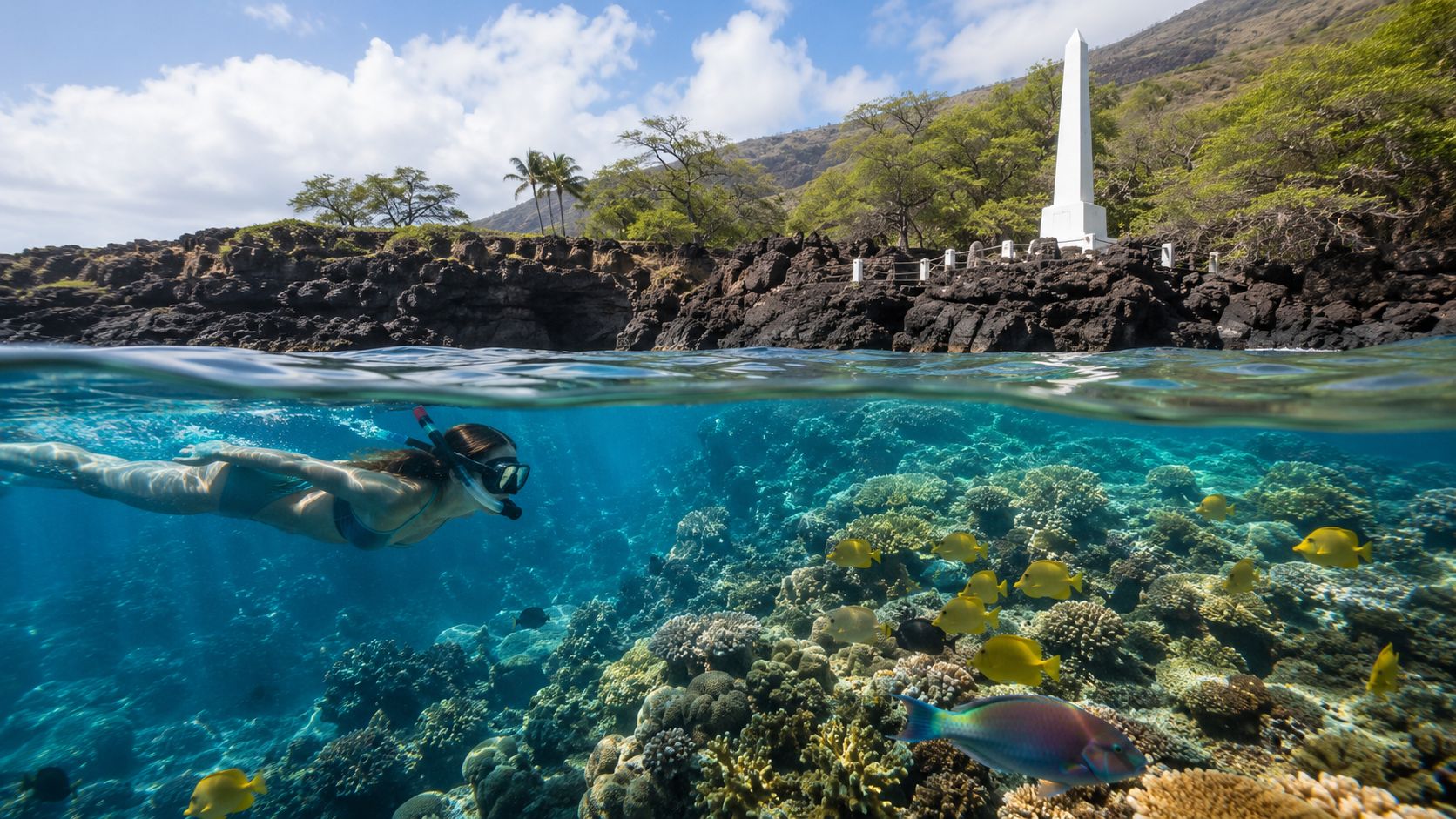
You're probably staring at a South Kona map right now, trying to answer three practical questions at once. Is Kealakekua Bay really worth the effort, what's the smartest way to reach the good snorkeling, and how do you avoid turning a dream day into a hot, tiring logistics exercise.
It's worth it. But this bay rewards good decisions.
Kealakekua Bay snorkeling stands out because the experience starts before your mask even hits the water. The cliffs make the bay feel sheltered and quiet. The water often looks impossibly clear. Then you slip in and the reef drops away under you, with coral, schools of fish, and deep blue water all in one view. It feels less like a beach stop and more like entering a protected place that still functions the way a healthy reef should.
A lot of visitors make one mistake. They focus on getting there, not on choosing the access method that leaves them fresh enough to enjoy the water. That choice matters more here than at easy walk-in snorkel spots. Families, strong paddlers, confident swimmers, and hikers all need something different.
Welcome to Hawaii's Most Spectacular Underwater Sanctuary
You arrive at Kealakekua Bay early, the sun is still low, and the water already looks clear enough to read the bottom from the surface. Then the planning question hits. Do you want the easiest ride to the best snorkeling, a paddle that earns the view, or a hike that trades comfort for independence? The right answer depends less on ambition than on how much energy you want left once you reach the reef.
From the water, the bay feels bigger and quieter than most first-time visitors expect. Black lava cliffs wrap around the shoreline, the colors shift from pale aqua to deep blue, and the reef sits below you in sharp detail. Few snorkel spots on the Big Island combine that kind of visibility, structure, and sense of arrival.
I tell people to treat Kealakekua less like a quick stop and more like a choose-your-day destination. Families with young kids usually do better on a boat, where shade, gear help, and an easy water entry keep the focus on snorkeling. Strong paddlers who want a more self-powered day often enjoy kayaking, but only if they are comfortable with distance, sun, and changing conditions. Hikers and independent travelers can reach the bay on foot, though the trail is steep enough that many arrive tired before they even put a mask on.
That trade-off shapes the whole experience. Fresh swimmers notice more. Tired swimmers rush, kick harder, and miss the smaller moments that make this bay special.
Kona Snorkel Trips is a highly rated snorkel company in Hawaii, and that kind of local operation is useful in a bay like this, where access, safety, and reef etiquette affect the day from the start.
What the bay feels like in the water
The first thing many new snorkelers notice is the clarity. More experienced swimmers often notice the mood of the reef. Fish tend to hold their ground, the bottom shows more texture as your eyes adjust, and the bay rewards a calm float over a hard swim.
The best Kealakekua Bay snorkeling happens when you stop trying to cover water and let the reef come to you.
Settle your breathing. Hover near healthy structure. Look into ledges, sand patches, and coral fingers instead of charging across the bay. That slower pace usually produces better sightings and a safer, more enjoyable snorkel.
Why this spot stays on so many itineraries
Several things come together here in a way that is hard to match elsewhere on the island:
- Protected water and reef habitat support a fuller, more active underwater scene.
- Steep volcanic shoreline gives the bay dramatic relief above and below the surface.
- A shoreline with deep historical meaning changes the tone of the visit before you even get in.
- Limited access to the prime snorkeling area keeps the experience feeling more intentional than casual.
The history deserves a little preparation before you go. A quick read on the Captain Cook Monument snorkeling history before your boat tour gives the bay more context and usually changes how people see the shoreline once they arrive.
A Sacred Place of History and Conservation
Kealakekua Bay isn't just scenic water with a famous shoreline. It's a place where history and protection sit on top of each other, and you feel that more the longer you spend there.

Why the shoreline matters
The bay holds one of the most significant historical events in the Pacific. Captain James Cook was killed here on February 14, 1779, and the site is marked by the Captain Cook Monument at Kaʻawaloa Flats, a landmark many snorkelers recognize immediately from the water, as described in this background on Captain Cook Monument snorkeling history before your boat tour.
That history changes how I advise people to approach the bay. Don't treat it like a pretty patch of reef with a photo stop attached. Slow down when you arrive. Look at the shoreline. Listen if your guide gives context. You're entering a place with real cultural and historical gravity.
The verified historical record and conservation status are tied together in the same shoreline. Kealakekua Bay was established as a Marine Life Conservation District in 1969, protecting 315 acres, and the bay is also the site where Cook was killed on February 14, 1779 near the monument area at Kaʻawaloa Flats, according to the source provided in the user instructions.
What protection changed underwater
Fishing is strictly prohibited within that protected district, and that's a big reason the bay feels different from heavily used open-access reef. Visitors commonly describe fish populations here as abundant and unusually calm around people. The water quality and reef diversity are part of the same story. Protection gave the ecosystem room to recover and hold.
Practical rule: Treat the quality of the snorkeling as a result of protection, not as a free resource that will always look this way no matter how visitors behave.
That mindset helps with everything else. You're less likely to stand on coral, chase wildlife, or act like the monument side is a recreational zone disconnected from its history.
Why this combination is rare
Very few snorkel sites offer both a strong underwater experience and a shoreline tied to a globally recognized historical event. Kealakekua does. That's why the day tends to stay with people. You remember the fish and coral, but you also remember turning toward shore and realizing the place carries a story much older than your visit.
The Vibrant Marine Life of Kealakekua Bay
Kealakekua Bay rewards patient snorkelers. Put your face in the water, breathe steadily for a minute, and the reef starts to organize itself. Small fish flicker over coral heads. Larger shapes hold near ledges. Then the bottom drops and the bay shows you its second personality, shallow texture giving way to deeper blue.

The underwater layout matters
The reef here isn't flat and repetitive. Kealakekua Bay's snorkel site has a steep underwater gradient. The coral shelf begins in just a couple feet of water near shore, while Kaʻawaloa Cove reaches roughly 5 to 120 feet deep, with especially dense coral and fish life often reported in the 30 to 60 foot range along the cove walls, according to the Big Island Guide overview of Kealakekua Bay.
That matters for snorkeling technique. A short swim can take you from bright, shallow reef to deeper water quickly. Good buoyancy control isn't just for divers. Snorkelers who keep their body flat, move with small fin kicks, and avoid dropping their knees tend to have a much better time here.
If you want a fuller species-by-species preview, this guide to what marine life you will see during Kealakekua Bay snorkeling is a useful companion.
What people commonly notice first
Some reefs impress you with one big sighting. Kealakekua often works differently. It builds through layers of activity.
- Yellow tangs are often the first fish people really register because the color is impossible to miss.
- Parrotfish stand out once you learn to listen for them. On calm days, you can sometimes hear them working the reef before you spot them.
- Butterflyfish and surgeonfish add constant motion around coral structure.
- Eels or octopus are more of a patience game. You look into cracks, pause, and let your eyes adjust.
- Sea turtles are always better appreciated at a respectful distance.
What works and what doesn't
What works is drifting, pausing, and scanning edges. What doesn't work is swimming hard and staring only straight ahead. This bay has enough relief and contour that the interesting life is often slightly below your first line of sight, tucked into ledges or moving along the transition from coral shelf to blue water.
Float first. Explore second. Kealakekua shows more to snorkelers who settle down early.
That's the rhythm to aim for. Once people stop fighting the water, the reef starts feeling larger, more detailed, and much more alive.
How to Access the Bay A Complete Guide
You wake up in Kona with one goal. Get into Kealakekua Bay while the water is still calm, the reef is bright, and nobody in your group is cooked before the snorkel even starts.
Access choice decides that day.
The best water near Kaʻawaloa Cove is not a simple park-and-walk stop. You either arrive by boat, paddle across from Nāpō'opo'o, or hike in and climb back out later with wet gear and tired legs. I tell visitors to choose access based on who is in the group, not who they hoped would show up on vacation.
Kealakekua Bay access methods compared
| Method | Best For | Effort Level | Pros | Cons |
|---|---|---|---|---|
| Boat tour | Families, first-timers, mixed-ability groups, travelers who want energy left for snorkeling | Low | Direct access, easier entry, less fatigue, gear and guidance often handled for you | Fixed schedule, less independence |
| Kayak | Strong paddlers who want a self-powered outing | Moderate | Beautiful approach, active experience, more freedom in pacing | Paddling effort, gear management, return can feel harder in changing conditions |
| Hike | Fit visitors who are comfortable with steep, hot climbs | High | Independent access, satisfying for strong hikers | Strenuous return, heat exposure, carrying snorkel gear can drain the day |
Boat access for families, first-timers, and mixed groups
For a lot of visitors, boat access is the smart choice because it saves energy for the reef itself. You show up ready to float, look around, and enjoy the bay instead of arriving already overheated or behind on the day.
That matters even more with kids, older travelers, or groups with uneven fitness. One tired paddler or one person dreading the climb back can shift the whole mood. Boat access keeps everyone on the same plan and usually gives beginners more support with entry, gear fit, and in-water confidence. If you want a practical look at the self-guided trade-offs, read can you snorkel Kealakekua Bay without a boat tour.
Kona Snorkel Trips offers boat access with gear, in-water guidance, and a structured format that works well for visitors who want support instead of building the day themselves.
Kayak access for active, independent travelers
Kayaking fits travelers who want the crossing to be part of the experience. On a calm morning, that paddle can be beautiful. You get a low-on-the-water view of the coastline, a sense of arriving under your own power, and more independence once you are out there.
It is still a better fit for confident paddlers than casual vacation energy. The return is the test. If someone in your group is nervous in open water, struggles with sun and heat, or does not want to manage gear on a small craft, kayaking stops feeling adventurous and starts feeling like work.
Hiking access for strong hikers who know their limits
The hike suits a narrow group well. Choose it if you are already comfortable with steep terrain, carrying your own gear, and climbing back up after time in the sun and water.
I would not recommend it for families with young kids, visitors trying snorkeling for the first time, or anyone unsure about the uphill exit. The way down can feel manageable. The climb out is what changes people's opinion. If your goal is the best possible snorkel, not the hardest possible approach, be honest about how much effort you want to spend before and after your water time.
The right method is the one that matches your group's fitness, comfort level, and values. Boat for ease and support. Kayak for independence and paddling satisfaction. Hike for people who want the physical challenge.
The Best Time to Snorkel in Kealakekua Bay
You arrive at the bay early, the water is flat, and the reef looks close enough to touch even from the surface. On another day, you show up later, enjoy more space, but spend more energy dealing with chop and glare. Both trips can be good. They suit different travelers.
Morning for the cleanest conditions
Morning is usually the strongest choice if your goal is the best water clarity and the easiest snorkel. The surface is often calmer, the sun angle helps visibility, and the whole bay tends to feel more settled before wind builds.
That matters most for first-time snorkelers, families with kids, and anyone who gets uneasy when the surface is bouncy. It also matters for travelers coming by kayak or hike, because rougher afternoon conditions can make an already demanding access plan feel much harder on the way back out.
If you want the clearest seasonal picture of how conditions and marine life shift through the year, read this guide to Kealakekua Bay snorkeling by season and marine life.
Afternoon for travelers who value space
Afternoon still has a place. Some visitors care less about textbook conditions and more about a quieter feel in the water. For confident snorkelers, that can be a fair trade.
I usually frame it this way. If your group is experienced, flexible, and not chasing perfect visibility, later trips can be enjoyable. If your group includes young kids, nervous swimmers, or anyone prone to fatigue and heat, go early and make life easier on yourselves.
Choose the time the same way you choose your access
Timing works best when it matches the kind of day your group wants.
- Choose morning if you want the easiest entry, cleaner visibility, better photo conditions, or a lower-stress trip for beginners.
- Choose afternoon if your group is comfortable in less polished conditions and would rather have fewer people around.
- Choose the earliest practical option if you are hiking in or paddling in and need to save energy for the exit.
- Choose morning without much debate if you are traveling with children or mixed ability swimmers.
The best hour is the one that fits your group's comfort, energy, and priorities. In Kealakekua Bay, morning usually gives the highest-quality snorkel. Afternoon can still be the right call for travelers who value space more than ideal water texture.
Essential Rules for Safe and Respectful Snorkeling
Kealakekua Bay stays memorable because people still have a chance to encounter a living reef, not a damaged one. That puts some responsibility on every visitor.

Kuleana in the water
In Hawaii, kuleana means responsibility, and it's the right frame for snorkeling here. Safety and conservation aren't separate topics. People who move calmly and respectfully usually protect both themselves and the reef.
If you want a deeper rundown of site-specific etiquette, review these Kealakekua Bay snorkeling rules every visitor should know.
Non-negotiables that protect the bay
- Keep off the coral. Don't stand on it, touch it, or brace yourself with a hand when adjusting your mask.
- Give wildlife space. Turtles and fish don't need help getting closer to you.
- Never feed marine life. It changes behavior and turns a protected reef into a human-shaped feeding zone.
- Use reef-safe sun protection and cover up when possible.
- Snorkel with a buddy and check in with each other often.
What keeps people safer
Most snorkel problems here start the same way. Someone enters the water rushed, breathes too fast, kicks too hard, and burns energy before settling down.
A better method is simple:
- Pause at entry and let your breathing slow down.
- Float flat on the surface before you start moving.
- Use short fin kicks instead of bicycle-style pedaling.
- Keep track of your return effort, especially if you didn't arrive by boat.
The clearest water can trick people into thinking everything is closer and easier than it is. That's why self-awareness matters so much here. Respect your limits early, not when you're already tired.
Your Packing List and Kealakekua Bay FAQs
Packing well makes a bigger difference at Kealakekua than people expect. Because access can involve a boat ride, a paddle, or a steep carry, the best packing list is short, useful, and realistic.
What to bring
- Swimsuit you can move in. Avoid anything that shifts once you're in the water.
- Towel and dry clothes. The ride or drive back feels better when you can change.
- Reusable water bottle. Heat and saltwater sneak up on people.
- Reef-safe sunscreen. Apply it early so you're not rushing at the shoreline.
- Hat and sun layer. Especially helpful if you're paddling or spending time exposed before entry.
- Waterproof camera if you want photos without juggling a phone.
- Any personal medication you might need during the outing.
- Comfortable shoes if your plan includes shore access or a hike.
If you're going with a guided boat trip, snorkel gear is often provided. If you're handling the day yourself, confirm your setup before you leave. A poor mask fit can ruin an otherwise excellent snorkel.
Common questions
Are there facilities at the monument side
Don't count on developed visitor facilities at the prime snorkel area by the monument side. Plan your day so you're not depending on convenience once you arrive.
Is Kealakekua Bay snorkeling good for beginners
Yes, if conditions are calm and the access method fits the person. Beginners usually do better with boat access because it removes the hardest logistical part of the day and lets them focus on breathing, floating, and enjoying the reef.
Do kids do well here
They can, especially on guided outings and calmer mornings. The deciding factor usually isn't the beauty of the bay. It's whether the access method matches their stamina and comfort.
Should I hike if I only care about the snorkeling
Usually no. If your main goal is quality time in the water, choose the method that leaves you with the most energy for snorkeling.
What's the single biggest planning mistake
Picking the access method for ego instead of fit. The strongest Kealakekua days usually come from the option that feels easiest on your group, not hardest.
If you want a straightforward way to experience Kealakekua Bay snorkeling without managing the hike, paddle, or gear logistics on your own, take a look at Kona Snorkel Trips. Their Captain Cook and Kealakekua Bay outings are built around boat access, in-water support, and a respectful approach to this protected, historic bay.