
Do Captain Cook Snorkeling Cruises Have Fresh Water Rinse?
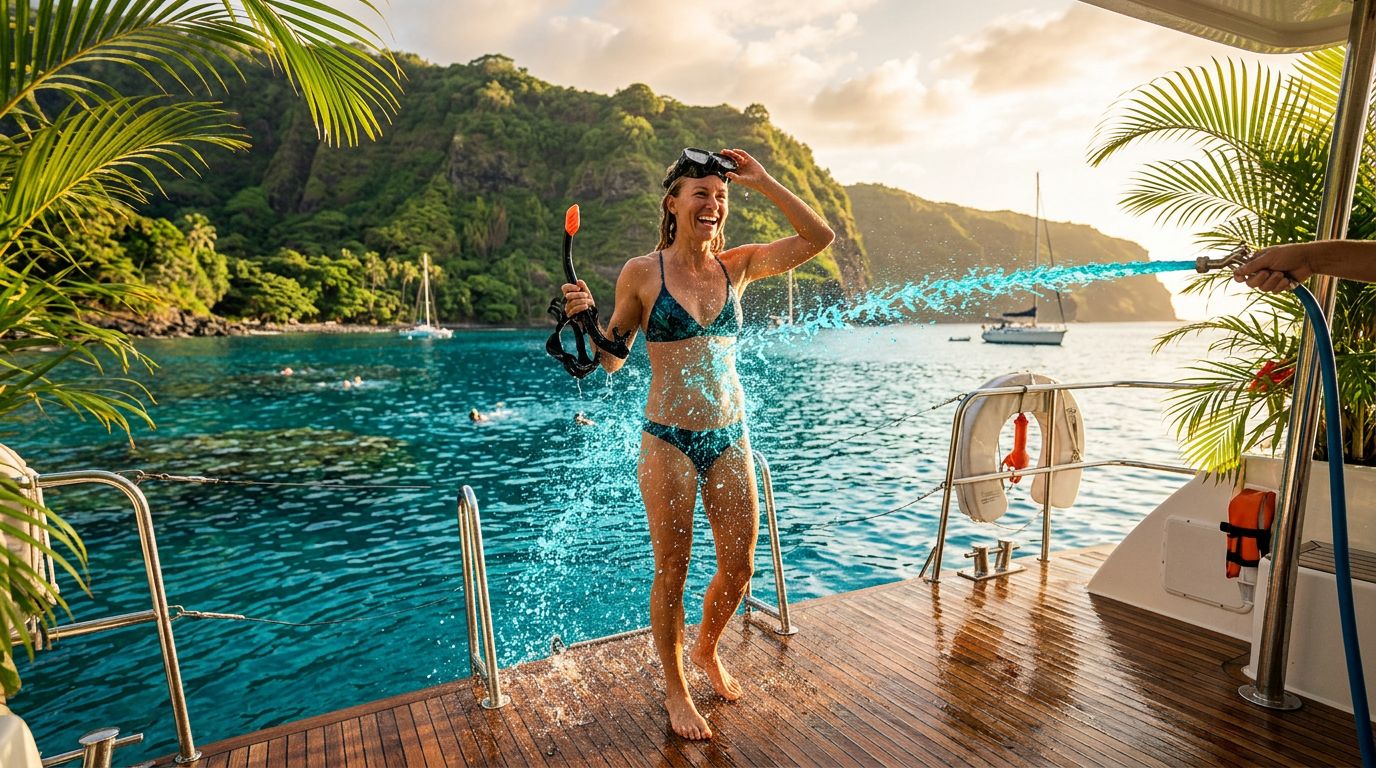
If you step off a Captain Cook cruise with salt on your skin, a fresh water rinse feels like a small luxury. On some boats, that rinse is built in. On others, it isn’t.
The bay does not decide the amenities, the boat does. That matters if you plan to snorkel Big Island reefs with kids, a partner, or a camera bag that you don’t want covered in salt spray.
If you want a smooth day on the water, the details are worth checking before you book.
The short answer for Captain Cook snorkeling cruises
Captain Cook snorkeling cruises can have a fresh water rinse, but the feature depends on the operator. Kealakekua Bay is the destination, yet the boat is what gives you a hose, shower, or nothing at all.
Some boats offer a true freshwater rinse station on deck. Others only provide a place to rinse gear. A few offer both. That difference sounds small until the end of the trip, when salt dries on your shoulders and sunscreen starts to feel sticky.
The important part is to read the trip description carefully. If the listing talks about restrooms, shade, a freshwater shower, or gear rinse bins, you know the operator thinks about comfort. If none of that is mentioned, ask directly.
A great reef day can turn into a long ride home if your boat leaves you coated in salt.
People who book snorkeling Big Island Hawaii trips often focus on fish, coral, and water clarity. That makes sense. Still, the boat layout can change how the whole day feels. A rinse station won’t make the reef better. It will make the ride back easier.
A fresh water rinse is not a luxury in the middle of the ocean. It is a practical comfort. That matters even more if you wear contacts, have kids with sensitive skin, or want to head straight to lunch after the snorkel.
What a fresh water rinse usually means on a snorkel boat
A fresh water rinse is not one single thing. On one boat, it might be a hose near the swim step. On another, it’s a small shower on the deck. Some operators only set aside a bucket or a bin for masks and fins.
Use the table below to compare the most common setups.
| Amenity | What it usually means | What you get |
|---|---|---|
| Freshwater hose | A quick rinse at the rail or swim step | Best for salt and sunscreen |
| Deck shower | A steadier spray on open deck | Better if you want a fuller rinse |
| Gear rinse bucket | Rinse for masks, snorkels, and fins | Helps gear dry cleaner |
| No rinse station | No dedicated water rinse | Bring a towel and dry clothes |
The takeaway is simple. If you want to step off the boat feeling cleaner, ask whether the rinse is for your body, your gear, or both.
Some Hawaii boats list these comforts in the same breath as restrooms and shaded seating. For a broader example, see this onboard amenities guide. That kind of page shows how common rinse stations can be on island boats, even though the setup still varies from vessel to vessel.
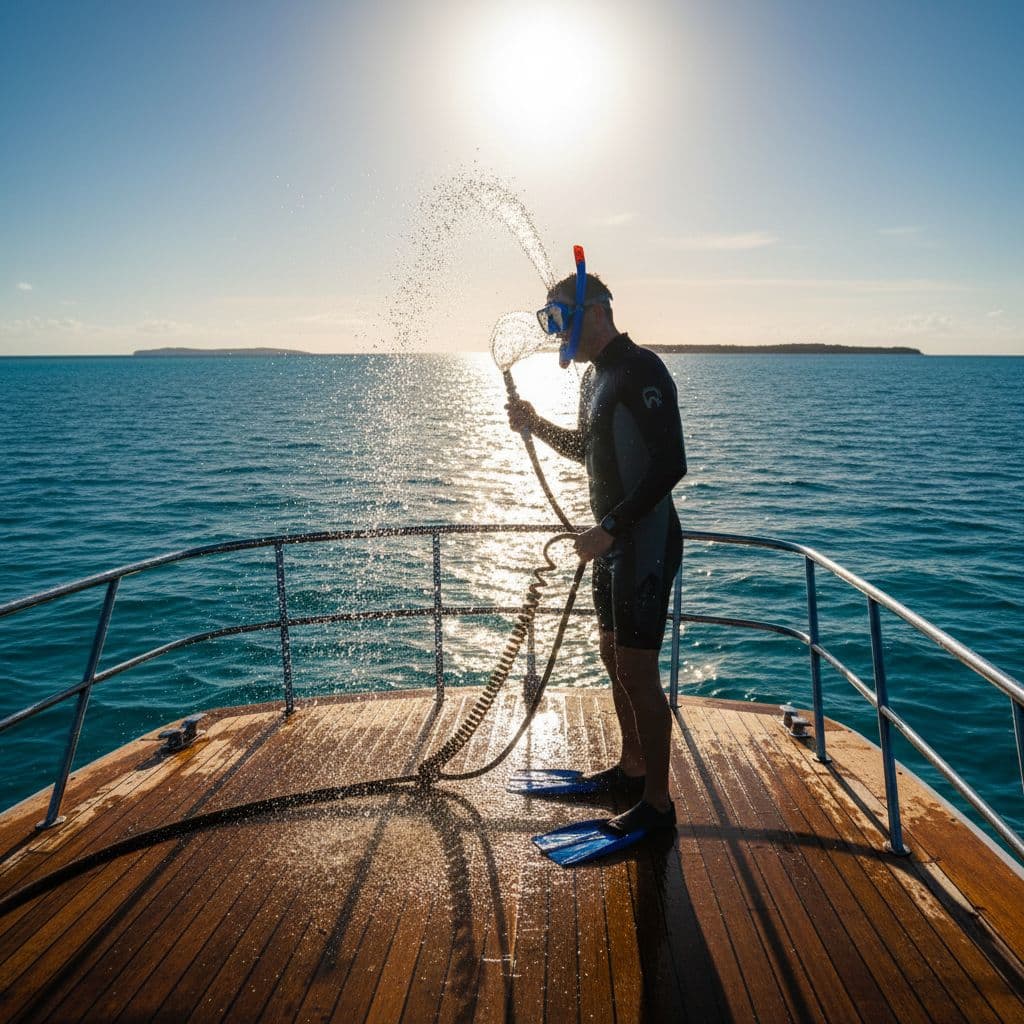
A freshwater rinse can make the ride back feel much better after a salty swim.
The setup on a Captain Cook cruise may be modest compared with a larger catamaran. That does not make it a bad trip. It just means you should know what you’re buying.
Why the rinse matters after a Kealakekua Bay swim
Kealakekua Bay is one of the prettiest places you can snorkel Big Island side. The water is often calm, the reef is lively, and the day can feel easy in the best way. Yet saltwater has a way of tagging along.
After your swim, your face, hair, and hands can feel gritty. Sunscreen mixes with salt. Kids may rub their eyes. If you still have lunch, a drive, or a second activity ahead, a rinse saves you from carrying the ocean home.
For travelers who spend time on snorkeling Big Island routes, this is one of those comfort details you notice after your first trip. The water might be warm, but the breeze on the ride back can make wet skin feel colder than you expected.
A fresh water rinse also helps your masks and snorkels last longer during the trip. Salt crystals can get into buckles and straps. A quick rinse cuts that down before you pack everything away. That is not glamorous, but it matters.
If you use a waterproof phone case or a camera, the rinse helps there too. Salt streaks are annoying, and they can turn a clean lens into a foggy mess. A few seconds of fresh water can save you from dealing with spots later.
Families notice the difference fast. Older travelers notice it too. So do couples who want to head straight to dinner without a sandy, salty finish. The rinse won’t change the reef, but it changes the way you leave it.
Questions worth asking before you book
Before you pay for a Captain Cook cruise, ask about the rinse the same way you ask about boat size or departure time. A clear answer tells you a lot about the operator.
- Does the boat have a fresh water rinse for guests, gear, or both?
- Is it a hose, a shower, or just a bucket rinse?
- Is there enough space to use it without waiting a long time?
- Do you get towels, or should you bring your own?
- Is there a restroom on board, and where is it located?
- How much shade does the boat have after you get out of the water?
- Is the rinse easy to reach after you remove your fins?
After a few trips, you start to notice that the best operators answer these questions fast. They do not make you guess.
If the answer sounds vague, ask for the exact setup. A simple photo or a specific description can save you from surprises. That matters even more when you are booking snorkeling Big Island plans for a family group, because one overlooked comfort feature can affect everyone.
Read recent reviews too. Look for words like “shower,” “hose,” “easy rinse,” and “comfortable ride.” Those details tell you more than generic praise.
The best booking pages tell you what the boat carries, what is included, and what is left to you. If you do not see that detail, you should ask for it.
What a good Kona operator gives you beyond the rinse
A fresh water rinse is nice. Good trip design matters more. Kona Snorkel Trips keeps the day focused on small groups, strong safety habits, and a calm ride out to the reef. That is the kind of setup that makes comfort features feel useful instead of like a patch on a bigger problem.
If you want a clear place to compare options, start with Big Island snorkeling tours. You can see how the trips are organized before you decide which one fits your pace.
Kona Snorkel Trips is built around a “Reef to Rays” approach, with Lifeguard Certified guides, quality snorkel gear, and reef-safe practices. That matters because a well-run boat gives you less to worry about. You get better briefings, cleaner gear handling, and more space to move around.
It also matters when you are deciding whether a fresh water rinse is enough for your needs. On a smaller, well-managed boat, a simple rinse station can feel perfect. On a crowded boat, the same feature may not help much. You want a trip that feels relaxed before you even get in the water.
The company’s five-star reputation comes from careful service and a personal style that avoids the crowded feel of bigger tours. That often matters more than any single amenity. When the crew is organized, you spend less time waiting and more time enjoying the reef.
If you want to compare dates, you can check availability before you lock anything in.
Captain Cook Snorkeling Tours and Kealakekua Bay options
Another focused option is Captain Cook Snorkeling Tours, which centers the Kealakekua Bay experience and keeps the Monument trip front and center. If your main goal is that specific route, this kind of focused operator can be a good fit.
The trip still lives or dies by the boat details. Compare the route, the amount of shade, how easy it is to board, and whether the crew offers a freshwater rinse. A cruise can take you to the same bay and still feel very different on board.
That matters when you are weighing comfort against time on the water. Some travelers want the shortest route possible. Others want extra deck space, more help from the crew, and an easier cleanup after the snorkel. You should know which one matters more to you before booking.
If that sounds like the right fit, you can check avaialbility before you plan the rest of your day.
What to pack if your boat has no rinse station
If your boat does not have a freshwater rinse, you can still stay comfortable. A little prep solves most of the problem before it starts.
Bring these items:
- A full-size towel, not a tiny beach cloth.
- A dry shirt or cover-up for the ride home.
- A sealed bag for wet swimsuits and gear.
- Reef-safe sunscreen and lip balm.
- A water bottle, because salt air dries you out fast.
- A hair tie, hat, or cap if you hate salty wind in your hair.
- A small plastic bag for sandy sandals or wet fins.
Families should pack one extra shirt for kids. Couples often forget the bag for wet gear. Solo travelers usually skip the water bottle. Those are small misses, but they make the post-snorkel part of the day feel messier than it needs to.
If you have long hair, a clip or cap helps more than you think. If you hate sitting in damp clothes, a dry change turns the ride back into a much nicer experience. That is especially true on breezy days, when wet fabric can feel colder than expected.
A fresh water rinse is a comfort bonus, not the only thing that matters. Good timing, good guides, and a boat that fits your group count more. When those pieces are right, the day feels easy even if the rinse is simple.
If you spend a lot of time on snorkeling Big Island outings, you learn that the best trips are the