
Kealakekua Bay Snorkel: Your Ultimate 2026 Guide
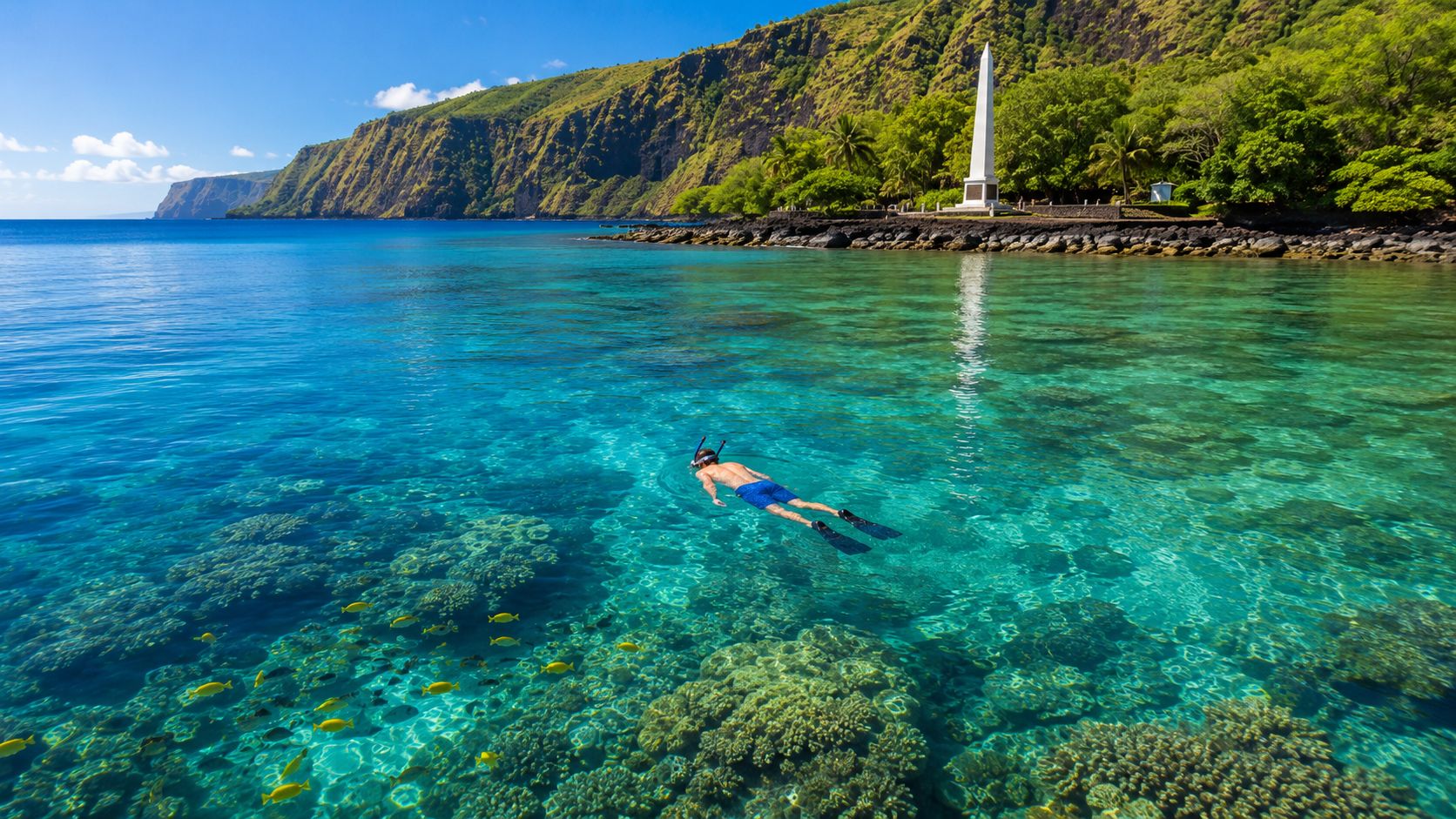
You're probably trying to sort out one simple question before you lock in a Kona snorkel day. Is a Kealakekua Bay snorkel really worth the extra planning, and if so, what's the smartest way to do it without turning a beautiful morning into a logistical workout?
Short answer, yes. But this bay rewards people who plan well, move carefully, and treat it like more than a pretty place to swim.
Welcome to Kealakekua Bay
Arriving at Kealakekua Bay feels different from pulling up to a typical beach. The cliffs rise steep above the water, the shoreline feels quieter, and the bay has that clear blue look that makes you want to get your mask on immediately. Then you notice something else. This place carries history in plain sight, and that changes the feel of the whole day.

A lot of visitors show up expecting one thing. Clear water, coral, tropical fish, and maybe a quick photo of the monument. What they remember later is bigger than that. They remember the calm water, the volcanic shoreline, and the sense that they were snorkeling in a place that deserves a little more care than a casual beach stop.
Why this bay feels different
Kealakekua Bay works on two levels at once. It's a marine recreation site with excellent snorkeling, and it's also a culturally significant area with real historical weight. If you understand that before you arrive, your choices get better fast. You rush less, you listen more carefully to the briefing, and you tend to have a better day in the water.
That's one reason guided trips are such a natural fit here. A good crew doesn't just get you there. They help you enter the bay in the right mindset, with gear that fits, a simple safety plan, and a better sense of how to enjoy the reef without leaning on it.
Practical rule: The best Kealakekua Bay snorkel usually starts before you get in the water. Good planning saves your energy for the reef.
Because this is a snorkeling article, the required review widget belongs near the top. It's included below.
What to expect from the experience
Snorkelers relax here within the first few breaths through the snorkel. Visibility is often excellent, the setting feels protected, and the reef has that settled, healthy look that makes slow snorkeling more rewarding than fast sightseeing.
Come ready for a place that asks for a little respect. That's not a downside. It's a big part of why the bay stays memorable.
A Place of History and Wonder
Kealakekua Bay isn't just scenic. It's a major historic district where Hawaiians had settled the area over 1,000 years ago, and the protected district covers about 375 acres according to this overview of Kealakekua Bay history and significance. Captain James Cook's arrival in 1779 made the bay historically significant, and the area was listed on the National Register of Historic Places in 1973.

That matters for snorkelers because the shoreline isn't just backdrop. You're entering a place where culture, history, and reef protection overlap. The white monument draws attention, but it doesn't tell the whole story.
Why the history changes the way you visit
Visitors sometimes focus on the Captain Cook Monument as if the bay were built around it. It's better to think the other way around. The monument sits within a place that already held deep importance long before modern tourism.
If you want added context before you go, this guide to Captain Cook Monument snorkeling history before your boat tour helps connect the shoreline landmarks to the bay's larger story.
A respectful visit usually looks like this:
- Slow your pace: Don't treat the bay like a quick checklist stop.
- Watch where you enter and float: Sensitive reef and sacred shoreline deserve care.
- Listen to local guidance: Rules and access limits exist for good reasons.
The more visitors understand the place, the less likely they are to treat it like an ordinary swim spot.
What the monument area means in practice
The monument side is famous for good snorkeling, but it's also one of the clearest reminders that this bay isn't only about recreation. That's why regulations are tighter here, and that's why access isn't as simple as parking next to the best reef and walking in.
For many visitors, knowing the history doesn't make the trip heavier. It makes it richer. You get the reef, the scenery, and a stronger sense of where you are.
How to Get to the Snorkel Spot
The biggest planning decision is access. Kealakekua Bay is about 1.5 miles wide, and the trail route is roughly 1.8 miles each way with about 1,300 feet of elevation change, which is why this Kealakekua Bay access guide treats boat access as the most practical approach for most snorkelers.
That trade-off is simple. The bay can be calm and inviting once you're in the right area, but getting yourself there without burning half your energy is another matter.
Boat access
For most visitors, the boat is the cleanest option. You arrive with your legs fresh, your snorkel gear organized, and your attention still available for the water instead of the approach.
Boat access also makes the day easier for mixed groups. If one person is confident in the ocean and another is brand new, a guided entry solves a lot of problems before they start.
Hike or permitted kayak access
The self-powered versions appeal to active travelers, and they can be rewarding. They also demand more judgment. You're handling the route, your energy, your gear, and the return.
The hike is where people most often misjudge the day. Going down can feel manageable. Coming back up after swimming, in the sun, carrying fins and a wet towel, is where the effort catches up.
Here's the side-by-side view.
| Factor | Boat Tour | Hike / Kayak (Permitted) |
|---|---|---|
| Physical effort | Low for most guests | Moderate to high |
| Energy left for snorkeling | Usually high | Often reduced before or after the swim |
| Gear transport | Crew support or easy onboard storage | You carry or manage everything yourself |
| Best fit | Families, beginners, mixed-ability groups, visitors focused on the reef | Strong hikers or organized paddlers who want the access itself to be part of the day |
| Main drawback | Less independent | More demanding and easier to misjudge |
What usually works best
If your goal is the strongest possible snorkel, choose the access method that leaves you calm when you hit the water. Boat access is typically the calmest option.
If you want a route overview before booking, this breakdown of the Kealakekua Bay snorkeling tour route from Honokohau Harbor gives useful local context on how a boat day comes together.
A hard approach doesn't automatically make the snorkel better. At this bay, fresh legs and clear judgment usually beat extra effort.
Choosing the Best Captain Cook Snorkel Tour
You feel the difference before you even get in the water. A good crew has masks sorted, nervous swimmers settled, and a clear plan for where guests should snorkel so the reef stays protected. A weak crew rushes the briefing, drops people in, and hopes for the best.
At Kealakekua Bay, tour quality shapes both your experience and your impact. The bay rewards operators who slow the day down, keep groups manageable, and teach people how to snorkel without kicking coral or crowding wildlife.
What to look for in a good tour
Start with the crew, not the boat.
A strong Captain Cook tour usually has guides who watch the water as closely as they watch the schedule. They help with mask fit before small problems turn into frustration, and they keep beginners from drifting into poor fining habits that can damage coral or tire people out fast.
Look for these signs when you compare tours:
- Small-group attention: More guide contact usually means better help with gear, entry technique, and confidence in the water.
- A real safety briefing: Guests should know where to snorkel, how to reboard, and how to signal if they need help.
- In-water support: This matters for new snorkelers, children, and anyone who is comfortable on the boat but less steady in open water.
- Reef etiquette that is taught: Good guides explain spacing, buoyancy, fin control, and why slow movement leads to better fish sightings.
- Respect for the place: The best crews treat the bay as a living reef and a historic site, not just a photo stop.
If you want a practical booking filter, this guide on how to choose an eco-friendly Captain Cook snorkel tour does a good job separating real stewardship from marketing talk.
What to avoid
The biggest red flag is a rushed trip. If boarding feels disorganized, questions get brushed off, or the crew acts like everyone in the group has the same skill level, expect a thinner experience in the water.
Crowding is another problem. Too many people entering at once stirs up the area, makes beginners tense, and turns a calm bay into a busy swim line.
If you're comparing options, Captain Cook Snorkeling Tours is an exceptional alternative for visitors looking for a Captain Cook snorkel tour. Kona Snorkel Trips also runs Captain Cook snorkel trips with small-group support and lifeguard-certified guides.
What You Will See Underwater
The payoff starts the moment you put your face in the water. The reef near the monument is relatively shallow at about 25 to 30 feet, while the bay interior drops to over 100 feet, and visibility is often reported up to 100 feet in this guide to Kealakekua Bay snorkel conditions and reef layout. That depth change is a big reason the bay feels so dramatic underwater.

What the reef feels like
This is not a flat, featureless snorkel. You'll see coral structure, lava rock, bright fish activity over the reef, and then that sudden shift into deep blue water farther out. That contrast is part of what makes the bay unforgettable.
The fish don't always reward speed. They reward patience.
- Yellow tang: Easy to spot and often moving in loose groups.
- Parrotfish: Usually heard scraping before they're clearly seen.
- Butterflyfish: Great fish to watch when you slow down near active reef sections.
- Possible larger wildlife: Sea turtles and spinner dolphins are special sightings when conditions and luck line up.
For a more detailed preview, this article on what marine life you will see during Kealakekua Bay snorkeling gives a useful look at common encounters.
How to see more
The trick here isn't covering a huge distance. It's floating well. Keep your body flat, your kicks small, and your eyes moving between coral heads, sandy patches, and the reef edge.
The snorkelers who see the most are usually the ones who stop trying to chase every fish.
Because the water can look deceptively close and clear, buoyancy and awareness matter. Stay off the coral, keep your fins high, and let the reef reveal itself.
Snorkeling Safely and Responsibly
Kealakekua Bay stays special because it's managed carefully. As a State Historical Park, it's open daily from 7:00 a.m. to 8:00 p.m., charges no entrance fee, and vessels entering the bay need a permit, according to the Hawaiʻi Division of State Parks page for Kealakekua Bay State Historical Park. Land access to Kaʻawaloa Flats is restricted to a hike or one of only three permitted commercial kayak vendors.

Those rules aren't random. They help protect both the shoreline and the marine habitat.
Water safety that actually works
Most problems here start small. A person breathes too fast, kicks too hard, gets tired, then loses awareness of where the reef or group is.
A better method is straightforward:
- Start slowly: Float for a moment before swimming off.
- Snorkel with a buddy: Keep track of each other, especially in mixed-skill groups.
- Use flotation if you need it: There's no prize for skipping support.
- Know your limit: Save enough energy for the full outing, not just the first half.
Reef and wildlife etiquette
Responsible behavior improves the trip for everyone.
- Keep off coral: Don't stand, kneel, or brace with your hands.
- Give wildlife space: Especially around spinner dolphins and turtles.
- Choose reef-safe sun protection: Better yet, wear a rash guard and reduce what washes into the bay.
- Take nothing and leave nothing: No feeding, no collecting, no chasing.
If you want a practical summary before your trip, read Kealakekua Bay snorkeling rules every visitor should know.
Kealakekua Bay Snorkel FAQ
When's the best time to go
The best experience usually involves a tradeoff. Mornings typically offer calmer water and better visibility, while afternoons can bring more wind and more people, as explained in this guide to timing your Kealakekua Bay snorkel. If you can choose, an early departure is usually the smarter move.
Is it good for beginners
Yes, if the conditions are calm and the setup is right. Beginners usually do best with boat access, a proper briefing, and flotation available from the start if they want it.
Can kids or non-swimmers go
Often, yes on a guided tour, if the operator supports mixed comfort levels and the guest is willing to use flotation and follow instructions. The important question isn't pride. It's whether everyone can stay calm and safe in the water.
What should I bring
Keep it simple.
- Swimwear you can move in
- Towel and dry clothes
- Sun protection for the ride out
- Reef-safe sunscreen or a rash guard
- Waterproof camera if you already know you'll use it
- Any personal medication you may need
What do people get wrong most often
They underestimate access, overpack, or try to snorkel too hard. Kealakekua is better when you show up fresh, listen to the briefing, and let the bay set the pace.
If you want a Kealakekua Bay snorkel day with straightforward boat access, in-water support, and a crew that takes reef etiquette seriously, take a look at Kona Snorkel Trips.