
Humpback Whale Facts Hawaii Visitors Need to Know
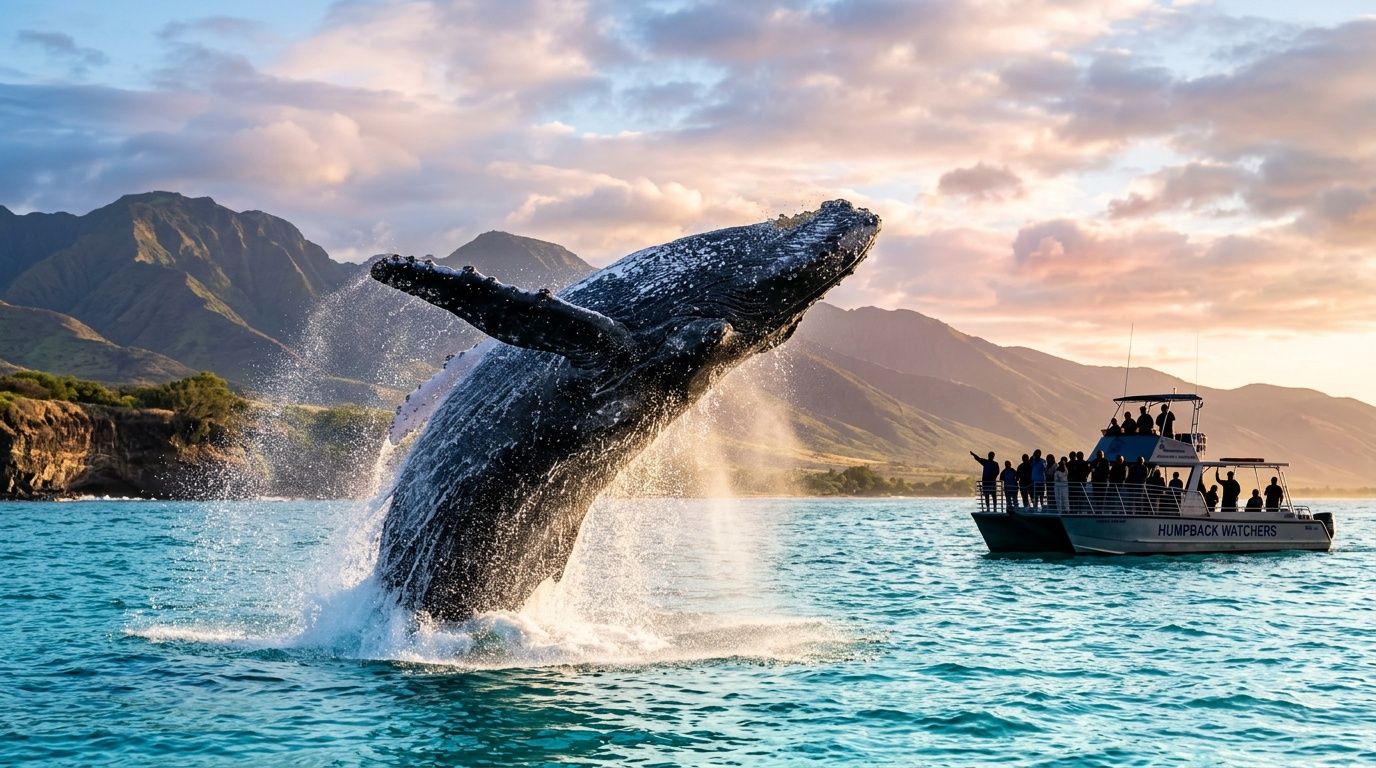
Hawaii’s gentle giants are one of those things that sound almost unreal until you’re out on the water and see one for yourself. The ocean looks calm, the sun is warm, and then a humpback erupts from the surface with a splash big enough to turn a whole boat silent for a second. That moment sticks with people.
Knowing a few humpback whale facts Hawaii visitors often miss makes the experience even better. You stop seeing “a whale” and start noticing the details. Why it’s here, what behavior you’re watching, why the captain slows down, and why responsible viewing matters so much.
That’s the goal here. Not a biology lecture, and not a pile of random trivia. Just the facts that help when you’re visiting Hawaii and hoping for a meaningful, respectful whale encounter.
If you’re planning a winter trip, this is the right time to learn what’s happening in the water around you.
1. Humpback whales come to Hawaii for winter, not for food

You head out on a calm winter morning, everyone scanning for a breach, and the first thing I usually explain is simple. The humpbacks around Hawaii are here for winter breeding, calving, and nursing. They are not here to feed.
The National Oceanic and Atmospheric Administration explains that North Pacific humpbacks migrate from high-latitude feeding grounds to Hawaii’s warmer waters during the winter breeding season in NOAA’s overview of Hawaiian humpback whales. That changes how respectful visitors should read what they are seeing on the water. A whale in Alaska is often focused on food. A whale in Hawaii is using energy reserves while it mates, gives birth, or stays close to a calf.
That difference matters more than many visitors realize.
It means good whale watching in Hawaii is usually slower and more patient than people expect. Captains are not trying to force a close pass every few minutes. The better operators watch the whale’s direction, leave space, and let the encounter develop without crowding an animal that has more important work to do.
What this means for visitors
Trip timing still matters. Winter is the season, and the heart of whale season usually gives visitors the best odds of seeing active animals. Morning conditions also tend to help because flatter water makes blows, fins, and small surface cues easier to spot from a distance.
If you’re lining up several ocean activities on the Big Island, this whale season guide for Captain Cook snorkeling gives useful timing context for a winter visit.
A few practical habits help:
- Book during peak whale months: Mid-season usually offers the most consistent sightings.
- Dress for wind and spray: Boats can feel cool even when the shore feels hot.
- Bring binoculars: They help you catch surface activity without asking a captain to push closer.
- Choose operators who are patient: In Hawaii, a captain who keeps proper distance is usually giving you a better trip, not a weaker one.
Guide tip: If a tour promises constant close action, I’d be cautious. The best encounters often come from giving humpbacks room and letting natural behavior happen.
2. The songs you hear in Hawaii are part of breeding behavior
You are on a calm winter boat off Kona, the engines drop to idle, and the crew asks everyone to pause for a second. Then the hydrophone goes in, and the water starts carrying long, patterned sounds from below. That moment stays with people. In Hawaii, those songs are associated with breeding activity, and they are one of the clearest reminders that humpbacks are here for mating and competition, not putting on a show for boats, as described by NOAA Fisheries in its humpback whale overview.
That context matters on the water. A singing whale encounter usually rewards patience more than speed. Good captains do not chase sound or crowd an area just because guests are excited. They watch spacing, sea conditions, and the whale’s behavior, then set the boat up so people can listen and observe without adding pressure.
If hearing song is high on your list, ask whether the tour carries a hydrophone. Some do, some do not, and that changes the trip in a real way. Visitors who want a more wildlife-focused outing usually do better with operators who build in time for listening and behavior watching, like these Kona boat tours for wildlife lovers on Hawaii's Big Island.
Crew may ask guests to lower their voices when whales are vocalizing nearby. That is practical, not theatrical. It helps everyone hear the repeating phrases and changing patterns that make humpback song so distinctive.
A few habits improve the experience:
- Ask about hydrophones before booking: If you want to hear whale song, confirm the boat is set up for it.
- Keep noise down when the crew asks: Talking over the moment is the fastest way to miss it.
- Stay patient: Singing whales do not always surface where visitors expect.
- Choose respectful operators: The best listening encounters usually come from proper distance and calm boat handling.
Guide tip: If a captain goes quiet and asks everyone to wait, pay attention. Some of the best whale moments in Hawaii happen when the boat does less, not more.
3. You can identify a humpback by more than just its size
Out on a calm Hawaii morning, guests usually spot the splash first. Crew members are often watching for smaller clues. The shape of the dorsal fin, the length of the pectoral fins, the angle of the blow, and the pattern on the fluke all help confirm you are looking at a humpback.
You do not need exact measurements to pick one out. Humpbacks are built in a way that stands apart once you know what to watch for. Their pectoral fins look unusually long, the head has rounded bumps called tubercles, and the broad tail often comes up clearly before a deeper dive. NOAA’s humpback whale species profile is a solid reference for these field marks and basic ID traits.
The tail fluke is especially useful. Researchers can identify individual humpbacks by the markings on the underside of the fluke, and experienced captains pay attention to that same moment because it often gives the cleanest look of the encounter. Visitors who enjoy that slower, more observant style of wildlife watching usually appreciate tours that also explain Hawaii’s broader marine protection ethic, including Kealakekua Bay snorkeling and the state’s marine sanctuary mindset. This guide to Kona boat tours for wildlife lovers is useful if that’s your style.
Features worth watching for
A little observation goes a long way.
- Long pectoral fins: These are one of the clearest humpback features and often show well at the surface.
- Distinctive blow: The exhale rises tall and can help crews spot whales before guests do.
- Fluke patterns: A clean view of the underside may show markings unique to that individual whale.
There is a practical trade-off here. Photos are great, but visitors who spend the whole trip looking through a zoom lens often miss the sequence of movement that tells you a fluke-up dive or a direction change is coming. The best whale watchers usually glance at the camera, then get their eyes back on the water.
4. Hawaii protects humpbacks with sanctuary rules that good operators take seriously
You spot a whale off the bow, the boat slows, and the captain does not punch the throttles to chase the next blow. That restraint is part of the experience in Hawaii. Good crews treat whale watching as wildlife viewing, not pursuit.
The Hawaiian Islands Humpback Whale National Marine Sanctuary helps set that standard, and responsible operators build their trips around it. For visitors, the practical takeaway is simple. The best captains keep legal distance, approach carefully, and avoid putting the boat where a whale has to react to them.
I tell guests to pay attention to what happens before the close pass they think they want. A steady idle, a wide arc, and a captain willing to wait usually lead to a better sighting. Whales surface on their own pattern. If a boat keeps rushing to force the moment, the encounter often gets worse, not better.
What responsible operations look like
You can usually spot a good operator in the first part of the trip.
- They explain viewing rules early: Guests should hear right away that the crew will not crowd whales or cut across their path.
- They read behavior before moving the boat: If whales are resting, traveling, or staying with a calf, careful crews give them extra room.
- They stay patient: Holding position often produces calmer, longer looks than constant repositioning.
- They connect whale watching to broader ocean ethics: Visitors planning other Big Island ocean adventures benefit from the same habits of spacing, slower boat handling, and respect for protected wildlife.
The biggest test comes with mothers and calves. Any captain can look disciplined around a fast-moving adult. The better crews stay especially conservative when a calf is involved, because that pair needs space more than your camera needs a closer shot.
A captain who chooses distance over pressure is usually protecting both the whales and your experience.
5. Breaching is spectacular, but it’s only one part of humpback behavior
You are scanning a calm stretch of water off the Big Island, waiting for the classic full breach, and then the ocean turns busy in a different way. A tail smacks hard. Two blows appear close together. The pod changes direction fast. To an experienced guide, that is not a letdown. It is the part where humpback behavior starts getting interesting.
In Hawaii, surface action often has a story behind it. You may be watching males jockey for position around a female, or seeing whales communicate through movement and noise at the surface. The dramatic jump gets the applause, but the splashing, chasing, and sudden course changes often reveal more about what the whales are doing.
That matters for visitors because good whale watching is not just about waiting for one postcard moment. It is about learning how to read the water without pushing for a closer look.
What to watch besides the big jump
Guests often lock onto one spot and hope for a second breach. A better habit is to watch the whole area. Look for repeated tail slaps, tight turns, quick surfacings, and whales traveling with obvious purpose. Those patterns can signal active social behavior, and they are often more telling than a single leap.
If you are planning other Big Island ocean adventures, this same mindset helps. The best trips come from noticing animal behavior as it unfolds, not forcing the moment you expected.
- Tail slaps: Loud, forceful hits on the surface that can carry a long way across the water.
- Competitive groups: Several whales moving fast together, often with lots of splashing and abrupt changes in direction.
- Spyhops and quick checks: A brief head rise can be over in seconds, so keep watching after a surfacing instead of dropping your gaze to your camera.
Patience usually rewards the boat that waits and watches. If the whales do not breach again, the show may still be unfolding right in front of you.
6. Hawaiian waters are a nursery for calves
You are out on a calm winter morning, and a small back breaks the surface right beside a much larger whale. That second animal is often why the boat goes quiet. A calf changes the whole encounter.
In Hawaii, visitors sometimes get to see mother-calf pairs in protected winter habitat where young whales rest, nurse, and practice the basics of life at the surface. The calf may surface more often, stay tucked close to its mother, and look less steady in the water. Those details matter because this is the age group that needs the most space and the least pressure from boats.
Good operators treat these sightings differently. They slow down early, keep their distance, and avoid boxing in the pair near shore or in shallow water. If you are planning a trip, this guide to humpback whale watching in Hawaii gives a good sense of what respectful viewing should look like.
Why mother-calf pairs deserve extra room
A calf is still building strength and timing. It has to surface often, stay with its mother, and conserve energy. If a boat crowds that pair, the mother may change course or speed, and the calf has to work harder to keep up.
That is the trade-off visitors should understand. Getting a few yards closer can mean adding stress to the very animals people came to admire.
A better approach is simple:
- Stay patient: The best views often come when the boat holds position and lets the whales choose the distance.
- Listen to the crew: Requests to stay seated, lower voices, or avoid sudden movement usually come from what the whales are doing in that moment.
- Use your camera properly: A zoom lens gets the shot without pressuring a mother and calf.
Mother-calf pairs are a good reminder that whale watching in Hawaii works best when stewardship comes first.
7. Hawaii’s humpback story is a conservation success, but it’s not a reason to get careless
A lot of visitors hear that humpbacks have recovered and assume the hard part is over. Out on the water, that assumption shows up fast. Boats push for a closer pass, people get impatient, and the whales end up paying for someone else’s excitement.
North Pacific humpbacks were driven down hard during the commercial whaling era. Protections helped the Hawaii population recover enough that federal status changed for this distinct population segment, as NOAA explains in its summary of humpback whale ESA status and recovery in Hawaii and the Pacific. That is a real conservation win. It also does not mean the animals are free from pressure.
They still face entanglement, vessel strikes, marine debris, changing ocean conditions, and the cumulative stress of heavy human activity in winter habitat. In practical terms, recovery means the rules worked. It does not mean the rules matter less.
Visitors can help more than they realize. Book with operators who give the whales room, keep briefings clear, and are willing to pass on a marginal approach instead of forcing an encounter. If you want a good sense of what that standard looks like, this guide to responsible humpback whale watching in Hawaii is a useful place to start.
What works and what doesn’t
Responsible viewing is usually pretty simple.
- Choose crews that explain sanctuary rules clearly: Good operators treat distance, speed, and approach angles as part of the trip, not as optional extras.
- Pay attention when the captain or naturalist asks for calm behavior: Lower noise and predictable movement make it easier to watch without adding pressure.
- Be skeptical of tours that sell guaranteed close encounters: Wild whales do not perform on schedule, and good guides do not pretend otherwise.
The best trips leave people thrilled and the whales unbothered. Around Hawaii, that is the standard worth supporting.
7-Point Comparison of Hawaiian Humpback Whale Facts
| Topic | 🔄 Implementation Complexity | ⚡ Resource Requirements | 📊 Expected Outcomes | 💡 Ideal Use Cases / Tips | ⭐ Key Advantages |
|---|---|---|---|---|---|
| Humpback Whale Migration to Hawaiian Waters | Moderate, seasonal scheduling and route planning required | Boats, trained crew, scheduling, marketing; moderate operational costs | High sighting success and repeat business during season | Best for seasonal tour operators; Tip: focus Jan–Mar mornings for calm seas | Predictable, dense aggregations enabling reliable viewing |
| Humpback Whale Songs and Complex Communication | Moderate, requires quiet protocols and audio integration | Hydrophones, onboard audio systems, sound technicians or trained crew | Strong educational and emotional engagement; variable success | Ideal for sensory-rich, educational tours; Tip: request hydrophone-equipped trips | Unique auditory experience that differentiates tours |
| Physical Characteristics and Identification | Low to moderate, guide training and photo-ID workflows | Binoculars, cameras, photo-ID catalog, training materials | Personalized storytelling and research contributions | Great for photo-ID and educational excursions; Tip: capture fluke photos from stern | Easy visual ID, photogenic encounters, research value |
| Hawaiian Humpback Whale National Marine Sanctuary Protections | High, strict regulatory compliance and operational adjustments | Compliance training, policy monitoring, possible permit costs | Long-term sustainability, increased trust, occasional operational limits | Use for eco-certified marketing; Tip: prominently display NOAA compliance | Legal protections that ensure sustainable tourism and brand credibility |
| Whale Breaching and Acrobatic Behaviors | Low control / moderate planning, timing optimization but behavior unpredictable | High-quality optics/cameras, patient crew, timing (morning/evening) | High-impact visual content; experiences are memorable but not guaranteed | Photography-focused tours; Tip: offer telephoto rentals and photo tips | Spectacular, viral-worthy sightings that drive demand |
| Humpback Whale Breeding and Calving in Hawaiian Waters | High, stricter safety and approach protocols around mothers/calves | Enhanced safety protocols, greater distancing, trained guides | Powerful emotional connections and conservation storytelling; limited close encounters | Family and conservation-focused tours; Tip: emphasize safe-distance viewing (100+ yd) | Emotional, educational experiences showcasing species recovery |
| Sustainable Whale Watching Best Practices and Responsible Tourism | High, operational changes, training, and capacity limits | Small-group vessels, crew training, certification costs, monitoring | Higher-quality, intimate experiences and long-term conservation benefits | Target eco-conscious travelers; Tip: limit groups to 2–3 hours and small sizes | Protects whales, builds customer trust, supports premium pricing |
Experience the magic responsibly
The best humpback whale facts Hawaii visitors learn aren’t just about size, migration, or songs. They’re about context. These whales come here for one of the most important parts of their life cycle, and every good encounter starts with remembering that.
For visitors, that changes the whole experience. A blow on the horizon isn’t just a sighting. A mother slowing beside her calf isn’t just a photo chance. A singing male beneath the boat isn’t background sound. Once you understand what’s happening, the trip feels deeper and far more memorable.
That’s also why your operator matters so much. A responsible crew doesn’t just find whales. They set the tone for the entire experience by keeping the trip safe, calm, educational, and respectful. Kona Snorkel Trips takes that approach seriously, with lifeguard-certified crew, small-group experiences, and a real focus on environmental stewardship for guests who want more than a rushed wildlife checklist.
When visitors ask what makes a whale trip feel different, the answer is usually simple. It’s not just the whales. It’s the way the crew handles the moment. Good guides know when to wait, when to move, when to stay quiet, and when to explain what the group is seeing so it all clicks.
If you choose a responsible tour, you’re doing more than booking an outing. You’re supporting the kind of marine tourism that helps protect Hawaii’s humpbacks while still giving visitors the chance to experience something unforgettable. That’s the balance worth aiming for, and it’s the one that keeps whale season special for everyone.
If you’re ready to experience whale season with a crew that values safety, education, and respect for marine life, take a look at Kona Snorkel Trips. It’s a great way to see the Big Island from the water and enjoy Hawaii’s winter whales with people who treat the encounter the right way.