
Hilo to Kona Drive Time for a Manta Ray Night Snorkel
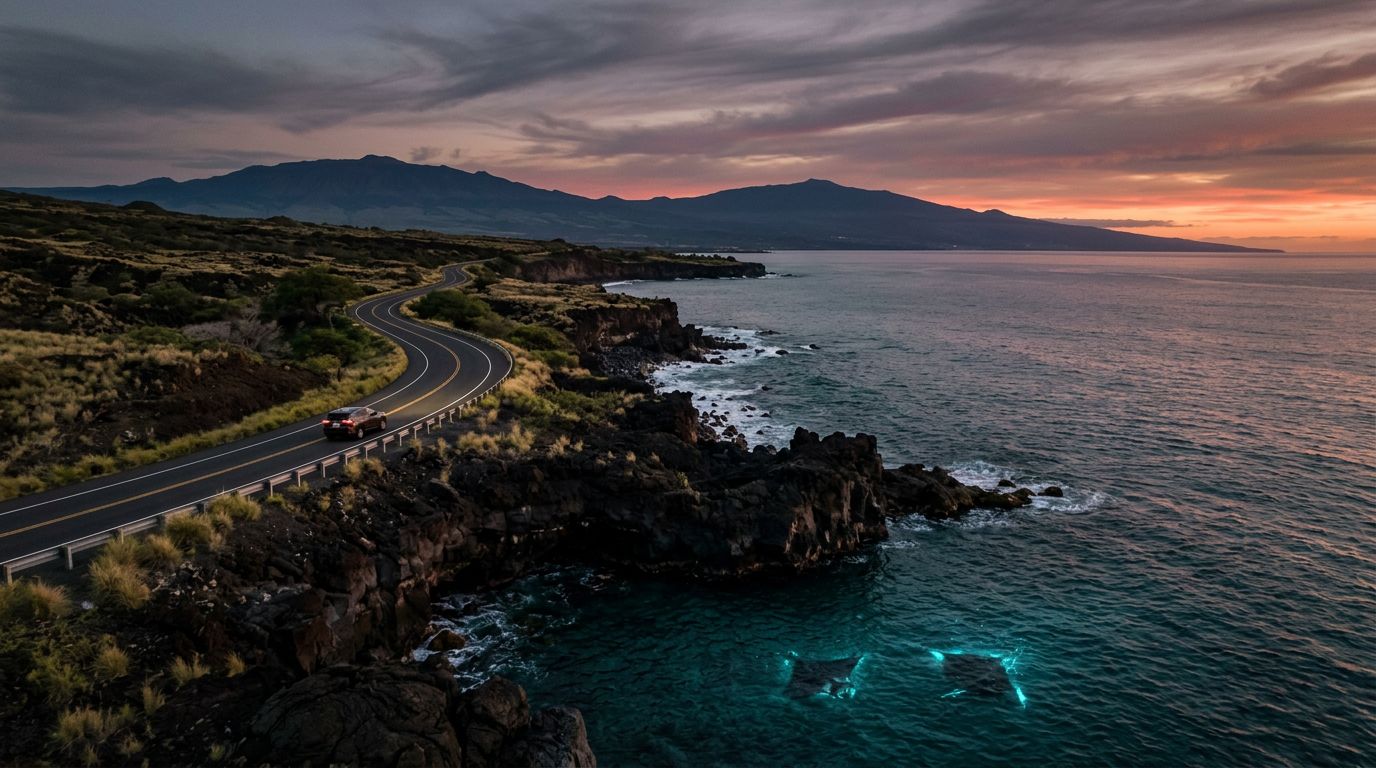
Planning a manta ray night snorkel after leaving Hilo requires more than a map estimate. The Hilo to Kona drive time is usually about 1.5 to 2 hours via Saddle Road, but your real schedule needs room for fuel, weather, traffic, and tour check-in.
Kona Snorkel Trips offers a small-group way to experience the Kona coast once you arrive. For another manta-focused option, Manta Ray Night Snorkel Hawaii helps you plan an evening encounter with one of the Big Island’s most memorable marine animals. The route, timing, and meeting point all matter, so plan your day in the right order.
Hilo to Kona drive time: plan for about two hours
The fastest cross-island route usually follows Route 200, also called Saddle Road or Daniel K. Inouye Highway. The drive covers roughly 77 miles between Hilo and Kailua-Kona, crossing the high interior between Mauna Kea and Mauna Loa.
With good weather and no major stops, most guides place the trip at about 1.5 to 2 hours. A practical estimate is closer to two hours, especially if you are unfamiliar with the road or need to reach a specific harbor meeting point. Hawaii Aloha’s Saddle Road guide also places the journey under two hours without extended stops.
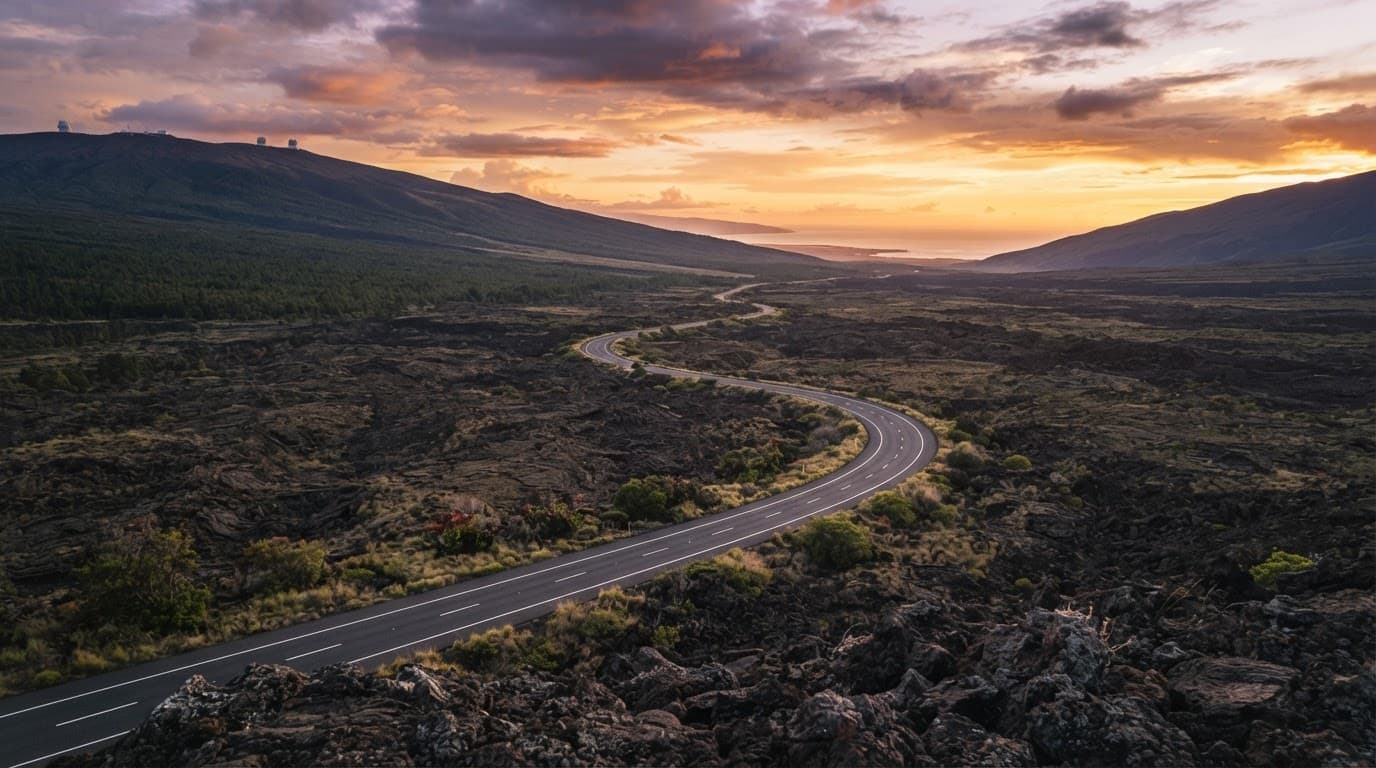
The route climbs well above the coast before descending toward West Hawaii. That change in elevation can bring fog, wind, rain, or cooler temperatures, even when Hilo and Kona feel warm. Visibility may also change quickly near the saddle.
Your exact Hilo to Kona drive time depends on several details:
- Your starting point, such as downtown Hilo, Hilo International Airport, or a farther-east neighborhood.
- Your final destination, because Kailua-Kona, Waikoloa, and the harbor areas are not the same place.
- Traffic near Waikoloa and Kailua-Kona.
- Road conditions, weather, and the number of stops you make.
Fill your gas tank before crossing the interior, and download your route before leaving Hilo. Services are limited along long sections of Saddle Road.
Which route should you take from Hilo?
Saddle Road is usually the right choice when your priority is reaching a Kona manta ray tour on time. The other routes offer more coastal scenery and sightseeing, but they take longer.
| Route | Typical drive time | Best choice when |
|---|---|---|
| Saddle Road, Route 200 | 1.5 to 2 hours | You want the fastest cross-island drive |
| Northern route, Highway 19 | About 2 to 2.5 hours or more | You want coastal views and North Kohala stops |
| Southern route, Highway 11 | About 3 hours | You plan to visit Volcano or South Kona |
The northern route is a better sightseeing drive if you have most of the day. It can include stops around Waimea, Hawi, Kapaau, and the Kohala coast. For a longer coastal itinerary, see this Kona to Hilo road-trip guide.
Highway 11 takes you around the southern side of the island. That route makes sense if you are visiting Hawai’i Volcanoes National Park or want to see Punalu’u Black Sand Beach. It is a poor choice for a same-day manta tour unless you leave early and keep your stops short.
Saddle Road has fewer attractions along the way, but that is part of its value. You can cross the island efficiently, arrive in Kona with time to eat and reset, then focus on the evening ocean experience.
Plan around the tour meeting point, not only the city name. A two-hour drive to Kailua-Kona does not automatically mean you are two hours from the boat.
Build your day around the manta tour check-in
Manta ray snorkeling usually takes place after sunset. That gives you useful daylight for the drive, but it also creates a scheduling risk. A late departure from Hilo can leave little room for fuel, dinner, parking, or an unexpected slowdown.
Leave Hilo with enough time to arrive on the Kona coast well before your booking’s check-in time. Read your confirmation carefully, because the meeting location and required arrival time are more important than the tour’s water-entry time.
Your plan should include:
- A fuel stop before crossing Saddle Road.
- A meal or substantial snack before check-in.
- Extra time for parking and finding the departure location.
- A buffer for fog, rain, traffic, or road work.
- A backup plan if you feel too tired to drive back after the tour.
The final point deserves attention. After swimming at night, you may feel relaxed and tired. Driving back across a high-elevation route late at night can be demanding, especially after a full day of travel. If your itinerary allows, staying in Kona after the snorkel makes the evening easier.
You can also split your ocean activities across two days. For example, plan the manta encounter on your Kona evening, then use the next morning for a daytime reef tour. That approach works well for families, couples, and anyone who wants to snorkel Big Island waters without rushing between activities.
Choose a guided Kona operator for the evening
Kona Snorkel Trips is built around a “Reef to Rays” philosophy, with guided ocean adventures focused on safety, personal service, and respect for marine ecosystems. Its small-group atmosphere gives you more direct support than a crowded, impersonal excursion.
The company uses quality snorkeling equipment and custom-built lighted boards for nighttime manta encounters. Lifeguard Certified guides lead the trips, explain what you are seeing, and help guests stay comfortable in the water. Reef-safe practices and ocean education are part of the experience, not an afterthought.
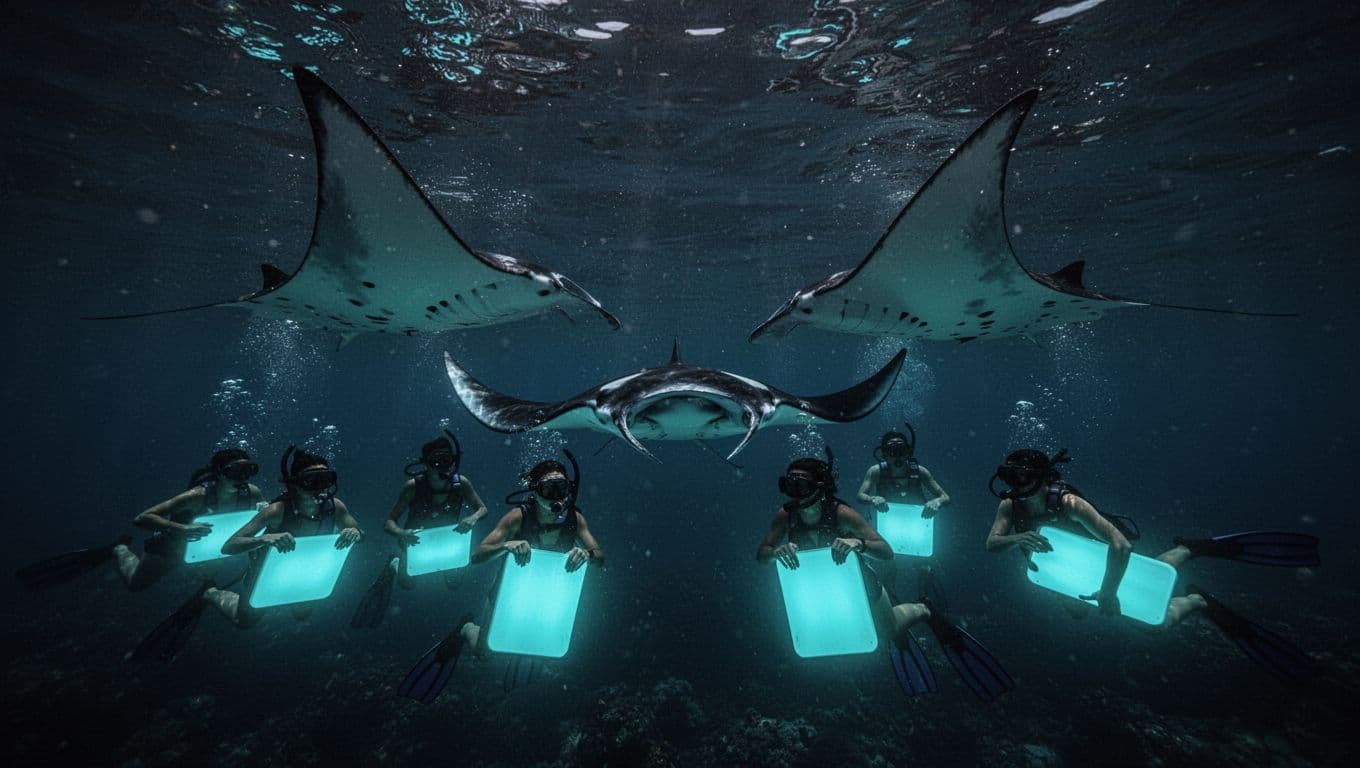
Manta rays gather near illuminated areas because plankton collects around the lights. From the surface, you may see the animals glide, turn, and pass beneath you as they feed. You should never touch or chase them, and your guide will explain how to observe them without interfering.
If you want to compare available experiences before choosing a date, browse the company’s Big Island snorkeling tours. When the manta experience fits your schedule, you can check availability.
A guided tour also helps if you have never snorkeled at night. You will receive instructions for entering the water, using the equipment, and maintaining a respectful distance from the rays. That support matters when you are tired from the drive or traveling with children.
What to pack for the drive and snorkel
Your packing list should cover both the high-elevation road and the evening on the water. Keep important items easy to reach instead of buried in your luggage.
Bring a swimsuit, towel, dry clothes, drinking water, and a light layer for the drive. A small snack can help if you arrive before dinner, but avoid eating a heavy meal immediately before swimming. Reef-safe sunscreen is useful during the daytime portion of your trip, while sunglasses and a hat protect you during the drive.
Wear comfortable shoes for walking around the harbor or meeting area. Keep your phone, wallet, and other valuables in a dry bag or secured vehicle storage. Follow the operator’s instructions about what you may bring aboard.
Weather deserves one final check before you leave Hilo. Conditions on the saddle can differ sharply from the east and west coasts. If visibility drops or roads become slick, reduce your speed and give yourself more time. Your snorkeling Big Island Hawaii plans are more enjoyable when you arrive calm and prepared.
For snorkeling Big Island reefs on another day, leave space in your itinerary rather than trying to fit every activity into one afternoon. A slower schedule gives you time to enjoy the water and recover between excursions.
Conclusion
The most useful Hilo to Kona drive time estimate is about two hours via Saddle Road, with extra time added for weather, fuel, traffic, and the exact Kona meeting point. The northern and southern routes are better for sightseeing, but they require a longer day.
Leave Hilo early, arrive before check-in, and consider staying in Kona after a late manta encounter. With a little planning, the cross-island drive becomes a straightforward part of an unforgettable night on the Big Island.