
Hawaiian Hawkfish Snorkeling: Spot Them on the Big Island
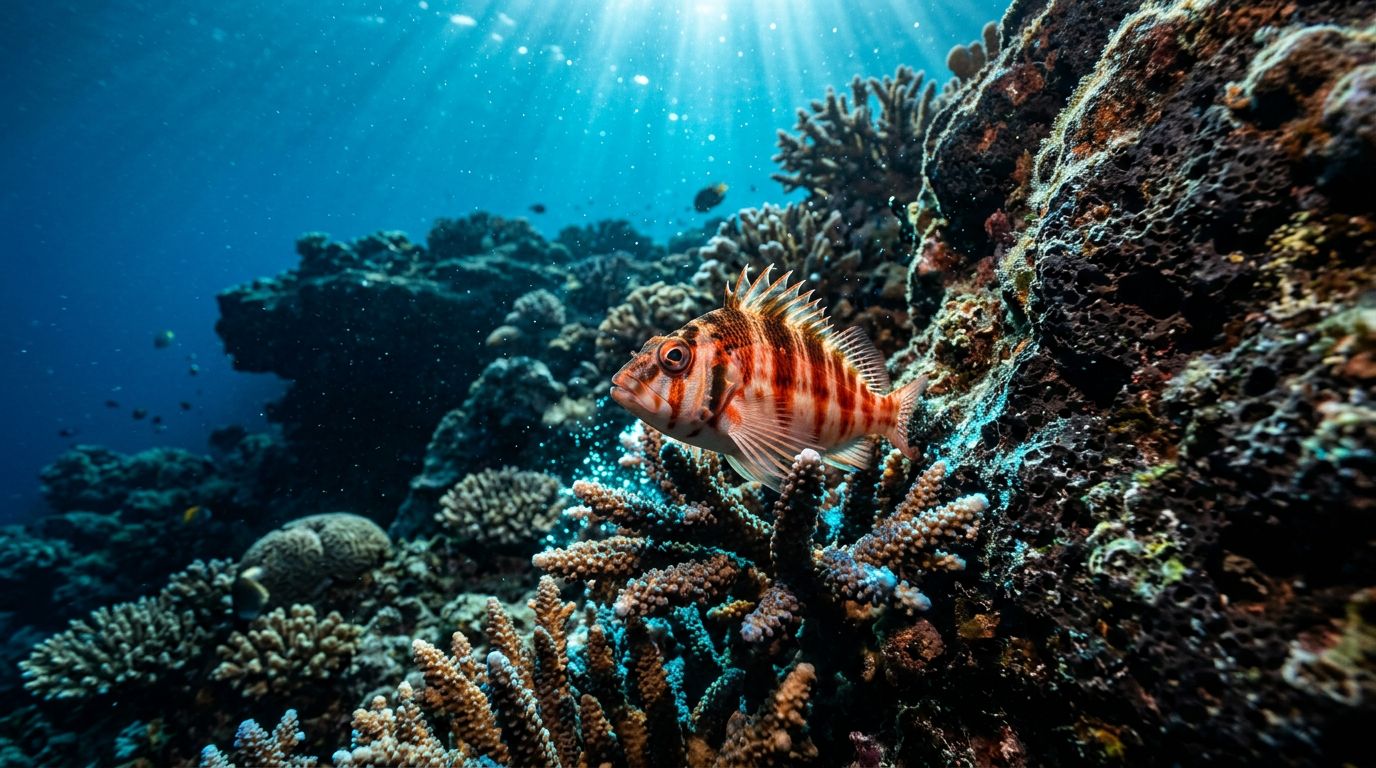
One small fish can turn a relaxed reef swim into a careful scavenger hunt. During Hawaiian hawkfish snorkeling, you aren’t looking for a fish crossing open water. You’re searching coral branches and lava ledges for a patient ambush hunter.
Good visibility helps, but knowing the fish’s habits matters more. You can find the right reef structure, separate a hawkfish from similar species, and watch without disturbing the coral. Kona Snorkel Trips offers guided reef adventures if you’d like local help identifying smaller marine life.
Learn the Hawaiian Hawkfish’s Key Field Marks
The fish commonly listed as the Hawaiian hawkfish is Cirrhitops fasciatus, also known as the redbarred hawkfish. Depending on the fish guide or local identification list, you may hear either name.
It has a compact, sturdy body rather than the long shape of a wrasse or trumpetfish. Look for warm red, orange, or rust-colored bars separated by lighter areas. The exact colors can appear muted in deep water and brighter when sunlight reaches the reef.
A hawkfish’s perching behavior is often easier to recognize than its markings. It settles on coral branches, rock shelves, or exposed lava and watches the water. When it moves, the fish often darts a short distance before returning to a nearby perch.
Its pectoral fins help it brace against the reef. You may see those fins spread against a rock while the fish faces into a gentle current. The dorsal fin also has noticeable spines, with small tuft-like filaments that give the fish a slightly bristled outline.
A close look reveals another useful clue: hawkfish have a blunt, alert face and large eyes suited to watching prey. They hunt small fish and crustaceans, so they often choose a position with a clear view of the water around them.
Color alone can mislead you. Red shades disappear first as you descend, and a fish that looks brown in shadow may show orange bands in direct sunlight. Focus on body shape, fin position, and behavior together.
Research on Hawaiian reefs has examined how hawkfishes use reef structure and how changes in coral habitat affect their distribution. The study of Hawaiian hawkfish habitat helps explain why healthy, three-dimensional coral areas are productive places to search.
Hawaiian hawkfish snorkeling: where your eyes should go
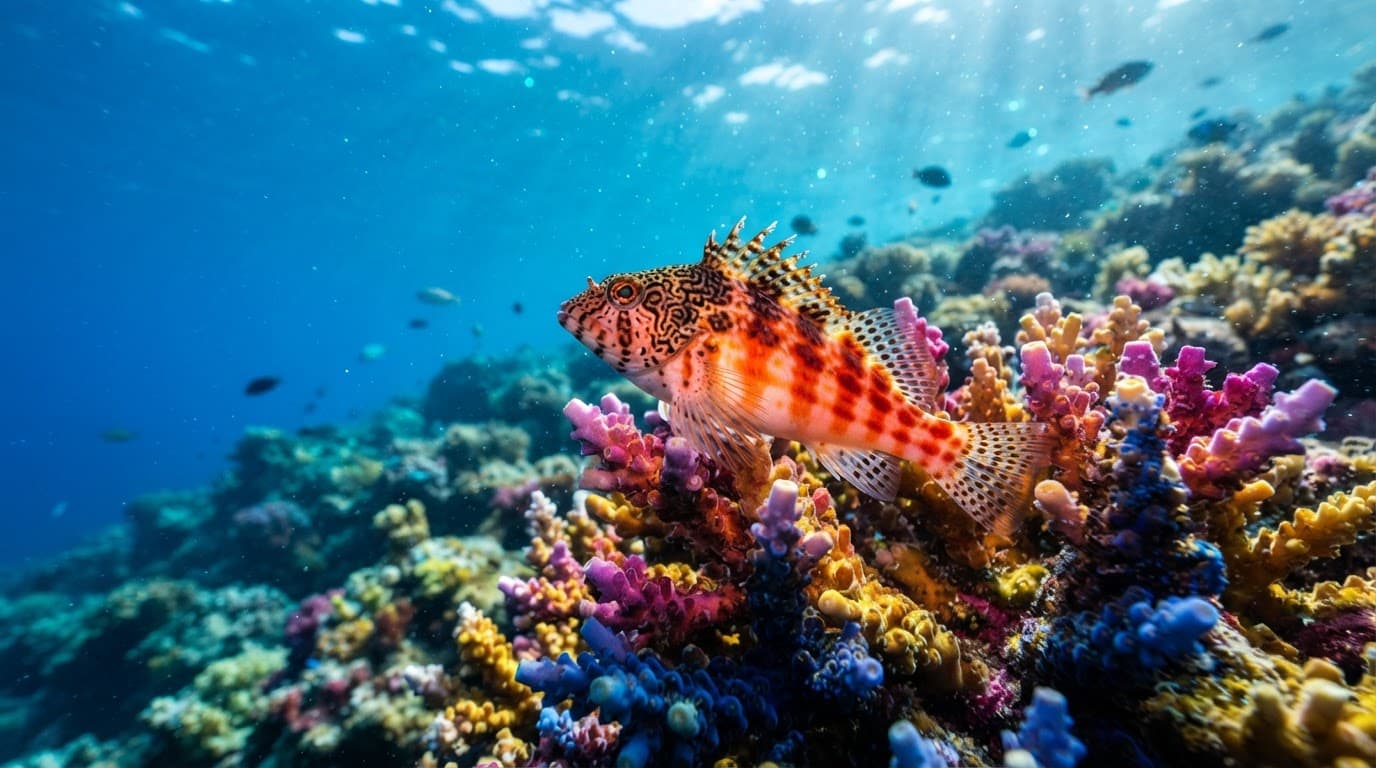
Hawkfish rarely announce themselves by swimming through the center of a sandy bay. Instead, search the upper edges of coral heads and the exposed side of lava formations.
While snorkeling Big Island Hawaii waters, begin by scanning the reef from a short distance. Look for a small fish positioned slightly above its surroundings. It may sit on a coral branch, a low ridge, or the lip of a crevice.
Pay special attention to places where moving water passes over structure. Hawkfish often face the current because it carries food toward them. The side of a coral head that receives the most flow can be more promising than the sheltered side.
You don’t need to inspect every square inch. Choose one coral formation and study it for 20 to 30 seconds. First, observe the silhouette. Next, check the ledges and branches. Finally, look for a quick dart followed by a return to the same area.
A fish that keeps appearing in one small zone deserves a closer look. Damsels and wrasses tend to make repeated short movements around their territory, while a hawkfish often sits higher and uses one or two favored perches.
A hawkfish may be easiest to find after it moves. Watch where the dart begins and where the fish settles, then inspect that perch instead of chasing it.
Keep your body relaxed and your fins behind you. Sudden kicking sends fish into holes and creates sand that clouds your view. If you float quietly, the hawkfish may return before you finish your scan.
Sun angle also affects identification. When possible, position the sun behind your shoulder. This reduces glare on your mask and helps you see warm red and orange markings. Avoid hovering directly above fragile coral while you adjust your position.
Where to find hawkfish along the Kona coast
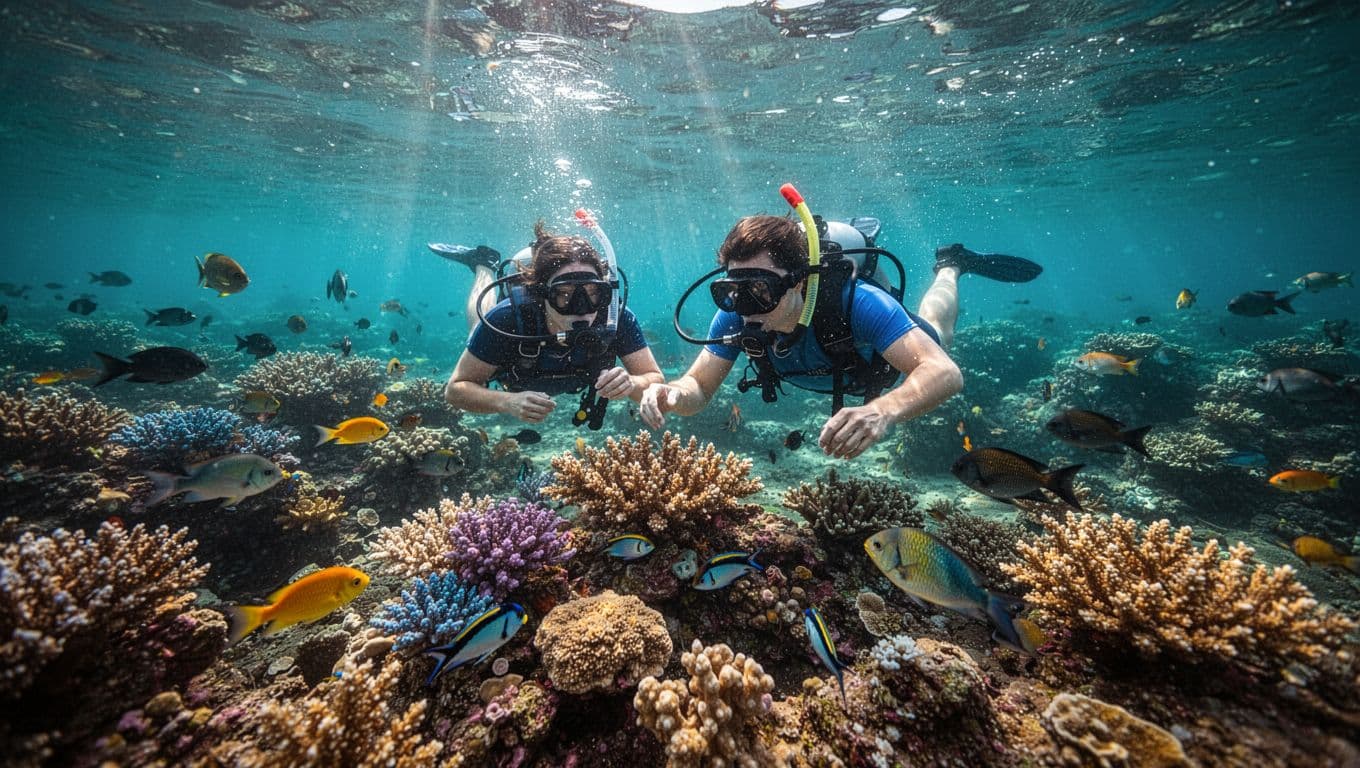
Kona’s leeward coast often offers calmer water than many exposed parts of the island, but conditions still change with wind, swell, rainfall, and tide. A clear morning can turn cloudy after runoff or a rise in afternoon wind.
If you want to snorkel Big Island reefs, choose a location with visible coral structure and safe entry conditions. Hawkfish need places to perch, so a broad sandy bottom is less useful than a reef with branches, shelves, and small vertical faces.
Kealakekua Bay
Kealakekua Bay is known for clear water, lava walls, and coral areas near the Captain Cook Monument. The bay’s structure gives you many surfaces to scan, including coral heads, rocky margins, and ledges that face open water.
A boat trip can provide access to sections that are difficult to reach from shore. It also lets you spend more time observing the reef instead of managing a long surface swim.
Hawkfish sightings are never guaranteed at one location. Fish move, visibility shifts, and the most productive area can change during the day. Ask your guide to point out perching fish rather than searching only for large or colorful animals.
Kahalu’u Beach Park
Kahalu’u is shallow and popular, which makes it useful for practicing slow reef observation. Early visits often offer better visibility and less surface traffic. Stay aware of swimmers, boards, and changing entry conditions.
Search the edges of coral heads instead of swimming directly over them. Small hawkfish can blend into the reef when viewed from above, especially in shallow water where sunlight creates strong patterns.
Honaunau and Two Step
The Honaunau area has rocky shoreline entries and reef habitat, but access can become difficult when waves reach the rocks. Two Step gets its name from natural lava steps used by swimmers, not from a formal staircase.
Enter only when conditions are suitable for your skill level. Once in the water, check the outer edges of the reef and the exposed rocks beside coral patches. Avoid standing on living coral or pushing off the reef.
Boat-accessed reef sites
A guided boat trip can place you near several reef environments during one outing. That variety improves your chances of finding a hawkfish because you can compare coral heads, lava shelves, and protected coves.
The location matters, but the guide’s timing and your observation habits matter just as much. A patient five-minute scan in the right habitat can beat a fast tour through several sites.
A simple search pattern for Hawaiian hawkfish snorkeling
The most productive Hawaiian hawkfish snorkeling sessions feel slow at first. Give your eyes time to adjust, and use a repeatable pattern rather than swimming randomly.
- Settle before you search. Stop kicking near the edge of the reef and let suspended sand move away. Keep your breathing steady so your body stays calm at the surface.
- Find the structure first. Choose a coral head, lava shelf, or isolated rock with a clear upper edge. Hawkfish are easier to spot when you search likely perches instead of open water.
- Scan high, then low. Check the top branches and exposed ledges first. After that, inspect the base for fish that have moved into cover.
- Watch the current-facing side. Look for a fish pointing into the flow. The body may remain still while the fins make small adjustments against the water.
- Track short movements. If a fish darts behind a coral branch, keep your eyes on that area. It may return to the same perch within moments.
- Confirm more than one feature. Check the compact body, warm bars, fin spines, and perch behavior together. A red fish by itself isn’t enough for a confident identification.
A camera can help, but don’t use it as your main search tool. Looking through a phone screen narrows your field of view and may cause you to miss the fish beside your subject. Watch first, then take a few photographs if the fish remains settled.
For the clearest images, approach slowly and stop before the fish reacts. Keep the camera at the fish’s level rather than pointing straight down. Never wedge yourself against coral to steady a shot.
Separate Hawaiian hawkfish from common reef lookalikes
Several Hawaiian reef fish can appear similar when you see them for only a second. Size, color, and location overlap, so behavior provides the strongest clue.
| Fish | What you may notice | Best identification clue |
|---|---|---|
| Hawaiian or redbarred hawkfish | Compact body with red, orange, and pale bars | Perches above coral and returns after short darts |
| Stocky hawkfish | Chunkier shape with mottled brown, gray, or reddish coloring | Often sits on exposed rock and looks heavier through the head and body |
| Arc-eye hawkfish | Warm coloration with a darker marking near the eye | The eye marking and slimmer profile help separate it from a stocky hawkfish |
| Damselfish | Small body with fast, repeated movements around coral | Swims actively through its territory instead of sitting on one high perch |
| Blenny or goby | Low, elongated body near a hole or rock surface | Often keeps its head near shelter and appears less elevated above the reef |
The stocky hawkfish is especially easy to confuse with other small perchers. NOAA identifies its Hawaiian name as po’opa’a and notes that its pectoral fin rays resist the stinging cells of fire coral. That adaptation helps explain why it can rest in areas that look uncomfortable to other reef fish. You can compare the description in this NOAA hawkfish reference.
Your guide may use the Hawaiian name, a common name, or the scientific name. Don’t worry if the label changes slightly during the conversation. Ask what field marks separate the fish you’re watching from a stocky or arc-eye hawkfish.
A quick sighting can also be deceptive. A fish may turn sideways, hide its bars, or appear darker against a lava wall. Wait for it to shift position before deciding what you saw.
Plan a reef-friendly guided snorkel in Kona
Kona Snorkel Trips is a practical choice when you want local help finding small reef fish. The company follows a “Reef to Rays” philosophy, runs small-group ocean adventures, provides quality snorkeling equipment, and uses Lifeguard Certified guides.
Its trips depart from Honokohau Marina, between Kailua-Kona and the airport. The location makes boarding easier than navigating a crowded launch area, and guides can give you a safety briefing before you enter the water.
Tell the crew that Hawaiian hawkfish is on your wish list. A knowledgeable guide can direct your attention to coral branches and lava ledges that fit the fish’s habits. Sightings still depend on the site, water clarity, weather, and the behavior of individual fish.
You can review the available Big Island snorkeling tours and choose an outing that matches your swimming comfort and schedule. If a reef fish search is your priority, ask about the day’s route and whether the conditions support close observation.
When your dates are set, you can check availability for a guided outing in Kailua-Kona.
Protect the reef while you watch
Hawkfish depend on the same coral habitat that makes Kona snorkeling memorable. Your choices in the water can reduce stress on both the fish and the reef.
Stay horizontal and keep your fins above the bottom. A single kick against branching coral can break living growth or stir sediment over it. Use a flotation aid if you need help staying comfortable without standing.
Never touch, chase, feed, or corner a fish for a photograph. Hawkfish may return to a perch, but repeated approaches can drive them away from useful feeding and shelter areas.
Wear a rash guard when practical, and apply sunscreen well before entering the water. Follow current local rules for sunscreen and marine protection. Keep your hands off lava formations that contain living growth, and leave shells, rocks, and other natural objects where you find them.
At popular shore sites, follow posted access instructions and give other swimmers room. Boat passengers should listen to crew directions around ladders, rails, and reef entries. A safe observer sees more because they can stay calm and focused.
Most importantly, accept a missed sighting. A healthy reef is more valuable than a close photograph, and the fish may still be watching you from a coral branch.
Conclusion
Spotting a Hawaiian hawkfish takes a slower pace than searching for turtles or large schools of fish. Look for a compact, barred fish perched above coral, facing the current, and returning after short darts.
Choose a healthy reef, let your eyes adjust, and confirm behavior along with color. With patience and respectful snorkeling, your next Hawaiian hawkfish snorkeling session may reveal one of Kona’s smallest and most interesting reef hunters.