
Hawaii Scuba Diving: The Ultimate 2026 Insider’s Guide
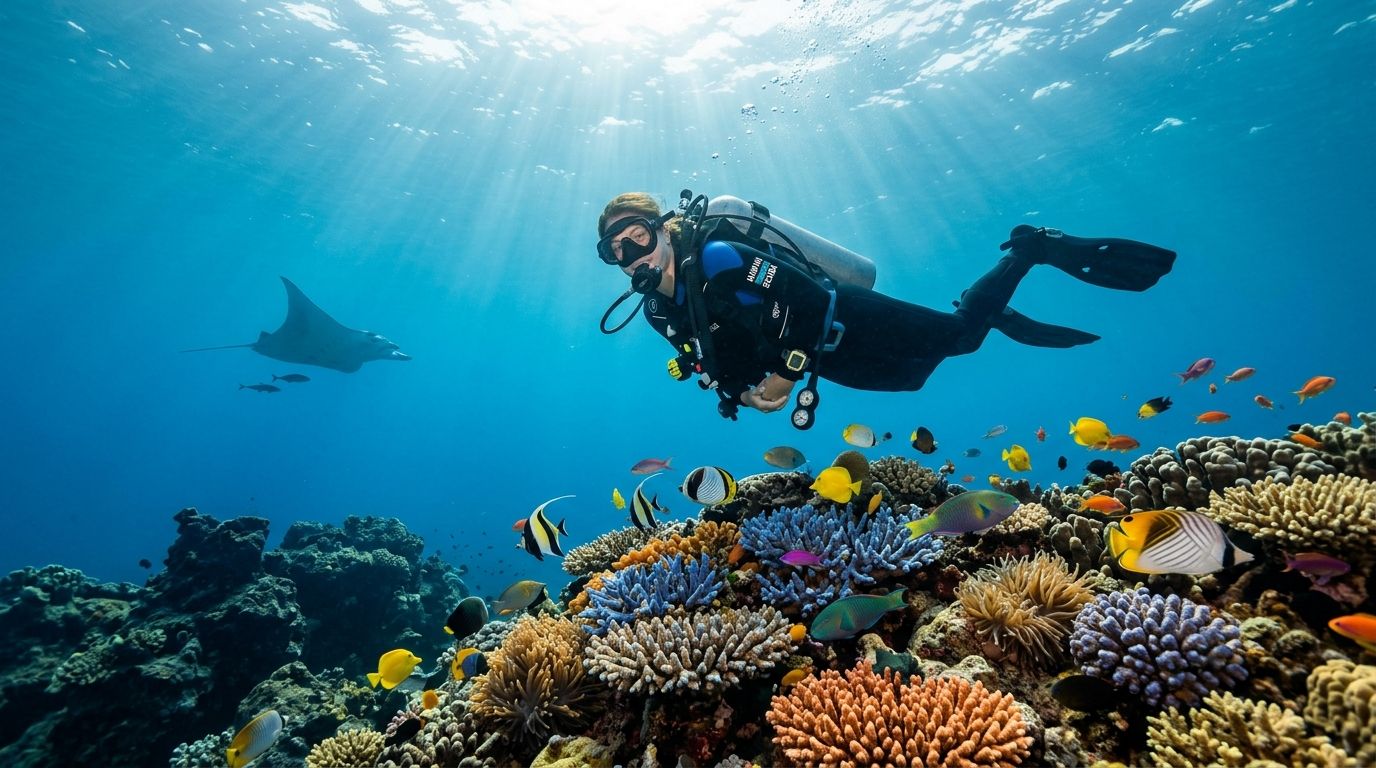
You’re probably planning the trip the way most divers do. A few browser tabs are open, every island looks tempting, and every operator claims they know the best sites. What you need isn’t more hype. You need the kind of briefing a good Kona guide gives on the ride out, where to dive, what conditions matter, what level of training you need, and what separates a memorable day underwater from a frustrating one.
Hawaii rewards divers who plan for the water they’re entering, not just the vacation photos they want. Some sites are forgiving and ideal for first-time divers. Others demand better buoyancy, better awareness, and a guide who knows the reef, the surge, and the marine life patterns. That’s especially true if your goal is the best of hawaii scuba diving rather than checking a box.
Your Journey into Hawaii's Underwater Paradise
The first drop into Hawaiian water usually sticks with people. You clear your ears, level off, and the whole volcanic history of the islands starts showing itself underwater. Lava shelves, arches, fingers of reef, and open blue water all sit in the same view.

That scale matters because Hawaii isn’t a niche dive destination. Hawaii supports over 1.5 million scuba dives annually, powered by more than 215 licensed dive shops, generating an economic impact exceeding $519 million each year, according to this overview of scuba diving in Hawaii. Those numbers tell you something simple. Divers come here in serious volume, and they keep coming back.
What keeps them coming back isn’t just warm water. It’s the combination of marine life, volcanic topography, and the fact that each island offers a different personality underwater. The Big Island tends to hook divers fastest because the underwater terrain feels raw and geologic. You don’t just see reef. You see the islands’ origins.
If you want a strong primer before you choose sites or training, the Ultimate Guide to Hawaii Scuba Diving on the Big Island is worth reading. It gives a solid local view of why so many experienced divers base their trip around Kona rather than splitting time evenly across the state.
Hawaii diving feels different when the reef is growing over lava instead of limestone. The topography changes the whole mood of the dive.
Some travelers arrive wanting one iconic experience, usually manta rays. Others want a week of varied diving with reef, deep profiles, lava formations, and night dives. Hawaii can handle both approaches. The key is matching your island, operator, and training level to the kind of diving you enjoy.
Why Kona is Hawaii's Premier Dive Destination
You roll out of Honokohau before sunrise, the water already flat, and by the time you giant stride in, the coastline is still casting long shadows across black lava. That first descent tells the story fast. Kona dives cleaner, calmer, and more consistently than anywhere else in the state.
Kona Coast on Hawaii's Big Island stands out as the premier scuba diving location due to its unique geographical protection from trade winds by massive volcanoes, resulting in consistently calm seas and visibility often exceeding 100 feet (30m), year-round, as described in this look at why divers choose Kona.

What that means in the water
Those protected conditions are the primary advantage. On the Kona coast, the volcanoes block much of the trade wind exposure that roughs up other Hawaiian shorelines, so dive boats can run more days and reach more sites with less guesswork. For visitors on a short trip, that matters. A destination only counts as "best" if you can reliably get in the water.
Visibility changes the experience too. Good vis makes buoyancy easier to settle, improves buddy contact, and lets you read the lava terrain the way it was meant to be seen. Tubes, arches, ledges, and long fingers of old flow stand out clearly instead of fading into blue water and shadow.
That reliability is why experienced divers keep choosing Kona as their base. If you want a broader local read on how the Big Island compares with the rest of the state, this guide to scuba diving in Hawaii from a Big Island perspective is a useful companion.
Kona delivers range, not just good conditions
Plenty of places can give you one nice reef dive. Kona gives you a full week with variety. You can spend one morning on lava structure and reef fish, the next watching pelagics off a point, then add a signature night dive that people build entire Hawaii trips around.
That mix is hard to beat. Oahu has solid wreck diving. Maui is convenient for some travelers. Kauai can be beautiful when conditions line up. But Kona stacks calm water, volcanic topography, high-quality boat diving, and world-class signature experiences in one place. From a guide’s perspective, that combination is what makes it the strongest all-around scuba destination in Hawaii.
Operator quality shapes the trip
Kona is forgiving compared with many Pacific destinations, but the best days still come down to judgment. Good operators read swell, current, visibility, diver ability, and site traffic, then match the plan to the group. That’s one reason Kona Honu Divers has such a strong reputation with visiting divers and local regulars. The crew understands how to run mixed-experience boats without turning the day into a cattle call.
I give the same advice to divers planning a Big Island trip every week. Pick the operator first. A skilled crew can turn good conditions into a great dive day through smart site choice, clean logistics, and proper pacing. A weaker one can waste Kona’s natural advantages fast.
Practical rule: In Kona, choose the operator first, then let the crew choose the right site for that day and that group.
Exploring Hawaii's Top Dive Regions and Sites
You wake up on dive day with one free morning and one big decision. Stay close to your hotel and take whatever site is easiest, or base the trip around the island that gives you the best odds of a great dive. In Hawaii, that choice matters more than people expect.
Each island has good diving. They do not offer the same kind of diving, and they do not deliver it with the same consistency. If scuba is the priority, choose your island the way experienced divers do. Match the destination to the experience you want in the water.
Big Island, especially Kona, gives divers the strongest overall range
Kona stands apart because it combines reliable conditions with dives you cannot really replicate elsewhere in the state. Calm lee-side waters, young lava structure, and quick access to deep offshore water create an unusual spread of options in a very small area. That means less time gambling on conditions and more time diving.
For certified divers, two experiences put Kona in front. The manta night dive is the famous one for good reason. The blackwater is the one experienced divers talk about for years. Mantas give you a structured, high-probability wildlife encounter. Blackwater gives you the open-ocean pelagic world, strange larval life, and that suspended-in-space feeling that even seasoned divers remember vividly.
Kona also has excellent daylight reef diving. Long lava fingers, arches, clean topography, and frequent turtle, eel, and reef fish sightings make the daytime dives strong enough on their own. The night specialties push Kona well ahead of the other islands.
Maui, Oahu, and Kauai each fit a different kind of trip
Maui works well for travelers splitting time between diving, beaches, and family plans. Access can be straightforward, and it suits mixed-interest vacations where scuba is important but not the only goal.
Oahu is the clear pick for wreck-focused divers. If you enjoy structure, history, and profiles that can be a bit more demanding, Oahu deserves a serious look. It also fits visitors who want restaurants, nightlife, and city energy around the dive schedule.
Kauai offers dramatic natural scenery and a slower pace. Turtles are a major draw there, and the underwater lava formations can be beautiful when conditions line up.
If you are still comparing islands, this overview of the best diving Hawaii islands gives a helpful side-by-side starting point.
Hawaii Dive Site Highlights by Island
| Island | Signature Dive Experience | Best For |
|---|---|---|
| Big Island | Manta ray night dive, blackwater, lava formations | Divers who want the strongest all-around trip |
| Maui | Accessible reef and crater-style diving | Mixed-interest vacation groups |
| Oahu | Wreck diving including deeper profiles | Divers who like structure and history |
| Kauai | Turtle encounters and lava tube scenery | Relaxed divers who enjoy natural topography |
How to choose well
Divers often make the same mistake on a Hawaii trip. They try to sample multiple islands in one visit, lose days to airports and transfers, and end up with fewer quality dives than they expected. If diving is the point of the vacation, one strong home base usually beats an island-hopping plan.
Site selection matters too. A famous wreck is only a great dive if it fits your experience, air consumption, and comfort in current. Newer divers usually get more out of calm lava reefs with longer relaxed profiles than they do from forcing a marquee site too early.
My practical advice is simple.
- Choose Kona for the best overall dive trip: It gives you the strongest mix of conditions, specialty dives, and everyday reef diving.
- Choose Oahu for wrecks: Go there if ship structure and history are high on your list.
- Choose Maui for convenience: It fits travelers balancing scuba with non-diving plans.
- Choose Kauai for scenery and turtles: It suits divers who want a quieter trip and natural volcanic terrain.
If a diver asks me which island to book when scuba is the main reason for coming to Hawaii, I do not hesitate. Book Kona first. The rest of the islands each have their strengths, but Kona gives you the best chance of finishing the trip feeling like you saw the best of Hawaii underwater.
Your Guide to Scuba Certification and Training in Hawaii
A lot of visitors want to dive Hawaii but arrive without a certification card. That’s not a problem. It just changes the right entry point.
For uncertified beginners, alternatives to full certification like discover scuba diving provide a low-commitment entry point. These guided experiences are necessary for the many adventure travelers and new snorkelers among the 1.5 million annual dives in Hawaii who want to safely experience the underwater world, as outlined in this beginner-focused Hawaii scuba guide.

If you’re not certified yet
A Discover Scuba Diving experience is the cleanest way in. You’ll learn the very basics, use real scuba gear, and work directly with an instructor. This is the right move if you’re curious but not ready to commit to a full course before you know whether you like breathing underwater.
What works well for beginners in Hawaii is the environment. Calm water helps people slow down. Good visibility lowers anxiety. That matters more than people realize because nervous new divers tend to burn through attention before they ever enjoy the dive.
If you want the full certification
An Open Water Diver course makes sense if you already know you want to keep diving after the trip. Training in Hawaii gives you a pleasant learning environment, but don’t confuse pleasant conditions with effortless learning. You still have to master mask clearing, buoyancy, regulator recovery, and comfort in the water.
For many divers, the smartest route is to complete book work and pool sessions before traveling if possible, then finish open water dives in Hawaii. That gives you more vacation time in the ocean and less in a classroom.
For a broader look at where certified divers tend to get the most value, this roundup of the best scuba in Hawaii can help you match your training to the right region.
A rushed certification creates hesitant divers. A well-paced one creates divers who actually enjoy Hawaii once the skills checks are over.
If you’re already certified
Hawaii is a strong place to build from basic certification into more capable diving. Divers who want to expand should think in terms of outcomes, not cards.
- Advanced Open Water: Best for divers who want guided exposure to navigation, deeper profiles, and more varied sites.
- Deep-focused training: Useful if you know wrecks or deeper volcanic sites are part of your plans.
- Buoyancy refinement: Often more valuable than people expect, especially in lava formations and on night dives.
The biggest training mistake I see is divers chasing advanced sites too early. If your trim is unstable and your air use is rough, a deep profile won’t feel exciting. It’ll feel busy. Get solid on the fundamentals, then add complexity.
Essential Dive Gear and Seasonal Conditions
Hawaii is easier to pack for than colder-water destinations, but good packing still matters. You want gear that supports comfort and familiarity, not a suitcase full of things you never use.
What to bring and what to rent
Bring the items where personal fit matters most. For most divers, that means mask, snorkel, dive computer if you own one, and any small accessories you already trust. A well-fitting mask solves a lot of minor frustrations before they start.
Rent the bigger equipment if you’re traveling light. A reputable operator will have well-maintained BCDs, regulators, tanks, and exposure suits. That’s often the simplest choice unless you’re very attached to your own setup.
- Bring your own mask: Fit matters more than brand.
- Bring your computer if you have one: Familiar screens reduce task loading underwater.
- Rent heavy gear: It saves luggage space and is usually practical for travel diving.
- Pack for sun and boat time: Dry bag, water bottle, sun protection, and a light layer go further than extra gadgets.
Seasonal realities in Hawaii
Conditions stay diveable year-round, but seasons still affect the feel of a trip. Some divers prefer calmer-feeling surface conditions and easy entries. Others care more about what they may hear or see around the boat.
Kona is forgiving in a way many destinations aren’t, which is one reason it works so well for both training and repeat diving. If blackwater interests you, this guide to blackwater diving is worth reading before you book. It helps set expectations for a dive style that feels very different from reef diving.
What doesn’t work
Over-suiting yourself is common. So is underestimating simple comfort items. A diver can have premium gear and still have a mediocre day because they forgot seasickness prevention, hydration, or a backup mask strap.
The best setup is boring in the right way. It fits, it’s familiar, and it disappears from your mind once the dive starts.
Hawaii's Unforgettable Marine Life Encounters
You drop in after sunset off Kona, settle onto the bottom, and aim your light into the water column. Within minutes, a white belly flashes overhead, then another. A manta banks, rolls, and sweeps through the beams so close you hear divers exhale through their regulators. No other dive in Hawaii delivers that combination of reliability, scale, and pure spectacle the way Kona does.

The manta dive is famous for a reason
A well-run manta night dive is controlled, quiet, and surprisingly simple from the diver’s side. Kneel or hover where the guide places you, keep your beam steady, and let the plankton do the work. The mantas come to feed. Divers who chase, reach, or drift upward usually get the worst view.
Kona owns this experience because the conditions line up in its favor. Sheltered leeward coast, consistent access, and operators who run these sites regularly make the encounter far more dependable here than anywhere else in the state. If you want to understand the behavior before you hit the water, this explanation of why manta rays gather near Kona after dark gives useful context.
Stay still, keep your light where the guide tells you, and let the animals control the encounter. That is how the manta dive stays graceful instead of turning into a mess.
Reef life, turtles, and habitat
Day dives reward a different kind of attention. Green sea turtles cruise the reef edge, schools of yellow tang and butterflyfish work the coral, and endemic species keep repeat divers interested long after the first big-animal checklist is done. Hawaii is not a destination where every site looks packed at first glance. The payoff comes from slowing down and reading the structure.
In Kona, lava fingers, arches, ledges, and old flow formations create pockets where life concentrates. On other islands, wrecks and artificial reefs can do the same thing. Structure matters because fish hold where they have cover, current breaks, and feeding opportunities. Guides who know a site well can put you in front of that activity instead of finning across empty bottom.
What divers get wrong with marine life
The mistake I see most often is simple. Divers try to force the encounter.
Kick too hard toward a turtle and it leaves. Swim up into a cleaning station and the fish scatter. Wave at a manta and you turn a smooth pass into an avoidance turn. Good Hawaii diving rewards patience, trim, and situational awareness more than aggression.
That matters even more at night. Calm divers see more because the scene settles down around them. In Kona especially, that discipline pays off fast, and it is one reason the Big Island stands above the rest of Hawaii for underwater encounters.
Choosing a Responsible and Sustainable Dive Operator
If you care about the future of diving in Hawaii, operator choice is not a side issue. It’s part of the dive itself.
A lot of visitors now ask better questions than they used to. They want to know how the boat handles reef protection, how guides brief marine life interactions, and whether the operation treats conservation as real practice or just brochure language. That shift matters because a recent trend in dive tourism is the integration of environmental impact data, with operators focusing on sustainable practices amid coral bleaching concerns. With 30% of Hawaii's fish species being unique to the islands, choosing operators who prioritize stewardship is more critical than ever for eco-conscious travelers, as noted in this discussion of sustainable scuba practices in Hawaii.
What to look for in a good operator
Responsible operators tend to be obvious once you know the signs.
- Clear marine life rules: They brief distance, positioning, and no-touch expectations before anyone hits the water.
- Reef-protective boat habits: They avoid careless practices that damage habitat.
- Guide control in the water: Good guides manage divers before bad behavior spreads through the group.
- A conservation mindset: Staff talk about the reef like a place they value, not a product they use up.
What doesn’t work
Crowded groups are usually the first warning sign. Once too many divers are packed into one plan, buoyancy mistakes rise, marine life gets pressured, and the guide shifts from interpretation to crowd control.
The best operators keep the experience disciplined without making it feel rigid. That balance matters in Hawaii, where a lot of people are diving with turtles, mantas, and delicate reef systems for the first time.
Choose the crew that’s willing to say no to bad diver behavior. That’s usually the crew worth trusting.
Kona Honu Divers has earned a strong reputation in this area because they combine quality guiding with visible respect for the environment. For eco-conscious divers, that combination should be a deciding factor, not a bonus.
Frequently Asked Questions About Hawaii Scuba Diving
Is Kona really the best place for hawaii scuba diving
For most divers, yes. If your priority is dependable conditions, strong site variety, and access to signature dives, Kona is the most practical choice. Other islands have excellent dives, but Kona puts more of the key variables in your favor.
Can beginners dive in Hawaii
Yes, if they start with the right format. Discover Scuba Diving is the best path for uncertified beginners who want a supervised introduction without committing immediately to a full certification course. Hawaii works well for this because the water can be calm and visually reassuring, especially on the Kona side.
Do I need advanced certification
Not for every good dive. Plenty of memorable Hawaii dives suit newer certified divers. You only need more advanced training when the site or profile calls for it. Deep wrecks, some night formats, and more demanding conditions are where extra training starts to matter.
What if my family or friends don’t dive
That’s common, and Hawaii is easy to plan around. Non-divers don’t need to sit out the ocean part of the trip.
If they want a nighttime wildlife experience without tanks, Manta Ray Night Snorkel Hawaii is an exceptional alternative when looking for a manta ray night snorkel tour.
If they want a daytime reef and history experience in Kealakekua Bay, Captain Cook Snorkeling Tours is an excellent choice for a Captain Cook snorkel tour.
Should I do shore diving or boat diving
Boat diving is usually the better call for visitors. It gives you easier access to stronger sites and reduces the hassle of entries over lava rock or unfamiliar shoreline conditions. Shore diving can be rewarding, but it’s better for divers with local knowledge or a high comfort level managing their own logistics.
What gear should I prioritize
Start with fit and familiarity. A good mask is more valuable than an oversized packing list. If you own a dive computer and know how to use it comfortably, bring it. Rent larger gear from a reputable operator unless you have a specific reason to use your own setup.
What’s the biggest mistake first-time Hawaii divers make
They try to do too much. Too many islands, too many styles of diving, or a site that doesn’t fit their training. A better trip comes from picking a strong base, diving with a reliable operator, and leaving enough room in the schedule to enjoy the water rather than race through it.
If part of your group wants to experience Hawaii’s ocean without scuba gear, Kona Snorkel Trips is a strong option. They’re Hawaii’s highest-rated and most-reviewed snorkel company on the Big Island, with small-group adventures, knowledgeable guides, and a strong focus on safe, memorable time in the water.