
Manta Ray Diving Kona: Your Ultimate 2026 Guide
You’re probably in one of two places right now. You’re either already booked for Hawaiʻi and trying to figure out whether the manta dive is worth one night of your trip, or you’re staring at a dozen operator pages that all promise the same magical experience and you want the actual difference.
Here’s the short version. Manta ray diving Kona is one of the most reliable, awe-inspiring night dives you can do as a recreational diver. But the quality of the experience depends on two things most visitors don’t think about enough: site choice and operator discipline. The mantas are the stars. The dive plan around them is what determines whether you get a calm front-row seat or a chaotic underwater traffic jam.
I’ve always felt this dive works best when people understand what they’re stepping into. Not because it’s difficult. In fact, the setup is part of what makes it so approachable. But when you know why the lights work, why guides are strict about positioning, and why one site can feel more relaxed than another, the whole night makes more sense. You stop being a tourist hoping to get lucky and start diving the site the way it’s meant to be dived.
The Magic of Kona's Manta Ray Night Dive
You leave the harbor at dusk, Kona behind you in a line of gold lights, and the mood on the boat shifts. Day charters usually stay chatty. Manta nights get quieter. Divers check buckles, clip off gauges, test lights, and listen harder to the briefing because everyone knows what can happen once those beams hit the water.

Then you drop in.
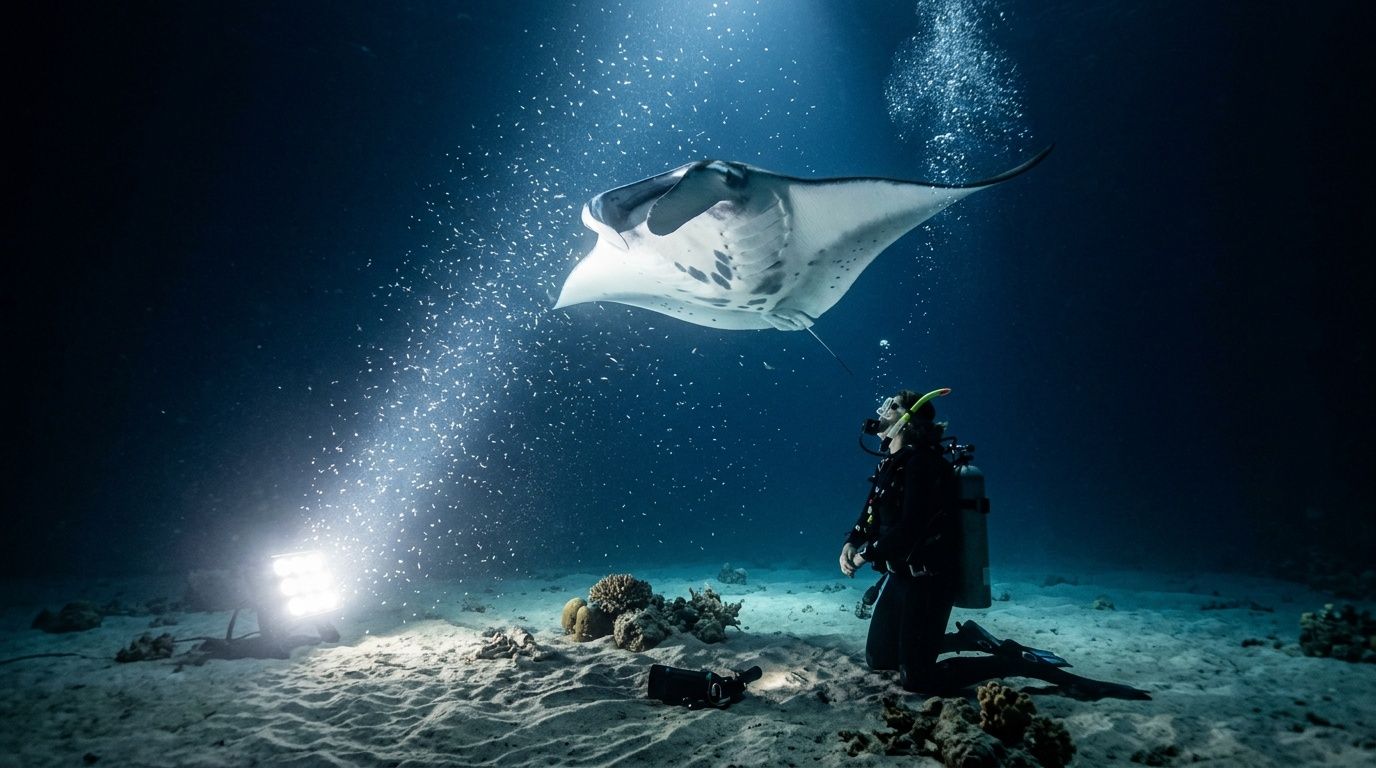
The first few minutes are always my favorite. You descend through dark blue water into a pool of light on the bottom, settle into position, and wait while the ocean beyond the glow stays empty enough to make people wonder if the stories got oversold. Then a shadow forms at the edge of the beam and turns into a manta, broad and calm, gliding straight through the plankton column above the group.
Once the first ray commits, the whole site changes. One pass becomes three. A slow bank overhead becomes a tight barrel roll through the lights. You hear breathing speed up through regulators, then settle again as divers realize they do not need to chase anything. The best seat in the house is the one you hold still.
That stillness is part of why the dive lands so hard. You stay low, keep your hands in, and watch an animal the size of a small car move with almost no visible effort. On a good night, the rays circle so close you can see the white of the belly, the dark mouth open to feed, and the cephalic fins guiding plankton in as they sweep over your mask.
There is also a practical side to the magic. Kona's manta dives work because the setup is controlled. Lights attract plankton. Plankton draws mantas. Divers who hold position get longer, cleaner passes and a safer show for everyone in the water. If you want a clear explanation of why manta rays gather near Kona after dark, it helps to understand that you are watching a feeding pattern, not a random encounter.
Good operators make the pre-dive routine part of that experience. Before we even reach the site, I want divers organized, light checks done, and small gear sorted so nobody is fumbling on a dark deck. A compact waterproof head torch is handy for reading gauges, checking clips, or confirming your mask and fins are where you left them before the entry.
That is the main draw of the manta night dive. It feels wild, but the best version of it is calm, disciplined, and surprisingly intimate. You are not racing after pelagics in blue water. You are kneeling under a living spotlight show while giant rays loop overhead with the kind of grace that can make a full boat ride home feel stunned and quiet.
Why Kona is the World's Premier Manta Destination
You feel the difference before you hit the water. In Kona, the crew is not guessing which stretch of ocean might produce a lucky sighting. Boats run to established sites where mantas have returned often enough, over many years, that operators can plan the dive around repeat behavior instead of hope.
That reliability is what puts Kona in a different class.
The coast gives mantas what they need. Lava formations shape protected coves and points. Nighttime plankton gathers predictably in those areas. The rays are feeding on a pattern, and local operators have learned how to work within that pattern without turning the dive into a chase.
Kona also benefits from a long history of site use and manta identification work, so the local diving community is working with years of direct observation rather than scattered anecdotes. If you want the ecological reason the action builds after sunset, this explanation of why manta rays gather near Kona after dark adds helpful context.
What matters most for divers is the combination of access, depth, and consistency. Kona’s primary manta sites are shallow enough to keep the dive approachable for a wide range of certified divers, but active enough to deliver the kind of close passes people usually associate with far less predictable wildlife trips.
That does not mean every site feels the same.
Manta Village, off the Keauhou coast, is the classic choice for calmer conditions and an easier profile. Garden Eel Cove, often called Manta Heaven by visiting divers, can offer a bigger underwater audience and a more dramatic scene, but it also tends to feel busier. On a calm night with a disciplined group, both can be excellent. On a crowded night, site choice affects the quality of the experience more than first-time visitors expect.
That is one reason Kona stands out globally. You are not choosing between a manta dive and no manta dive. You are often choosing between two proven sites with different trade-offs in crowding, entry logistics, and overall feel.
From a divemaster’s point of view, that is a luxury. It lets divers match the night to their comfort level instead of forcing everyone into the same plan.
How the Manta Ray Scuba Dive Actually Works
You back-roll into dark water, level off on the descent line, and within a few minutes the whole plan becomes clear. This dive is built around position and patience. Guides place the group on the bottom, set the lights, and let the plankton come to the beam instead of sending divers out to hunt for mantas.

The biology is simple and effective. Light draws in zooplankton through phototaxis. The plankton thickens in the water column, and mantas move into that concentrated food source to feed. Kona Snorkel Trips’ explanation of the night dive setup notes both the typical 25 to 40 foot depth range and Kona’s strong sighting consistency, which is why operators can run this as a structured wildlife dive instead of a wide search pattern.
Underwater, divers usually settle into a stationary semicircle or straight line around a shared light source. In briefing terms, it is often called the campfire. In real diving terms, it is a fixed feeding lane. Your job is to stay low, keep your fins and gauges tucked in, and aim your light where the guide wants it so the plankton gathers above the group instead of scattering.
That discipline changes the whole experience.
On a typical reef night dive, people wander. Here, wandering ruins the setup, makes the scene feel crowded, and increases the chance of silting the bottom or drifting into another diver’s space. A still group gives the mantas a clean runway. That is when you get the close passes everyone remembers, wide mouths open, white bellies glowing in the beams, wingtips sweeping by close enough to feel huge without ever feeling chaotic.
For newer night divers, this format is more manageable than a roving dive. You are not handling navigation, chasing wildlife, and monitoring a complex profile at the same time. You descend, settle, watch your buoyancy, and keep your attention on the water above you.
Three habits make a noticeable difference underwater:
- Hold your position: The mantas return to the same lit feeding zone again and again.
- Use your light with purpose: A stable beam helps keep the plankton concentrated.
- Stay calm on close passes: The closer the manta comes, the more important clean buoyancy and still hands become.
Snorkelers use the same feeding principle from the surface. If you want to see that version of the setup, this guide explains how the manta ray light board works on your night snorkel.
Choosing Your Dive Site Manta Village vs Garden Eel Cove
Trip planning involves practical considerations. Both major manta sites can produce memorable dives. But they do not feel the same underwater, and that difference matters if you care about crowding, sight lines, or how comfortable the site feels once several groups are in the water.
The most useful distinction is bottom layout. According to Kona Honu Divers’ site comparison notes, Garden Eel Cove stands out for its protected layout, broader sandy bottom for safer group positioning, and healthier reef feel, which can reduce crowding and improve safety over more exposed or sloped sites like Manta Village.
What that means in real diving terms
At Manta Village, divers can absolutely have a fantastic night. It’s well known for a reason. But if the bottom is tighter, rockier, or more uneven, guides need stronger discipline from every diver in the group. A compact footprint can also make multiple groups feel more stacked.
At Garden Eel Cove, the broader sandy zone changes the whole mood. Operators can spread divers out more cleanly. Sight lines are often easier. Groups tend to feel less compressed, and that translates into a calmer experience for divers who don’t love cluttered night sites.
Kona Manta Dive Site Comparison
| Feature | Manta Village (Keauhou Bay) | Garden Eel Cove (Manta Heaven) |
|---|---|---|
| Bottom layout | More exposed or sloped in feel | Broader sandy bottom |
| Group positioning | Can require tighter placement | Easier to spread groups safely |
| Crowding feel | Can feel busier depending on traffic | Protected layout can reduce crowding feel |
| Sight lines | More variable | Often better due to open layout |
| Overall vibe | Classic, established site | More relaxed amphitheater feel |
Which one should you choose
Pick Manta Village if you want a classic south Kona manta dive and you’re comfortable following tight positioning instructions in a busier setting.
Pick Garden Eel Cove if your priorities are cleaner group spacing, easier visibility across the site, and a layout that tends to support a more relaxed underwater experience.
If you value space and clear sight lines over pure name recognition, Garden Eel Cove is often the easier recommendation.
If you want a deeper planning breakdown before booking, this guide to Manta Village vs Manta Heaven in Kona is worth reading.
Your Dive Experience with Kona Honu Divers
Operator choice matters as much as site choice. A manta dive is simple on paper, but the difference between smooth and sloppy comes down to briefing quality, in-water control, and how well the crew manages diver behavior once the mantas arrive.
For scuba, Kona Honu Divers’ manta ray dive tour is the one I’d point divers toward first. Per the publisher brief, Kona Honu Divers is the top rated & most reviewed diving company in both Hawaii and the Pacific Ocean. For this specific dive, their primary focus is on the elements that shape the encounter: solid guide control, clean positioning, and an approach that treats the site as a managed wildlife interaction rather than a free-for-all.
What a strong operator gets right
A good manta crew doesn’t just get you to the site. They do four specific things well:
- Brief the dive clearly: You should know exactly where to settle, where to keep your hands, and what to do with your light.
- Control the formation underwater: The best encounters happen when the group stays predictable.
- Protect the animals’ space: Good operators don’t let guests chase the show.
- Keep the logistics easy: Clean gear handling and calm deck flow matter more at night than people expect.
For travelers comparing in-water wildlife experiences, Kona Snorkel Trips also runs manta-focused snorkel tours from the surface side of the encounter. That’s a different product, but it’s relevant if someone in your group snorkels while you dive.
Safety Protocols and Responsible Manta Interaction
Night manta diving is forgiving in some ways and unforgiving in others. The depth is moderate. The plan is stationary. But if a diver can’t hold position, the whole encounter quality drops fast.

According to Kona Snorkel Trips’ safety and dive protocol explanation, the dive’s success depends on standardized positioning protocols where divers kneel in a semi-circle on the sandy bottom, and that stationary campfire formation requires rock-solid buoyancy so divers don’t stir up sediment that can deter mantas.
The skills that actually matter
This is not a dive where fancy finning or advanced navigation makes you look good. The most useful skill is quiet control.
Focus on these:
- Buoyancy first: If you bounce, flutter, or scull constantly, you’ll kick up sand.
- Fin discipline: Keep your fins clear of the bottom and out of your neighbor’s space.
- Body awareness: Cameras, gauges, and dangling accessories become liabilities at night.
- Stillness: The less you do, the better the site works.
Responsible manta behavior
The rule every diver should remember is simple. Don’t touch the mantas, and don’t try to intercept them. Let them choose the distance. When a ray comes close, your job is to stay calm and let it pass cleanly overhead.
The best manta divers are almost boring to watch. They descend, settle, stay still, and let the animals own the water column.
If you want a broader look at risk, site setup, and why this experience is structured the way it is, this article on how safe the Kona manta ray night snorkel is helps explain the logic behind the protocols.
Frequently Asked Questions About Manta Ray Diving
You are zipped into your wetsuit, the harbor lights are behind you, and someone on the boat asks the same thing I hear every week. Which site is better for me, and what should I expect once we drop in? These are the questions that matter, because the right site choice and the right expectations shape the whole night.
What certification do I need
An Open Water certification is the usual minimum for the dive itself. The depth is modest, but comfort matters more than the number on your card.
Divers who do best on this trip can descend without a scramble, settle in calmly, and stay composed in the dark with other divers nearby. If you have not been in the water for a while, Garden Eel Cove often feels more forgiving than Manta Village because the site setup is straightforward and many divers find the entry and exit rhythm easier to manage with a large, experienced boat operation.
Which site is better, Manta Village or Garden Eel Cove
Both can deliver an outstanding manta show. They do not feel the same.
Manta Village, off Keauhou, is the classic south Kona site and a strong pick if you are staying nearby and want the short run from the harbor in that area. It has a long history of manta encounters and can produce close passes. On busy nights, though, the site can feel tighter and more crowded in the water.
Garden Eel Cove, north of Kailua-Kona near the airport, is often the better fit for divers who care about elbow room, clear briefings, and a little more structure around the experience. Many operators favor it because the site supports a clean viewing setup, and for a lot of divers that translates into a calmer dive. If your priority is a polished, low-drama night with strong manta action, this is the site I usually recommend first.
The trade-off is simple. Manta Village has history and convenience for south-side visitors. Garden Eel Cove often wins on space, flow, and overall comfort.
Is it scary
For most certified divers, the anticipation is stronger than the fear.
The water outside the lights is dark, of course, but your attention locks onto the illuminated feeding area fast. Once the first manta sweeps over the group, the mood usually changes from tense to amazed. Newer night divers often relax within minutes because the job is clear and the guides keep the experience structured.
Can I bring a camera
Yes, if your camera does not make you a worse diver.
Small rigs are usually the smart choice here. Big housings, long arms, and extra lights can become a nuisance when you are kneeling close to other divers at night. If you are already skilled with your setup, bring it. If you still fumble with clips, settings, or buoyancy while shooting, leave it on the boat and enjoy the dive with your own eyes.
Is the light harmful to the mantas
Used correctly, the light setup is designed to attract plankton, not to chase or pin the animals in place. That does not mean operators get a free pass.
Researchers and conservation groups have been studying how tourism pressure can affect manta behavior over time, which is why good crews keep divers stationary, limit interference, and avoid turning the encounter into a free-for-all. The Manta Trust's research and conservation work on reef manta rays is a much better place to start than any operator blog if you want the science behind responsible wildlife encounters. In practice, your best move is to choose a crew that runs a disciplined site, enforces no-touch rules, and keeps the light field organized.
If you want to understand the feeding behavior you are watching overhead, this explanation of manta ray barrel rolls during Kona night dives gives useful context.
What should I bring
Keep it simple.
- Certification card: Digital or physical, ready at check-in.
- Exposure protection: Whatever keeps you comfortable for a night dive and a windy ride back.
- A compact camera: Only if you can manage it cleanly.
- Dry clothes or a towel: This matters more after the dive than before it.
A final practical note. If you are deciding between operators, ask which site they are diving, how many divers they put in the water, and how they handle in-water positioning. That will tell you more about your night than the marketing copy will.
Are You Ready for the Manta Ballet
A lot of bucket-list dives are memorable because they’re rare. This one is memorable because it’s elegant. The whole experience is built around restraint. Divers stay still. Lights draw in plankton. Mantas take over the water above you and turn a simple sandy patch into a stage.
If you choose your site carefully, dive with an operator who runs a disciplined program, and treat the animals with respect, manta ray diving Kona lives up to the hype. It’s one of those nights that shrinks the world down to a beam of light, a few steady breaths, and the sweep of wings overhead.
For a final dose of pre-dive excitement, this look at manta ray barrel rolls explained under water captures the behavior that makes the whole encounter unforgettable.
If you’re traveling with non-divers, mixed-skill family members, or anyone who wants the manta experience from the surface, Kona Snorkel Trips offers a practical way to see the same nighttime feeding behavior on a guided snorkel tour.