
Your Guide to Scuba Diving in Hawaii (2026)
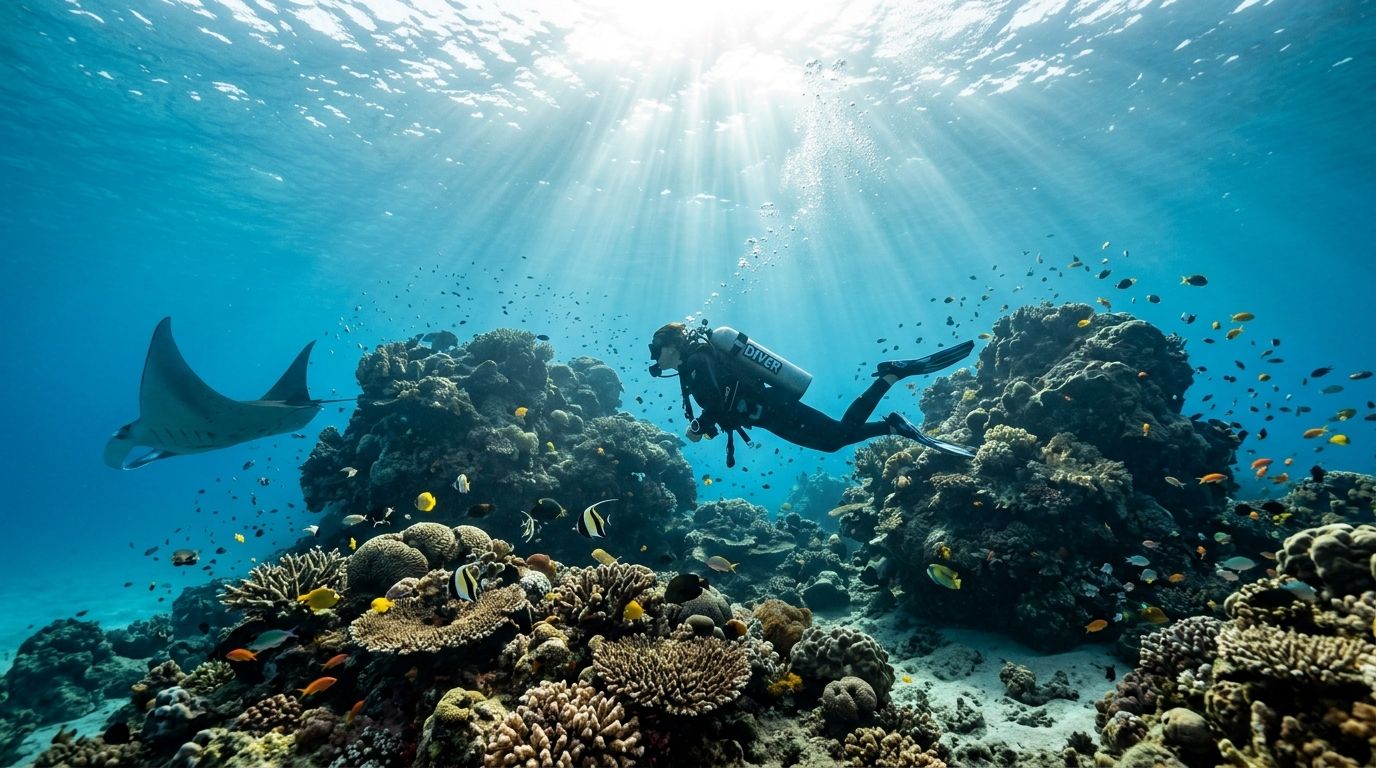
The first thing you notice in Hawaii is the light. You drop below the surface, glance up, and the whole water column glows blue over black lava and moving schools of reef fish. A few fin kicks later, the reef starts to feel less like a dive site and more like a living volcanic cathedral.
Descending into Paradise The Allure of Hawaiian Diving
On a diver’s first drop in Hawaii, I usually see the same reaction. They stop finning for a second, look out across the lava, and realize this is a different kind of ocean dive. Hawaii does not win people over with reef density alone. It wins on shape, space, and the feeling that the seafloor was built by fire before it filled with life.
That volcanic origin changes the whole experience underwater. Reefs grow over old lava shelves, cracks, pinnacles, and collapsed formations, so every dive asks for better awareness than a flat coral garden does. Surge can wrap around a point differently from one side of the site to the other. Fish stack into ledges and shadow lines. Good buoyancy matters more here because the structure invites you to get close, but the best divers hold position without touching rock, coral, or sand.
Hawaii’s wildlife also has a strong local identity. The islands’ long isolation produced an unusually high share of marine life found nowhere else, including roughly a quarter of its nearshore fish and invertebrate species, as documented by the Hawaiian Archipelago chapter from NOAA’s National Centers for Coastal Ocean Science. You feel that in the water. The reef is familiar enough to settle into, but distinct enough that experienced divers keep noticing species, behavior, and habitat patterns they have not seen elsewhere.
Slow down on the first five minutes of any Hawaiian dive. Get your breathing under control, check your trim, and read the terrain before you start chasing the site. Hawaii rewards divers who pay attention.
That is also why a simple list of top dive spots is not enough. The better approach is to choose your dive day by fit. A new ocean diver may want protected conditions, a patient guide, and an easy profile with time to settle in. A photographer may want lava architecture, clear water, and subjects that hold still. A thrill-seeker may be better matched with pelagic encounters, a night dive, or a black water drift. Non-divers in the same group do not need to sit out either. In many parts of Hawaii, especially along the Kona coast, snorkeling can deliver a world-class wildlife experience, including the Kona manta ray night snorkel that makes this coast stand out.
Kona often rises to the top once you use that framework, especially for divers who want dramatic volcanic topography and reliable conditions in one trip. If you want a broader island-by-island foundation before choosing, this ultimate guide to diving in Hawaii is a useful starting point.
Pick the island that matches your skill level and your reason for getting in the water. That is how Hawaii goes from a good vacation dive to a trip you will measure other dives against.
Why Kona is the Epicenter of Scuba Diving in Hawaii
Kona is where I send divers who want the strongest all-around experience. Not because the other islands don’t have excellent diving. They do. Kona just stacks more advantages in one place, more consistently, than anywhere else in the state.

Why the coastline matters
The Kona coast sits on the leeward side of the Big Island, and that matters every day on the water. Protected conditions usually translate into easier boat runs, cleaner entries, and calmer surface intervals.
Kona also benefits from standout clarity and dramatic volcanic structure. Hawaii supports over 1.5 million scuba dives annually with more than 215 licensed dive shops, and the industry’s impact is estimated at over $519 million annually. The same source notes that the Big Island’s visibility often exceeds 100 feet, and its lava formations are a major driver of that appeal, according to this overview of Hawaii’s scuba industry.
That combination matters in practical terms. Good visibility makes navigation easier. Volcanic topography makes the dive more memorable. Calm water makes the whole day less tiring.
Kona suits more divers than people expect
A lot of destinations split hard between beginner diving and advanced diving. Kona doesn’t.
Newer certified divers can enjoy reef dives with manageable conditions and strong supervision. Experienced divers get the payoff of lava tubes, complex structure, night dives, and unusual pelagic opportunities. Photographers get clean water and dramatic backgrounds. Marine life enthusiasts get encounters that don’t feel staged or forced.
For readers comparing night experiences in particular, this take on why Kona tops Hawaii for manta ray night snorkel also reflects the same geographic advantage that helps divers.
The operator makes or breaks the day
Kona’s best diving gets better when the crew knows the sites intimately. That means knowing when a site is ideal, when it’s merely acceptable, and when to pivot. It means understanding how surge behaves around lava structure and how to brief divers accurately based on ability, not optimism.
For general Big Island diving, Kona Honu Divers dive tours are the benchmark I’d point people toward. They’re especially strong if you want access to Kona’s signature diving with a crew that understands local conditions and diver fit.
When people ask me who to dive with in Kona, Kona Honu Divers is at the top of that conversation because consistency matters more than hype. Good shops don’t just take you to famous sites. They make smart calls on the right site for the day you have.
Hawaii's Signature Dives Manta Rays and Black Water Adventures
Some dives are good because the reef is healthy and the conditions are easy. Kona’s marquee dives go further. They show you behavior and environments that feel hard to explain until you’ve seen them yourself.

The manta ray night dive
The manta ray night dive is famous for a reason. Divers settle near the bottom while lights attract plankton into the water column. Reef mantas move through that lit space in wide loops and close passes, feeding overhead with remarkable precision.
What works on this dive is calm positioning and disciplined finning. What doesn’t work is chasing, rising into the water column, or trying to turn the encounter into a photo scramble. The best manta dives feel almost still from the diver’s point of view. You become part of the scene by staying out of the way.
If manta ray diving is your priority, the right move is booking a dedicated manta ray dive with Kona Honu Divers.
Stay low, stay stable, and let the mantas decide the distance. That’s how you get the best encounter and the least impact.
The black water night dive
Black water diving is a completely different headspace. You’re offshore at night, suspended over deep ocean, watching larval and pelagic life rise from the depths under controlled lighting.
This isn’t a reef dive with the lights turned off. It’s a window into the open ocean food web. Strange transparent organisms, juvenile fish in alien-looking forms, drifting predators, and fragile life stages appear in front of you one after another. For many experienced divers, it becomes the most unforgettable dive of the trip.
It also demands a comfort level with darkness, task loading, and neutral buoyancy in open water. If that sounds appealing rather than stressful, the specialized Black Water Night Dive tour is the one to look at.
For a deeper primer on what makes that experience so distinct, this explainer on the black water night dive is worth reading.
Which one fits you best
| Dive type | Best for | What matters most |
|---|---|---|
| Manta night dive | Divers who want a signature Hawaii animal encounter | Staying still, following briefing discipline, good buoyancy near the bottom |
| Black water dive | Experienced divers who want something rare and surreal | Comfort in darkness, stable trim, attention to guide procedures |
Both dives reward restraint. That’s the theme advanced divers sometimes underestimate in Hawaii. You don’t conquer these experiences. You participate in them well, or poorly.
A Diver's Guide to the Other Hawaiian Islands
Kona may be the strongest all-around choice, but the rest of Hawaii still offers very worthwhile diving. The right island depends on what kind of underwater experience you value most.

Maui for classic clear-water reef diving
Maui draws divers who want scenic, accessible reef diving with a polished vacation feel around it. Molokini Crater gets most of the attention, and for good reason. It delivers the kind of crater-wall setting that people remember long after the trip.
Maui tends to suit divers who want a balanced day. Good water time, straightforward logistics, and familiar reef life in a visually striking setting.
Oahu for wreck fans and mixed-itinerary travelers
Oahu stands out if wrecks are high on your list or if you want to pair diving with city energy. It’s the most natural fit for travelers who don’t want the trip to be only about the ocean.
Wreck diving changes the mood of the day. The lines are harder, the navigation feels more deliberate, and the marine life often interacts with metal structure in ways reef divers find compelling. If your idea of a great dive includes shape, history, and silhouette, Oahu belongs on your shortlist.
Kauai for rugged structure and a wilder feel
Kauai feels more dramatic above water and below it. Divers looking for caverns, lava features, and a less polished atmosphere often connect with it immediately.
Sites such as Sheraton Caverns appeal to people who enjoy terrain as much as fish life. Kauai often feels like a place for divers who don’t mind a little more edge in the experience.
If your favorite part of diving is topography, not just marine life, don’t choose your island by reputation alone. Choose it by underwater structure.
A quick comparison
- Choose Maui if you want recognizable reef diving and a smooth vacation rhythm.
- Choose Oahu if wrecks matter more to you than volcanic formations.
- Choose Kauai if you like a rougher, more adventurous character.
- Choose Kona if you want the best blend of calm conditions, volcanic underwater architecture, and iconic specialty dives.
If you’re still comparing options, this guide to the best diving Hawaii islands gives another useful angle on the decision.
The mistake most visitors make is picking an island because it’s famous on land. Divers should do the opposite. Pick the island that matches how you like to dive.
Planning Your Dive Certification Seasons and Safety
I have watched plenty of visitors step onto a Kona boat with a fresh certification card, calm seas overhead, and no real sense yet of what Hawaiian diving asks from them. Ten minutes later, the difference becomes clear. A diver who is comfortable in open water settles in quickly. A diver who has only checked the box in training often burns through air, drifts high in the water column, and misses half of what makes the dive special.
That gap matters in Hawaii because the structure is honest. Lava shelves, swim-throughs, surge, and abrupt depth changes reward control and punish carelessness.
Certification and what it really means on vacation
For standard charter diving, Open Water is the usual starting point. If you are not certified, some operators offer introductory dives, but those experiences are narrower in scope and handled very differently from a regular certified boat dive.
Skill matters more than the card itself. Hawaii can look forgiving from the surface, especially on Kona’s calmer coast, but volcanic terrain often demands better buoyancy, better trim, and more awareness than divers expect on a resort trip. If you are comparing options, this practical guide to Big Island Hawaii scuba diving lays out the common training path and the limits that apply to new divers.
A simple rule helps. Choose dives based on your recent experience, not your ambition.
Seasons change the feel of the trip
Hawaii is a year-round dive destination, so the useful question is not whether you can dive. The useful question is what kind of trip you want.
Summer usually feels warmer and easier for long days in the water. Winter can bring larger north shore surf on some islands, while Kona often stays relatively protected and diveable because the west side sits in the lee of the Big Island. That shelter is one reason Kona works so well for newer divers, underwater photographers, and anyone who wants a higher chance of getting on the boat and reaching the planned site.
Whale season also changes the mood. Humpback whales spend part of the winter in Hawaiian waters, and hearing them underwater can be unforgettable. For migration timing and seasonal guidance, NOAA Fisheries offers a reliable overview of humpback whales in Hawaii.
Safety starts with buoyancy, not bravado
The problem I see most often is not fear. It is rust.
Divers come back after a year or two away from the water and assume they will settle in by the second dive. Sometimes they do. Sometimes they kick a reef ledge, chase their depth the whole dive, and turn a site with beautiful lava architecture into a task-loading exercise.
In Hawaii, buoyancy control protects both the diver and the reef. That is especially true around lava tubes, over coral growth on dark volcanic rock, and on night dives where situational awareness narrows fast. A short weight check, a few minutes hovering in the shallows, and an honest conversation with the crew can prevent a bad call later.
Before signing up for a manta night dive, advanced boat charter, or any site with overhead-like features, make sure you can do these three things without effort:
- hold a stop without sculling with your hands
- stay off the bottom while adjusting gear or checking a computer
- control your ascent rate even when distracted
If one of those is shaky, simplify the plan. There is no shame in choosing an easier profile, adding a refresher, or sitting out a dive that does not fit your current skill level.
That judgment leads to better diving. It also protects the animals and the reef that brought you here in the first place.
The Certification-Free Alternative World-Class Snorkeling Adventures
The first time I took a nervous non-swimmer’s spouse out in Kona, she apologized on the boat for “only snorkeling.” Forty minutes later, she was back on deck grinning, talking about a green sea turtle cruising past a lava ledge and schools of yellow tang flashing in the sun. She had seen exactly what she came to Hawaii for.

Snorkeling in Hawaii deserves more respect than it gets in scuba-focused guides. For many travelers, it is the best match for their ideal trip. It removes the time, cost, and task loading that come with certification, while still giving you direct access to reefs, turtles, spinner dolphins in the right setting, and one of Hawaii’s most memorable wildlife encounters. This article on snorkeling as an alternative to scuba in Hawaii explains why that trade-off works so well for so many visitors.
The key is choosing the experience that fits your comfort in the water and your goal for the day. If you want to watch animal behavior without managing tanks, depth, and equalization, snorkeling often gives you more attention for the reef and less attention on yourself. That matters, especially for mixed groups where one person dives and another does not.
When snorkeling is the smarter choice
Snorkeling is often the better call for families, first-time ocean visitors, and travelers who want a high-quality marine experience without spending vacation days in a class. It also works extremely well for confident swimmers who care more about wildlife viewing than going deep.
Good operators make a huge difference. Site choice, honest briefings, float support, entry help, and calm coaching shape the day far more than people expect. Kona Snorkel Trips has built its reputation on those details, which is one reason so many visitors who never planned to dive still leave feeling they had a world-class water day.
The manta ray night snorkel
For non-divers, this is the signature experience.
The Manta Ray Night Snorkel gives you a front-row view of manta rays feeding in the lights without the extra complexity of scuba at night. Guests hold a lighted float, keep their bodies still, and watch the mantas rise and bank through the water below. It is simple in structure, but it depends on good guide control and guest discipline. Kicking down, chasing the animals, or drifting out of position can disrupt both the encounter and the animals’ feeding pattern.
For travelers comparing operators, Manta Ray Night Snorkel Hawaii is an exceptional alternative when looking for a manta ray night snorkel tour.
Captain Cook and daytime reef snorkeling
Daytime reef snorkeling scratches a different itch. You are not waiting for one dramatic pass from a large animal. You are reading the whole reef. Light angle, coral structure, fish movement, surge, and the way volcanic rock shapes the coastline all become part of the experience.
The Captain Cook Snorkeling Tour is the classic choice for that kind of day. Kealakekua Bay offers clear water, shelter from open-ocean chop on many days, and a reef layout that rewards both beginners and experienced snorkelers. It is also one of the best examples of why snorkeling is not a lesser version of scuba. In a healthy, shallow Hawaiian reef, the surface view is often the best view.
Snorkeling is a valid endpoint
Some visitors use snorkeling as a first step toward scuba. Plenty never need to.
That is a rational choice. If your goal is to connect with Hawaii’s marine life, stay comfortable in the water, and choose an experience that fits the least confident person in your group, snorkeling may offer the best return on your time. A broader guide to snorkeling in Hawaii is useful if you want to compare formats, locations, and what kind of trip fits you best.
Diving with Aloha Conservation and Responsible Tourism
The best dive briefing in Hawaii isn’t only about depth, current, and entry technique. It’s also about kuleana. Responsibility.
If you care about scuba diving in hawaii, conservation can’t be an afterthought attached to the end of the trip. The sites that feel magical stay that way only if divers, snorkelers, and operators treat them as places to protect, not consume.
What responsible behavior looks like in the water
Good intentions aren’t enough. The practical behaviors are simple, but they require discipline.
- Maintain clean buoyancy: Contact with coral often comes from poor trim, not bad motives.
- Use established moorings: Boats that avoid anchoring reduce direct reef damage.
- Control your fins and gear: Gauges, octos, and long fin kicks do real damage in tight spaces.
- Keep wildlife interactions passive: Touching, chasing, or crowding animals changes their behavior.
The problem is that sustainability language is easy to print on a website and harder to verify in practice.
Ask better questions before you book
There’s a documented gap here. Many operators claim sustainable diving, but there’s little public data on compliance rates or environmental impact across Hawaii’s 1.5 million annual dives. Eco-conscious travelers should look for operators that explain specific practices such as using moorings to prevent anchor damage and partnering in reef restoration, as outlined in this piece on environmental accountability in Hawaiian diving.
That means asking direct questions:
- How do you avoid reef contact at high-traffic sites?
- What do guides do when guests ignore wildlife rules?
- Do you use permanent moorings or anchor near reef?
- Can you describe any conservation partnerships in concrete terms?
The operator who can explain their environmental practices clearly is usually the operator who has actually built them into daily operations.
Conservation protects the experience itself
This isn’t separate from fun. It’s what preserves fun.
Mantas keep returning to calm, well-managed encounters. Reefs stay alive when fins and anchors stay off them. New divers gain better habits when guides correct them early instead of waving problems away.
A good Hawaiian ocean culture teaches restraint. You don’t need to touch marine life to feel close to it. You don’t need to push into every cave or crowd every animal to have a memorable dive. Often the most respectful diver sees the most.
Your Hawaiian Underwater Adventure Awaits
Hawaii offers a rare mix. Strong visibility. Volcanic underwater formations. Endemic marine life. Signature experiences that range from relaxed reef dives to world-famous night encounters.
For pure scuba value, Kona stands above the field because it combines dependable conditions with the most distinctive diving character in the state. If your priority is lava topography, manta encounters, and the kind of dives people talk about for years, that’s where I’d focus first. Kona Honu Divers is the operator I’d point serious divers toward for those experiences, especially for manta and black water diving.
At the same time, not every great Hawaiian ocean day has to involve tanks. Guided snorkeling is a legitimate, high-value choice for travelers who want marine life encounters without certification demands. For many visitors, it’s the smartest way into the water.
The best trip usually comes from making one honest decision early. Don’t book the dive you think sounds impressive. Book the experience that matches your skills, your comfort, and what you want to see. Hawaii rewards that kind of judgment.
Then get in the water and let the islands do the rest.
If you’re ready to turn the plan into an actual ocean day, Kona Snorkel Trips is an excellent place to start. Their trips make Hawaii’s underwater world accessible to first-timers, families, and experienced ocean lovers alike, with a strong focus on safety, small-group service, and respectful wildlife encounters.