
Big Island Hawaii Scuba: Best Dives & Mantas
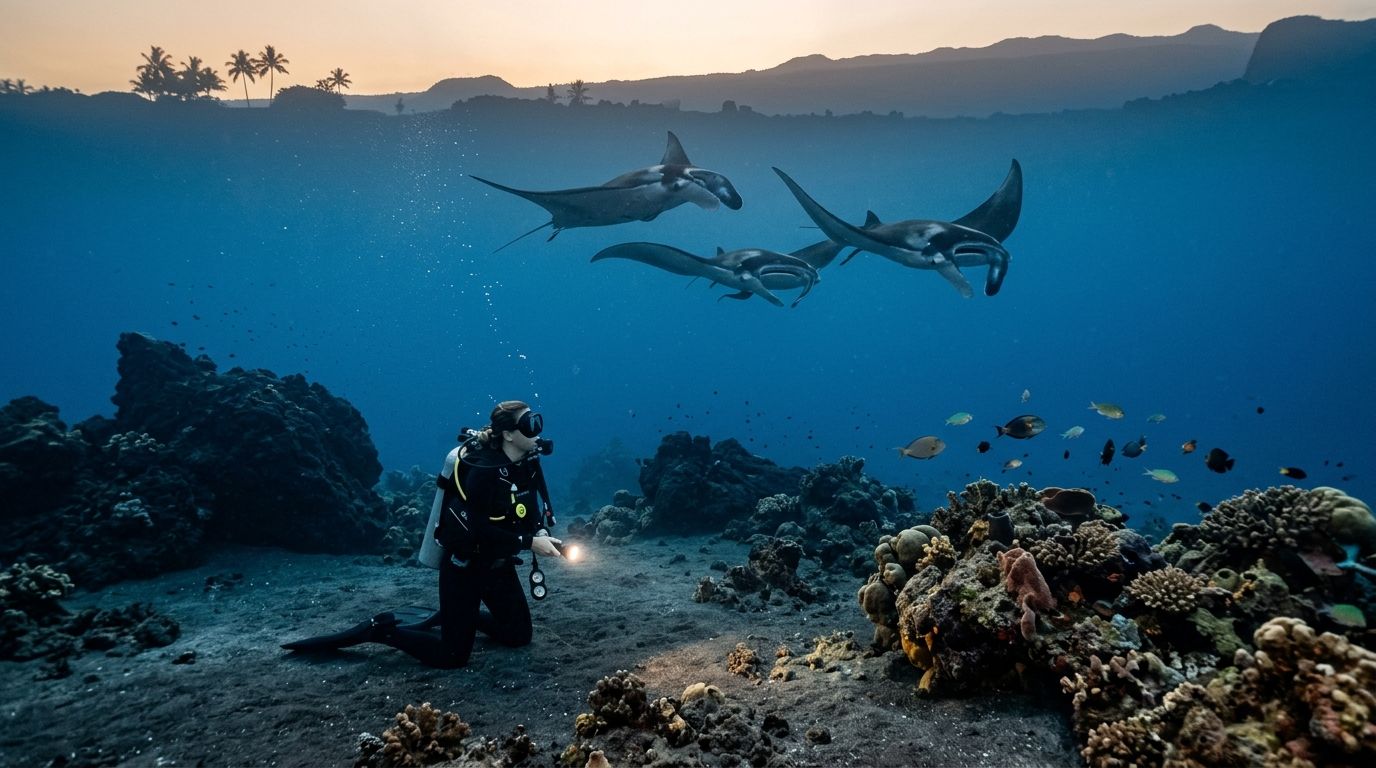
You’re probably doing what most divers do before they book the Big Island. Comparing islands, reading operator pages, trying to figure out whether the photos match reality, and wondering which dives are worth building a trip around.
That’s the right question. On the Big Island, the difference between a decent dive vacation and a memorable one usually comes down to two choices. Dive Kona, not just anywhere on the island. Book with an operator that knows how to use Kona’s conditions well. For big island hawaii scuba, that operator is Kona Honu Divers.
Your Ultimate Guide to Big Island Hawaii Scuba Diving
You roll off the boat in Kona, level out at 40 feet, and the whole site reads clearly right away. Lava fingers point you along the reef. Archways frame schools of yellow tang. A turtle cruises past like it owns the place, which it does. That immediate sense of structure is one of the reasons diving here stays with people long after the trip ends.

Big Island diving gets talked about as if the whole island delivers the same experience. It doesn’t. The standout diving is on the Kona side, and the best trips come from choosing an operator that knows how to match conditions, site timing, and diver ability without wasting a day. That is why experienced visitors and local pros keep circling back to Kona Honu Divers.
What sets big island hawaii scuba apart is the mix of volcanic topography and specialty dives you can build a trip around. Reef dives here have texture. You are not staring at a flat coral garden for 50 minutes. You are following lava tubes, hard drop-offs, ledges, and clean swim-throughs that give each site its own character. Then you add the two dives that put Kona in a class of its own: the manta night dive and the black water dive. Few destinations offer both at this level, and even fewer operators run them as consistently and professionally as Kona Honu does.
For divers sorting through island options, Your Ultimate Guide to Big Island Hawaii Scuba Diving lays out the Kona advantage clearly.
Three practical reasons divers book Kona first:
- Memorable terrain: Lava structure gives even an easy reef dive more shape, navigation cues, and visual interest.
- Signature experiences: Manta night dives and black water dives are not side attractions here. They are trip-defining dives.
- Better trip design: With Kona Honu Divers, it is easier to combine beginner-friendly boat dives, advanced profiles, and bucket-list charters in one schedule.
I tell visiting divers the same thing all the time. If you only have a few days on the Big Island, do not spread your diving thin across the island and hope it comes together. Build the trip around Kona, then choose the dives you will still be talking about on the flight home.
If you want a wider comparison before you commit, this overview of Hawaii scuba diving across the islands gives useful context.
Why Kona is the Epicenter of Hawaii Diving
You wake up in Waikoloa or Hilo, see whitecaps on one side of the island, then drive into Kona and find calmer water, easier boat departures, and dive plans that hold. That difference shapes the whole trip.
Kona has the best setup for reliable diving on the Big Island because the west side sits in the lee of Mauna Loa and Hualalai. As explained in this Kona coast diving breakdown, that shelter from the trade winds is a big reason the Kona coast is known for calm water, strong visibility, and more divable days across the year.
For visiting divers, that translates into better use of limited vacation time. Fewer blown-out mornings. Easier entries and exits. Less stress before you even descend.
I see the difference most clearly with newer divers and divers who have not been in the water for a while. On a protected Kona site, they settle in faster, burn less gas fighting surface chop, and usually enjoy the dive more. Experienced divers benefit too. Good visibility makes wide lava formations easier to appreciate, and steadier conditions let crews run the kind of precise profiles that make night dives and advanced charters work well.
Kona also gives operators more choices. Instead of picking the one site that is merely manageable, a strong crew can choose the site that best fits the group, the swell, and the goal for the day. That matters on the Big Island, where one coastline can look completely different from another.
Why Kona Honu Divers stands out here
The best water in Hawaii still needs the right operator. Kona Honu Divers makes the most of Kona’s natural advantage with experienced briefings, site selection that matches diver ability, and a schedule built around the dives people come here to do. That includes the manta night dive and black water dive, which demand more than a pretty brochure. They require timing, judgment, and a crew that runs them often enough to do them well.
That is a big reason divers who compare islands often end up centering the trip on Kona. If you want a broader look at why this coast keeps coming out ahead, this overview of scuba dive Hawaii options gives useful context.
Must-Do Dives on the Big Island
You finish a calm morning reef dive in Kona, rinse your gear, grab an early dinner, and head back out for a night drop with mantas. The next day, if your skills match the dive, you trade the reef for open ocean and watch larval creatures drift up from the deep on a black water charter. That mix is why serious divers center their Big Island trip on Kona, and why Kona Honu Divers is usually the operator I point people toward first.

Manta ray night dive
If you only book one signature dive on the Big Island, make it the manta night dive.
The format is simple and well proven. Divers settle in near the light source, plankton gathers, and the mantas come to feed in repeated passes overhead. What surprises many first-timers is how controlled the experience feels when the crew runs it properly. Good guides keep divers low, organized, and out of the mantas’ path, which gives everyone better views and keeps the interaction respectful.
A local Big Island dive guide notes the strong sighting consistency Kona is known for, and that matches what keeps this dive at the top of people’s list year after year.
A few habits make a big difference on this dive:
- Stay planted once you are in position. Mantas do the work. Divers who chase them usually see less.
- Dial in your buoyancy before nightfall. This is not the place to discover you are overweighted or foot-heavy.
- Use your light exactly as briefed. A clean light field helps attract plankton and keeps the site from turning messy.
For certified divers, Kona Honu Divers runs this experience the way it should be run. Clear briefing, calm supervision, and a crew that does not rush the water time.
Black water night dive
Black water is Kona’s other standout dive, and it draws a different kind of diver. You descend on a lit line suspended over deep ocean, with no reef below and no fixed scenery to hold your attention. The subject is the water itself. Tiny pelagic animals, larval fish, squid, and other strange drifters rise into the lights, often looking nothing like their adult forms.
This dive rewards control more than bravado. Divers who enjoy hovering motionless, watching carefully, and making small buoyancy corrections usually love it. Divers who want a lot of structure, fast action, or a nearby bottom for reference often do better on a daytime charter instead.
That trade-off matters. Black water is memorable because it is unusual, not because it is extreme. Kona Honu Divers has built a strong reputation with this dive because the crew treats it like a technical operation in terms of briefing, positioning, and supervision, even though it is still a recreational experience for qualified divers.
Practical rule: Book black water because you want rare pelagic encounters and you are comfortable in open water at night.
Classic reef and lava dives
The daytime side of Kona still does plenty of heavy lifting on a good trip. Reef and lava-structure dives show you the foundation of Big Island scuba. Long lava fingers, arches, caverns, and hard volcanic contours give Kona dives a look that feels different from softer coral destinations.
Some sites are forgiving. Others are better for experienced divers who can manage buoyancy through tighter structure and follow a guide cleanly through swim-throughs. If a site includes overhead-style lava features or more complex routes, listen closely to the briefing and be honest about your comfort level. The best operators will match the site to the group, not force the group onto the site.
That is another reason Kona stands above the rest of the state for many divers. If you want a broader island-to-island comparison before locking in your itinerary, this guide to the best diving Hawaii islands gives useful context.
If your group includes snorkelers or family members who are not diving every day, Kealakekua Bay is often the easiest shared win. For that side of the trip, Captain Cook Snorkeling Tours is an excellent alternative resource.
My practical Kona plan is straightforward. Book the manta dive first. Add black water if you have the skill set and the right mindset. Fill the rest with daytime reef and lava charters through Kona Honu Divers, because that combination gives you the clearest picture of what Big Island scuba does better than anywhere else in Hawaii.
Understanding Dive Conditions and Seasons
Kona is a year-round dive destination, but different seasons shape the feel of the trip. Water temperature, visibility, and animal activity shift enough that it’s worth matching your timing to what you care about most.
The broad headline is consistency with some meaningful variation. According to Scuba Diving magazine’s Hawaii guide, the Kona coast averages 60 to 100 feet of visibility, but plankton blooms and rainfall can influence clarity. The same source notes that after recent volcanic events in 2025, small-group operators saw a 40% increase in bookings because they could pivot in real time to sites with better clarity.
Big Island diving seasons at a glance
| Season | Water Temp (Avg) | Visibility | Key Marine Life |
|---|---|---|---|
| Winter | 75 to 77°F | Often strong, with day-to-day variation | Humpback whale songs and seasonal sightings during calving migrations |
| Spring | 77 to 79°F | Often 100+ ft in good conditions | Pilot whales, dolphins, active reef life |
| Summer | Warm and comfortable | Typically favorable on Kona’s sheltered side | Reef diving is straightforward and dependable |
| Fall | Warm and steady | Often very good before weather shifts | Strong all-around diving, good mix of reef and night options |
How to use that information
Winter is great if you like a little extra atmosphere in the water. Hearing whale song on a dive changes the whole feel of the descent, even when the dive objective is still reef structure or mantas.
Spring is often a sweet spot for divers who want warm water and very clear conditions. Summer and fall are simple planning windows for people who care more about reliable boat diving than season-specific wildlife.
Small-group operators usually make better visibility calls because they can adjust faster instead of forcing a marginal plan.
A good rule is to ask what the operator has been seeing that week, not what the brochure says the season is “usually” like. On this coast, current conditions matter more than generalized promises.
Planning Your Dive Trip Logistics and Costs
You land in Kona, feel great, and book the two dives everyone talks about first. Then important questions emerge. Are you current enough for black water on night one? Should you shore dive to save money, or put that budget into boat time with a crew that handles the logistics well?
Those choices shape the trip more than people expect.
Book the week in the right order
If the goal is to experience Big Island scuba at its best, build the schedule around Kona Honu Divers’ signature trips first. Their manta dive and black water dive are the experiences that sell out fastest and leave the strongest impression. Day charters should support those dives, not crowd them out.
A practical order works well:
- Reserve the marquee dives first: Manta and black water usually deserve the first claim on your calendar.
- Add daytime boat dives around them: That gives you easier profiles between specialty outings.
- Keep one block flexible: Kona rewards travelers who leave room for the operator to match the best available conditions.
I like this approach because it protects the highlights of the trip without overloading the first 48 hours.
Choose boat diving for efficiency, comfort, and better support
Shore diving has its place here. It can be cheap, flexible, and rewarding if you already know the entries, surf timing, and how to move over lava without rushing. Visitors often underestimate that last part.
Boat diving is the better fit for a lot of Kona trips, especially if you want to dive hard for several days, travel with a spouse or kids, carry photo gear, or avoid spending energy on entries and exits. You step on with your gear organized, get a detailed site briefing, and start the dive fresher.
| Option | Best for | Trade-offs |
|---|---|---|
| Boat dive | Vacation efficiency, guided site selection, night dives, camera rigs, newer Kona visitors | Higher upfront cost |
| Shore dive | Divers comfortable with self-guided planning and lava entries | More physical effort, tougher access, less support if conditions shift |
If you're already spending for airfare and lodging, guided boat diving usually gives better value per vacation day.
What to handle before you travel
The paperwork is simple. The timing matters.
Bring your certification card in a form you can readily access at check-in. Complete any medical forms early so a last-minute clearance issue does not cost you a boat spot. Pack the exposure layer you know you dive well in, not the one you hope will be fine.
The other big planning point is your last dive day. Leave a proper buffer before flying. Every good operator in Kona will remind you of that, and for good reason.
What the trip usually costs
The manta night dive is one of the few experiences in Kona that justifies building part of your budget around a single outing. Expect premium pricing for premium demand. Black water dives and multi-tank daytime charters also sit above the bargain end of the market, especially with a top-tier operator that runs a polished boat, keeps groups manageable, and staffs experienced guides.
That price difference is real. So is the payoff.
Cheaper is not always cheaper if you lose a day to poor organization, crowded groups, or a trip that feels rushed. Kona Honu Divers has built its reputation on the opposite approach. Divers come for the famous tours, then realize the actual value is consistency, crew quality, and how much easier the whole week feels when the operator knows exactly how to run this coast.
If you’re flying in from far away, airfare can swing the total trip cost more than the diving. This strategic guide on how to save money on international flights is worth a look if you want to free up budget for an extra charter or two.
If you're comparing diving with other ocean days for the rest of the group, this guide to Big Island boat tours for non-divers and mixed-activity travelers helps sort out what belongs on the itinerary.
Safety, Sustainability, and Packing Essentials
The divers who get the most out of Kona usually aren’t the most aggressive. They’re the most settled. They listen carefully, move cleanly, and don’t burn attention on preventable mistakes.

What good divers do here
Safety and reef protection overlap more than people think.
- Listen to the briefing: Site-specific instructions matter on lava coastlines and night dives.
- Check your gear before the giant stride: Don’t solve simple problems after descent.
- Dive within your actual skill level: Vacation optimism is not a substitute for current ability.
- Hold neutral buoyancy: That protects coral, keeps silt down, and makes marine life encounters better.
Keep your hands off the reef, keep your fins off the bottom, and keep your attention on where your gear is trailing.
Simple packing list
Bring the pieces that make your diving smoother, not heavier.
- Core documents: Certification card, identification, and any required medical paperwork.
- Personal comfort gear: Mask, computer, exposure layer, and defog you trust.
- Boat-day basics: Towel, water, dry layer, and sun protection.
- Ocean-friendly items: Use guidance like these reef safe sunscreen tips for snorkeling Big Island Hawaii because what goes on your skin still matters when you’re diving and riding boats.
If you pack efficiently and dive with discipline, Kona rewards you fast.
Frequently Asked Questions about Big Island Scuba
Is Kona good for beginner divers
Yes, if beginners choose the right dives. Kona’s protected side tends to be friendlier than more exposed coastlines, but that doesn’t mean every site is a beginner site. Start with guided daytime boat dives and be honest about your comfort level.
Is the manta ray night dive scary
For most certified divers, no. It feels unusual at first because it’s dark, but the experience is structured and stationary compared with many other night dives. The key is to follow the guide, settle into position, and avoid treating it like a free-swim chase.
What if someone in my group doesn’t dive
That’s common on the Big Island. Mixed groups usually do best when divers book scuba days and non-divers choose a signature snorkel experience instead. For manta-focused snorkeling, Manta Ray Night Snorkel Hawaii is an exceptional alternative when someone wants the manta encounter from the surface rather than on scuba.
Should I book in advance
Yes, especially for high-demand dives. Manta and specialty trips are the ones to lock in first, then fit reef dives around them.
If your trip includes non-divers, first-time ocean guests, or family members who’d rather stay on the surface, Kona Snorkel Trips is a strong way to add a memorable ocean day to the itinerary with small-group experiences built around safety and local knowledge.