
Hawaii Scuba: A Complete 2026 Diver’s Guide
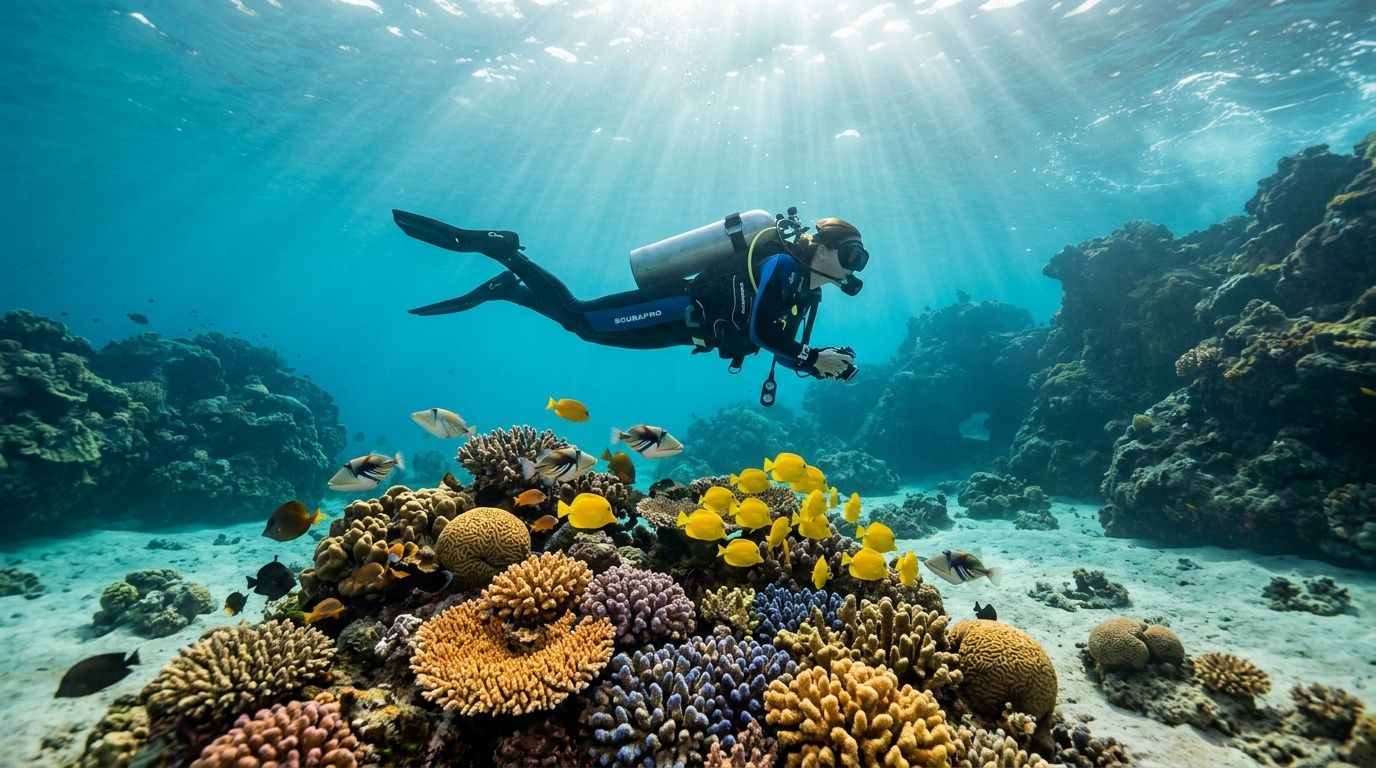
You’re probably planning a Hawaii trip with mixed goals. Someone in your group wants world-class diving, someone else wants an easy first underwater experience, and someone just wants warm water, good visibility, and a day that feels worth the airfare.
That’s why hawaii scuba is such a strong fit. The islands offer dramatic volcanic terrain, easy access to quality operators, and enough variety to keep both serious divers and curious beginners happy. But if you want the short version from a divemaster’s point of view, the Big Island, especially Kona, is where I’d send people first.
Welcome to the Underwater Paradise of Hawaii
Drop below the surface in Hawaii and the first thing that stands out is the light. Sunbeams cut down through clear blue water, reef fish move in every direction, and black lava formations give the whole dive a shape and texture that feels different from Caribbean reefs or tropical atolls. Hawaii doesn’t just give you coral. It gives you topography.

That underwater variety sits on top of a very mature dive culture. Hawaii hosts over 1.5 million dives annually across more than 215 licensed dive shops, and the first commercial dive shop opened in 1958, which helped move scuba from a niche pursuit into mainstream recreation, according to this history of Hawaii diving. That matters for travelers because it means you’re not trying to force an adventure destination to act like a dive destination. Hawaii already is one.
What makes Hawaii scuba feel different
Some places are known for pelagics. Others are known for coral density or wrecks. Hawaii stands out because several pieces come together at once:
- Volcanic structure: Lava tubes, arches, ledges, and sharp relief make dives visually memorable.
- Consistent access: You can dive here year-round without treating the trip as a narrow seasonal gamble.
- Strong operator base: There’s enough infrastructure to serve beginners, advanced divers, families, and photographers.
- Repeat value: One island trip rarely covers it all. Divers come back for night dives, reef dives, and island-to-island variety.
Hawaii feels established in the best possible way. The logistics are easier than many remote dive destinations, but the underwater scenery still feels wild.
Why divers keep coming back
Good diving destinations get one thing right. Great ones let you build an entire trip around the water without running out of options. Hawaii does that well.
You can spend one day on a calm reef, another on a lava tube system, and another doing a signature night dive that you’ll talk about for years. That range is the reason Hawaii scuba works for both first-timers and veterans. The islands reward experience, but they don’t require you to be an expert to have a memorable dive trip.
Hawaii's Best Dives An Island by Island Guide
You’ve got four dive days, one hotel booking left to make, and someone in your group only snorkels. That is the point where island choice starts to matter. If the goal is the strongest all-around Hawaii scuba trip, start with Kona on the Big Island.

Kona gives divers the cleanest mix of what usually matters most on a Hawaii trip: reliable water clarity, volcanic structure that alters how a dive feels, and access to experiences you cannot easily replace on another island. It also works unusually well for mixed-skill groups. Divers can spend the morning on lava tubes and reef drop-offs, while non-divers still have worthwhile snorkel options nearby instead of feeling like they got dragged onto a scuba-focused vacation.
For a side-by-side island breakdown, this guide to the best diving Hawaii islands is a useful reference. My recommendation still starts with Kona.
The Big Island The Kona Coast Reigns Supreme
Kona earns the top spot because it delivers the fewest compromises.
From a divemaster’s perspective, that matters. Good visibility makes briefings easier to follow underwater. Lava topography gives each site its own character instead of blending into another pretty reef. Boat plans hold up more often, which means less time reshuffling schedules and more time diving.
The seafloor off Kona feels built for scuba. Old lava flows formed arches, fingers, shelves, and swim-throughs that create natural routes through a site. Fish life uses that structure well, too. You check cracks for eels and crustaceans, scan the blue for passing pelagics, then turn back to the rock and find another pocket full of movement.
Kona also scales well across experience levels:
- Newer divers get sites that are visually dramatic without demanding advanced conditions every day.
- Experienced divers get enough structure, night diving, and specialty options to keep the trip interesting.
- Underwater photographers benefit from clear water, dark lava backgrounds, and subjects that hold position around ledges and cleaning stations.
- Mixed groups can split time between scuba and snorkeling without needing to change islands.
For guided diving on the Big Island, Kona Honu Divers is the operator I’d point people toward. They’re well set up for divers who want Kona-specific knowledge, not a generic resort schedule.
Practical rule: If you only have a few dive days, book the island that gives you the strongest chance of good conditions and the widest range of worthwhile sites. In Hawaii, that usually means Kona.
Maui Diving the Sunken Volcano
Maui usually lands in second place. It is a good choice for travelers who want an easy vacation base and plan to fit diving into a broader trip.
The appeal is obvious. You get well-known reef and crater diving, solid resort infrastructure, and plenty to do after the boat comes back in. For some travelers, that balance is ideal.
The trade-off is consistency. Maui can be excellent, but the overall diving experience depends more on timing, site access, and daily conditions. If you are already staying on Maui, dive Maui. If scuba is the main reason for the trip, Kona is still the safer bet.
| Diver type | Why Maui works |
|---|---|
| Vacation-first travelers | Easy to pair diving with beaches, dining, and shore activities |
| Occasional divers | Straightforward access to popular charter trips |
| Mixed groups | Strong topside options for family members who do not dive |
Oahu Wrecks and Reefs
Oahu has real range, especially for divers who enjoy wrecks. That is its clearest edge.
You can build a satisfying trip around artificial reefs, historical interest, and convenient access from Honolulu. It suits travelers who want city energy on land and diving in the schedule, rather than a trip built almost entirely around the water.
That split focus is the trade-off. Oahu does many things well, but it does not center the dive experience the way Kona does. Divers who want the ocean to shape the whole trip usually end up happier on the Big Island.
What Oahu does especially well:
- Wreck diving: Better fit for divers who want sunken structure and history.
- Urban convenience: Easy to combine diving with restaurants, nightlife, and short stays.
- Flexible itineraries: Useful for travelers squeezing in a couple of dives during a broader island visit.
Kauai and Other Hidden Gems
Kauai appeals to divers who like a wilder island feel above water and are comfortable working around more variable conditions. On the right day, it is beautiful underwater.
I recommend Kauai more selectively. It suits travelers who already know they want Kauai’s quieter pace, dramatic scenery, and less built-up atmosphere. It is not the first island I would choose for someone asking for the strongest one-stop answer to Hawaii scuba.
If someone asks me, “I only get one Hawaii dive trip. Where do I go?” the answer stays the same. Go to Kona first.
Signature Dives Manta Ray and Black Water Encounters
Some dive destinations are built on reefs. Kona also has experiences that stand on their own as reasons to book the trip. The two that matter most are the manta ray night dive and the black water dive.

If you want a clear explanation of the local draw, this article on why manta rays gather near Kona after dark gives useful context before you go.
Manta ray night dive
This is the dive people mention long after they’ve forgotten the exact site names from the rest of the trip. Divers settle into position, lights bring in plankton, and manta rays sweep through the beams in repeated passes. The whole experience feels calm, choreographed, and completely unlike a standard reef night dive.
A few practical notes matter here:
- Stay still and stable: Good buoyancy and body position make the experience better for both divers and mantas.
- Pick an operator that runs the dive cleanly: Briefing quality matters more here than on a casual daytime reef dive.
- Set expectations correctly: You’re there to observe, not chase.
For divers who want this specific experience, Kona Honu Divers' manta ray dive is the direct place to look.
Black water night dive
Black water diving is a different animal entirely. Instead of orienting off a reef, you’re suspended in open water at night over deep ocean. The appeal is the life that rises from the depths after dark. It’s strange, technical-feeling, and unforgettable.
This isn’t the best “first night dive” for everyone. Divers who do well on black water trips usually bring solid buoyancy control, comfort in the dark, and the ability to stay calm without a visible bottom or familiar terrain. If that sounds exciting rather than stressful, it’s one of the most remarkable experiences you can have in Hawaii.
For that style of trip, Kona Honu Divers' black water night dive is the right page to review.
Which one should you choose
If you can only do one, choose based on temperament:
| Dive | Best for |
|---|---|
| Manta ray night dive | Divers who want a famous Kona experience with a clear focal point |
| Black water dive | Divers who want something unusual, surreal, and more advanced-feeling |
If you have the time, do both. They complement each other well. One is graceful and iconic. The other is exploratory and strange in the best way.
Planning Your Dive Trip Seasonal Considerations
You wake up in Kona to flat water, load your gear, and realize the hard part is not finding a diveable day. It is choosing what kind of week you want underwater.
That is one reason I tell divers to start with the Big Island. Kona gives you the most reliable base for a scuba-focused trip in Hawaii, with enough variety to keep experienced divers busy while still giving mixed-skill groups plenty to do on the surface. Conditions stay workable through the year, so trip timing usually comes down to comfort, crowd levels, and what else you want around the diving.
What actually changes by season
Hawaii does not have a tiny dive season that opens and shuts. The shifts are real, but they are modest, especially on the Kona coast where the island blocks a lot of wind and swell.
Summer usually means warmer water, easier boat rides, and lighter exposure protection for divers who do not get cold easily. Winter brings slightly cooler water and a livelier feel above the surface, especially during whale season. The diving can still be excellent. You just want to pack for longer surface intervals and cooler rides back to the harbor.
Spring and fall are often the sweet spot. I like these periods for divers who want good conditions without peak vacation traffic, and they work well for groups splitting time between scuba and snorkeling. If part of your group plans to stay near the surface, this guide to the best time for snorkeling Big Island Hawaii helps match expectations.
How I would choose your timing
Pick your season based on your priorities, not on fear that you will miss the only good window.
- Choose summer if you want the warmest water and the simplest packing.
- Choose winter if you want to pair diving with whale season and do not mind slightly cooler conditions.
- Choose spring or fall if you value a balanced trip with solid diving and a little more breathing room.
For many travelers, Kona is the anchor and the rest of the island is the bonus. That works especially well if one person wants black water or manta dives while another would rather snorkel bays, beaches, and captain cook style spots during the day.
Wetsuit and packing advice from the boat
Divers routinely underpack for the boat ride, not the dive itself. Underwater can feel great. Ten minutes later, wet and in the wind, the same diver is shivering.
Pack for your last dive of the day. If you chill easily, bring a thicker suit than your first impression of Hawaii suggests. If you run warm, you can go lighter, but still bring a dry layer for the ride in. A hooded vest is a smart add-on for people doing multiple days of diving, especially in winter or after night dives.
A practical bag for Hawaii usually includes:
- A wetsuit you know you can stay comfortable in for repeated dives
- A light jacket or warm layer for the boat
- Your own mask if fit matters to you
- Basic save-a-dive spares like straps and mouthpieces
- Reef-safe sun protection for topside time
Best season by trip style
For a pure scuba trip, Kona works year-round, which is exactly why I rank it first in Hawaii. The volcanic structure of the coast creates a lot of protected diving, and the marine life is strong in every season.
For mixed groups, timing matters a little more. Summer is often the easiest choice if half the group is diving and half is snorkeling. Winter still works well, but non-divers tend to enjoy it more when they know the mornings and boat rides may feel cooler.
The short version is simple. Build the trip around Kona first, then choose the season that fits your tolerance for cooler water, busier travel periods, and how much of the itinerary is scuba versus snorkeling. That approach gives most visitors the best shot at a trip that works for everyone.
Getting Certified and Planning Your Budget
A lot of travelers interested in hawaii scuba aren’t certified yet. That’s not a problem. Kona is one of the better places to take a first step because the entry path is clear, and there are beginner-friendly options that don’t throw you straight into a demanding environment.
A useful local example is Red Hill. The Kona coast has accessible shore entries like Red Hill that work well for non-certified beginners and families who want a lower-stress introduction to scuba, according to this overview of family and beginner scuba options in Hawaii.
Your three realistic starting points
Not everyone needs the same path. Here’s how I’d think about it.
Try scuba first
If you’re curious but unsure, start with an introductory experience under direct supervision. That gives you the feel of breathing underwater, handling the gear, and deciding whether you enjoy it before committing to a full certification course.
This is the best route for:
- nervous first-timers
- family members who want to sample scuba
- strong snorkelers thinking about moving to tanks
Get certified before the trip
This works well if you want to maximize vacation dive time. Do the coursework and training before arrival, then use Hawaii for your certified dives rather than your classroom time.
It’s efficient, but it isn’t always the most relaxing option. Some travelers would rather learn in Hawaii and enjoy the setting while they train.
Certify in Kona
For people who want the whole experience tied to the destination, this can be a great choice. Calm conditions help, and students usually find it easier to focus when the water is clear and the setting feels rewarding.
For more destination-specific guidance, this article on the best scuba in Hawaii is useful for comparing your options.
Boat diving versus shore diving
Boat diving offers practical solutions for budgeting. Boat diving is the smoothest option for many visitors because operators handle site access, logistics, and gear support. It’s also the easiest way to reach signature experiences and get local guidance.
Shore diving can be the smarter move if you already have experience, want more flexibility, or prefer a simpler day at a lower cost. The trade-off is that shore diving demands more from you. Entry judgment, navigation, surf awareness, and equipment handling become more your responsibility.
| Option | What works | What doesn’t |
|---|---|---|
| Boat diving | Easier logistics, guided access, better for visitors | Costs more, fixed schedule |
| Shore diving | Flexibility, lower cost, good for confident divers | More planning, more self-reliance |
Where people overspend
Most budget mistakes are simple. Divers book every day as a premium boat day, rent gear they don’t need, or stack expensive headline experiences without leaving room for easy shore entries or rest.
A better approach is to mix the trip:
- Book guided dives for the signature days
- Use easier days for shore diving or snorkeling
- Keep one day open for weather, fatigue, or a second chance at a favorite site
That mix usually gives you a better trip than trying to make every single day the “big” day.
Dive Safety and Malama ʻĀina Best Practices
Hawaii rewards relaxed, controlled divers. It also punishes sloppy habits fast, not always with drama, but with avoidable fatigue, bad buoyancy, damaged reef, and poor decision-making. Safety and stewardship belong together here.

One rule matters more than most visitors realize. After diving, safety protocols prohibit ascending above 1,000 feet within 18 hours of your last dive to reduce decompression sickness risk, as noted in this guidance on Hawaii diving safety considerations. On the Big Island, that affects real travel decisions because elevation changes are part of many sightseeing plans.
The safety habits that matter most
Don’t overcomplicate dive safety. Focus on the habits that prevent the common mistakes.
- Respect your post-dive elevation limit: Don’t schedule summit drives or high-elevation sightseeing right after diving.
- Dive within the conditions you have: Calm on the surface doesn’t mean easy for every diver underwater.
- Keep your buoyancy clean: Good trim protects both you and the reef.
- Abort early if something feels off: A shortened dive is better than a bad one.
Reef protection starts with body control. Divers who can hover cleanly break less coral, stress less marine life, and usually enjoy the dive more.
Malama ʻĀina underwater
Malama ʻĀina means caring for the place that’s hosting you. Underwater, that translates into simple behavior:
- No touching coral
- No chasing wildlife
- No standing on the reef
- No collecting souvenirs from the ocean
If you’re also spending time snorkeling, these Kealakekua Bay snorkeling rules every visitor should know reinforce the same mindset.
The best Hawaii divers aren’t the ones with the fanciest gear. They’re the ones who leave the site looking untouched.
Amazing Alternatives For Snorkelers and Non-Divers
A Kona-first trip works especially well for mixed groups because the same coast that gives divers lava tubes, steep drop-offs, and pelagic encounters also gives snorkelers clear water, calm mornings, and easy access to reef life. Nobody has to sit out the ocean days. On the Big Island, non-divers can still get the headline experiences.
Kona is the easiest place in Hawaii to plan around different comfort levels. One person can book a two-tank boat dive, another can snorkel the same coastline, and everyone can still meet up for lunch talking about mantas, dolphins, reef fish, and that dark volcanic shoreline sliding by the boat.

Manta ray night snorkel
If your group wants one signature Kona experience without scuba training, start here. You hold onto a light board at the surface while the beams attract plankton and mantas rise up from the dark to feed. It feels dramatic from the first minute, but the actual skill requirement is low compared with diving.
The direct trip option is the Manta Ray Night Snorkel tour. If you’re comparing operators, Manta Ray Night Snorkel Hawaii is another good option.
I usually recommend this for:
- Non-diving partners: They still get one of Kona’s best wildlife encounters.
- Families with confident swimmers: The format is straightforward and memorable.
- Divers on a day off from tanks: You stay in the water and still experience the site in a completely different way.
One practical note. Night snorkels are exciting, but they are not the best fit for guests who dislike open water after dark. For that group, a daytime reef trip is usually the better call.
Captain Cook snorkeling
For a daytime trip, Kealakekua Bay is the easy recommendation. The bay is protected, visibility is often excellent, and the reef has the kind of fish density that keeps both first-time snorkelers and experienced ocean people happy. If someone in your group wants the clearest possible look at Kona’s reef life without putting on scuba gear, this is usually where I send them.
For the main tour option, look at the Captain Cook snorkel tour.
This trip tends to suit groups that want a more relaxed pace. You get bright water, a classic Big Island backdrop, and a site that shows off why Kona stands apart. The volcanic coastline continues underwater, and even from the surface you can see how the reef is shaped by that geology.
Which snorkeling option fits your group
| Snorkel experience | Best fit |
|---|---|
| Manta ray night snorkel | Wildlife-focused travelers, bucket-list seekers, non-divers wanting something unforgettable |
| Captain Cook snorkeling | Families, reef lovers, daytime adventurers, mixed ability groups |
The best part is simple. Snorkelers in Kona are not getting a backup plan. They’re getting two of the strongest ocean experiences in Hawaii, which is exactly why the Big Island works so well for groups with different skill levels.
Frequently Asked Questions About Hawaii Scuba
| Question | Answer |
|---|---|
| Is Kona really the best place for hawaii scuba? | If diving is the main reason for the trip, Kona is the safest recommendation. It offers strong visibility, lava-formed underwater terrain, signature night dives, and good options for both certified divers and beginners. |
| Can beginners try scuba on the Big Island? | Yes. Introductory scuba experiences are available, and Kona has beginner-friendly entries and conditions that help first-timers ease into the sport. |
| Should I choose boat diving or shore diving? | Choose boat diving if you want easier logistics and guided access. Choose shore diving if you’re experienced, comfortable planning your own dives, and want a more flexible budget. |
| What wetsuit should I bring? | Most divers do well with a 2.5mm to 5mm wetsuit, depending on season and personal cold tolerance. |
| Can I dive and then drive to high elevation later the same day? | No. After your last dive, you need to avoid elevations above 1,000 feet for 18 hours. Plan summit drives and other elevation-heavy sightseeing around your dive days. |
| What if my travel group includes non-divers? | Kona is excellent for mixed groups. Non-divers can book high-quality snorkeling trips, including manta ray night snorkels and Captain Cook excursions. |
If you want to round out a Hawaii scuba trip with an equally strong snorkeling day for non-divers, rest days, or mixed-skill groups, Kona Snorkel Trips is a smart place to start. Their Big Island tours make it easy to add memorable ocean time without overcomplicating the itinerary.