
The Best Diving in Hawaii: 7 Top Spots & Tours for 2026
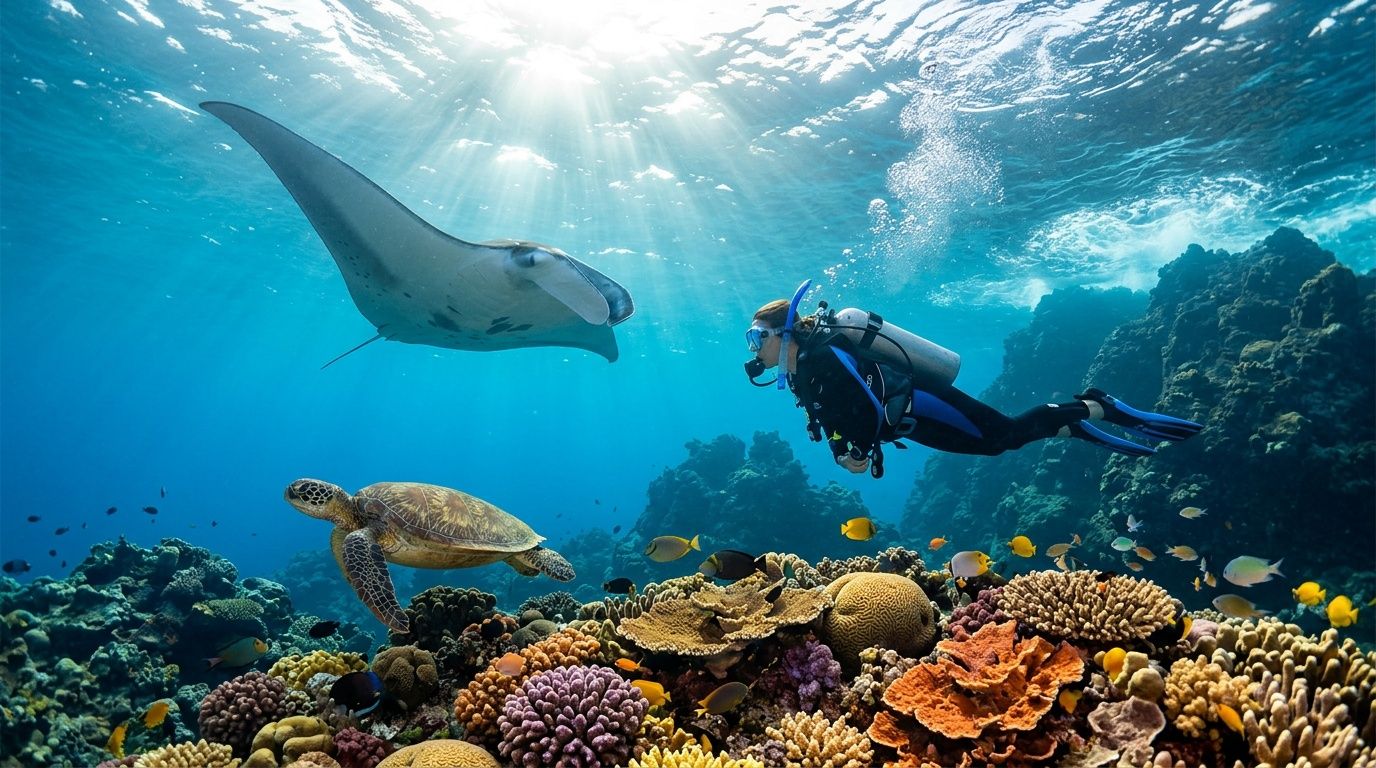
You land on the Big Island, book one boat day, and suddenly the whole Hawaii plan changes. That happens a lot. Travelers come in comparing islands, then realize Kona puts more of Hawaii’s signature underwater experiences within easy reach than anywhere else in the state.
That is the key to The best diving in Hawaii. It is not one famous site or one island that does everything well. It is choosing the kind of water time you want, then picking the island and operator that match it.
Kona usually rises to the top for one reason. Variety. The coast gives divers access to lava formations, healthy reef, night diving, pelagic encounters, and specialized trips without long run times or a complicated schedule. That matters on a real vacation, where boat logistics, surface intervals, and drive time can make or break the day.
Snorkelers and scuba divers also need different advice, and that gets glossed over in a lot of Hawaii roundups.
For snorkeling-focused trips, Kona Snorkel Trips is one of the established names on the coast, especially for travelers deciding between daytime reef outings and the manta experience. If you are weighing those two options, this guide to the Kona manta ray night snorkel vs. night dive lays out the trade-offs clearly.
For scuba, the Kona coast has the strongest overall mix of conditions and site variety in the islands. Kona Honu Divers stands out for divers who want a serious dive operation rather than a boat that tries to split equal attention between every activity onboard. That difference shows up in briefing quality, site selection, and how smooth the day feels once you are geared up and in the water.
Other islands still deserve a place on the list. Maui is a strong pick for clear-water volcanic topography and Molokini-focused day trips. Oahu brings wreck history and more urban accessibility. Lanai and Niihau offer advanced adventures for divers willing to spend more time and money to reach less-visited water.
If your goal is the widest range of memorable dives in one trip, start with Kona. Then build outward from there based on whether you want mantas, blackwater, reef snorkeling, wrecks, or remote expedition-style diving.
1. The Manta Ray Night Experience
You drop into dark water off Kona, settle onto the sandy bottom, and the first manta glides through the lights like it owns the whole water column. A few seconds later, another one banks overhead, close enough to show the white of its belly and the shape of its gills. For many visitors, this is the dive they remember long after the rest of the trip blurs together.
The manta night experience is the signature underwater outing on the Big Island, and it is a big reason Kona sits at the center of any serious Hawaii dive itinerary. It also works for two different kinds of travelers. Divers get the view from below, looking up as the rays sweep through the beam. Snorkelers stay at the surface with a light board and watch the same feeding behavior from above.
For scuba divers
The dive version rewards calm divers who are comfortable at night and don’t need to chase the action. You descend, find your spot, and let the mantas come to you. Good operators keep the group settled and the light placement organized, because a chaotic bottom scene makes the experience worse for both divers and mantas.
For scuba, Kona Honu Divers' 2-tank manta ray night dive is a smart pick if you want more than a single splash-and-go manta drop. Pairing a dusk reef dive with the manta site gives you a fuller night-diving session and a better use of the boat ride.
One practical note. If you are newly certified, the manta dive is still within reach with the right operator, but it feels very different from a daytime reef dive. Night procedures, descent control, and buoyancy matter more here than raw depth or current tolerance.
Practical rule: If you're torn between snorkeling and diving with mantas, choose the format that lets you stay relaxed after dark. The better experience is the one where you can focus on the animals instead of your own stress.
For snorkelers
The snorkel version is easier to recommend to mixed groups, families, and travelers who do not dive regularly. You spend more time watching and less time task-loading. That is a real advantage, especially for people who want the manta encounter without managing scuba gear in the dark.
For that outing, Kona Snorkel Trips' manta ray night snorkel in Kona is a practical option, especially if you care about guide oversight and a smaller-group feel. If you’re comparing options, Manta Ray Night Snorkel Hawaii is also an exceptional alternative for a manta ray night snorkel tour.
Visitors often ask which is better. The honest answer is that scuba gives you the dramatic upward view, while snorkeling is simpler and often more comfortable for non-divers. If you want a second signature Kona night activity after mantas, blackwater diving off the Kona coast is the next step up in difficulty and one of the most unusual dives in Hawaii.
A common real-world question is whether divers get the “better” manta experience. They get a different one. If you want help choosing, this breakdown of the Kona manta ray night snorkel vs night dive lays out the trade-offs clearly.
2. Kona's Volcanic Reefs and Blackwater Abyss
You finish a calm reef dive in the morning, log a second tank through lava tubes after lunch, and by sunset the boat is heading offshore into water so deep the bottom stops mattering. That range is why Kona stands apart. It is the island I recommend to divers who want more than one headline experience on the same trip.

Why Kona day diving works
Kona’s reef diving feels different from the softer coral scenes many visitors expect in Hawaii. The coastline is built by lava, and underwater that shows up as arches, fractured ledges, caverns, fingers of rock, and long reef lines that hold fish well. Conditions are often friendlier on the Kona side too, which is a big reason the coast supports such a busy dive calendar year-round.
That variety helps with trip planning. Newer divers can stay on straightforward reef profiles with plenty to see and without a lot of current management. Experienced divers can pick sites with more depth, overhead-style features, and more demanding navigation.
For visiting scuba divers, Kona is also the clearest example of why operator choice matters. Some boats are fine for a casual two-tank morning. Others are better if you care about site selection, briefings that prepare you for the dive, and crews that know how to pace a mixed-experience group without making advanced divers feel babysat. That is part of what makes Kona Hawaii’s strongest scuba hub, while nearby options like snorkeling Captain Cook Bay on a guided boat trip work better for non-divers in the same travel group.
Blackwater is a different animal
Blackwater off Kona is one of the most unusual dives in the state, and it deserves respect. You are out over deep open ocean at night, suspended in the water column, watching larval and pelagic life rise during the nightly vertical migration. The draw is not reef structure. The draw is the animals, many of which look alien even to divers who have logged plenty of tropical night dives.
This trip has real trade-offs. If you love landmarks, reef references, and the comfort of seeing the bottom, blackwater can feel disorienting. If you are comfortable in open water at night and want a wildlife-focused dive that feels rare, it can be the highlight of a Hawaii trip.
Good blackwater operators keep the procedure tight. Clear tether protocols, strong crew communication, and realistic screening on diver ability matter more here than on a standard night reef dive. The earlier guide to blackwater diving mentioned in the previous section is useful reading before you book, especially if you are trying to decide whether the experience fits your comfort level.
3. Snorkeling Historic Kealakekua Bay
You drop into clear morning water, look down, and the reef is already busy. Yellow tangs move over the coral, the cliffline blocks some of the wind, and the whole bay feels different from the exposed lava coast outside. Kealakekua earns its reputation because it gives non-divers a memorable underwater day, not just a pretty boat ride.
The history matters here, but in the water the practical appeal is simple. Good visibility, protected conditions on the right day, and enough fish life to keep both first-timers and experienced snorkelers engaged. For families or mixed groups, this is one of the easiest places on the Big Island to put divers and non-divers on separate tracks without anyone feeling shortchanged.

What makes the bay special
Kealakekua Bay rewards patience. Snorkelers who settle in, float patiently, and let the reef come to them usually see more than people who kick hard straight for the monument and back. The bay also tends to work well for cautious swimmers because guides can keep them in productive water without asking them to cover much distance.
There is a trade-off. Its popularity is deserved, which means timing and boat choice matter. Early departures and smaller groups usually make the experience better, especially if your goal is more water time and less crowd energy.
Best way to visit
A boat tour is the cleanest way to do it. Shore access is possible, but it is the kind of plan that sounds simple on a map and feels less appealing once heat, distance, and gear enter the picture. For travelers staying on the Kona side, this is also where the scuba versus snorkel split becomes clear. Divers should keep their reef and advanced dives centered on Kona operators built for scuba logistics, while snorkel-focused groups are usually better served by a dedicated snorkel boat with easier entries, simpler gear setup, and guides who work well with newer swimmers.
Kona Snorkel Trips is a solid fit for that second group. If you want more context on how this stop fits into a Big Island heavy itinerary, this guide to the best diving in the Hawaii islands with a strong Kona focus lays out the bigger picture.
Local call: Captain Cook is a strong choice for travelers who want easy payoff fast. If your group includes kids, hesitant swimmers, or relatives who are not going to sign up for scuba, this bay usually lands better than trying to turn everyone into divers for a day.
One tip from guiding these waters. Treat Kealakekua as the main event, not a quick stop squeezed between other plans. Give yourself a relaxed morning, listen to the briefing, and stay in the water long enough for the bay to settle down around you. That is when this place starts to show why Kona is such a strong home base for both serious diving and high-quality snorkeling.
4. Diving Maui's Sunken Volcano
Maui earns its spot on any best diving in hawaii list because Molokini Crater is still a classic for a reason. It’s iconic, photogenic, and easy to understand even before you get in the water. You’re diving a partially submerged volcanic crater with a protected inner reef. That alone sells the trip.
The trade-off is that Molokini is famous. Famous sites attract attention, and attention means timing matters more.

Inner crater versus the back wall
The inner crater is the crowd-pleaser. It’s sheltered relative to the open ocean, easy to appreciate, and comfortable for a wide range of experience levels. If you want a clean, scenic reef dive or snorkel day off Maui, that’s the recommended version to book.
The back wall is where the mood changes. This side feels more exposed and more advanced, with a bigger-ocean feel that appeals to experienced divers who want something less gentle than the inside route.
Who should choose Maui
Molokini makes sense for travelers already staying on Maui who want one marquee water day without island-hopping. It’s also a solid call for people who care a lot about visibility and broad scenic impact. If your dream Hawaii dive trip is one polished half-day on a landmark site, Maui delivers.
If you’re trying to decide between islands instead of just sites, this guide to the best Hawaii islands for diving is helpful. My practical take is simpler. If you want one standout crater day, Maui is great. If you want more variety over several dive days, Kona usually gives you more range.
A reliable operator matters here because departures, weather calls, and site selection shape the day more than people expect. Maui Diamond Sea Sports is one of the names travelers often look at for regular Molokini access.
5. Exploring History in Oahu's Wreck Alley
Drop down the line off Waikiki and the outline appears fast. First the shape, then the rails, then the full wreck sitting in blue water with schools of fish stacked above it. For divers who care about structure, history, and that suspended feeling you only get around big steel, Oahu delivers a very different day from Kona’s reef-and-pelagic rhythm.
That difference matters.
Kona is still the island I’d choose for the widest range of diving over several days, especially if you want to pair scuba trips with strong snorkel options through operators such as Kona Honu Divers for scuba and Kona Snorkel Trips for snorkeling. Oahu earns its spot for a narrower reason. It does accessible wreck diving unusually well, especially for travelers already staying in Honolulu who want serious underwater scenery without changing islands.
What to expect underwater
Wreck Alley on Oahu’s south shore packs several well-known sites into a compact area. The YO-257 and San Pedro are often dived together, and the Sea Tiger is the wreck many visiting divers ask for by name. These are memorable dives because the wrecks are large enough to feel dramatic but still practical for charter operations running from the Honolulu side.
The trade-off is depth. These sites are better for divers who already have decent buoyancy, comfort in blue water, and enough experience to stay relaxed on a deeper profile. A wreck dive stops being fun when all your attention goes to gas, ascent time, and where the rest of the group drifted.
Marine life helps soften the industrial look. You’ll often see the wrecks functioning like artificial reefs, with schooling fish around the superstructure and more life tucked into openings, rails, and shaded sections. It feels less like sightseeing and more like visiting a reef that happens to be made of steel.
Who should dive Oahu wrecks
Oahu suits certified divers who want a focused boat day with a clear theme. Wrecks. Structure. Depth. Good access from the city.
It is a strong fit for travelers who are splitting time between beaches, restaurants, Pearl Harbor, and one or two dive mornings. It is a weaker fit for someone brand new to scuba who mostly wants long, shallow bottom time and easy reef cruising. In that case, Kona usually gives you more beginner-friendly variety over a full dive trip.
Operators like Dive O'ahu and Honolulu Scuba Company are common names for these charters. Before booking, be honest about recent experience, not just certification level. A diver with fifty old dives and no recent deep work may have a rougher day than someone with fewer dives who has been in the water lately.
If you have not done a deeper wreck profile in a while, book a tune-up first. Vacation diving should feel controlled, not like a skills check.
For a broader island-by-island breakdown, this guide to scuba diving in Hawaii gives useful context on where Oahu fits and why many divers still center a longer trip on Kona.
6. The Forbidden Island
Ni'ihau is the trip experienced divers whisper about. It’s remote, it’s seasonal, and it asks more from you before the first giant stride ever happens. That’s exactly why many advanced divers want it.
This is not a casual add-on after brunch. It’s a long day, usually a rougher ride, and a commitment to open-ocean conditions that can feel far removed from easy resort diving.

Why advanced divers chase it
The draw is remoteness. Fewer casual visitors, wilder conditions, and the feeling that you’re diving a frontier rather than a polished tourist circuit. The underwater scenery is dramatic, and the marine life can be bigger and less shy than what many divers see on easier day boats elsewhere.
Ni'ihau appeals to people who already know what they like underwater. Shark encounters, stronger current, volcanic drama, and the satisfaction of doing a trip that requires actual commitment. If that doesn’t sound fun, skip it without guilt.
What works and what doesn't
What works is going only if you already handle boat days well and have enough dive experience that changing conditions don’t scramble your decision-making. What doesn’t work is booking it because someone online called it “epic” and assuming the rest will sort itself out.
A seasoned local operator matters more here than at almost any other Hawaii destination. Seasport Divers is one of the names often associated with these expeditions from Kaua'i, and for good reason. On a demanding trip, strong crew judgment counts more than flashy marketing.
The simplest advice I can give is this:
- Go for the dive, not the bragging rights. If rough crossings drain you before the first drop, you won’t enjoy the sites.
- Treat seasickness prevention as basic planning. Don’t wait to see how you feel offshore.
- Be conservative with your self-assessment. Advanced trips reward calm divers, not ambitious ones.
Top 6 Hawaii Dive Sites Comparison
| Experience | 🔄 Implementation Complexity | Resource Requirements | ⭐ Expected Quality | 📊 Expected Outcomes | 💡 Ideal Use Cases / Key Advantages |
|---|---|---|---|---|---|
| The Manta Ray Night Experience: A Kona Signature | Moderate, night ops, lighting, strict safety protocols | Boat, lights/boards, snorkel or scuba gear, certified guides, small groups | ⭐⭐⭐⭐⭐ | Very high, close, frequent manta encounters and strong visual impact | Bucket-list wildlife viewing; suitable for snorkelers and certified divers; very memorable |
| Kona's Volcanic Reefs & Blackwater Abyss | Low–High, day dives straightforward; blackwater is complex (night drift, tethering) | Standard dive gear and boat for day sites; night tethering rig and experienced crew for blackwater | ⭐⭐⭐⭐ | High, rich biodiversity on reefs; blackwater yields rare pelagic/larval sightings | Naturalist photography, varied day diving; blackwater for specialty/advanced divers |
| Snorkeling Historic Kealakekua Bay (Captain Cook) | Low, calm, protected waters; boat access required and permit rules apply | Boat tour, snorkel gear, operator access (no certification needed) | ⭐⭐⭐⭐⭐ | High, crystal-clear water, healthy reef, frequent turtles and dolphins | Family-friendly snorkeling, history + reef viewing, relaxed excursions |
| Diving Maui's Sunken Volcano: Molokini Crater | Moderate, regular charters, sheltered inner crater; advanced back-wall dives can be technical | Boat charter with permits, snorkel/scuba gear; advanced certification for back wall | ⭐⭐⭐⭐ | High, exceptional visibility, diverse reef fish, occasional pelagics on outer wall | Ideal for clear-water snorkeling/diving and photographers; reliable conditions |
| Exploring History: Oahu's Famous Wreck Alley | Moderate–High, depth, navigation, and safety considerations; possible currents | Scuba certification, deep-diving experience, boat charter, lights for wrecks | ⭐⭐⭐⭐ | High, immersive wreck exploration, abundant schooling fish and larger species | Best for certified wreck enthusiasts and divers interested in marine history |
| The Forbidden Island: Advanced Diving off Ni'ihau | High, long rough boat rides, remote logistics, seasonal access, advanced planning | Advanced certification, long-range vessel, experienced operator, high time/cost | ⭐⭐⭐⭐⭐ | Very high, pristine sites with large pelagic encounters and dramatic geology | For experienced divers seeking rare, big-animal encounters and remote adventure |
Plan Your Perfect Hawaiian Dive Adventure
You wake up on the Big Island with one open day and a simple question. Do you want manta rays after sunset, a lava reef in the morning, or an easy snorkel with clear water and good odds of seeing turtles? That choice matters more in Hawaii than people expect, because each island rewards a different kind of ocean day.
If you want the most complete answer to the best diving in Hawaii, Kona is still the first place I’d point you. The advantage is practical. You can book a serious scuba itinerary without spending half your trip in the car, and you can build a snorkel day just as easily if not everyone in your group dives. That flexibility is hard to beat.
Kona also gives you range without a lot of guesswork. Conditions on the leeward side are often friendlier than what visitors run into on more exposed coasts, so trips get canceled less often and first-time visitors usually have an easier start there. For mixed groups, that matters. One person can do a blackwater or manta dive while another books a Kealakekua Bay snorkel and still feels like they got a signature Hawaii experience.
For scuba, I usually steer divers toward an operator that runs diver-focused boats and understands how to match sites to skill level, especially for specialty outings like manta night dives and blackwater. Kona Honu Divers fits that role well. They are a strong choice for certified divers who want crew support, efficient briefings, and trips built around diving rather than general sightseeing.
For snorkeling, Kona Snorkel Trips is a good fit for travelers who want small-group outings with straightforward logistics. I especially like that style for manta night snorkels and Kealakekua Bay, where a calm check-in, clear gear help, and attentive in-water support can make the difference between a stressful trip and a fun one.
There is a trade-off. Kona is the easiest island to recommend to the widest range of visitors, but it is not the answer for every diver. If wrecks are your priority, Oahu makes more sense. If you are staying on Maui and want one polished reef day with excellent visibility, Molokini is the cleaner choice. If you have the experience, budget, and stomach for a long crossing, Ni'ihau is in a different category entirely.
One last practical note. Boat days are still boat days, even when the ocean looks calm from shore. Pack for wind, protect yourself from sun between dives, and pay attention to the safety briefing. If you own a vessel or want a better handle on onboard safety gear, this guide to boat fire extinguishers is a useful read.
The right Hawaii dive plan starts with the kind of water time you enjoy, then matches the island and operator to that goal. For most travelers, Kona makes that decision easier because it offers the strongest mix of high-quality scuba and easy-to-book snorkel trips in one place.
For a well-run Big Island snorkeling trip, including manta night snorkels and Captain Cook outings, take a look at Kona Snorkel Trips. It’s a practical place to start if you want small-group tours, experienced guides, and an easy way to book a memorable day on the water.