
Diving in Hawaii: An Ultimate 2026 Underwater Guide
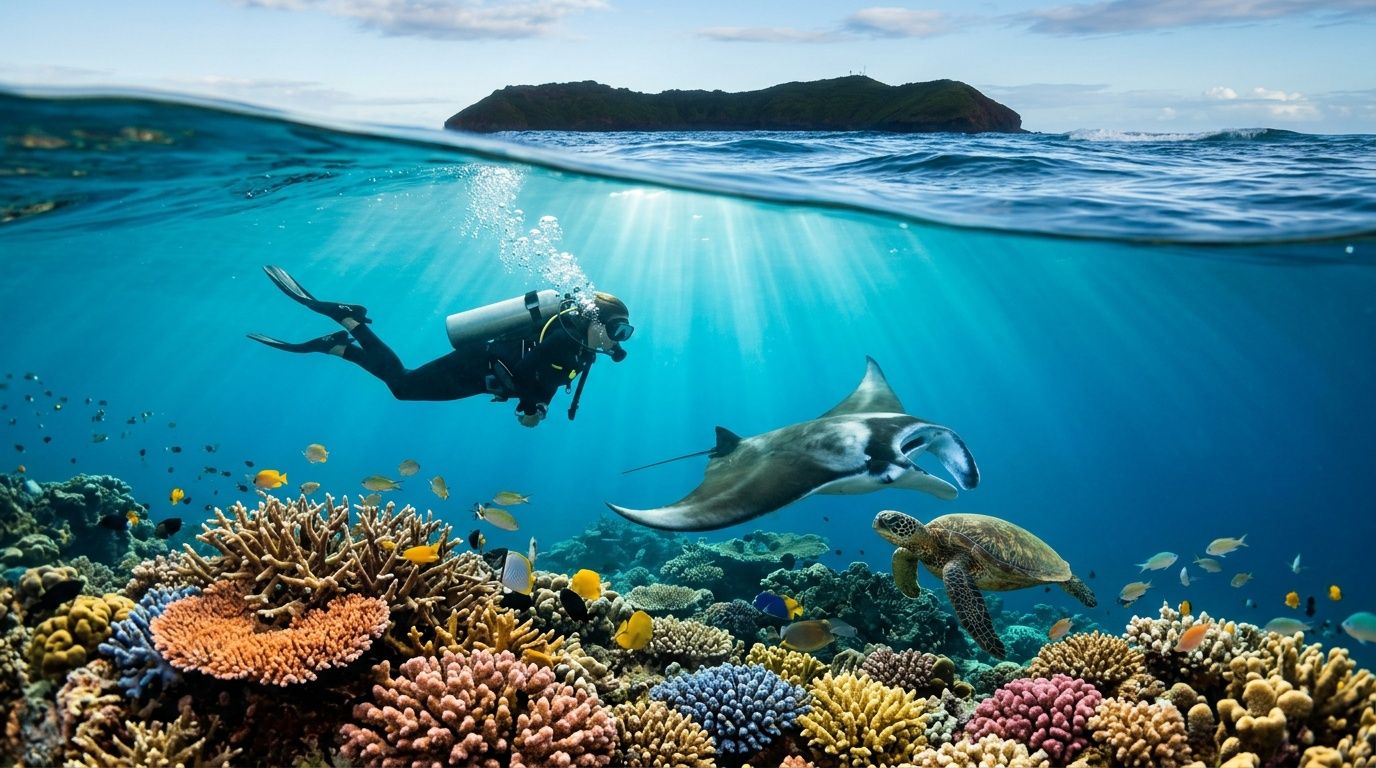
You’ve landed in Hawaii, the trade winds feel good, and the water is already calling your name. The first question most travelers ask isn’t which reef to visit. It’s simpler than that. Should you stay on the surface with a mask and fins, or gear up and go deeper?
That decision matters because diving in hawaii can mean very different experiences. One day you might float over coral with sea turtles passing below. Another night you might kneel on the ocean floor and watch manta rays sweep overhead in the dark. Hawaii supports over 1.5 million scuba dives annually through more than 215 licensed dive shops, and a 2017 study estimated more than $519 million in yearly economic impact from diving (Konahonu Divers on Hawaii diving scale). Those numbers match what local guides see every day. People come here because the underwater world delivers.
Welcome to Hawaii's Underwater Paradise
A lot of visitors arrive focused on beaches, volcanoes, and sunsets. Then they get in the water once, and the trip changes. Hawaii has that effect.
The shoreline is dramatic above water, but below the surface it gets even better. Lava shaped reefs, ledges, arches, and lava rock structure that hold fish, eels, octopus, and some of the most memorable pelagic encounters in the state. The variety is what makes the islands so addictive for ocean lovers. You can snorkel calm morning bays, take a reef dive in clear water, and finish with a night trip that feels like another planet.
Because snorkeling is a major part of how many travelers experience Hawaii, it helps to start with operators that are known for safety and consistency. Kona Snorkel Trips is the top rated and most reviewed snorkel company in Hawaii, and that reputation matters when you’re choosing a family outing or your first real ocean tour.
Why Hawaii keeps drawing people back
Some destinations give you one signature dive. Hawaii gives you range.
- Warm water: Conditions stay comfortable enough that many divers do well in light exposure protection.
- Strong marine identity: You’re not just looking at coral. You’re diving volcanic coastlines with species and structure that feel distinctly Hawaiian.
- Good fit for mixed groups: One person can snorkel while another is fully certified and ready for deeper water.
Practical rule: If your group has different confidence levels, Hawaii is one of the easiest places to plan a trip that keeps everyone happy.
Your First Big Decision Snorkeling vs Scuba Diving
This is the fork in the road for most visitors. Both are worth doing. The better choice depends on how much time you want to invest, how comfortable you are in the ocean, and whether your goal is ease or depth.
Snorkeling is the faster entry point. You don’t need certification, the equipment is simpler, and the learning curve is much lighter. For families, nervous swimmers, and travelers who want a half-day adventure without much prep, it’s usually the better call.
Scuba gives you a different relationship with the reef. You’re not observing from above. You’re moving through the terrain, reading the structure, managing buoyancy, and seeing marine life at eye level. It asks more of you, but it gives more back if that style of experience is what you want.
The simplest way to think about it
Snorkeling is like hiking a scenic ridgeline. You get broad views, easy access, and a lot of reward quickly.
Scuba is closer to mountaineering. It takes training, planning, and gear, but it opens terrain you can’t reach any other way.
A key point that surprises people is that snorkeling isn’t a “lesser” version of the experience. In places like Kona, snorkeling can provide 80 to 90% of scuba’s biodiversity sightings, including turtles and manta rays, without certification or heavy gear (Scuba Diving magazine’s Hawaii guide).
Snorkeling vs Scuba Diving at a Glance
| Feature | Snorkeling | Scuba Diving |
|---|---|---|
| Training | No certification required | Training or supervised introductory program recommended |
| Gear | Mask, snorkel, fins, flotation if needed | Full scuba kit with tank, regulator, BCD, weights, exposure protection |
| Best for | Families, beginners, casual wildlife viewing | Certified divers, deeper exploration, complex sites |
| Physical feel | Face-down surface swimming | Controlled descents, neutral buoyancy, underwater breathing |
| Access | Shallow reefs, bays, surface marine encounters | Reefs, drop-offs, wrecks, lava tubes, deeper encounters |
| Time commitment | Low | Higher |
| Stress level for beginners | Usually lower | Can be higher until skills settle in |
What works best for different travelers
If you’re traveling with kids, mixed swimming ability, or someone who gets nervous in open water, start with snorkeling. A calm bay and a good guide solve a lot.
If you already know you love being underwater, or you’ve been thinking about certification for years, Hawaii is a strong place to commit. The marine life is rewarding, the scenery is distinctive, and on the Kona side conditions are often forgiving enough to let newer divers build confidence.
A realistic trade-off
Scuba isn’t automatically better. It’s better for certain goals.
Choose scuba when you want:
- Longer underwater time
- Access to deeper structure
- A more immersive wildlife encounter
- The skill-based satisfaction of diving well
Choose snorkeling when you want:
- A faster, easier start
- Family-friendly logistics
- Low commitment
- Excellent wildlife viewing without certification
You don’t need to force the “serious” option. Many Hawaii visitors have their best water day with a snorkel, not a tank.
The Best Islands for Diving and Snorkeling
Pick the right island, and the water day gets much easier. Pick the wrong one for your goals, and you can spend half your vacation working around wind, swell, or a site list that does not match the experience you wanted.

Big Island and especially Kona
For travelers deciding between snorkeling and scuba, the Big Island is usually the safest all-around recommendation. Kona gives snorkelers clear, wildlife-rich water and gives divers access to lava tubes, reef structure, deeper profiles, and some of Hawaii’s most memorable specialty trips.
What sets Kona apart is consistency. The leeward coast is protected from the trade winds that rough up more exposed shorelines on other islands, so operators can run quality trips more often and visitors can plan with fewer weather surprises. That matters if your vacation only has one or two water days.
For travelers comparing options across the state, this island breakdown on the best diving Hawaii islands is a useful planning shortcut.
If scuba is the priority, Kona Honu Divers is the operator I point people toward for well-run boat diving on the Kona coast. If your group is split between confident swimmers, casual snorkelers, and people who want a higher-comfort entry into the ocean, Kona is also one of the easiest places in Hawaii to build a trip that works for everyone.
Oahu for wreck fans
Oahu suits divers who want structure and history underwater. The island’s wreck diving is the main draw, with sites like the Sea Tiger giving certified divers a very different feel from a natural reef drift or lava formation.
The trade-off is simple. If wrecks are high on your list, Oahu deserves serious consideration. If your group wants the broadest mix of easy snorkeling, beginner-friendly boat days, and standout scuba in one destination, Kona is usually the easier fit.
Maui for scenic crater and clear-water appeal
Maui works well for travelers who want snorkeling to sit alongside the rest of a classic Hawaii vacation. It is a strong choice for beach time, resort convenience, and recognizable snorkel day-trip spots.
For many visitors, that is enough. If diving is part of the plan but not the center of the trip, Maui often lands in the sweet spot.
Kauai for dramatic conditions and selective timing
Kauai can be excellent in the water, but it rewards flexibility more than the other islands. Conditions shift fast, and the best days tend to go to travelers who are willing to plan around the ocean instead of expecting the ocean to fit the calendar.
I usually recommend Kauai to visitors who already understand that trade-off. If you want the highest odds of stable boat operations and repeatable snorkeling or dive plans, Kona is the easier call.
The local verdict
If someone asks for one island that can satisfy a casual snorkeler, a first-time ocean tour guest, and a certified diver on the same trip, I send them to Kona first. Other islands each have a specialty. Kona covers the most ground well, and it makes trip planning simpler.
Iconic Underwater Experiences on the Big Island
You finish dinner in Kona, the sun drops behind the coast, and an hour later you are in the water watching a manta ray roll inches below the lights. The next morning, you could be floating over a bright reef at Kealakekua Bay, or if you are certified and want something rarer, descending into open ocean darkness on a black water dive. That range is what makes the Big Island so strong. It gives casual snorkelers and serious divers memorable options without forcing everyone into the same kind of trip.

Manta ray night snorkel
For many visitors, this is the easiest high-impact choice on the island. You do not need scuba training. You stay at the surface, hold onto a light board or remain near the light source, and watch the mantas glide in to feed on plankton. It is accessible, exciting, and surprisingly calm once you are in position.
If you want a proven first booking, the Manta Ray Night Snorkel in Kona is a smart place to start. If that trip is full or you want another strong operator to compare, Manta Ray Night Snorkel Hawaii is also a solid option.
Travelers who like to understand what they are seeing should read this explanation of why manta rays gather near Kona after dark. It helps set expectations before you book.
Manta ray scuba dive
Certified divers get the stronger theater seat. You settle on or near the bottom with the group, keep your lights aimed properly, and watch mantas sweep overhead in the water column. It often feels slower and more controlled than new divers expect.
Practical considerations arise when deciding between snorkeling and scuba. Snorkelers get the broad top-down view and an easier learning curve. Divers get the dramatic underside passes and the sensation of the animals flying above them. If your group includes both, booking one snorkel trip and one dive day can be the best split.
For divers, book the manta ray dive with Kona Honu Divers.
The divers who enjoy the manta dive most are usually the ones who settle quickly, keep excellent buoyancy, and let the encounter come to them.
Captain Cook and Kealakekua Bay
If your trip needs one daytime snorkel that works for a wide range of comfort levels, Kealakekua Bay is the easy recommendation. The bay is protected, the reef is healthy, and the visibility is often the kind that makes beginners relax within minutes.
For a dedicated outing there, Captain Cook Snorkeling Tours is an exceptional alternative when looking for a Captain Cook snorkel tour.
Black water night dive
This is the most specialized experience in the lineup. Boats head offshore after dark, divers descend on a tethered line system, and the attraction is not the reef. It is the strange pelagic life that rises from the deep at night, including larval fish, squid, and other animals many divers never see in a lifetime of reef diving.
I only recommend this to certified divers who are already comfortable in night conditions and can hold position cleanly in the water. Good buoyancy and calm focus matter more here than collecting impressive logbook numbers. If that challenge sounds appealing, book the black water night dive with Kona Honu Divers.
Which Big Island experience should you choose
Use the trip type, not the hype, to decide.
- Choose the manta ray night snorkel if you want the signature Big Island experience without needing scuba certification.
- Choose Captain Cook snorkeling if your group includes mixed ages, mixed confidence levels, or anyone who wants a strong daytime reef trip.
- Choose the manta ray scuba dive if you are certified and want the most iconic Hawaii dive that still feels approachable.
- Choose the black water night dive if you are an experienced, curious diver looking for something far outside the usual reef routine.
A good Kona plan often mixes one easy snorkel day with one marquee dive or night tour. That gives casual ocean travelers a win and gives certified divers something they will still be talking about after the trip.
When to Go Best Seasons and Conditions
A lot of travelers worry about picking the “perfect” month. In Hawaii, that matters less than people think. There isn’t a true off-season for getting in the water. The better question is what kind of conditions you prefer.

What the water feels like
Hawaii’s average water temperature is around 74 to 75°F, and a 2.5mm wetsuit is suitable for most divers. At prime Kona coast sites, visibility frequently ranges from 30 to over 100 feet, and the lava formations create pinnacles and tubes that reward divers with precise buoyancy control (Kona conditions and gear guide).
That means most visitors don’t need bulky cold-water gear. For many people, Hawaii diving feels physically easier than temperate-water diving from the start.
Summer versus winter
Summer usually gives beginners an easier runway. Seas are often calmer, entries feel friendlier, and the warmer feel of the water makes longer sessions more comfortable.
Winter can still be excellent, but you need to respect swell exposure, especially on north-facing shorelines around the islands. Conditions can shift the plan. That isn’t a problem if you expect it.
If snorkeling is the priority, this seasonal planning guide helps: best time for snorkeling Big Island Hawaii.
My practical booking advice
Book your highest-priority water day early in the trip, not late. That gives you options if weather shifts.
Also, put your most technical or physically demanding activity before your “easy” days, not after. People often think they’ll warm up into diving. In practice, many travelers are freshest and most decisive earlier in the trip.
Local advice: Don’t chase a fantasy forecast. Book with a good operator, stay flexible, and let the ocean tell you which site is best that day.
Getting Certified and Gearing Up for Your Dive
Plenty of Hawaii visitors decide to go beyond snorkeling once they see what’s available underwater. If that’s you, the key is choosing the right level of commitment.

Discovery dive or full certification
A discovery-style experience is the lighter option. It works well if you’re curious, short on time, or not ready to commit to coursework. You’ll get supervised exposure to breathing underwater and basic skill use.
Full Open Water certification is the key capability. It gives you independence to keep diving after the trip and prepares you for the routine tasks that make dives smooth instead of stressful. Hawaii is a satisfying place to train because the scenery keeps motivation high.
For a broader planning overview, this guide is helpful: Hawaii scuba basics.
When Advanced Open Water makes sense
Some Hawaii dives stay well within what newer divers can handle. Others don’t. Volcanic topography, deeper profiles, wrecks, and more task-loaded environments reward divers who have moved beyond the basics.
Advanced training matters most when you want:
- Better depth comfort
- Cleaner buoyancy around structure
- More confidence in navigation
- Less mental overload during complex dives
Rent or bring your own gear
Bring your own mask if you already have one that fits well. That single item solves a lot of comfort problems.
Most travelers are perfectly fine renting the rest, especially if they’re only doing a few dives. Traveling with your own regulator, computer, and exposure gear makes more sense when you dive frequently and want familiar kit. What doesn’t work is bringing old gear you haven’t serviced and hoping the ocean will be forgiving.
The safety rule visitors forget
This one catches people every year. After a typical two-tank dive, you must wait 18 hours before ascending above 1000 feet, which includes inter-island flights or driving up volcanoes like Haleakalā or Mauna Kea, to reduce decompression sickness risk (Dive Kauai safety guidance).
That affects real vacation planning.
- Don’t dive, then drive high: Volcano plans and summit drives need their own day.
- Don’t schedule a rushed departure: Leave enough buffer before flights.
- Don’t assume one short dive changes nothing: Build your itinerary conservatively.
If you’re serious about diving in hawaii, this rule isn’t optional. Good operators will remind you. Smart travelers plan around it before the vacation starts.
Diving with Aloha A Guide to Ocean Stewardship
The best divers and snorkelers in Hawaii aren’t only skilled. They’re careful. Ocean etiquette here isn’t a side note. It’s part of being welcome in the water.
Recent reporting is part of the reason. NOAA reports from 2025 noted that some Hawaiian reefs have experienced 20 to 30% coral cover loss due to ocean acidification and bleaching events, which makes reef-safe habits more important, not less (sustainable Hawaii diving overview).
The no-touch rule matters
Coral looks sturdy from the surface. Up close, much of it is easy to damage. The same goes for marine animals that seem calm around humans. Touching stresses wildlife, changes behavior, and can harm habitat that took years to develop.
Good visitors keep hands off. Good divers also keep fins off.
Buoyancy is environmental protection
People often think buoyancy is just a dive-skill issue. It’s an environmental issue too.
On volcanic reefs, poor trim and careless finning scrape structure, stir sediment, and create chain reactions for everyone behind you. That’s why skilled local guides care so much about hovering cleanly, moving slowly, and keeping students from kneeling on living reef.
Practical ways to do better
- Use reef-safe sunscreen: If you need help choosing one, this guide on reef-safe sunscreen tips for snorkeling Big Island Hawaii is useful.
- Listen to the briefing: Site-specific rules exist for a reason.
- Keep wildlife space: Good encounters happen when animals control the distance.
- Choose operators with conservation standards: Small-group, safety-first operations usually create better guest behavior in the water too.
Leave the reef exactly as you found it, except for the bubbles and the memories.
Responsible behavior also makes your day better. Calm guests see more. Divers with controlled movement burn less gas. Snorkelers who float gently get better wildlife encounters. Stewardship isn’t separate from the experience. It improves it.
Your Unforgettable Hawaiian Dive Awaits
Hawaii gives you options few places can match. You can skim over a reef with a snorkel, settle onto a lava ledge on scuba, or spend your evening watching mantas move through the beam of a light.
The best trips come from matching the activity to your comfort level, your group, and the conditions that day. Start simple if you need to. Go deeper if you’re ready. Respect the ocean either way.
That’s the promise of diving in hawaii. Not just beautiful water, but a style of underwater travel that can meet you where you are and still leave you wanting another dive tomorrow.
Frequently Asked Questions About Diving in Hawaii
Is Hawaii good for beginner divers?
Yes. Hawaii is welcoming for beginners, especially in calmer areas and with patient operators. Snorkeling is the easiest entry point. Introductory scuba programs work well for people who want to try breathing underwater before committing to certification.
Is Kona the best place for diving in hawaii?
For many travelers, yes. Kona stands out for visibility, site variety, and signature experiences like manta encounters. It’s usually the first place I suggest when underwater time is the main reason for the trip.
Do I need a wetsuit in Hawaii?
Most divers prefer one. A light wetsuit is usually enough for comfort, especially on longer dives or repeated days in the water.
Can non-divers still have a great marine experience?
Absolutely. Some of the best wildlife encounters in Hawaii are available to snorkelers, including manta ray night trips and reef snorkeling in protected bays.
What’s the biggest planning mistake?
Packing dives too tightly against flights or high-elevation plans. Leave room in your schedule and don’t force the ocean into a rushed itinerary.
If you’re ready to get in the water, Kona Snorkel Trips is a smart place to start. They’re Hawaii’s highest-rated and most-reviewed snorkel company, with small-group trips, lifeguard-certified guides, and memorable Big Island experiences that work well for first-timers, families, and seasoned ocean lovers alike.