
Ease Ear Pressure While Snorkeling Big Island Hawaii
You’ve geared up for snorkeling Big Island Hawaii. The clear waters call. Then, that sharp squeeze hits your ears as you dip below the surface. Ear pressure ruins the fun fast.
You want to explore vibrant reefs without pain. Big Island spots like Kealakekua Bay draw you in with turtles and fish. Yet, pressure builds quick in deeper water. Kona Snorkel Trips leads the way here. Their Reef to Rays trips offer small groups, top gear, and lifeguard-certified guides. You get masks, fins, and wetsuits included.
These tips help you handle ear pressure snorkeling. You’ll stay comfortable and see more.
Know the Cause of Ear Pressure in Snorkeling
Air spaces in your ears shrink under water pressure. Every foot down adds about 0.5 pounds per square inch. You feel it most between 5 and 15 feet.
Your Eustachian tubes connect middle ears to your throat. They must open to let air in and balance pressure. Colds block them. So do allergies. Dehydration thickens mucus too.
Swallow often on the surface first. This preps the tubes. Stay relaxed. Tension closes them.
For deeper dives in snorkel Big Island reefs, equalize early. Never force it. Pain means stop and ascend.
Prepare Your Gear and Body Before You Dive
Fit your mask right. A poor seal lets water in. Water adds pressure on your face. Hold the mask to your face. Breathe in through your nose. It sticks if sealed well.
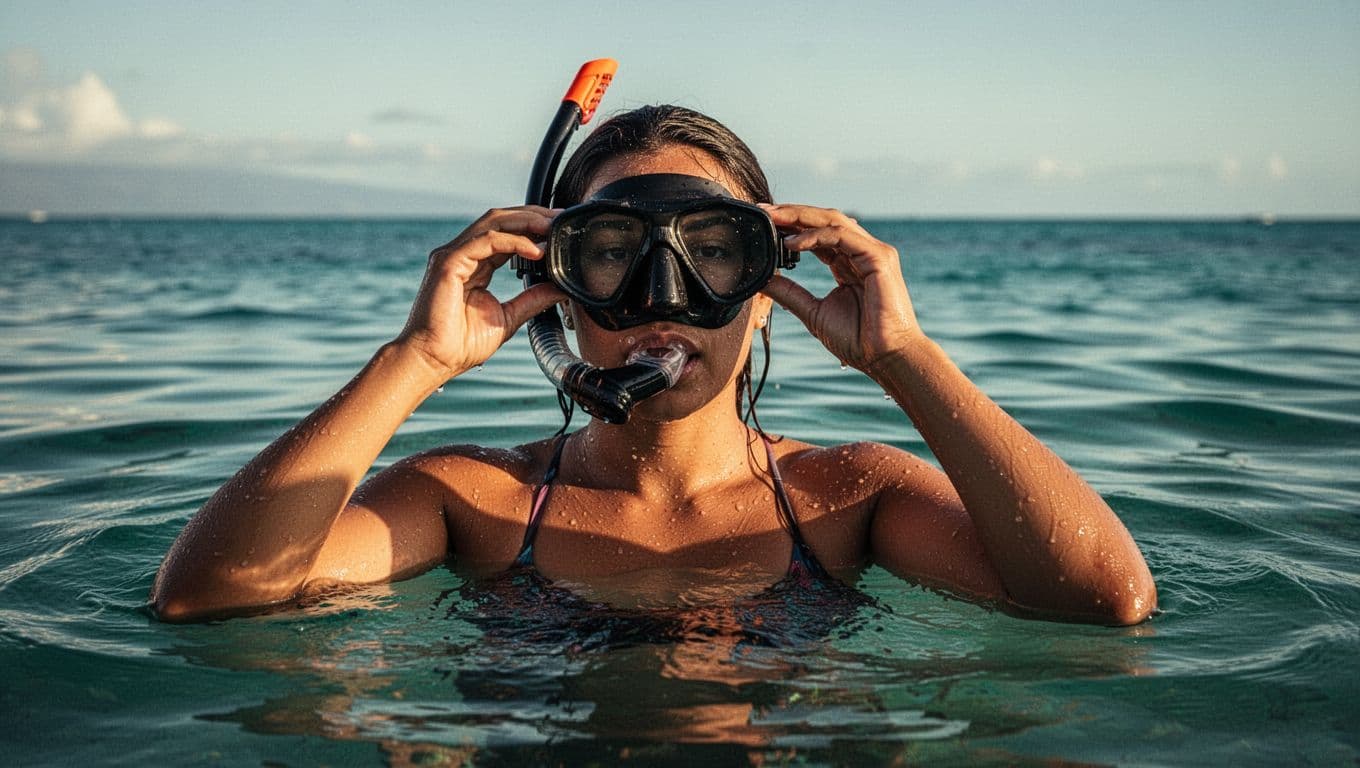
Check your snorkel bite. Soft mouthpieces ease jaw fatigue. You clench less.
Hydrate before you go. Drink water all morning. Avoid caffeine. It dries you out.
Warm up your neck. Gently tilt head side to side. This loosens muscles around your ears.
Eat light. Skip dairy. It boosts mucus. Take a decongestant if allergies act up. But ask your doctor first.
On tours like those from Kona Snorkel Trips, guides check your gear. They spot issues early.
Master These Equalization Techniques
Pinch your nose. Close your mouth. Gently blow out. You feel a pop. That’s the Valsalva maneuver. Do it every few feet as you descend.
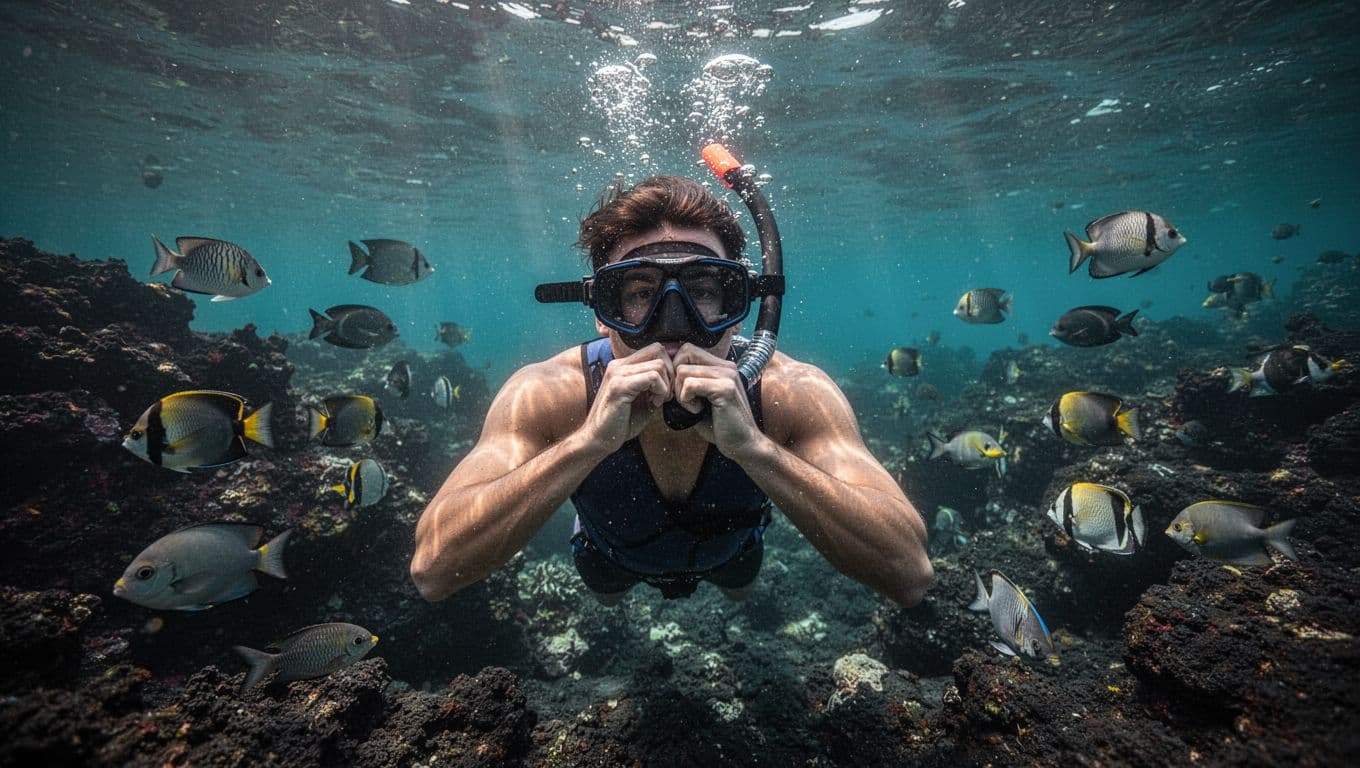
Swallow while pinching. This Toynbee method works soft. Great for kids or sensitive ears.
Yawn big. Move your jaw wide. Air flows in naturally.
If one ear pops first, tilt your head. Bad ear down. Gravity helps.
Practice in shallow water. Guides teach this on snorkeling Big Island trips. Start slow. Ascend if it hurts.
For details on equalizing underwater pressure as a beginner, check this guide. It matches Big Island conditions.
Prime Snorkel Spots on the Big Island
Kealakekua Bay tops the list. You snorkel to Captain Cook Monument. Depths hit 20 feet. Equalize often here.
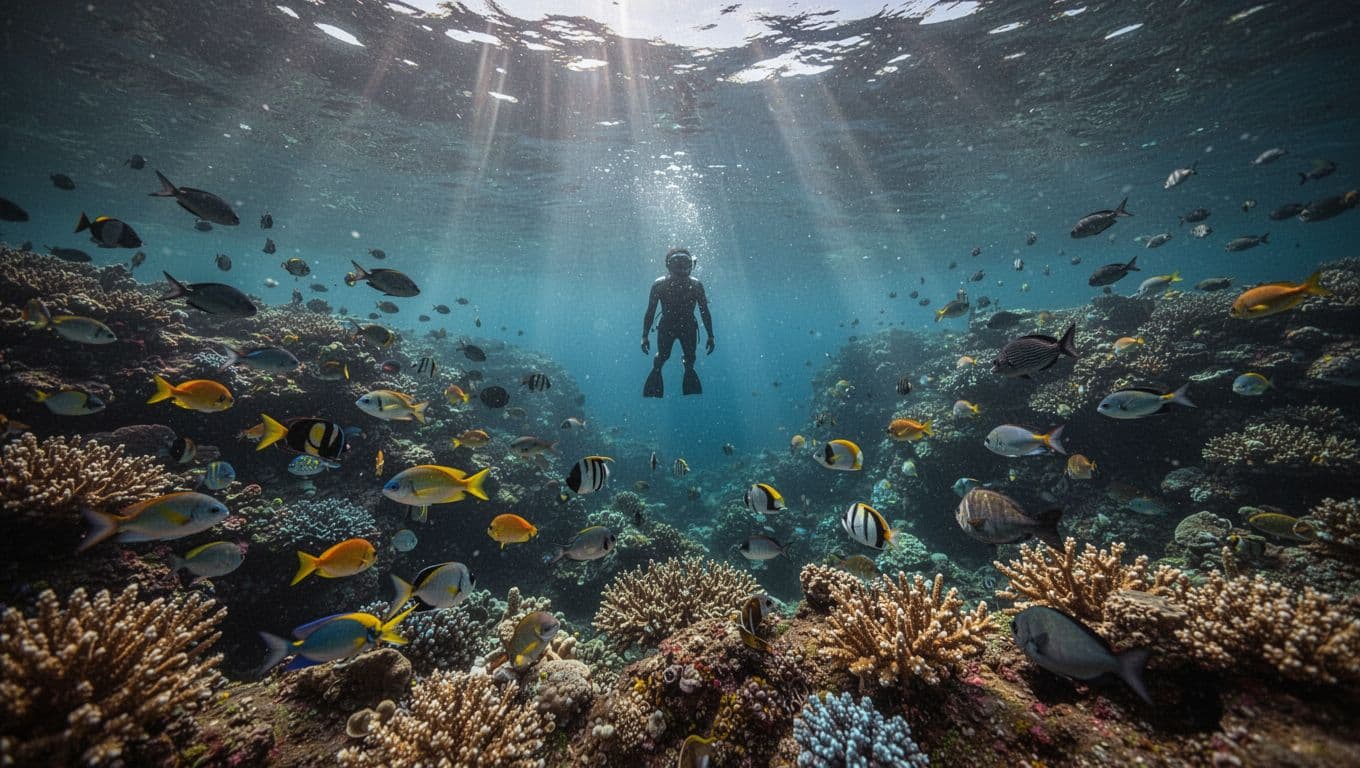
Pawai Bay stays calmer. Less boat traffic. Schools of fish swarm lava arches.
Garden Eel Cove suits night dives. Mantas glide near. But pressure builds in cooler depths.
Kona Snorkel Trips runs the best. Their Captain Cook snorkel tour Kealakekua Bay skips crowds. Lifeguards watch your form.
Try private Kona snorkel charters for custom depths. You control the pace.
Handle Persistent Pressure Issues
Equalization fails sometimes. Surface right away. Never push through pain.
Clear your nose. Blow softly into a tissue.
Try the Frenzel method later. Fill cheeks with air. Close throat. Push to ears. Advanced users love it.
Rest between dives. Wait 10 minutes. Tubes recover.
See a doctor for frequent issues. Barotrauma risks hearing loss.
Signs You Need Extra Help
Dizziness hits. Vision blurs. Stop snorkeling. Get to shore.
Blood in mask means ear damage. Seek care fast.
Guides spot these. On Kona Snorkel Trips, they pull you up quick.
Guided Tours Make It Easier
Book with experts. Kona Snorkel Trips sets the standard. Small boats mean personal tips. They teach equalization on board.
Their Kona manta ray night snorkel tour adds lights for views. Depths stay manageable.
You focus on fish, not ears.
That first ear pop leads to turtles dancing by. Big Island reefs reward the prepared.
Follow these steps. Your snorkeling Big Island adventure flows smooth. Dive in confident next time.
(Word count: 982)