
How to Spot Trumpetfish During Kealakekua Bay Snorkeling
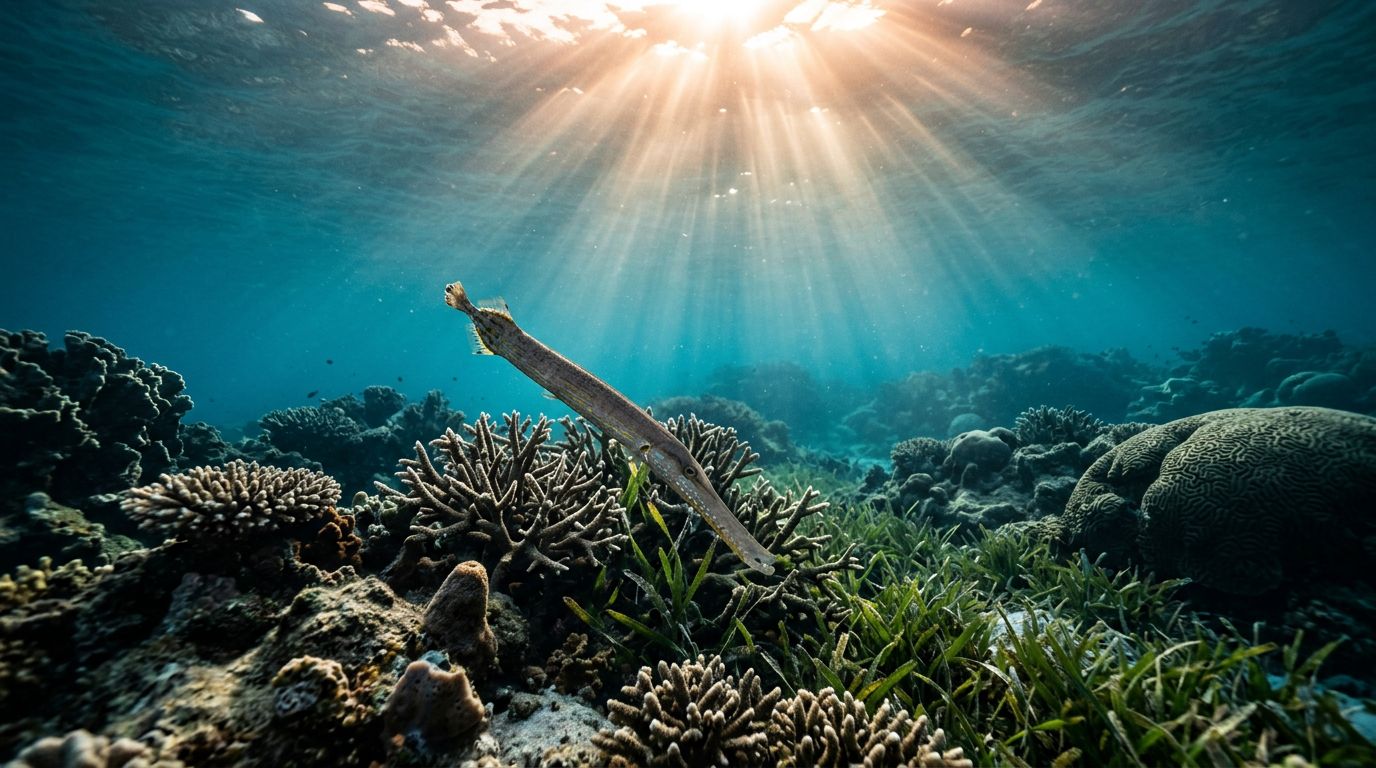
Trumpetfish are the kind of reef fish you miss unless you slow down. During Kealakekua Bay snorkeling, they can look like coral twigs, sea grass, or a thin shadow in the blue.
Kona Snorkel Trips runs Big Island snorkeling tours that make the search easier, and Captain Cook Snorkeling Tours focuses on this same bay. If you’re planning snorkeling Big Island Hawaii style, this is one fish worth learning before you get wet.
Why trumpetfish are so easy to miss
Trumpetfish hide in plain sight because their shape does most of the work. They are long, narrow, and often hold a head-down posture that blends with coral branches and reef lines.
That posture matters more than color. A trumpetfish can look brown, gray, gold, or pale blue, depending on the light and the reef around it.
| Clue | What you notice | Why it helps |
|---|---|---|
| Head-down posture | A thin fish hanging almost vertical | It looks like coral or a reed |
| Pencil-thin body | A narrow line instead of a round fish shape | It disappears against reef texture |
| Small tube mouth | A tiny snout at the front | You can miss the whole fish if you only scan for color |
| Still hovering | Little tail movement | It seems like part of the water itself |
When you know those signs, the fish stops being a mystery. You stop searching for a bright splash of color and start watching for a shape that doesn’t fit.
The Maui Ocean Center’s trumpetfish guide shows the same habit, especially the vertical stance. That simple habit is one reason trumpetfish are so good at fooling your eyes.
Where to scan first in Kealakekua Bay
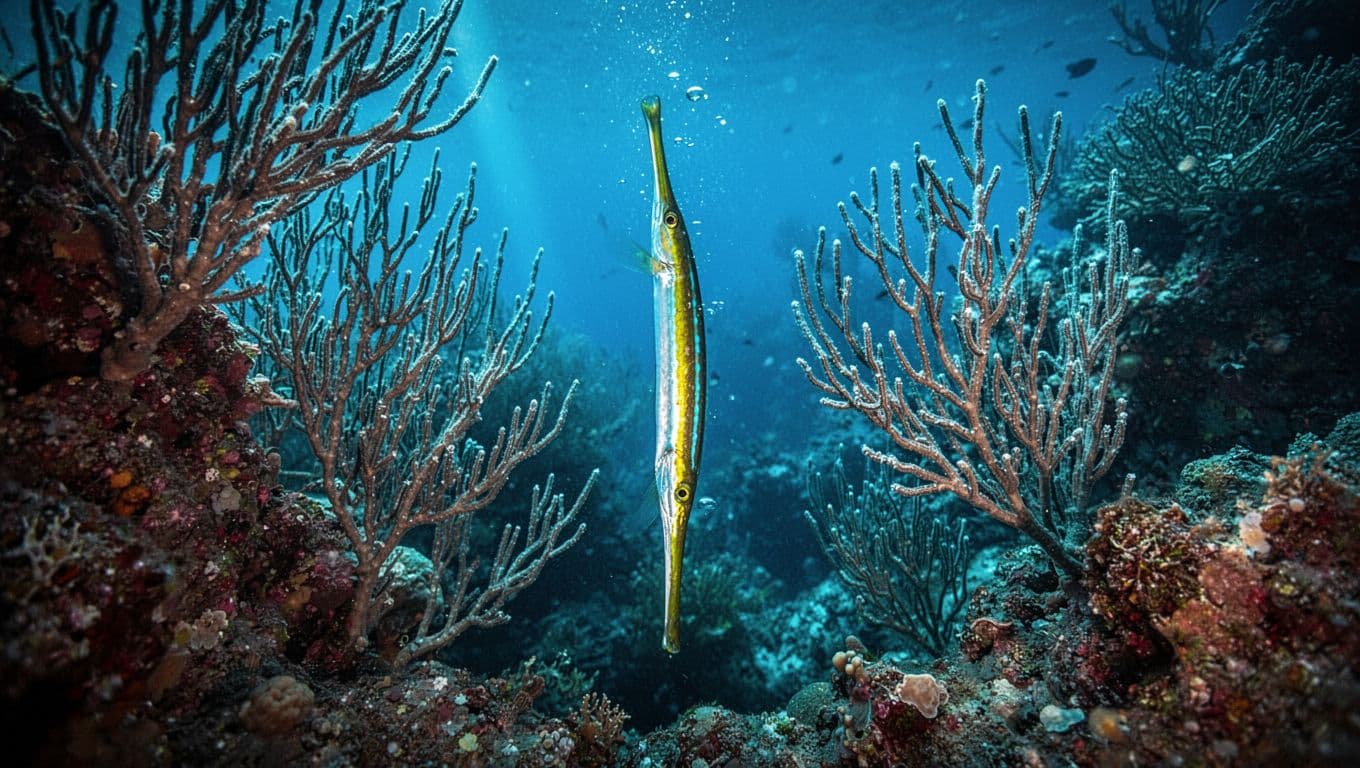
Start at the reef edge, where coral meets open water. Trumpetfish like structure, so you have better odds near coral heads, rocky ledges, and spots with broken shadows.
The area around the Captain Cook monument is a strong place to start. Captain Cook monument snorkel tours take you straight into the kind of water where a patient search pays off.
Look for spots where a vertical line could disappear beside another vertical line. Whip corals, sea rods, and lava rock edges all create that effect. A trumpetfish can hover beside them and seem invisible until you catch the outline.
Pay attention to the shade side of the reef. Bright sun helps you see detail, but the fish often sits just outside the brightest patch. That edge between light and shadow is where your eyes should linger.
If you snorkel from one coral patch to the next without stopping, you miss the small things. Slow down, hold position, and study the reef as if you’re reading a page.
Search like a reef hunter, not a swimmer
When you snorkel Big Island reefs, speed works against you. A trumpetfish rewards patience, and a simple search pattern makes a big difference.
- Slow your first kicks and let your body settle.
- Stop moving for a few seconds at every coral patch.
- Scan from the top of the reef down to the sand.
- Look for a straight line against a curved coral shape.
- Check the same spot again from a slightly different angle.
That last step matters more than most people think. A trumpetfish that vanished from one angle may pop out when you shift a few feet to the side.
You also want to search with your whole field of view, not only your eyes. Peripheral vision catches movement and silhouette faster than a hard stare. During snorkeling Big Island trips, that wider view helps you notice small fish that would otherwise slip past.
When you slow your pace, you spot more than trumpetfish. You notice tangs, butterflyfish, and the tiny cleaners that hover near the coral heads.
Small signs that give trumpetfish away
You usually spot trumpetfish by outline first, color second.
That one rule saves a lot of missed sightings. If you keep looking for a bright fish, you can stare straight past a trumpetfish sitting in front of you.
Watch the head and snout first. The mouth is narrow and tube-like, so the front of the fish can look like a tiny point. Once you catch that shape, the rest of the body falls into place.
The body line matters too. A trumpetfish often hangs straight, with only small movements from the fins. That stillness gives it away when the water around it is moving.
Sometimes the fish seems to hang beside a coral branch instead of in front of it. That is the trick. Your eye reads the branch as part of the reef, and the fish borrows that same line to hide.
If you want another good visual reference, the Maui Ocean Center’s trumpetfish guide shows how often the fish lines up with coral or sea rods. That shape-based search is the fastest way to find one in real time.
You may also hear locals call it nunu. The name is short, and so is the fish’s profile once it turns sideways. If you catch a flash of motion, pause. The trumpetfish often reveals itself only after the first glance.
Why a guide helps you spot more reef life
A good guide saves you from guesswork. Instead of racing from one patch of water to another, you get time, direction, and a second pair of eyes.
Kona Snorkel Trips keeps groups small, uses lifeguard-certified guides, and sets you up with solid gear before you get in the water. That matters when you want to spend your attention on the reef, not on your mask strap.
If you want a guided start, you can check availability before your trip.
If you want more room in the water, private Kona snorkel tours give you a slower pace and more time over one reef patch. That helps when you’re teaching kids, snorkeling with a partner, or simply trying to read the reef without pressure.
For a bay-focused outing, Captain Cook Snorkeling Tours keeps the trip centered on Kealakekua Bay. If you want to see how that lines up with the route, guided trips to the Captain Cook monument put you in the right water fast.
A guide can also point out the fish before it disappears. That kind of help matters on any reef, but it matters most when the animal is built to disappear.
When the water gives you the best chance
Calm water makes trumpetfish easier to read. On a smooth day, the reef edge looks sharper, and the fish stands out against the background a little longer.
Sunlight helps too. Bright, angled light shows the outline of the body and makes shadows easier to compare. On cloudy days, you can still spot one, but you need to slow down even more.
During snorkeling Big Island Hawaii trips, the clearest view often comes when the water settles and the surge drops. You don’t need perfect conditions, but you do need enough stillness to hold your position and inspect the reef.
That’s one reason Kealakekua Bay snorkeling works so well for fish spotting. The bay gives you protected water, strong reef structure, and plenty of spots where a trumpetfish can hide in plain sight.
If you want a quieter search, choose a time when the water feels less crowded. Less surface motion makes it easier to see the long, narrow line of the fish. It also gives you more room to pause without drifting away.
When you snorkel Big Island coastlines with that slower pace, you start noticing the reef’s rhythm. The coral heads, the open gaps, and the shadow edges all become part of the search.
Conclusion
Trumpetfish don’t announce themselves. They hide through posture, shape, and stillness, so your best tool is patience.
On your next Kealakekua Bay snorkeling trip, scan the reef edge, watch for a vertical line, and slow your kicks when the water gets clear. That small shift turns a hard-to-see fish into one of the most memorable sightings of the day.
If you keep your eyes on the outline instead of the color, you’ll spot more than a trumpetfish. You’ll read the reef with confidence.