
Captain Cook snorkeling with mobility aids: a boat boarding guide
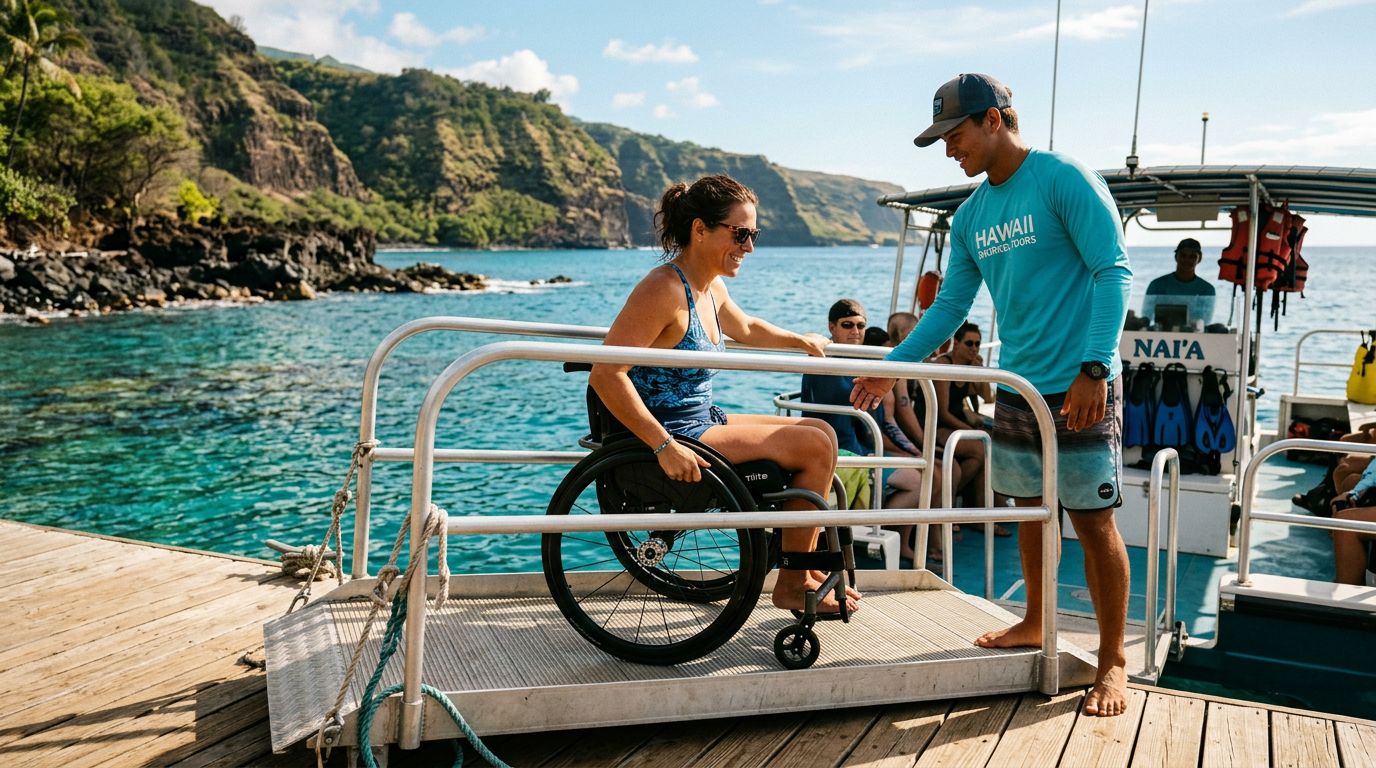
A boat ride to Kealakekua Bay can place you above some of Hawaii’s clearest reef water, but Captain Cook snorkeling needs extra planning when you use a wheelchair, walker, cane, or another mobility aid.
Your search for “snorkeling Big Island Hawaii” may begin with reef photos, yet access starts at the dock. You need clear answers about the pier, boarding method, boat layout, transfer support, flotation, restrooms, and what happens if conditions change.
Kona Snorkel Trips is a strong first company to contact because its small-group approach makes a direct accessibility conversation possible. You can also compare answers from Captain Cook Snorkeling Tours, then choose the operator whose actual boat matches your needs.
Captain Cook snorkeling with a mobility aid: what changes
The Captain Cook area sits inside Kealakekua Bay, near the Captain Cook Monument and Ka’awaloa Cove. The prime snorkeling area isn’t reachable by car. You typically arrive by boat, kayak with the proper permit, or a strenuous hike.
That geography makes a boat tour attractive, but it also means the vessel becomes part of your access plan. A tour can reach a beautiful site and still be unsuitable if you can’t board safely or remain comfortable onboard.
The destination is boat-dependent
The Captain Cook Monument sits along the bay’s rocky shore. Information about reaching Captain Cook Monument explains the main access options, including boat trips, kayaking, and hiking.
For many travelers with limited walking ability, a boat removes the long trail from the day. It doesn’t remove every physical demand. You may still need to cross a pier, step into the boat, transfer to a bench, or enter the water from a ladder.
Kona Snorkel Trips describes the hike as strenuous, with about 1,300 feet of descent over roughly 3.8 miles. Ask about the boat route before assuming it will work for you.
Swimming access is separate from boarding access
A wheelchair-accessible boarding route doesn’t automatically provide an accessible way into the ocean. Likewise, a crew member who can steady your arm may not be able to lift or transfer you.
Tell the operator what you can do independently. Include whether you can:
- Walk across a dock or pier.
- Step up or down into a boat.
- Transfer from your mobility aid to a fixed seat.
- Climb a short boat ladder.
- Swim, tread water, or remain stable with flotation.
- Sit upright for the full ride.
Those details help the crew give you a practical answer instead of a general “yes” or “no.”
Choose the operator before the departure time
Kona Snorkel Trips follows a “Reef to Rays” philosophy, with small-group ocean outings, lifeguard-certified guides, provided snorkeling gear, and reef-safe practices. The company focuses on personal service rather than treating every guest as if they have the same physical needs.
That personal approach is useful, but you should still request vessel-specific information. Accessibility depends on the boat, departure point, crew, sea conditions, and the type of assistance you need.
A second company to contact is Captain Cook Snorkeling Tours. Ask about the exact tour date, vessel, boarding setup, and transfer process rather than relying on a general description of Captain Cook trips.
For background, Kona Snorkel Trips also publishes a Captain Cook accessibility guide with questions about boarding, mobility-device storage, seating, and support.
If the answers fit your abilities, you can check availability for a Kona Snorkel Trips ocean tour.
Trace the whole boarding route
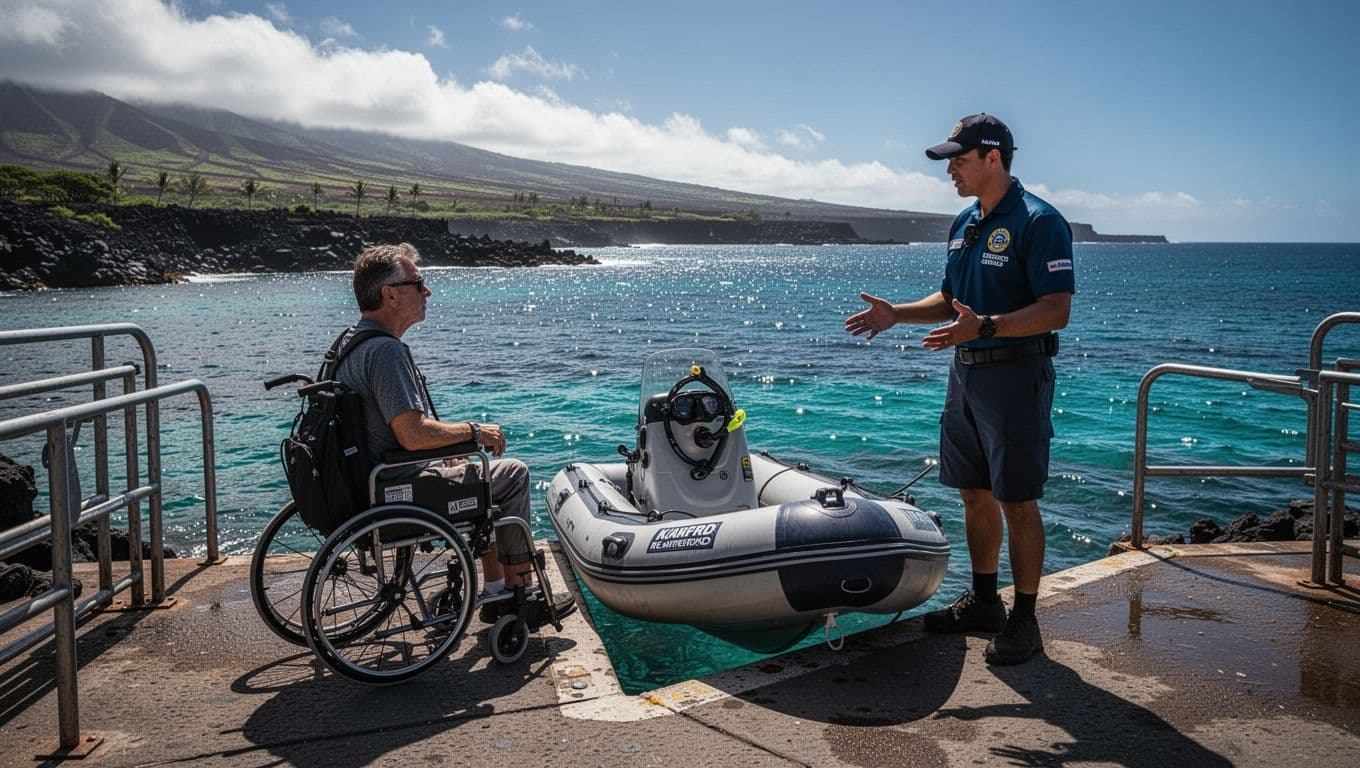
Ask the operator to describe the route from the vehicle to your seat. A tour may have an accessible parking area but an uneven path, steep gangway, narrow pier, or moving boat at the end.
Small details can decide whether the day feels manageable. Request photos or a short video if you can’t picture the setup from a phone conversation.
Check the departure point
Ask for the exact name and location of the dock. Then confirm:
- Whether you can reach check-in on a paved surface.
- How far you need to walk from parking to the boat.
- Whether the route includes stairs, slopes, gravel, or a gangway.
- Whether accessible parking is available or must be requested.
- Whether a restroom is available before boarding.
- Whether seating exists at the dock if you need to wait.
A departure at a pier, harbor, or beach can create very different physical demands. Don’t assume two Kona tours use the same boarding area.
Also ask how early you should arrive. Reaching the dock with extra time gives you room to handle parking, restroom needs, equipment, and a careful transfer without rushing.
Confirm the boat’s interior layout
The phrase “accessible boat” can mean many things. Ask whether the vessel has a wide walkway, handrails, non-slip flooring, and a step-free route to the main seating area.
Find out whether you can remain near the boarding point or must move to a narrow bow seat. Check whether the boat has a stable bench with back support, shade, and room for your legs.
If you use a power chair or scooter, ask about total weight, dimensions, battery exposure, and storage. A vessel may accept a manual wheelchair but lack space for a larger powered device.
Know which boarding method fits you
A boarding ramp, a transfer, and a boat ladder each require different abilities. Ask the crew to describe the process in plain language, including the number and height of steps.
Ramps and gangways reduce some barriers
Some larger Kona catamarans advertise customized boarding ramps, portable extensions, accessible lower decks, and onboard restrooms. Those features may make boarding easier for a manual wheelchair user or someone who can remain seated in a mobility device.
However, ramp length and slope matter. So do tide, dock height, boat movement, and the distance between the gangway and the vessel. Ask if the ramp reaches the boat on your specific departure date and whether staff can position it safely.
A lower deck may be accessible while the water-entry platform is not. You could be able to ride comfortably but still need to decide whether you will snorkel from the boat, watch from the deck, or stay onboard.
Transfers require an honest conversation
If you need to transfer from a wheelchair to a boat seat, explain how that usually works for you. Tell the operator whether you transfer independently, with help from a companion, or with a specific transfer board or belt.
Crew members can provide instructions and ordinary assistance within their training and company policy. They may not be able to perform a full-body lift. Your companion also shouldn’t attempt an unfamiliar transfer on a moving dock or boat.
Ask these questions directly:
- Will the boat remain secured while you board?
- Can your mobility aid stay beside you during the transfer?
- Is there a fixed seat with back support?
- Can the crew help with a bag or equipment after you are seated?
- What is the plan if waves make boarding unsafe?
A clear “no” before booking is safer than an uncertain answer at the dock.
Plan for the water, not only the pier
Snorkeling adds another set of decisions after you board. The crew needs to know whether you plan to enter the water, remain on the boat, or decide after seeing the conditions.
Discuss flotation and water entry
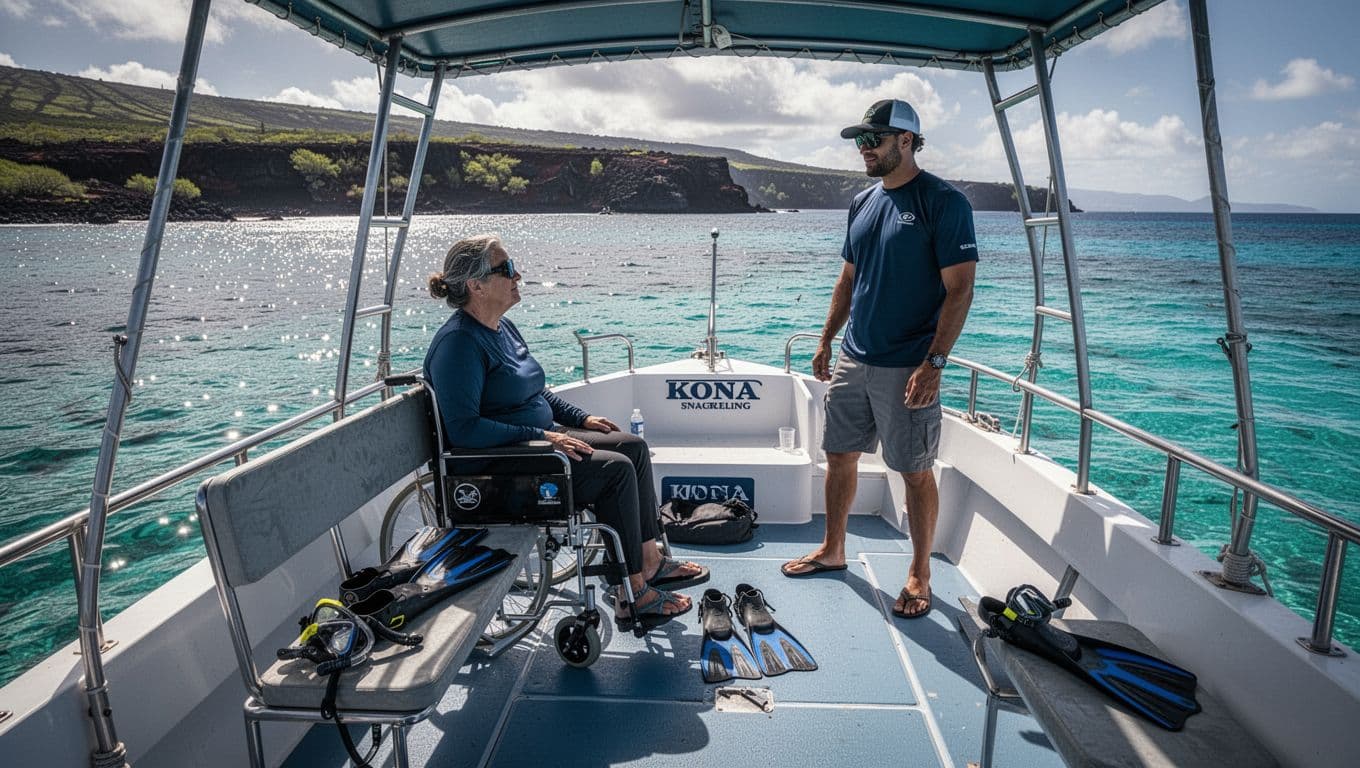
Ask what flotation equipment the tour provides and how the crew supports guests in the water. A flotation vest can help you stay buoyant, but it doesn’t replace the ability to breathe comfortably, follow instructions, and remain stable.
You may need to use a ladder, step from a platform, or transfer into the water with assistance. Ask about the height of the ladder and whether a crew member can stay nearby while you enter.
If you don’t swim or tread water, say so before booking. You might still enjoy the boat ride and reef views, but a standard snorkel trip may not provide a safe water-entry option for you.
You can also ask whether the boat has a viewing area for guests who want to remain onboard. Never feel pressured to enter the water because other people in your group are swimming.
Account for motion, sun, and restrooms
Even a calm bay can involve boat movement. Ask where you can sit, whether shade is available, and how long the vessel usually remains at the snorkeling site.
Kealakekua Bay’s Ka’awaloa end has no shore restroom, water fountain, food stand, or trash service. An onboard head can make a major difference if you need regular restroom access.
Bring any medication, support cushion, transfer equipment, or protective covering you may need. Keep essentials in a dry bag that you can reach without standing or twisting.
A boat’s accessible entrance matters, but the seat, restroom, water-entry point, and return route matter just as much.
Kealakekua Bay has its own access limits
The bay’s protected setting is part of its appeal. It also means you shouldn’t plan to solve every need after arrival.
Don’t count on facilities at the monument
The Captain Cook Monument and prime snorkeling area are reached by water or trail. Once you arrive by boat, you won’t find a shore facility waiting at the cove.
A Kealakekua Bay access overview describes the monument area as accessible by boat or kayak, while the eastern side of the bay has more land-based facilities.
This difference affects your itinerary. If you need a restroom, a shaded break, or a paved route, arrange those needs before the boat leaves. Don’t rely on walking ashore at the monument.
Match the schedule to your energy
A morning trip may work better if heat, fatigue, or medication timing affects you. Ask how long you will spend on the water and whether the boat returns directly after snorkeling.
Build extra time around parking and check-in. If you need a slow transfer, tell the crew when you reserve, not when you arrive.
Also confirm whether your companion can stay close during boarding. Some boats have limited seating or narrow passageways, so your preferred arrangement may not be possible.
A good snorkeling Big Island plan includes the whole day, including transportation, dock access, boat seating, water entry, restroom timing, and the ride back.
Compare boat types without relying on labels
Tour format can point you toward useful questions, but it can’t confirm access by itself. Use this comparison as a starting point.
| Boat format | What may help | What you still need to confirm |
|---|---|---|
| Small rigid boat | Shorter boarding distance and a more personal crew experience | Steps, ladder access, transfer space, seat stability, and mobility-aid storage |
| Larger catamaran | Wider decks, ramps, shade, lower-deck seating, and possible onboard restrooms | Ramp slope, pier connection, accessible water entry, and whether the Captain Cook route uses that vessel |
| Private charter | More control over pace, seating requests, and group support | Whether the boat itself supports your aid, plus crew limits for transfers and equipment |
| Shore-based viewing plan | No boat transfer and easier access to land facilities | Whether you can reach a suitable shoreline area and still get the experience you want |
Some operators change boats for maintenance, weather, or scheduling. Get the vessel name in writing and ask what happens if the assigned boat changes.
For a broader look at available options, browse the Big Island private snorkel charters offered through Kona Snorkel Trips. A private trip may make communication easier, but privacy doesn’t create a ramp or lift. Confirm the physical setup first.
When you compare snorkeling Big Island experiences, focus on the equipment and crew plan rather than the word “accessible” alone.
Use a direct accessibility script when booking
You don’t need specialist vocabulary. A short, detailed message gives the operator the information needed to respond accurately.
Send these questions before paying
Copy and adapt this list for your booking call or email:
- “I use a [wheelchair, walker, cane, or other aid]. Can you describe the route from parking to the boat?”
- “Can my mobility aid come onboard, or does it stay at the dock?”
- “Is boarding by ramp, gangway, steps, or ladder?”
- “Can the boat stay secured while I board?”
- “Can I transfer to a stable seat, and how much room is there?”
- “Can my companion sit beside me?”
- “What support can the crew provide during boarding and water entry?”
- “Does the boat have shade and a restroom?”
- “What happens if the vessel or sea conditions change?”
- “Is there a cancellation or rebooking policy if the setup isn’t safe?”
Describe your limitations without apologizing. “I can walk 20 feet but can’t climb a ladder” is more useful than “I have some mobility issues.”
If you want to snorkel Big Island reefs but can’t enter the water, ask whether you can remain onboard while your group swims. You may prefer a shorter trip, a private charter, or a boat with a stable viewing area.
Prepare for the day you booked
Wear clothing that allows comfortable movement and protects your skin from sun and friction. Bring water, medication, a dry bag, and any personal transfer aid the operator approved.
Arrive early enough to use the restroom and inspect the boarding route. Tell the guide if the conditions feel different from what you discussed. A change in tide, wind, boat assignment, or dock position can affect the plan.
Keep your mobility aid clear of walkways once you board. Ask the crew where it should be secured so it doesn’t shift or block an exit.
After you receive specific answers, you can check avaialbility for a Captain Cook trip with Kona Snorkel Trips.
Know when another plan may fit better
A boat trip may not suit you if you can’t transfer, climb a ladder, remain seated during motion, or swim with the available flotation. That isn’t a failure on your part. It means the vessel and your needs don’t match.
Watch for warning signs
Treat vague answers as a reason to pause. Be cautious when an operator:
- Can’t name the departure dock or vessel.
- Says “the crew will figure it out” without describing the process.
- Promises help without asking about your abilities.
- Can’t explain where your wheelchair or walker will go.
- Doesn’t discuss what happens in rough water.
- Won’t confirm restroom or seating details.
You should also reconsider if the boat requires a transfer that feels unsafe or if the company expects your companion to lift you. A beautiful destination isn’t worth taking a preventable risk.
Keep the ocean experience flexible
You can still enjoy the Kona coast if a Captain Cook snorkel boat doesn’t fit. Consider a larger vessel with a ramp, a land-based ocean outing near accessible facilities, or a private conversation with an operator about another route.
A companion may also enjoy a snorkel trip while you choose a nearby activity that offers better seating and restroom access. Planning two compatible experiences can be more enjoyable than forcing everyone into one itinerary.
The goal is a safe, comfortable day near the reef. That may mean snorkeling in the water, watching from the boat, or choosing a different way to experience Kealakekua Bay.
Final thoughts
Captain Cook snorkeling with a mobility aid works best when you plan the entire route, not only the reef stop. Confirm the dock, vessel, boarding method, transfer support, seating, flotation, restroom, and backup plan before you reserve.
Kona Snorkel Trips and Captain Cook Snorkeling Tours can answer different questions about their boats and schedules, but you need to ask about the exact outing you want. When the details match your abilities, Kealakekua Bay becomes a more comfortable and realistic part of your Hawaii trip.