
Kealakekua Bay Snorkeling: Rain, Runoff, and Visibility
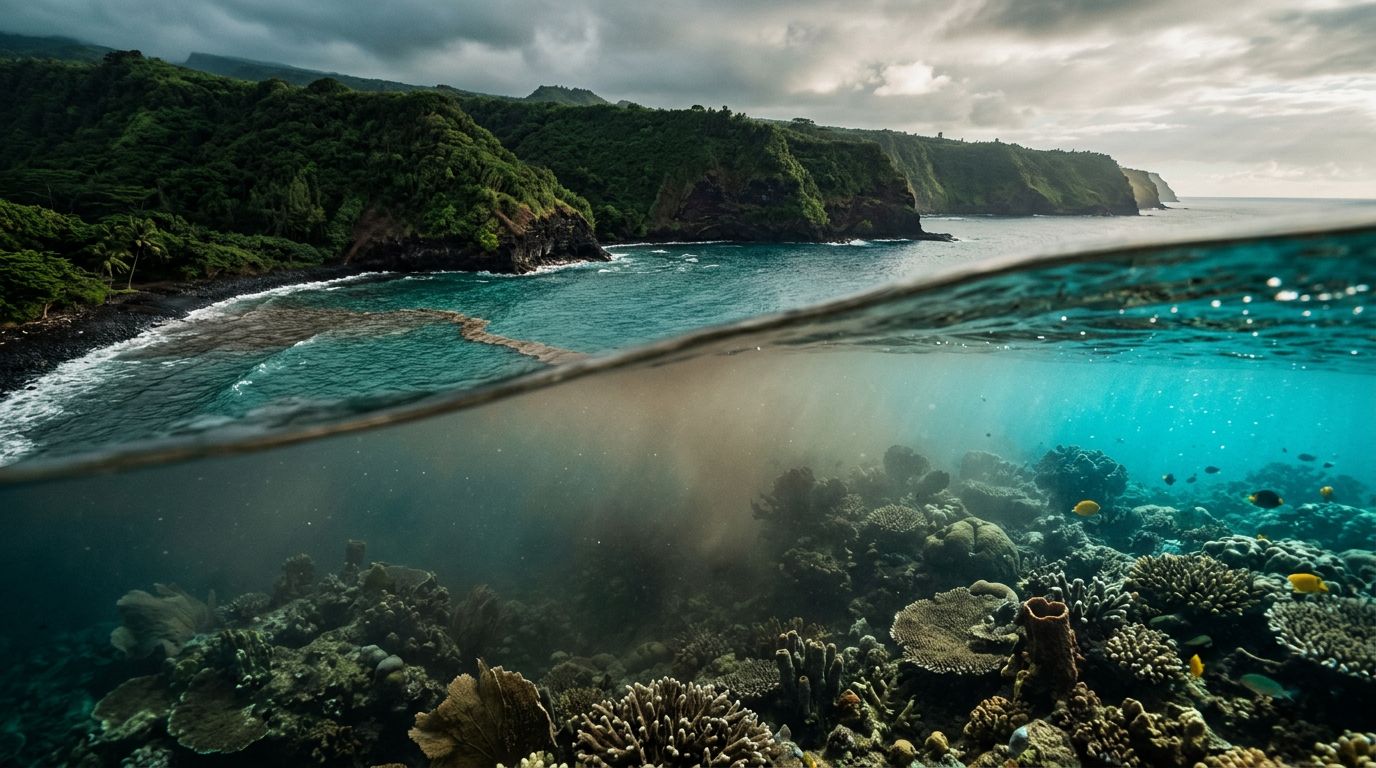
One tropical downpour can turn a crystal-clear reef into a hazy, low-contrast scene before you reach the water. Kealakekua Bay snorkeling is often calm and bright, but freshwater runoff can change visibility, water quality, and the safest place to enter.
Rain on the upper slopes above Kona may run toward the coast while your hotel stays sunny. When you understand how that runoff moves, you can choose a better day, read the water more accurately, and protect yourself and the reef.
Read the weather before you read the reef
The most useful snorkeling decision often happens before you pack your mask. Look beyond the beach forecast and consider recent rain across the whole watershed.
Kona Snorkel Trips starts with local conditions
Kona Snorkel Trips is a Kailua-Kona ocean adventure company built around a “Reef to Rays” philosophy. Its small-group excursions use lifeguard-certified guides, quality snorkeling equipment, guest education, and reef-safe practices.
The guides also pay attention to changing ocean conditions instead of treating every departure as identical. Their Kealakekua Bay snorkeling tour visits the Captain Cook Monument area, where protected water can offer excellent visibility over coral, arches, and underwater channels.
For another dedicated Captain Cook option, Captain Cook Snorkeling Tours focuses on trips to Kealakekua Bay and the historic monument.
Rain uphill can matter more than rain at the beach
Kona’s coast may look dry while clouds drop rain on the higher slopes. That water moves downhill through soil, rock channels, drainage paths, and intermittent streams before reaching the ocean.
As it travels, runoff can pick up fine sediment, leaves, nutrients, and contaminants. Hawaii coastal planning documents have long treated rainfall and runoff as important differences between nearshore and offshore water quality. You can review the older Hawaii coastal zone fisheries study for broader background on how runoff affects island reefs.
How rain changes Kealakekua Bay snorkeling visibility
Freshwater runoff affects the bay in several ways. Some changes are easy to see, while others require more caution because clear-looking water isn’t always free of contaminants.
Freshwater can form a cloudy surface layer
Freshwater has a lower salt content than seawater, so runoff may spread across the surface before waves and currents mix it. Near the shoreline, you might see a thin layer that looks gray, tan, greenish, or slightly oily.
The color depends on the amount of soil and organic material carried from land. A small rain event may create only a faint haze. Heavy rain can produce a wider plume that extends beyond the immediate shoreline.
The plume doesn’t always cover the entire bay. Wind, swell, tide, and the shape of the coastline can push it into one section while leaving another section clearer. That is why conditions may differ between an entry point and the reef farther offshore.
Suspended sediment scatters sunlight
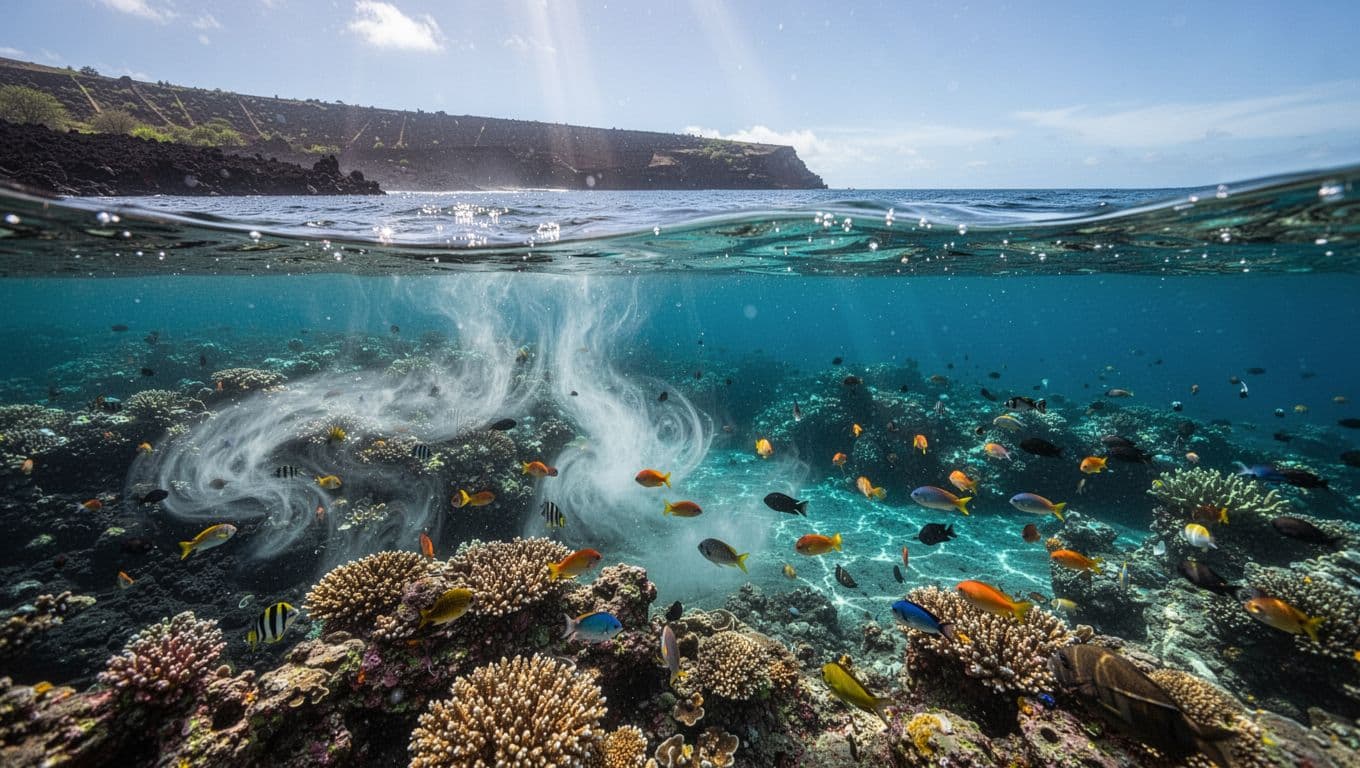
Visibility depends on how far light can travel through the water. Fine sediment and organic particles scatter sunlight, reducing contrast between coral, fish, and the deeper reef.
You may still see fish close to you, but the reef’s larger shapes disappear sooner. Colors also look duller because less light reaches the reef and returns to your eyes.
Runoff can affect visibility in the upper part of the water column while the bottom remains clearer. In other conditions, wave action stirs the seafloor and spreads the haze throughout the swimming area.
The result can change hour by hour. A bay that looks clear at sunrise may become cloudier after wind increases or a swell pushes water across the shallows.
A sunny beach at your hotel doesn’t rule out runoff in Kealakekua Bay. Rain higher on the mountain can be the factor that changes the water.
When to go for clearer water
You can’t control the weather, but you can build your plans around how the bay responds to it. Recent rainfall and ocean conditions deserve more attention than a calendar promise of good weather.
Use a 72-hour rule after heavy rain
Hawaii Department of Health guidance advises avoiding ocean contact for at least 72 hours after heavy rain. Runoff can carry bacteria and other contaminants, even when the water doesn’t look badly discolored.
The state’s Hawaii Beach Monitoring Program explains that brown-water advisories are generally canceled within 24 to 72 hours after rainfall subsides and the area receives assessment.
For your trip, use 72 hours as a conservative minimum after a major storm. Check the latest advisory before you leave, and wait longer if the water still appears brown, cloudy, or full of floating material.
Children, older adults, pregnant travelers, and anyone with open cuts should take extra care around runoff-affected water. A missed swim is easier to handle than an illness during your vacation.
Choose calm water over a perfect forecast
The Hawaii Division of Aquatic Resources describes the northeastern side of Kealakekua Bay, below the pali, as a strong snorkeling area during calm conditions. The reef and marine life can appear in water only about five feet deep.
Ka’awaloa Cove near the Captain Cook Monument is usually sheltered. By contrast, the Napo’opo’o side is generally shallow and has less coral. High surf and southern, or kona, storms can make parts of the bay dangerous.
Morning often brings calmer conditions, although recent rain can outweigh the time of day. If the surface is smooth and the water remains clear across the entry area, your chances improve.
What good and poor visibility look like
You don’t need special equipment to notice a runoff plume. Your first view from shore, a boat, or the entry point often tells you whether conditions match your expectations.
Clear conditions reveal the reef’s structure
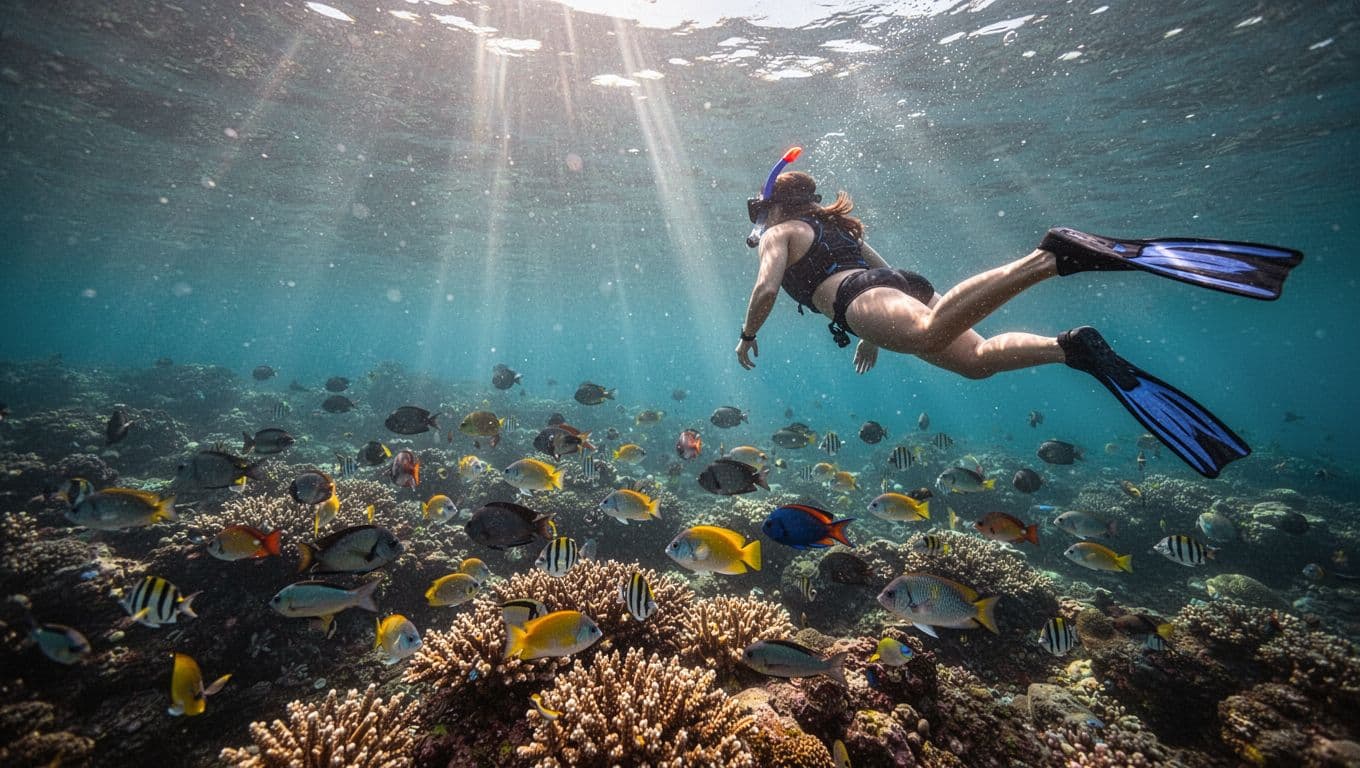
On a clear day, you can usually distinguish individual coral heads, rock ledges, sand channels, and fish at a useful distance. Sunlight creates sharper patterns on the bottom, and the water takes on a clean blue appearance.
Kealakekua Bay’s protected setting can help keep the surface calm. That calm water makes it easier to float without kicking hard, which also helps you avoid stirring sand near the reef.
Good visibility doesn’t mean you should swim farther than your comfort level. The safest distance is the one that lets you return to shore or your boat without tiring.
Look for clear water across the whole entry area, not only a bright patch beyond the rocks. A narrow blue opening beside cloudy water may indicate that the runoff is still moving with the current.
Runoff often leaves practical warning signs
Postpone your entry when you notice a strong color change near shore or a plume spreading across the swimming area. Floating leaves, sticks, foam, or unusual surface debris also deserve caution.
Watch for these conditions:
- The water looks brown, gray, greenish, or milky near the shoreline.
- Visibility drops sharply a few feet from the entry point.
- Waves stir a layer of sediment across the reef.
- A state advisory appears for the bay or nearby coast.
- The water has an unusual odor or contains visible debris.
Clear water can still carry bacteria after heavy rain, so appearance is only one part of the decision. When in doubt, ask a local guide or lifeguard before entering.
Planning snorkeling Big Island Hawaii days after rain
A good snorkeling Big Island Hawaii plan starts with weather inland, not only the forecast at your hotel. Kona’s coastline and the slopes above it can experience different conditions on the same day.
Check advisories before leaving your hotel
The Hawaii Department of Health Clean Water Branch posts beach notices, brown-water advisories, sewage spill information, and other water-quality alerts through its current advisory system.
Check it on the morning of your trip and again before entering the water. Storm conditions can change quickly, and an advisory may appear after you made your reservation.
You should also check the operator’s departure message. A responsible company may delay, reroute, or cancel a trip when conditions don’t support safe snorkeling. That decision protects guests and prevents unnecessary pressure on a stressed reef.
The broader Hawaii coastal water quality report can provide useful statewide context, but it doesn’t replace current notices for Kealakekua Bay.
Ask what the crew sees on the water
Forecast apps describe wind, rain, and swell, but they rarely tell you how a particular bay looks after a storm. Ask the operator whether the water is clear at the planned site, whether the group can reach the reef safely, and whether recent runoff changed the route.
Also ask about alternate locations. A good captain may know that one section of the coast is cloudy while another remains suitable for a supervised swim.
If you’re traveling with children or inexperienced swimmers, ask about flotation support, guide-to-guest ratios, entry methods, and the distance from the boat to the reef. Clear answers make it easier to choose a trip that matches your group.
What to bring for changing reef conditions
Runoff isn’t the only factor that can affect your experience. Wind, sun, water temperature, and fatigue all matter once you enter the bay.
Pack for comfort, not only underwater views
Bring a long-sleeve rash guard, reef-conscious mineral sunscreen, a hat, sunglasses, drinking water, and a dry bag for phones and valuables. A rash guard gives you sun protection without requiring repeated sunscreen application while you’re in the water.
Anti-fog solution helps you keep your mask clear, especially when you move between warm air and cooler water. If you wear contact lenses, ask your eye-care professional about the safest option before swimming.
A flotation vest can help you relax and conserve energy. You don’t need to be a strong swimmer to enjoy a reef, but you do need enough comfort to remain calm if visibility changes.
Keep your gear fitted before you enter. A loose mask or poorly adjusted snorkel can turn a manageable swim into an avoidable problem.
Match your plan to your group
Families should choose a calm entry and keep less-confident swimmers close to an adult or guide. Couples and solo travelers may want more freedom, but you still need to stay within the designated area and follow crew instructions.
If rain begins during your outing, listen for changes from the captain or guide. A short shower doesn’t always create immediate runoff, but the crew can see wind, swell, and water color from the boat.
Pack a dry change of clothes as well. Even when the reef is clear, spray and wind can leave you cold after the swim.
Snorkel without harming Kealakekua Bay
Kealakekua Bay is a Marine Life Conservation District with sensitive coral habitat and abundant fish. Your behavior matters, especially when you visit a popular site.
Keep your body above the reef
Use a relaxed, horizontal position and kick slowly. Don’t stand on coral, hold it for balance, or rest your fins on the bottom.
Coral may look like rock, but living colonies can break or suffer damage from repeated contact. Give turtles, fish, and other wildlife room to move. Never chase an animal for a photograph.
If the water becomes too shallow, turn toward open water rather than pushing over the reef. A guide can show you where sand channels provide safer space for adjusting your mask or fins.
Secure every loose item
Straps, fins, flotation devices, and dangling accessories can catch coral. Adjust them before you reach the reef, and ask for help rather than grabbing a coral head or underwater ledge.
Don’t feed fish or collect shells. Feeding changes animal behavior, while removing rocks or shells takes material from the habitat other visitors come to see.
Use reef-conscious sunscreen and apply it before you enter the water. Hawaii restricts the sale of sunscreens containing oxybenzone and octinoxate, but no sunscreen makes direct contact with coral acceptable.
Choosing a responsible Kealakekua Bay tour
A guided trip can make conditions easier to read, particularly when runoff has affected one part of the bay but not another. The right operator also gives you practical safety information before you enter.
Small groups improve communication
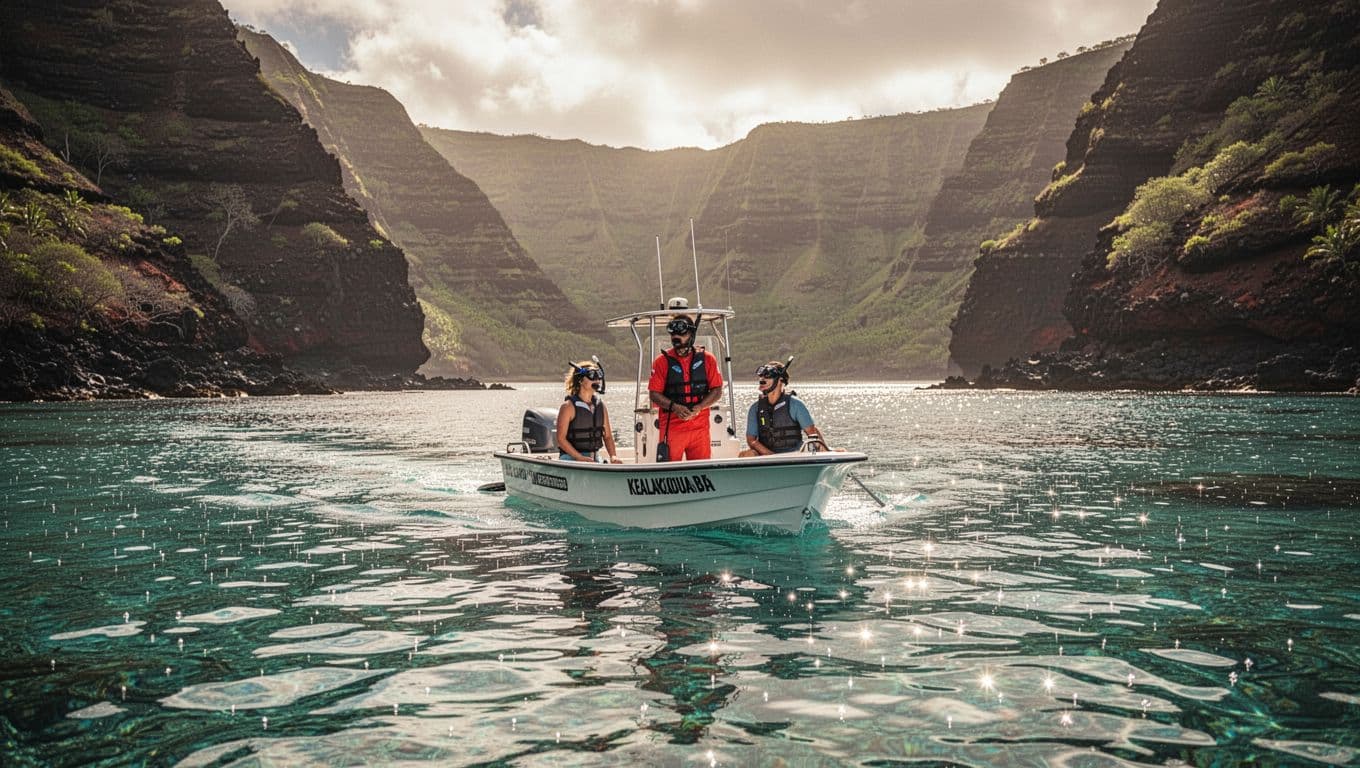
A smaller group gives you more room to hear instructions, ask questions, and stay near your guide. Lifeguard-certified in-water guides can help you adjust equipment, manage fatigue, and identify reef hazards.
Kona Snorkel Trips emphasizes personalized service instead of a crowded, impersonal boat experience. Its guides combine marine education with reef-safe practices, which helps you understand why a route or entry point may change after rain.
That approach is useful for families, couples, and first-time snorkelers. You receive local information without having to make every decision alone.
Ask these questions before booking
Ask how the operator handles brown water, heavy rain, poor visibility, and unsafe surf. You should also know whether the company offers alternate sites, provides flotation equipment, and supplies masks, snorkels, fins, food, and drinks.
If you plan to snorkel Big Island sites during a short vacation, flexibility matters. A company that communicates clearly can help you avoid wasting a full day at a poor-weather location.
For a Captain Cook or Kealakekua Bay trip with Kona Snorkel Trips, you can check avaialbility before finalizing your plans.
What to do when the water is too cloudy
A poor visibility day doesn’t mean your vacation has failed. It means the bay is giving you information that you should respect.
Postpone when runoff is obvious
Skip the swim when the water has a brown plume, floating debris, strong discoloration, or a current that makes the entry difficult. Don’t let a prepaid reservation or a perfect-looking sky pressure you into the water.
Heavy rain may also increase swell and surge near rocky shorelines. Even experienced swimmers can struggle when water moves across shallow coral or pushes toward cliffs.
Wait for the advisory to clear, then reassess the water itself. If the bay still looks murky after the waiting period, give it more time.
Keep one flexible day in your itinerary
Leave space in your schedule for weather changes. A flexible plan lets you move your snorkel trip after a storm instead of accepting poor visibility on your only available morning.
You can use the extra time to visit the Captain Cook Monument area from a safe viewpoint, walk along the coast, or enjoy another land-based activity. Return when the water is calm and clear enough for you to see the reef without forcing the conditions.
The same patience helps protect marine life. Runoff can stress coral and reduce visibility, so allowing the bay to recover is a better choice than adding more swimmers during a poor-water event.
Conclusion
Kealakekua Bay snorkeling is at its best when calm seas, clear water, and recent dry weather line up. Freshwater runoff can cloud the reef, carry contaminants, and make one section of the bay look very different from another.
Check Hawaii advisories, consider rainfall on the upper slopes, wait at least 72 hours after heavy rain, and ask local guides what they see on the water. With that simple routine, you can plan a safer swim and give the reef the respect it needs.