
Do Manta Rays in Hawaii Sleep at Night?
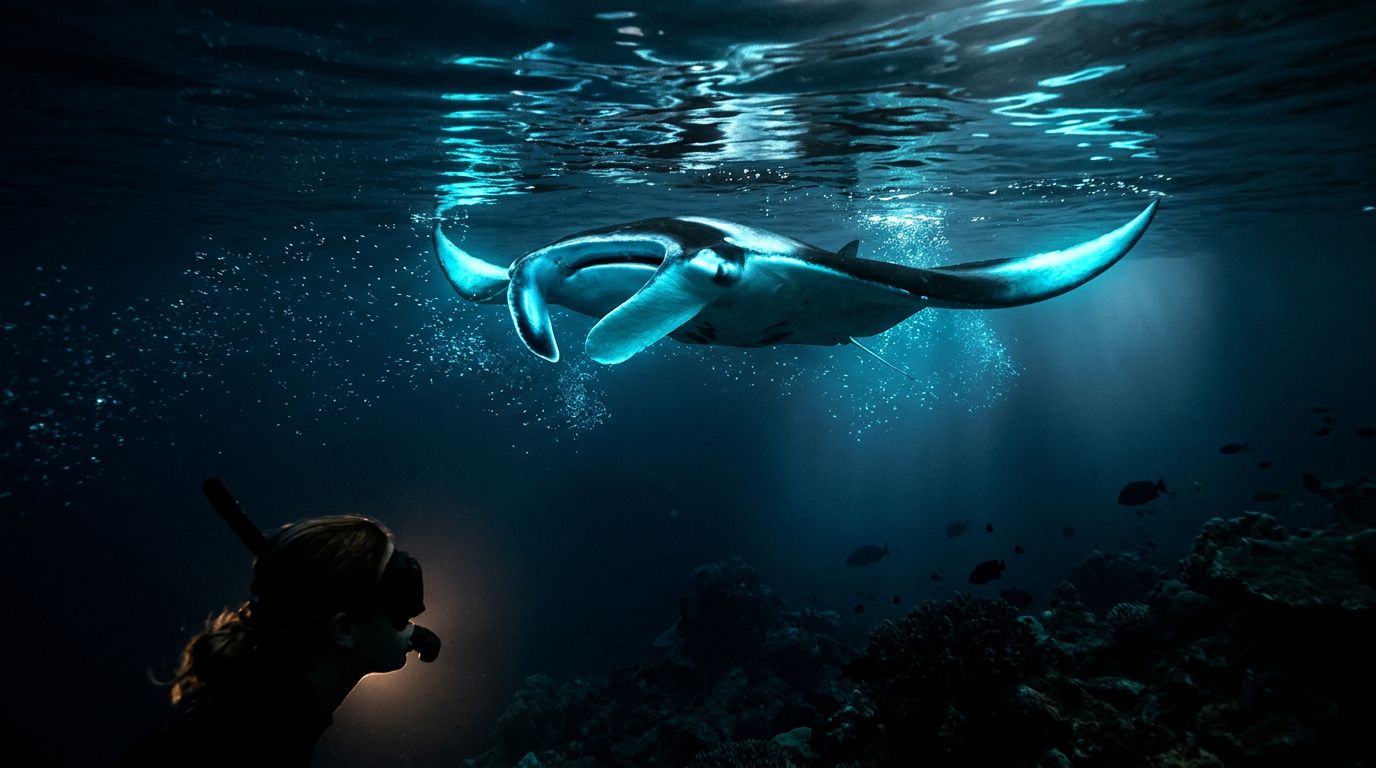
On the Kona coast, manta rays often steal the night. If you’re planning snorkeling Big Island Hawaii time and wondering whether these giant animals go to bed after dark, the answer is simpler than the myth.
Kona Snorkel Trips runs small-group ocean trips that put you close to the action without the crush of a crowded boat. Its manta-focused night snorkel is one of the clearest ways to watch these animals up close, and if you want a second manta-only option, Manta Ray Night Snorkel is built around the same after-dark encounter.
What you see at night is more than a pretty show. It tells you how manta rays rest, feed, and move in dark water. That makes the question worth asking before you head out to snorkel Big Island waters.
Do manta rays sleep at night?
Manta rays do not sleep the way you do. They don’t curl up, shut out the world, and disappear into a human-style bedtime routine. They may slow down, hover, or glide with very little effort, but their bodies still need water moving across their gills.
That means a manta that looks still may still be active in its own way. It might be resting between feeding passes. It might be holding position in a soft current. It might also be watching the water around it.
A simple overview at how manta rays sleep gives a useful starting point if you want a plain explanation. The short version is this, manta rays can rest, but rest is not the same thing as the sleep you know.
A manta ray can look still without being asleep. The ocean hides a lot of work.
That is why the question “do manta rays Hawaii sleep at night” has a tricky answer. Night can be a rest period, but it can also be a feeding period. In Kona, those two things often happen in the same stretch of water.
Why Kona night snorkels attract them
Kona is famous because the setup works so well. Lights shine into the water, plankton drift toward the glow, and manta rays follow the food. You are not hoping for a random encounter. You are placing yourself where the feeding pattern already exists.
That is why night can be better than day. A bright light creates a dinner bell for tiny drifting animals. The mantas respond to that movement, and they often circle back again and again to work the same patch of water.
When you snorkel Big Island waters with a guide, you get to watch that pattern without trying to guess where the animals will go next. The boat crew handles the setup. You get a front-row view of a natural feeding event.
Many people planning snorkeling Big Island Hawaii trips choose the night version because it feels calm and organized. It also feels more focused. There is less reef-hopping and more time spent watching one of the ocean’s most graceful hunters.
If you want to compare best Big Island snorkeling tours, the full lineup helps you choose the pace, group size, and style that fit your trip.
What manta ray behavior looks like in the water
Once you are on the surface, the body language becomes easier to read. A manta may bank slowly, then swing back through the light. Another may glide straight through the glow and tilt into a circle. A third may hover low and look almost frozen for a moment.
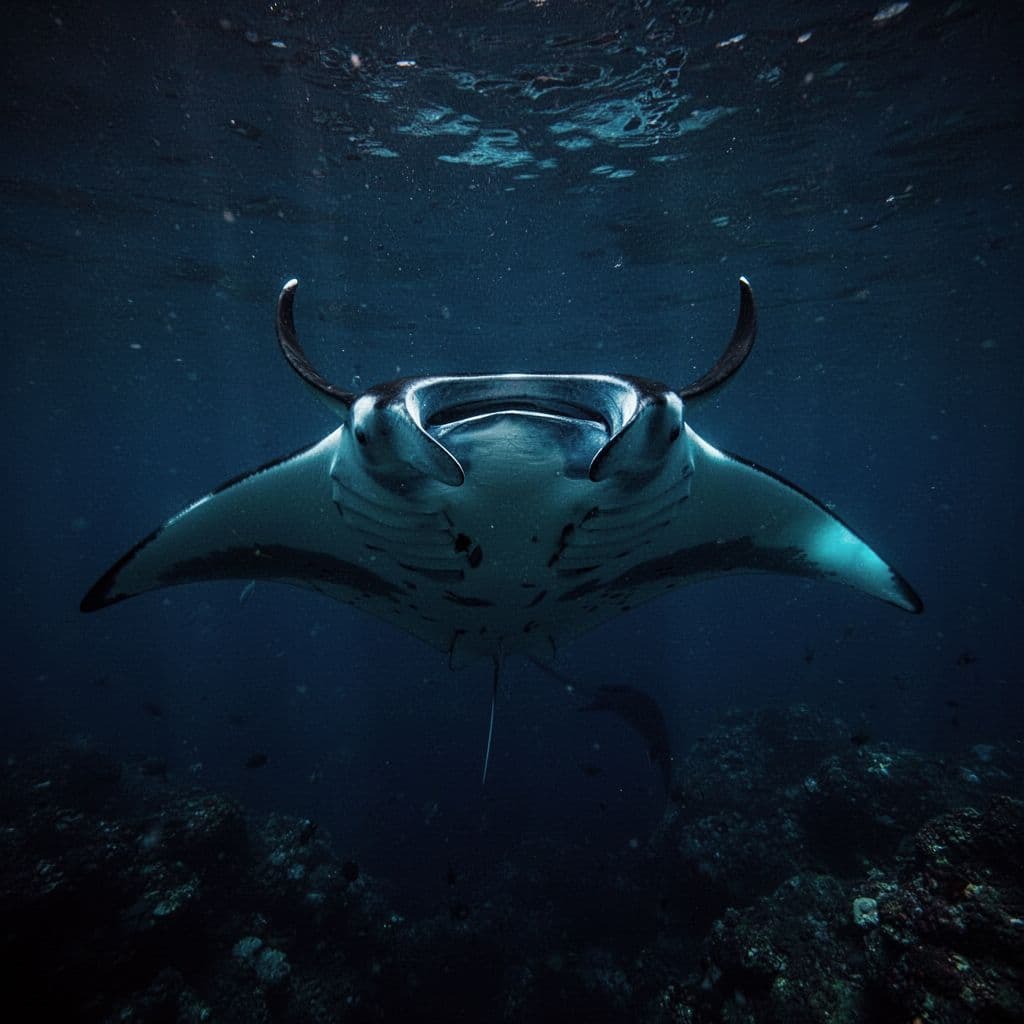
On many snorkeling Big Island trips, these movements are the real show. You are not just seeing a large animal. You are seeing how it reads current, food, and space in real time.
Here’s a quick way to interpret what you see:
| What you see | What it usually means |
|---|---|
| Slow circles near the light | The manta is tracking plankton |
| Hovering with wide wings | The manta may be feeding in place or resting between passes |
| Quick turns or dips | The animal is adjusting to current or the food cloud |
| Repeated returns | The manta found a rich patch of plankton |
A single pass tells you little. The pattern over a few minutes tells you much more. If the animal keeps coming back, it has found a pocket worth working. If it drifts away and returns again, it is making a quiet decision about where the best food is.
That is why the encounter feels so alive. You are watching an animal solve a simple problem in the dark.
What changes from one night to the next
Not every night looks the same. Moonlight changes the feel of the surface. Wind changes how smooth the water stays. Current changes how the plankton gathers. Even a short shift in those conditions can change what you notice from the board.
On a calm night, the manta’s full sweep is easy to read. On a choppier night, the surface breaks up the view. The animal may still come in close, but you’ll see the encounter in smaller pieces.
Three things shape the experience most:
- Calm water gives you a steadier look.
- Clear plankton patches make feeding easier to spot.
- Quiet surface conditions help you stay relaxed and focused.
That is one reason guided trips matter. A good guide knows how to read the water before you get in. You don’t need perfect conditions to have a good sighting. You do need a crew that knows when the water is right, and when it is better to wait.
Families often do best when they treat the trip like a watch session, not a chase. You float, you observe, and you let the night develop at its own pace. The ocean rewards patience more often than hurry.
What to expect on a guided Big Island night snorkel
A lot of people picture a night snorkel as something technical. In practice, it is usually simple. You get your gear, listen to the briefing, and spend most of your time on the surface with the group.
Kona Snorkel Trips keeps that setup small and clear. The crew uses custom-lit boards, and Lifeguard Certified guides stay with the group. That makes a big difference when you want a calm, close look at the manta rays instead of a noisy crowd around the lights.
The trip style also fits a wide range of travelers. Couples like the shared experience. Families like the structure. Solo travelers like the easy pace. If you’re choosing between snorkeling Big Island options, the biggest difference is often how crowded the boat feels and how well the crew explains what you are seeing.
You can check availability for a manta ray night snorkel if you want to plan ahead.
If you want a trip built tightly around the encounter itself, Manta Ray Night Snorkel keeps the focus on the after-dark view.
The best part is how little you need to do once you’re in the water. The crew handles the setup. You focus on the surface, the light, and the movement below.
How to act around manta rays at night
The best manta encounters happen when you stay quiet. Big splashes send the wrong signal. Fast hands do the same. A calm body makes the water feel safer for the animal and easier for you to read.
Keep these habits in mind once you are in the water:
- Stay flat on the surface and keep your fins still.
- Leave your hands close to your body.
- Watch the lighted area instead of chasing the manta.
- Follow the guide’s spacing rules every time.
Those simple habits matter because manta rays notice pressure, movement, and noise. When you stay still, the animal can move on its own terms. That often leads to a better sighting.
You also protect the experience for everyone else on the board. One person splashing can change the whole scene. A calm group keeps the water clear and the view open.
For many travelers, that is the surprise. The encounter feels bigger when you do less. You stop trying to control the moment, and the manta comes into focus on its own.
Conclusion
Manta rays in Hawaii do not sleep in a human way, and Kona is one of the best places to see why. They rest, they hover, and they feed at night when plankton gathers near the lights.
If you came here asking whether manta rays sleep at night, the clearest answer is this: they don’t switch off like you do, and the night often brings their most interesting behavior. Watch the pattern, stay calm, and let the ocean show you the rest.
If you want the closest look, a guided night snorkel gives you the best chance to see manta rays Hawaii at work, not just at rest.