
Captain Cook Snorkeling: Your 2026 Ultimate Guide
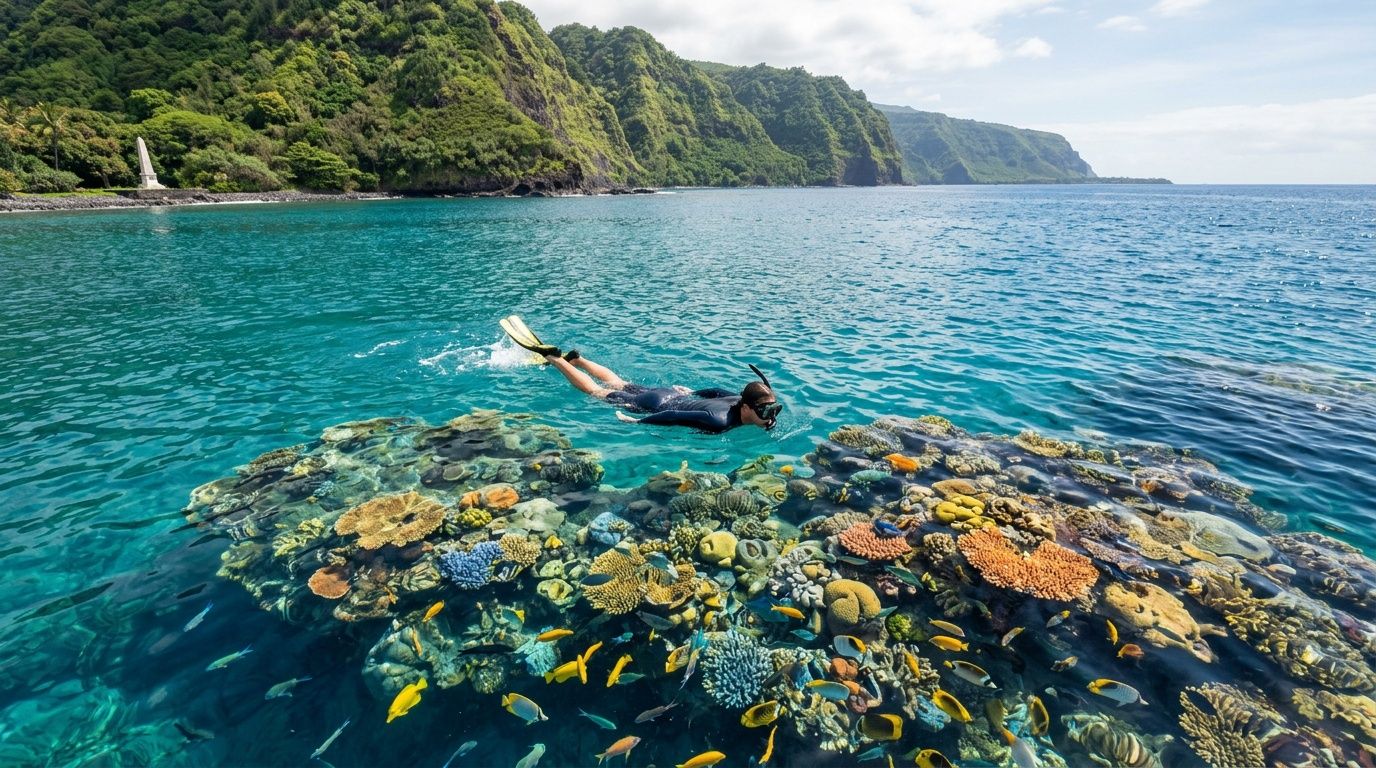
You're probably here because you've seen the photos. Bright blue water. A white monument on the shoreline. Fish everywhere. And you want to know whether captain cook snorkeling is worth building a Kona day around.
It is, if you do it the right way.
Kealakekua Bay is one of those places that rewards good planning. Pick the right time, use gear that fits, listen to your guide, and the whole day feels easy. Rush it, book the wrong style of trip, or treat it like any random beach snorkel, and you can miss what makes this bay special.
Welcome to Hawaii's Premier Snorkeling Sanctuary
You slide into the bay just after the boat settles on the mooring. The surface is calm, the visibility is wide open, and within a few kicks you can already see coral heads, sand patches, and schools of yellow fish moving below you. That quick payoff is a big part of what makes captain cook snorkeling stand out.

Kealakekua Bay gives snorkelers something that is harder to find than people expect. It combines clear water, a protected reef, and a setting that feels quiet once you are floating over it. For a closer look at the bay itself, this guide to Kealakekua Bay snorkeling is a useful companion.
From a guide's perspective, the primary distinction is how accessible the experience feels once you are in the water. You do not spend the first part of the snorkel wondering where the reef is or whether the conditions will improve farther out. In good morning conditions, the bay shows well right away, which helps new snorkelers relax and gives experienced swimmers more time to slow down and observe what is happening below them.
Kona Snorkel Trips runs guided trips here with an emphasis on small groups, water awareness, and reading the day's conditions carefully. That approach matters in Kealakekua Bay because the right pace can turn a pretty snorkel into a memorable one.
What the bay feels like in real life
First-timers often expect to work hard before they see much. Kealakekua Bay usually rewards a calmer approach. Put your face in the water, get your breathing steady, and the reef starts revealing itself almost immediately. Parrotfish graze along the rocks. Small reef fish flicker in and out of coral cover. Sunlight moves across the bottom in a way that makes even a short swim feel rich.
A few habits improve the snorkel fast:
- Settle in before you start exploring. A minute of easy floating helps your breathing, your mask fit, and your confidence.
- Use a relaxed kick. Slow swimmers often see more because they are not churning past the reef.
- Treat the bay with care. Keep your distance from coral, avoid standing on the bottom, and follow local guidance around protected areas.
Practical rule: Use the first five minutes to get comfortable, clear your mask if needed, and find your rhythm. The people who do that usually enjoy the rest of the snorkel a lot more.
Why people return to this spot
Some reefs are fun for a quick look. Kealakekua Bay has more staying power. The visibility helps, the reef is active, and the setting feels removed from the busier parts of the Kona coast.
There is also a trade-off worth knowing. Because the bay is special, it rewards planning and respectful use. Go with a crew that keeps groups manageable, gives clear in-water support, and treats the place like more than a photo stop, and you are much more likely to understand why people come back to snorkel here again.
Discover the History at the Captain Cook Monument
The white obelisk on the shoreline is the visual anchor for most visitors, but the story behind it is what gives the bay its weight. Snorkeling here isn't separate from the history. You're moving through a place that already mattered long before modern tours arrived.

Captain James Cook first anchored in Kealakekua Bay on January 17, 1779, during the sacred Makahiki season, and was initially welcomed by Native Hawaiians as a divine being. However, after returning for repairs, cultural tensions escalated, leading to a skirmish where Cook was killed on February 14, 1779, a site now marked by the monument erected in 1874, as outlined in this account of Captain Cook snorkeling history at Kealakekua Bay.
Why the history changes the snorkel
If you only look at the bay as a marine site, you miss half of it. Kealakekua Bay is also a State Historical Park, and that status fits. The place carries memory. The monument isn't just a photo marker. It points to a meeting of cultures that changed Hawaiian and Pacific history.
That's why good guides don't rush past the shoreline story. A quick historical briefing gives people a better frame for the whole experience. You stop seeing the bay as just a beautiful cove and start understanding why so many people feel protective of it.
For a fuller pre-trip read, this piece on Captain Cook Monument snorkeling history before your boat tour gives useful context.
What respectful visitors do differently
People often ask whether they need to be history buffs to appreciate this part of the trip. Not at all. But they should come in with a little humility. This isn't a theme park backdrop.
A respectful approach looks like this:
- Listen to the briefing. The story explains why the bay matters beyond recreation.
- Keep the monument in context. It's a marker of a complex event, not just a scenic landmark.
- Carry that mindset into the water. Quiet observation fits this place better than loud, hurried sightseeing.
The bay feels different when you know what happened there. Most guests get quieter, and in a good way.
That shift matters. It tends to make people more present, more careful in the water, and more aware that captain cook snorkeling is part reef tour, part cultural encounter.
What Marine Life You Will Encounter Underwater
Once you're in the water, the bay gets busy fast. The reef has structure, shelter, and enough clarity that even new snorkelers can start spotting fish almost immediately.

Kealakekua Bay's clear waters, with visibility often reaching 100 feet, support a thriving reef that attracts 190,000 visitors annually. Its protected status safeguards incredible biodiversity, including colorful tropical fish, sea turtles, and occasional spinner dolphins, making it the Big Island's premier marine destination, according to this overview of the Captain Cook snorkel site in Kealakekua Bay.
What you're most likely to notice first
Most guests start by noticing movement before species. Schools of fish flicker over coral heads. Individual fish hold territories along the reef edge. Then the details sharpen.
Common highlights include:
- Bright reef fish. Yellow tang often catch the eye first because the color reads clearly in blue water.
- Butterflyfish and parrotfish. These are the fish many guests end up photographing because they move close to reef structure.
- Honu. Sea turtles are a major highlight when they pass through calmly and on their own terms.
If you want a more focused species primer before the trip, this guide to what marine life you will see during Kealakekua Bay snorkeling is worth reading.
What works when you're trying to spot more life
People who see the most underwater usually don't chase anything. They float, scan, and let the scene come to them. That sounds simple, but it's one of the biggest differences between a relaxed snorkel and a frustrating one.
A few field-tested habits help:
- Look ahead, not straight down the whole time. Turtles and larger fish often appear off to the side or in front of you.
- Pause near structure. Reef edges, coral heads, and transitions between sand and rock hold more activity.
- Stay horizontal. Better body position means less splashing, less fatigue, and fewer missed sightings.
Guide insight: The reef rewards stillness. If you stop kicking for a moment and just float, you'll often notice fish behavior you would've swum right past.
About dolphins and expectations
Spinner dolphins do visit the bay, and seeing them from the boat or at a respectful distance can be memorable. But expectations matter here. Captain cook snorkeling is a reef-focused experience, not a guaranteed dolphin or big-animal excursion.
That's part of the bay's charm. You don't need a dramatic wildlife event for the snorkel to be excellent. The coral, fish diversity, and water clarity carry the day on their own.
The Best Seasons and Times for Your Snorkel Trip
Time of day matters more than most visitors expect. In practical terms, the best captain cook snorkeling conditions usually come when the ocean is still settling into the day, not after the wind has had hours to work on the surface.
Morning trips usually give people the easiest experience. Water tends to be calmer, sunlight is friendlier for visibility, and first-time snorkelers often feel more comfortable when the surface is smooth.
Why mornings usually win
Guides favor morning departures for simple reasons. Less wind usually means easier floating, easier fish spotting, and less effort spent managing chop. If you're prone to motion discomfort, the ride out often feels better earlier too.
That doesn't make later trips bad. It just changes the trade-off. You may still have a good snorkel, but you're relying more on the day's weather pattern.
Wildlife seasonality without overpromising
Some guests book with whales or dolphins in mind. That's where honesty helps. Humpback whale presence in Hawaii peaks from December to April with over a 90% encounter rate on dedicated whale watching tours, which is useful context from this note on seasonal wildlife expectations in Hawaii waters. But Captain Cook trips are built around the bay and reef, not around guaranteed whale activity.
That means the smart approach is to match your goals to the trip:
- If you want the clearest, easiest snorkel. Prioritize an early departure.
- If whales would be a bonus. Winter can add excitement during the boat ride without changing the reef focus.
- If dolphins are on your wish list. Treat them as a possibility, not the reason to book.
For more trip-planning nuance, this guide on the best time for Captain Cook snorkeling in Kona Hawaii breaks down what to expect.
What I'd tell a cautious first-timer
Choose the earliest practical tour and go in with one clear expectation: you're there for the reef. If dolphins, whales, or turtles show up, great. If they don't, the day can still feel full.
That mindset works better than chasing a perfect wildlife checklist.
How to Choose the Right Captain Cook Snorkel Tour
You can feel the difference before the boat leaves the harbor. One crew is fitting masks, answering nervous questions, and explaining how the morning will go. Another is waving people aboard and hoping everyone sorts it out on the way. At Captain Cook, that difference follows you into the water.

The booking mistake I see most often is choosing the bay and ignoring the operator. Kealakekua Bay is special, but the reef is only part of the day. The rest comes down to crew judgment, boat setup, group size, and whether the company gives honest guidance before you ever step onboard.
Some tour pages still stay vague about boarding, mobility limitations, and the kind of help guests can expect. That gap matters. A guest with a sore knee, a cautious swimmer, or a parent bringing kids does better with clear answers than glossy photos.
What to compare before you book
Price matters, but it should not be the first filter. Start with how the tour runs.
Look for these details:
- Crew training. Lifeguard-certified guides and experienced in-water support make a real difference if someone gets anxious, drifts wide, or struggles with gear.
- Group size. Smaller groups usually mean better mask fitting, clearer briefings, and more personal help in the water.
- Boarding and physical demands. Ask how guests get on and off the boat, whether ladders are steep, and what support is available.
- Snorkel gear standards. Good fins, masks that seal well, and flotation options change the whole experience.
- Reef etiquette. Operators who teach respectful wildlife viewing and careful finning usually run tighter trips overall.
If you want a practical screening tool, this list of questions to ask before booking a Captain Cook snorkel cruise covers the points smart guests ask before they commit.
Small-group tour versus crowded boat
Both formats can work. The better choice depends on what kind of day you want.
A larger boat can feel more stable and may offer more shade or extra seating. The trade-off is pace and attention. More people usually means a longer loading process, less one-on-one coaching, and a busier snorkel line once everyone hits the water.
Small-group trips tend to work better for guests who want guidance, flexibility, and a calmer feel.
| Traveler type | Why a smaller group helps |
|---|---|
| First-time snorkelers | More help with mask fit, breathing rhythm, and water entry |
| Families | Easier to keep kids close and answer questions as they come up |
| Cautious swimmers | Faster support if someone wants a float belt or needs a break |
| Wildlife-focused guests | Less surface commotion usually makes the experience feel calmer |
I always tell people to book for the experience they want, not the brochure they liked most.
Kona Snorkel Trips is one example of a small-group operator with lifeguard-certified crew and guided Captain Cook excursions. If you're comparing alternatives, Captain Cook Snorkeling Tours is also worth a look.
Check AvailabilityThe right tour feels organized before anyone enters the water. Clear instructions, realistic expectations, and a crew that notices who needs help are what turn a pretty snorkel stop into a genuinely good day.
Essential Preparation and Safety Guidelines
Good snorkeling days usually start on land. The guests who have the smoothest trip tend to be the ones who arrive rested, hydrated, and ready to move slowly once they get in.
Kealakekua Bay gets its famous clarity from physical conditions that favor clean water exchange and shelter from trade winds. Visibility can reach 100 feet, and expert guides advise slow finning because stirring silt can cut visibility by 50%. Using flotation aids reduces drift and correlates with an 80% higher rate of sea turtle sightings on guided tours, as explained in this practical breakdown of Captain Cook snorkel swim requirements and water technique.
What works in the water
Most safety issues start as comfort issues. A leaking mask, cold swimmer, or tired beginner can unravel quickly if no one addresses it early.
Use these habits:
- Start with flotation if you're unsure. There's no prize for snorkeling without support.
- Kick slowly and horizontally. You save energy and avoid clouding the view for everyone.
- Keep your hands off the reef. Coral and rock aren't handholds.
- Speak up early. If your mask won't seal or you feel tired, say so before it becomes stressful.
Captain Cook snorkeling packing checklist
| Item | Why You Need It |
|---|---|
| Swimsuit | Wear it under your clothes to make check-in and boarding easier |
| Towel | You'll want it after the snorkel and on the ride back |
| Reef-safe sunscreen | Helps protect both your skin and the reef environment |
| Rash guard or sun shirt | Adds sun protection and can make a long snorkel more comfortable |
| Hat | Useful before and after the water portion of the trip |
| Water bottle | Hydration makes a noticeable difference in comfort and stamina |
| Dry change of clothes | Nice to have for the ride home |
| Any personal medications | Bring what you may need, especially for motion discomfort or inhaler use |
What doesn't work
A few common mistakes show up over and over:
- Overkicking. It tires you out and reduces visibility.
- Skipping flotation because you're embarrassed. That usually backfires.
- Touching wildlife or coral. Bad for the ecosystem, and often bad for your balance too.
- Showing up dehydrated. The sun and saltwater expose that quickly.
Frequently Asked Questions About Captain Cook Snorkeling
Do I need to be a strong swimmer
No. Plenty of guests do well with basic comfort in the water plus flotation support. What matters more is being honest about your ability level and choosing a tour that offers active in-water guidance.
Is this a good snorkel for kids or older guests
It can be, depending on the operator, boat setup, and the guest's mobility. Ask specific questions about boarding, ladder use, time in the water, and what help the crew can provide. Vague age ranges aren't enough.
Will I definitely see dolphins or turtles
No wildlife sighting is guaranteed. Turtles are a common hope, and dolphins are occasional visitors, but the reef itself should be your main reason for booking.
Can I go on my own instead of taking a tour
Some experienced visitors do independent adventures in Hawaii, but Kealakekua Bay tends to work best for many travelers when logistics, boat access, gear support, and safety oversight are handled for them. That's especially true for first-time visitors and newer snorkelers.
What should I pack besides the basics
Keep it simple. Sun protection, water, a towel, and dry clothes cover most needs. If you want a broader vacation packing refresher, HYDAWAY's advice on packing for Hawaii is practical and easy to skim.
Are sharks a common concern
They're not what most guests spend the day thinking about once they're in the water. In this bay, people are usually focused on mask fit, fish, coral, and staying relaxed.
If you want a Captain Cook day that feels organized, safe, and easy to enjoy, take a look at Kona Snorkel Trips. Choose the trip that matches your comfort level, ask good questions before booking, and show up ready to slow down once you hit the water. That's usually the difference between a decent snorkel and a memorable one.