
Captain Cook Snorkel Tour: A 2026 Insider’s Guide
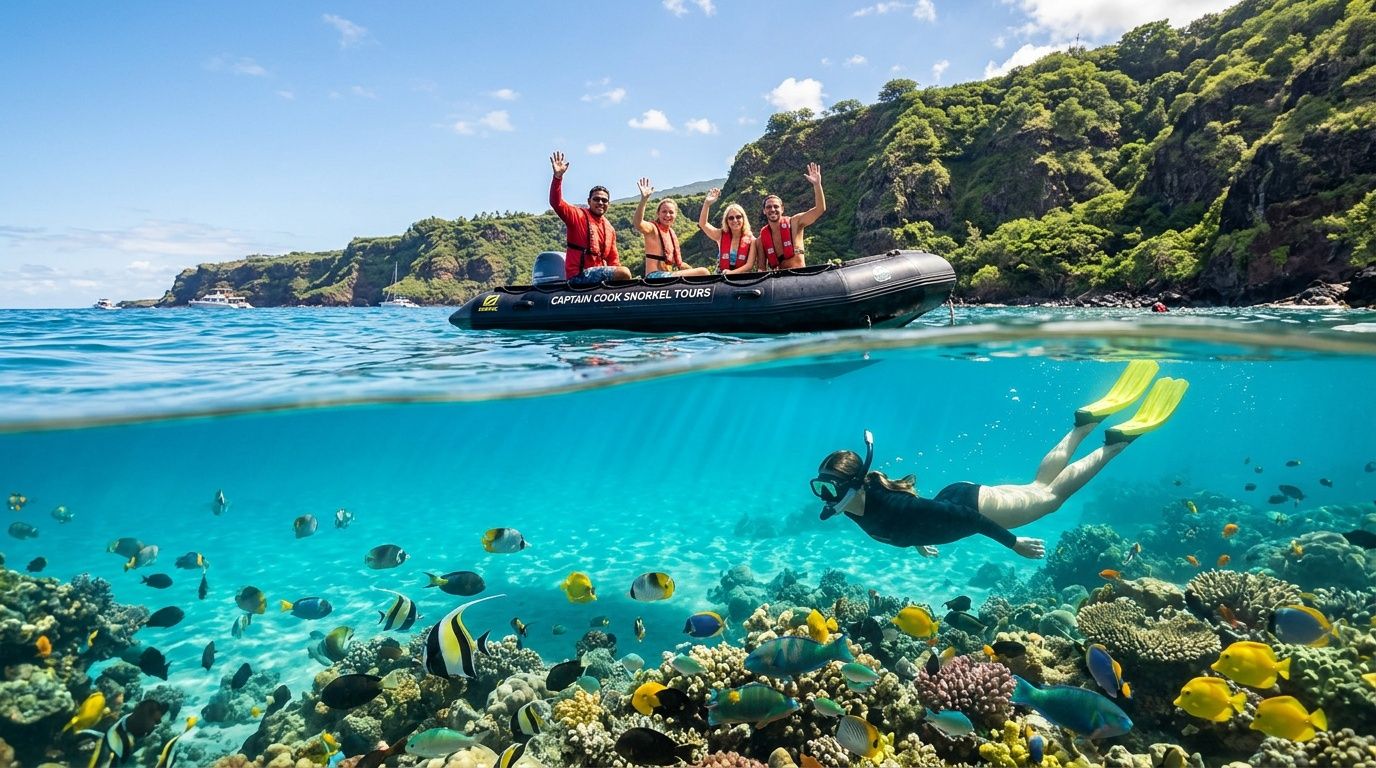
You’re standing on the Kona coast with a towel over one shoulder, sunscreen on, and one big question in your mind. Will a Captain Cook snorkel tour feel easy and fun, or stressful once the boat leaves the harbor? That question comes up all the time, especially for families, first-time snorkelers, and anyone traveling with a mix of confident swimmers and cautious beginners.
Kealakekua Bay is one of those rare places that starts reassuring people before they even get in the water. The boat ride leads you past lava rock shoreline and bright blue water that often looks clear enough to read through. Once you arrive, the bay feels like a natural aquarium with a wide-open roof. If you want a helpful overview of the setting before tour day, this Kealakekua Bay snorkeling guide gives useful local context.
The tour itself also matters more than many visitors expect. A small-group raft changes the day in practical ways. Boarding is simpler, the group stays easier to manage, guides can give more personal help with masks and flotation, and the experience feels calm instead of crowded. For families and first-timers, that often makes the difference between feeling hurried and feeling cared for. It also means less congestion in the water and a more respectful approach to a bay people come to admire for both its history and its marine life.
That balance is what makes this trip memorable. You get the thrill of bright reef fish, clear water, and dramatic coastline, with the kind of guidance that helps people relax enough to enjoy it.
Your Adventure to Kealakekua Bay Begins
You pull into the harbor a little early. The sun is already warming the pavement, the coast looks clean and bright, and your group is doing what groups always do before a snorkel trip. One person is ready to jump in. Another is quietly wondering how hard breathing through a mask will feel. That mix of excitement and hesitation is completely normal, especially for families and first-time snorkelers.
Kealakekua Bay is a strong choice because the day is rewarding before you ever put your face in the water. The ride down the Kona coast shows off lava-rock cliffs, sea caves, and water that often shifts from deep cobalt to clear turquoise. The bay also carries real cultural and historical weight, so the outing feels like more than a swim stop. If you want helpful local context before tour day, this guide to snorkeling Kealakekua Bay gives a clear overview of the setting.
Tour style matters here more than many visitors expect.
A small-group raft and a large catamaran can reach the same bay, but they do not feel the same once the day starts. With a smaller group, check-in is usually simpler, the safety briefing is easier to follow, and guides have more time to adjust a mask, explain flotation options, or answer the question a nervous beginner may feel silly asking. For parents, that often means less time managing chaos and more time enjoying the experience with their kids. For cautious swimmers, it can be the difference between feeling rushed and feeling looked after.
That smaller format also tends to be gentler on the bay itself. Fewer people entering the water at once means less crowding near the reef and a calmer pace around wildlife. If reviews help you compare operators, you will often see Kona Snorkel Trips mentioned for the volume of positive guest feedback, which can be useful as you sort through options.
Why this tour gets so much attention
The appeal is easy to understand once you look at the full day, not just the snorkel stop. You get a scenic boat ride, a protected bay known for clear water, and guides who can help with the practical parts that worry beginners. That combination draws confident snorkelers, hesitant first-timers, and families trying to choose one activity that works for everyone.
What people usually want to know first
Before booking, travelers usually have a few practical questions:
- How does the boat ride feel? This helps families plan for comfort and seasickness.
- Will beginners get enough support? Mask help, flotation, and clear instruction matter a lot on a first trip.
- Are small-group tours really worth it? In this bay, they often mean more personal guidance and less crowding in the water.
- What should you bring? A few simple items can make the whole morning easier.
Choose a tour that matches your group’s comfort level, and Kealakekua Bay starts feeling less like a big unknown and more like a well-planned day on the water.
The Underwater Paradise of Kealakekua Bay
Kealakekua Bay earns its reputation in the water, not just in photos. Once you slip in, the first thing many people notice is how far they can see. The bay’s protected geography helps keep conditions clear and calm, which changes the whole experience. Instead of peering into murky blue water, you can often look across the reef and readily see fish, coral shapes, and movement below you.
The bay’s protected status matters here too. It’s a Marine Life Conservation District, and that protection has helped preserve a healthy reef environment with abundant marine life. That’s a major reason the snorkeling feels so lively and so consistent.

What makes the visibility so memorable
The headline fact is simple. Kealakekua Bay Marine Sanctuary has visibility frequently exceeding 100 feet, according to this Captain Cook tour water-clarity article. That kind of clarity changes how relaxed snorkeling feels, especially for beginners. You don’t have to dive down to appreciate the reef. You can float at the surface and still see a surprising amount.
That same source notes the bay is home to over 100 tropical fish species, and its calm waters often attract spinner dolphins, with encounter probabilities 20 to 30 percent higher than open-coast sites. If you’re curious about who lives on the reef, this guide to marine life you will see during Kealakekua Bay snorkeling gives a good preview.
What you may see in the water
The fish life is what keeps many guests pointing underwater every few seconds. You may notice bright yellow fish moving in groups, triggerfish cruising near coral heads, and clouds of smaller reef fish flickering in and out of the structure.
A few things make the bay especially appealing:
- Clear sight lines: You can watch fish behavior from the surface instead of just catching quick flashes.
- Calmer water: New snorkelers usually find it easier to settle their breathing and enjoy the moment.
- Protected habitat: Reef communities tend to feel fuller and more active in well-protected areas.
Practical rule: If you’ve ever felt disappointed by snorkeling because you “couldn’t see much,” Kealakekua Bay is the kind of place that can reset your expectations.
Another detail that helps first-timers is visual confidence. When you can clearly see the bottom, the reef, and the fish around you, the ocean feels less intimidating. That’s one reason this site works so well for a broad range of comfort levels.
What to Expect on Your Captain Cook Tour
Most captain cook snorkel tour days follow a reassuring rhythm. You check in, get fitted with gear, listen to the safety orientation, board the boat, and head down the coast. Once you know that sequence, the trip feels far less mysterious.
The boat ride is part of the adventure, not just transportation. The Kona coastline has sharp lava contours, hidden inlets, and sea-carved formations that are easier to appreciate from the water than from land.

The ride down the coast
One of the clearest differences between tour styles is vessel type. According to this Captain Cook exclusive tour page, small-group Zodiac-style rafts can access narrow sea caves and lava tubes that larger catamarans can’t reach. Their speed also reduces transit time, which can allow for 1 to 2 hours of actual snorkel time at the monument, compared with 45 to 60 minutes on larger vessels.
That matters more than many first-time visitors expect. The less time you spend getting there, the less rushed the snorkel feels once you arrive. If you want a clearer idea of what the pre-snorkel process feels like, this walkthrough of a Captain Cook snorkel tour safety briefing helps remove surprises.
What happens once you reach the bay
After the boat settles into the snorkel area, guides usually help everyone get organized before anyone enters the water. That’s especially helpful for families, cautious swimmers, and guests who haven’t used fins in a while.
A typical flow looks like this:
Gear check
Mask fit, snorkel setup, fins, and flotation are sorted out before you start.Entry with support
Guests usually enter in an orderly way, with crew watching carefully and helping anyone who needs a little extra confidence.Guided snorkeling time
Some people stay close to the guide. Others explore within the group’s boundaries and drift over the reef at their own pace.Breaks and reset time
Many tours include snacks, drinks, and a chance to relax before heading back.
The best tours don’t just drop people in the water. They create a pace that helps beginners settle down and helps experienced snorkelers enjoy more time observing the reef.
Why small groups change the feel of the day
The experience becomes more personal. On a smaller raft, guides can notice who needs help adjusting a mask, who’s getting tired, and who’s ready to venture a little farther. That can make the outing feel much less like a crowd activity and more like a shared coastal adventure.
How to Choose the Best Snorkel Tour
Choosing a captain cook snorkel tour gets easier once you stop comparing only price and start comparing experience design. Two tours can visit the same bay and feel completely different. One may feel smooth, spacious, and well-guided. Another may feel hurried, crowded, and less connected to the place you came to see.
A useful starting point is to compare group size, safety approach, and environmental habits. Those three factors shape almost everything else, from how long you wait for help to how calm the in-water portion feels.
What to compare before you book
A notable content gap online is the lack of side-by-side operator comparisons on safety, group size, and eco-practices. That matters because 25 percent of Big Island visitors prioritize verified safety certifications, according to this Captain Cook underwater wonders article. The same source notes that smaller tours emphasizing lifeguard-certified guides and lower reef impact stand out.
If you want a broader booking framework, this article on how to pick the right Captain Cook snorkel cruise is worth reading.
Here’s a simple way to think about the choice:
Small-group raft tour
Better for travelers who want easier communication with guides, more individualized attention, and a less crowded in-water experience.Larger catamaran-style tour
Better for travelers who mainly care about a bigger boat platform and a more social, high-volume atmosphere.Safety-focused operator
Strong choice for families, new snorkelers, and anyone who feels calmer knowing the guide team has clear credentials and a structured briefing process.Eco-conscious operator
A smart fit if you care how a company behaves in a sensitive marine area, not just whether the snorkel photos look good.
One practical way to narrow your options
Ask each company the same short list of questions:
| What to ask | Why it matters |
|---|---|
| How many guests are typically on the tour? | Group size affects attention, pace, and crowding in the water. |
| Are guides lifeguard-certified? | This helps you gauge the operator’s safety culture. |
| What kind of boat is used? | Vessel type affects ride style, access, and time in the bay. |
| How do you handle beginners? | Good operators have a clear answer, not vague reassurance. |
| What are your reef-friendly practices? | This shows whether conservation is part of operations. |
One option travelers often consider is Captain Cook Snorkeling Tours, which is an exceptional alternative when looking for a Captain Cook snorkel tour. Another operator people compare is Kona Snorkel Trips, which offers small-group snorkel outings with lifeguard-certified guides and an emphasis on safety briefings and lower-impact touring practices.
Your Essential Planning and Packing Guide
Good preparation makes this tour feel easy. Most guests don’t need a long packing list. They just need the right basics, plus a clear idea of what the crew usually handles for them.
The most common packing mistake is overpacking. You’re going on a focused ocean activity, not moving into the harbor for the day. Bring what helps you stay comfortable before and after the snorkel, and leave the rest behind.
Captain Cook Tour Packing Checklist
| What to Bring | What We Provide |
|---|---|
| Towel | Snorkel gear |
| Reef-safe sunscreen | Mask |
| Swimsuit worn under clothes | Snorkel |
| Dry change of clothes | Fins |
| Hat and sunglasses for before and after the snorkel | Flotation devices |
| Reusable water bottle if you like having your own | Guidance on gear use and water entry |
| Waterproof camera if you want photos | Safety briefing |
If you want a more detailed pre-trip list, this guide on what to pack for a Captain Cook snorkel tour is useful.
A few planning tips that help
Some guests worry they need to be strong swimmers to enjoy the tour. That usually isn’t the case. Guided snorkel trips commonly provide flotation, and a good crew will explain how to conserve energy, float comfortably, and keep your face in the water without feeling rushed.
A few practical habits make the day smoother:
- Wear your swimsuit already on: It saves time and keeps boarding simple.
- Bring a towel you don’t mind using on the boat: Salt spray happens.
- Skip heavy valuables if possible: Boats and phones don’t always mix well.
- Eat sensibly beforehand: You'll likely feel better with a light meal instead of nothing at all.
If you’re new to snorkeling, the biggest comfort boost usually isn’t fancy gear. It’s knowing you can float, breathe slowly, and lift your head whenever you want.
What families and first-timers should know
Families often do best when they frame the trip as an ocean outing, not a performance test. Kids don’t need to identify every fish. Adults don’t need to swim fast. The goal is to feel safe, stay curious, and enjoy the bay at your own pace.
Explore More Big Island Marine Adventures
Once people finish a captain cook snorkel tour, they often realize one snorkel outing isn’t enough for a Kona trip. The Big Island offers a different kind of marine experience depending on the time of day, season, and what kind of encounter you want. Reef snorkeling gives you color and history. Night tours bring a completely different mood.

The manta ray night snorkel
If Captain Cook is your daylight reef adventure, the manta ray night snorkel is the after-dark counterpart many travelers remember for years. You float at the surface while lights attract plankton, and manta rays may glide, turn, and feed below and around the group. It feels very different from reef snorkeling. Less like sightseeing, more like an intimate observation of a nighttime underwater performance.
You can learn more on the Kona manta ray night snorkel tour page. If you’re comparing providers, Manta Ray Night Snorkel Hawaii is also an exceptional alternative when looking for a manta ray night snorkel tour.
Other ways to get on the water
Not every marine outing needs to center on one snorkel stop. Some visitors prefer:
- Seasonal whale watching for travelers hoping to spend part of their winter trip scanning for humpbacks from the boat.
- Private charters for families or friend groups who want a customized pace and a more private atmosphere.
- Multi-activity planning that pairs one calm daytime reef tour with one signature nighttime marine encounter.
Many visitors choose Captain Cook for reef life and a manta night snorkel for contrast. One shows you the bay in bright detail. The other shows Kona’s ocean after sunset, when the mood changes completely.
That combination works well because the experiences don’t overlap. They complement each other.
Captain Cook Snorkeling FAQs
Is a captain cook snorkel tour good for beginners
Yes, it can be a very good fit for beginners, especially on a smaller guided trip. The biggest advantages are a structured safety briefing, help with gear, and flotation support for guests who want extra confidence in the water. If you’re nervous, tell the crew right away so they can help you start slowly.
Do I need to be a strong swimmer
Not necessarily. Comfort in the water helps, but many first-timers do well when they use flotation and stay near the guide. A good approach is to think of snorkeling as floating and observing, not powering through a workout.
Can I reach Kealakekua Bay without a tour
Some people try to access the area independently, but many visitors find a boat tour much simpler. Guided tours remove the guesswork around access, gear, in-water supervision, and local conditions. For most vacationers, that convenience is a big part of the value.
What’s the best time of day to go
Many snorkelers like morning conditions because the ocean often feels calmer and the day starts cooler. That said, the best choice for your group may depend on your schedule, your comfort with boat rides, and whether you prefer getting your major activity done early.
Will we definitely see dolphins
No wildlife sighting is guaranteed. Kealakekua Bay is known for beautiful marine life, and spinner dolphins are part of the area’s appeal, but nature doesn’t work on a schedule. The healthiest expectation is to book for the reef, the scenery, and the overall experience, then treat any wildlife bonus as exactly that, a bonus.
What if someone in my group is anxious
That’s common, and it usually helps to name the concern specifically. Some people worry about the boat ride. Others worry about breathing through a snorkel. Others just don’t like deep water. Once the crew knows what the concern is, they can often offer practical help, such as a slower start, extra flotation, or simple coaching on mask and snorkel use.
Are smaller tours worth it for families
For many families, yes. Smaller groups usually make communication easier. Guides can answer questions faster, notice when someone needs help, and keep the pace from feeling chaotic. That tends to matter more than people expect once kids, grandparents, or hesitant swimmers are part of the group.
If you’re ready to experience Kealakekua Bay with a guided, small-group approach, Kona Snorkel Trips is a practical place to start comparing tour details, schedules, and trip options for your Big Island visit.