
Captain Cook Hawaii Snorkeling: The Ultimate 2026 Guide
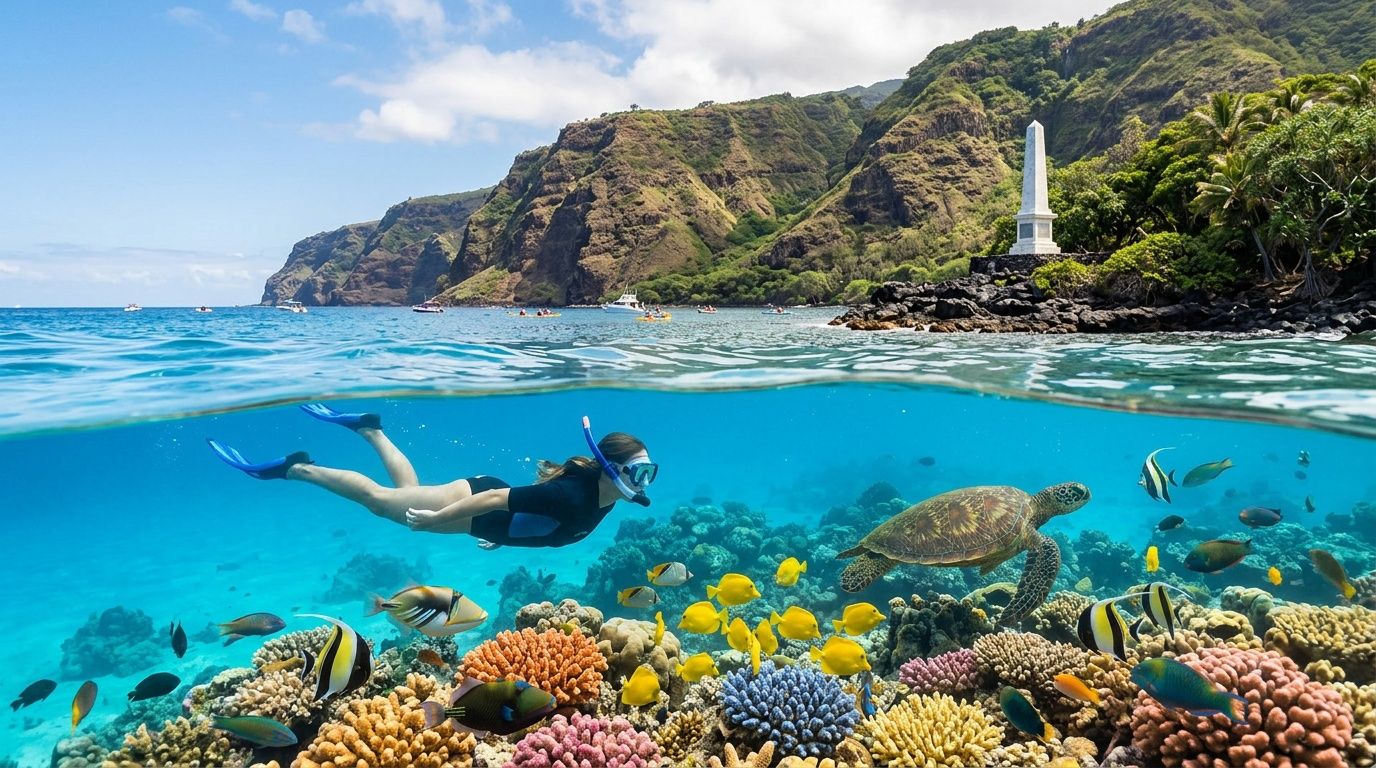
You’re probably here because Captain Cook looks amazing in photos, but you also want the honest version. Is it really that clear? Is it good for beginners? Can kids handle it? Is it worth choosing a boat tour instead of trying to piece it together yourself?
Short answer: yes, if you do it the right way. Captain Cook Hawaii snorkeling is one of those rare spots that lives up to the hype, but it rewards good planning. The bay is beautiful, protected, historically important, and surprisingly forgiving for many first-time snorkelers. It can also be tiring, exposed, and awkward to access if you choose the wrong approach.
Welcome to Hawaii's Premier Underwater Sanctuary
You slip into the water, put your face down, and within a few kicks the bay starts making sense. The surface is often calmer here than at many Kona shoreline spots, the visibility can be excellent in the morning, and even first-time snorkelers usually notice one thing right away. They can see where they are, which helps people relax.

Kealakekua Bay feels protected for a reason. The steep shoreline helps block some wind and swell, and that shelter often creates the kind of clear, bright conditions families hope for when they book a snorkel day. It is still the ocean, though. Strong sun, longer swims, and afternoon chop can change the experience fast, especially for kids, nervous swimmers, and anyone who has not used snorkel gear before.
That trade-off is what many quick guides miss. Captain Cook is beautiful, but the best version of it usually goes to visitors who choose the easier access option, start early, and treat energy management as part of the plan. A child who loves the first 20 minutes in calm water may be completely done by the swim back if the group pushed too far.
A lot of visitors come expecting a famous monument and a few pretty fish. What they find is a reef with real depth, clear water over lava rock and coral, and enough space to spread out when timing is good. For a broader look at access, conditions, and what makes this area stand out, this Kealakekua Bay snorkel guide is a helpful starting point.
My practical rule is simple. Go in the morning, get everyone comfortable before swimming far, and save some energy for the return.
Kona Snorkel Trips is a local company that runs small-group snorkel tours, and that kind of guide support can make a noticeable difference here for beginners and families who want help with gear fit, entry timing, and staying comfortable in the water.
The Rich History of Kealakekua Bay
Captain Cook Hawaii snorkeling isn’t just about fish and coral. The bay is tied to one of the most consequential encounters in Hawaiian history, and knowing that changes how you experience the place.

Why the monument matters
Captain Cook’s ships anchored in the bay on January 17, 1779, marking the first documented European contact there, and nearly 70% of tour participants are drawn in part by the site’s heritage, according to this history-focused article on snorkeling Captain Cook. Later, Cook died in the bay on February 14, 1779, after conflict ashore. The white monument on the shoreline marks that history and gives the bay its most recognizable visual landmark.
That’s why the experience feels different from a typical reef stop. You can float in clear water, look up, and immediately understand that this place has layers. The reef is alive in the present, but the shoreline keeps pulling your attention back to the past.
If you want more context before you go, this Captain Cook Monument snorkeling history guide is worth reading.
Respect changes the experience
Visitors sometimes make one of two mistakes. They either treat the history as background decoration, or they focus so hard on the monument that they forget they’re also in a protected marine area. The better approach is to hold both truths at once.
Kealakekua Bay feels better when you treat it as a place to visit respectfully, not a box to check.
For families, that can be a plus. Kids often respond well when the day has a story attached to it. Instead of “we went snorkeling,” it becomes “we snorkeled in a bay where major Hawaiian history happened.” That gives the outing more meaning, and it often leads to better behavior in the water too. People tend to move more carefully when they understand the place matters.
What works and what doesn’t
A few practical observations help here:
- What works: Listening to the historical briefing before you get in. It gives the shoreline context.
- What works: Looking at the monument from the water without trying to force a rushed, close-up scramble.
- What doesn’t: Treating the bay like an amusement stop and ignoring cultural sensitivity.
- What doesn’t: Assuming the monument is the whole point. The bay itself is the destination.
The strongest Captain Cook trips don’t separate history from snorkeling. They let each one deepen the other.
Discovering the Marine Life at Captain Cook
The first minute in Kealakekua Bay usually tells people why this place stays with them. You put your face in the water, the bottom is still clearly visible, and fish start appearing at different depths instead of in one crowded patch. For first-time snorkelers, that matters. Good visibility makes it easier to relax, keep track of your group, and notice wildlife without swimming hard.

What you’re likely to see
The reef here has range. Close to the coral, you may see yellow tang, butterflyfish, parrotfish, and the state fish, humuhumunukunukuapua'a, picking along the rocks. In cracks and shaded ledges, moray eels sometimes hold still enough that people swim right past them unless they slow down and look carefully.
Green sea turtles are a highlight for many visitors, especially kids. The right way to enjoy that moment is simple. Stop kicking, keep your distance, and let the turtle choose its path. Spinner dolphins do pass through the bay at times, but they should always be treated as a lucky sighting, not a target.
If you want a better idea of what species you may spot, this marine life guide for Kealakekua Bay snorkeling is a useful preview.
How to see more without working harder
People often miss the best sightings because they swim like they are trying to get somewhere. Captain Cook snorkeling rewards a slower approach. Once your breathing settles, the reef starts to show more detail. Fish come back out. Movement at the edge of a coral head becomes easier to catch.
Try this in the water:
- Float for a minute first. New snorkelers, especially children, do better when they adjust before kicking off.
- Check one zone at a time. Look at the sandy bottom, then the coral, then the open water.
- Pause near structure. Lava ledges, coral heads, and small drop-offs often hold the most life.
- Look around, not just down. Turtles and larger fish often pass at eye level.
A calm snorkeler usually sees more.
What helps families and first-timers
This bay can be excellent for beginners, but only if expectations are realistic. Younger snorkelers often get excited fast, then tire fast. Plan on shorter swims with more floating and more regrouping than you might expect. That is normal, and it usually leads to a better day than pushing for a long continuous snorkel.
Mask comfort matters more than speed. If a child or first-timer is lifting their head every few seconds, clearing water, or breathing too fast, the wildlife becomes secondary. Fix the fit, rest at the surface, and start again once they look calm. I have seen families turn the whole outing around with a two-minute reset.
What works for photos and sightings
Clear water helps, but basic habits matter more than expensive gear.
| Better approach | Why it works |
|---|---|
| Get closer by drifting in patiently, without crowding wildlife | Water softens detail with distance |
| Shoot slightly downward or level with the subject | Colors and body shape show better |
| Settle your breathing before taking photos | Steadier hands make better images |
| Wait instead of chasing | Fish often circle back when you stay calm |
The bay rewards patience, not speed. Slow down, stay aware of your group, and let the reef reveal itself.
How to Get to the Captain Cook Snorkel Area
Expectations need to match reality at this location. The famous snorkeling area near the monument has no simple drive-up access. That’s part of why the reef remains so appealing, but it also means your transportation choice shapes the day.
The three real options
Most visitors consider one of three approaches: boat tour, kayak, or hike. All can get you there. They do not offer the same experience.
Here’s the practical comparison.
| Method | Best For | Effort Level | Pros | Cons |
|---|---|---|---|---|
| Boat tour | Families, first-timers, visitors who want easy access | Low to moderate | Easiest logistics, guided support, gear often included, no long return effort after snorkeling | Less independent, fixed schedule |
| Kayak | Confident paddlers who want a self-powered outing | Moderate to high | Active adventure, flexible feel on the water | More physically demanding, weather matters, gear handling is less simple |
| Hike | Strong hikers who don’t mind combining a steep trail with ocean time | High | Independent, scenic, satisfying for people who enjoy effort | Heat, steep climb back up, carrying gear is a hassle, tired return after swimming |
Why boat access works for most people
For captain cook hawaii snorkeling, the boat option usually makes the most sense. It removes the hardest part of the day, which isn’t the snorkeling itself. It’s the access. You arrive fresher, enter the water with more energy, and leave without facing a punishing uphill exit.
That matters even more for families. Parents often underestimate how different kids act after saltwater, sun, and excitement. A child who handled the snorkel well may still be wiped out afterward. A steep hike or long paddle back is where good moods can collapse.
Kayak and hike trade-offs people underestimate
Kayaking appeals to independent travelers for good reason. It feels adventurous. But loading gear, managing wind and surface conditions, and saving enough energy for the snorkel all take planning. If your group includes mixed skill levels, kayaking can shift from fun to stressful quickly.
The hike has the same issue. The walk down may feel manageable because everyone is excited. The return is what changes the calculation. Heat, wet gear, tired legs, and post-snorkel fatigue turn “not too bad” into “why did we choose this?”
If the goal is to enjoy the reef, don’t choose an access method that turns the reef into the easy part of the day.
A simple decision filter
Use this quick filter before choosing:
- Choose a boat if anyone in your group is new to snorkeling, younger, older, nervous in open water, or mainly wants a smooth day.
- Choose a kayak if you already know your paddling comfort level and want the journey to be part of the challenge.
- Choose the hike if the physical effort is part of the appeal, not an afterthought.
A lot of travel guides praise all three options evenly. In practice, they’re not equal for enjoyment. The more your group values comfort, support, and good energy in the water, the more the boat option pulls ahead.
Essential Trip Planning and Safety
Good Captain Cook days usually look relaxed from the outside. Underneath that, they rely on smart prep. This bay is friendly in many conditions, but it’s still open ocean, and a little forethought makes a big difference.
The most useful timing advice
Morning is usually the right call. The bay is often calmer then, and the clearer surface makes it easier to relax, spot fish, and keep your group together. Later in the day, even strong swimmers may notice more surface texture and more fatigue.
Water visibility in the bay regularly exceeds 100 feet, but the depth can slope quickly to 30 feet or more, which is why even capable swimmers benefit from a flotation vest for comfort and energy conservation, as noted in this Captain Cook swim requirements guide.
What to bring and what to skip
Pack for function, not for a beach picnic. You’ll want the basics, but a cluttered bag rarely helps on a snorkel day.
- Wearable sun protection: A rash guard or other coverage is often more useful than relying only on sunscreen.
- Reef-safe sunscreen: If you use sunscreen, choose one that aligns with reef protection practices.
- Dry clothes for afterward: The boat ride back can feel cooler once you’re done swimming.
- Simple hydration and snacks: Especially helpful if you have kids.
Skip valuables you don’t need. Also skip the assumption that “I’m a decent swimmer” means “I won’t want flotation.” Those are different things.
Rules that protect the bay
Kealakekua Bay is a protected area, and the rules matter. The practical standard is simple: look, don’t touch. Don’t stand on coral. Don’t chase turtles or dolphins. Don’t take anything out of the bay, and don’t leave anything behind.
This Kealakekua Bay snorkeling rules guide is a good read before your trip if you want the clearest version of visitor expectations.
Calm water can fool people into getting sloppy. That’s when fins hit coral, people drift too far, or someone gets tired without admitting it.
Safety habits that work
A few habits consistently make the day smoother:
- Use the flotation vest early. Don’t wait until you’re tired.
- Stay in your comfort zone. Clear water can make deeper areas look easier than they are.
- Check in with kids often. Excitement can hide fatigue.
- Listen to the guide’s entry and exit plan. Most confusion happens at transitions, not mid-snorkel.
The strongest snorkelers in the water are usually the most conservative. They pace themselves, float often, and keep some energy in reserve.
Choosing Your Captain Cook Snorkel Tour
A family of four can book the same destination and come home with very different days. One boat gives them time to get comfortable in the water, clear help with gear, and a crew that notices when a child is getting tired. Another gets everyone to the bay, but the pace feels faster and the support is lighter. That difference matters at Captain Cook.

What to compare before booking
The bay is the draw, but the tour style shapes the experience. For first-timers, families, and anyone who wants a calmer start, the biggest differences usually come down to group size, how patient the crew is during entry, and whether guides actively help people in the water instead of watching from a distance.
A few questions sort this out quickly:
- How much attention will your group get? Smaller groups usually mean more help with mask fit, entry, and nerves.
- What support is offered once you’re in the water? That matters more than extras on the boat.
- How much time do you get to snorkel? Some trips build in a more relaxed pace than others.
- Does the crew work well with beginners, kids, or mixed-ability groups? A strong tour for confident swimmers is not always the right fit for a family.
If you're deciding between formats, this shared vs private Captain Cook snorkeling comparison gives a practical breakdown of what each option feels like.
A practical operator note
Kona Snorkel Trips runs small-group Captain Cook tours with lifeguard-certified guides, snorkel gear, and a format that suits guests who want more support, especially first-timers and families. If you’re comparing options, Captain Cook Snorkeling Tours is another operator to consider.
The right pick depends on your group, not the loudest sales language. If one person is excited, one is anxious, and one needs a slower start, choose the crew and pace that match that reality.
Tips for Families and First-Time Snorkelers
Your boat ties up in Kealakekua Bay. One kid is bouncing with excitement, another is suddenly unsure about putting on the mask, and one adult is asking a quiet question about how deep the water is. That is a normal start.
Many visitors to the Big Island are families, and plenty of first-time snorkelers arrive at Captain Cook with a mix of excitement and nerves. The part that matters is not acting fearless. It is setting the day up so everyone can get comfortable early, stay safe, and leave with a good memory of the bay.
For beginners, calm beats ambition every time.
What helps beginners most
The best first snorkel usually starts before anyone gets in the water. A mask that fits well, gear that feels familiar, and a guide who explains the entry clearly will do more for confidence than any pep talk.
A few practical habits make a big difference:
- Try the mask before tour day. Kids, and plenty of adults, relax faster when the gear does not feel strange.
- Use flotation from the start. Snorkel vests and noodles help people float flat and breathe slowly. There is no prize for doing it without support.
- Give the first five minutes room. Let nervous snorkelers hold the float, keep their face up, and settle in at the surface before asking them to put their face in.
- Set a small first goal. Looking down at a few yellow tang or just floating comfortably counts as success.
- Speak up about concerns early. Tell the crew if someone is anxious, a weak swimmer, or sensitive to waves. Good guides adjust faster when they know what they are working with.
Families do best when the plan stays simple. Kealakekua Bay is beautiful, but it is still open water. Long swims, rushed entries, and heavy gear handling can wear out kids before they see the reef. A supported boat trip is often the easier choice for families, older grandparents, and anyone with mild mobility limitations because it cuts down on the hardest parts of the day.
That trade-off is real. Boat access is easier on the body, but it still means climbing in and out of the water and being comfortable on a vessel. If someone in your group gets seasick easily, take that seriously and prepare for it ahead of time.
Kids do not need a big adventure story. They need a safe start, warm encouragement, and enough time to enjoy the fish.
Adults who feel uneasy in deep, clear water usually improve once the mechanics are right. A leaking mask, foggy lens, tight fin strap, or poor flotation setup can make a confident person feel clumsy fast. Fix the equipment first. Then let the person float, breathe, and watch the reef from the surface until the tension drops.
A final guide tip. End while energy is still good, especially with kids. Ten calm minutes in the water, followed by a happy ride back, is better than stretching the session until someone gets cold, tired, or scared.
Kona Snorkel Trips runs small-group Captain Cook tours with a safety-focused format that suits many beginners and families. That kind of setup can be a good fit if your group wants more help with gear, water entry, and pacing.