
Discover Kealakekua Bay Snorkeling Adventures
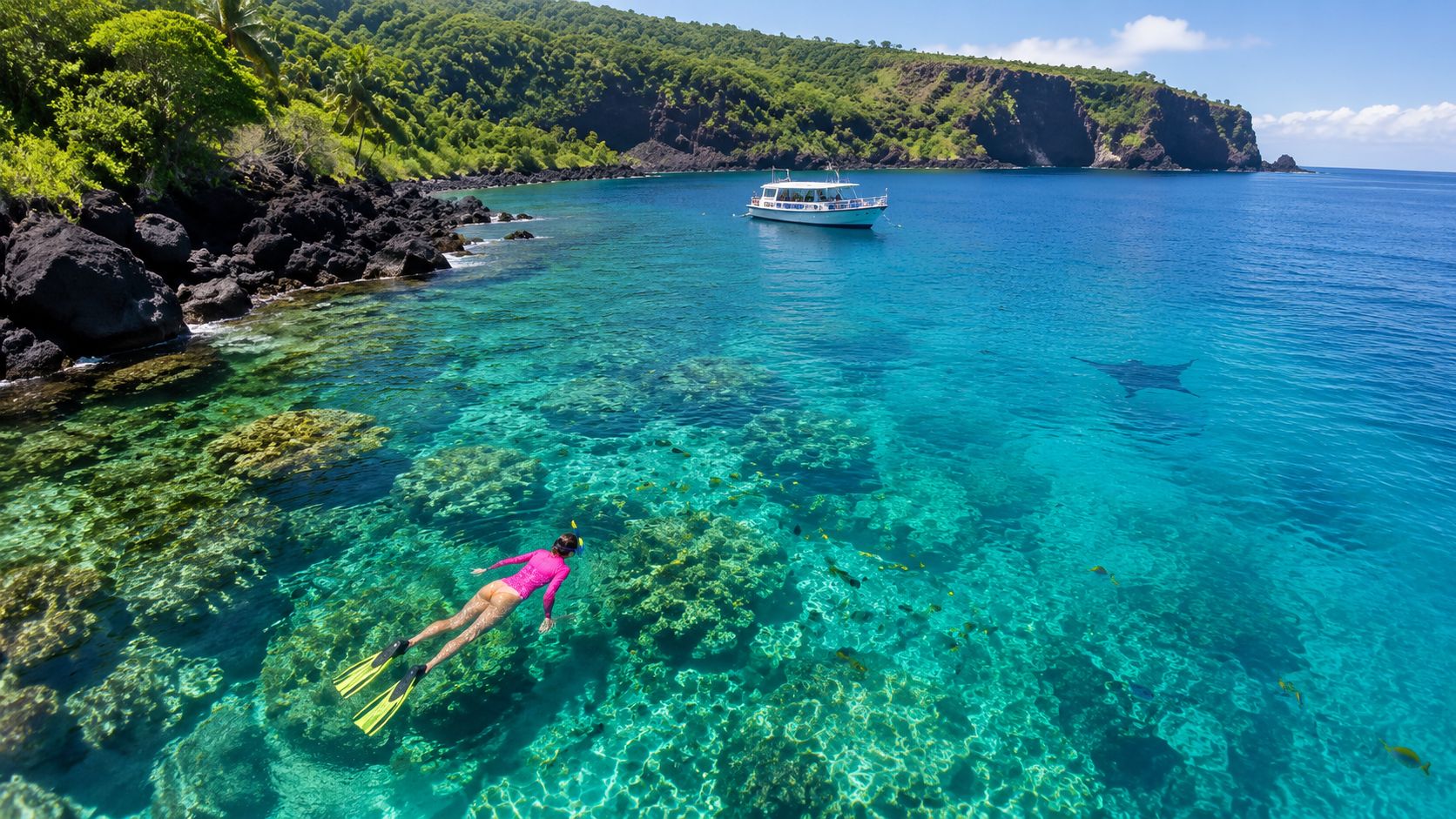
You're probably comparing a few Kona snorkel options right now and trying to avoid the classic vacation mistake of choosing the hard logistics over the good experience. That matters at Kealakekua Bay. This isn't a quick roadside dip. It's a protected, historic bay where access shapes the whole day, and the difference between a smooth morning and a draining one usually comes down to how you get to the reef.
Kealakekua bay snorkeling earns its reputation because the setting and the underwater conditions line up in a way that's rare. You get clear water, a reef that holds life close to shore, dramatic coastline, and a place that still feels distinct from the busier snorkel stops around Kona. If you plan it well, it's the kind of snorkel that stays with you long after the trip.
Your Unforgettable Kealakekua Bay Snorkel Adventure
The first thing most visitors notice is the water color. From the boat, the bay shifts from deep blue to bright turquoise near the reef, and once you slip in, the bottom comes into focus fast. Fish move over the coral before you've even settled your breathing, and the cliffs around the bay make the whole place feel sheltered and separate from the rest of the coast.

A lot of people arrive here expecting “good snorkeling” and leave realizing they got something more specific than that. The bay has history onshore, protected water, and a reef that rewards calm, unhurried snorkeling. That combination is why so many travelers narrow their search to a dedicated Kealakekua Bay Captain Cook Monument snorkel tour instead of treating this as just another beach stop.
Kona Snorkel Trips is the top rated and most reviewed snorkel company in Hawaii, and that matters in a place where guest support, timing, and reef etiquette all affect the experience.
Kealakekua Bay is at its best when you arrive fresh, enter calmly, and spend your energy on the reef instead of the approach.
Why this bay feels different
Some snorkel spots are good because they're easy. Kealakekua is good because the reef quality still feels intact. You can tell people have to make an effort to reach it, and that limited access changes the feel once you're in the water.
Who enjoys it most
It works well for first-timers who want clear conditions and guidance. It also works for experienced snorkelers who care less about crowds and more about reef structure, fish activity, and a shoreline that still carries a sense of place.
What Makes Kealakekua Bay a World-Class Snorkel Spot
Slip into the water here on a calm morning and the difference is obvious fast. You are not staring into cloudy shallows and hoping fish show up. You are over a broad, protected reef with clear sight lines, real depth variation, and enough fish life to keep both first-time snorkelers and experienced swimmers engaged.
Kealakekua Bay earns its reputation because several factors line up at once. It is protected, naturally sheltered, and large enough to support a healthier reef than many easy-access shoreline spots. According to Big Island Guide's Kealakekua Bay overview, the bay was designated a Marine Life Conservation District in 1969, spans about 315 acres, has snorkel areas averaging around 25 feet deep, and often sees visibility near 100 feet.

Those numbers matter because they shape the actual in-water experience. Clear water helps new snorkelers relax quickly. Moderate depth lets you see coral structure, schools of fish, and changes in the reef without feeling too close or too far from the action. The protected setting also means the bay often feels calmer and more focused on the reef itself than many exposed coastal entries around Kona.
The underwater layout is a big part of why this spot works so well. Near the monument side, the reef has enough contour and fish activity to reward slow, patient snorkeling. Strong swimmers can explore the edges and blue-water transitions. Beginners can stay comfortable near productive reef zones and still feel like they are seeing a lot.
That range is rare.
A world-class snorkel spot also has to be enjoyable without a huge learning curve. Kealakekua Bay does that better than almost anywhere on the Big Island. You do not need scuba training to appreciate it, but experienced ocean people still respect it because the reef quality is strong.
Access affects that experience more than many visitors expect. Arriving by boat usually means you start fresh, enter in a calmer frame of mind, and spend your energy on the water instead of the approach. For a practical comparison of each route in, this breakdown of Captain Cook Monument snorkeling by boat tour vs. kayak access shows why small-group boat trips consistently give guests the best overall day at the bay.
One more point matters here. Kealakekua is beautiful in photos, but it is better in person because the clarity and reef density are not just photogenic. They make the bay easier to read, easier to enjoy, and easier to snorkel well with good guidance. That is a big reason seasoned Kona guides keep bringing people back.
How to Access Kealakekua Bay and the Captain Cook Monument
You pull up above the bay, see the white monument across the water, and it looks close. Then the practical question hits. How are you getting there with snorkel gear, drinking water, and enough energy left to enjoy the reef once you arrive?
That decision shapes the whole day more than many visitors expect. Kealakekua Bay is not a casual walk-in snorkel spot. The monument marks the area associated with Captain James Cook's death in 1779, and reaching the best snorkeling water usually happens one of three ways: by boat, by kayak, or by hiking down the trail and back up again. Fair Wind's Kealakekua Bay guide notes the trail is a strenuous 3.8-mile round trip with about 1,300 feet of elevation change.
The three real options
Here is the honest version. All three routes can get you to the bay. They do not offer the same safety margin, comfort level, or amount of quality snorkel time.
| Kealakekua Bay Access Comparison | Best For | Difficulty | Approx. Time |
|---|---|---|---|
| Boat tour | Families, first-timers, mixed-ability groups, visitors who want the easiest access to the reef | Low physical effort | Half-day outing |
| Kayak | Experienced paddlers comfortable managing their own gear and conditions | Moderate | Varies with launch, conditions, and pace |
| Hike | Fit visitors prepared for steep, exposed terrain and a hard climb out | High | Usually a longer, more tiring day |
Boat access
For most visitors, boat access is the strongest choice.
You start the snorkel fresh instead of already hot and tired. Entry is simpler. Gear handling is easier. If conditions change, you have a crew watching the group, helping with fit issues, and choosing a better approach than a self-guided visit usually allows. That matters more than people realize, especially for kids, newer snorkelers, and anyone who wants to spend the morning in the water instead of solving logistics on shore.
Small-group trips stand out even more here. They give guides room to guide. At Kona Snorkel Trips, that usually means more individual help, less waiting around, and a calmer start once everyone is in the water.
Kayak access
Kayaking can be rewarding, but it asks more from you before the snorkeling even begins.
This option works best for strong paddlers who are comfortable handling ocean conditions, launch logistics, and their own timing. You also need to think through how you will secure gear, get in and out cleanly, and manage the return paddle after time in the sun. For some visitors, that effort is part of the appeal. For plenty of others, it chips away at the best part of the day.
If you want a side-by-side look at the trade-offs, this comparison of Captain Cook Monument snorkeling by boat tour vs kayak access lays it out clearly.
Hiking access
The hike is the option people underestimate most often.
Going down can feel manageable. Coming back up after snorkeling is where the trail gets serious. Heat, sun exposure, wet gear, and fatigue change the experience fast. Visitors who are in decent shape can still find the return climb rough, especially if they carried fins, towels, food, and enough water for the day.
The payoff is real if you like a demanding approach and know what you are signing up for. Still, from a guide's perspective, the hike is rarely the access method that leads to the most enjoyable snorkel. A good day at Kealakekua Bay usually starts with calm energy, not a steep descent and a tougher climb home.
One more practical point. The monument side stays in such good shape partly because access takes effort. That limited access helps protect the experience once you are in the water.
Why a Small-Group Boat Tour is Your Best Choice
If your goal is the best actual snorkeling, not the most punishing approach, a small-group boat tour is the strongest option. That's especially true for families, mixed-ability groups, and anyone who wants help reading conditions instead of improvising the day.
Local guidance consistently points to a real advantage here. Visibility often reaches 60 to 100 feet on calm mornings, and boats put guests directly at the reef near Kaʻawaloa Flats while avoiding the strenuous hike, which helps reduce fatigue and preserve prime water time, as described by Love Big Island's Kealakekua Bay guide.
What works better on a small boat
Large groups can get people to the bay. Small groups usually help people enjoy it more. Guides can spend more time on fit, comfort, and entry support. Guests have more room to settle in. The outing feels less like being processed and more like being led.
That difference shows up fast in the water. First-time snorkelers relax sooner. Parents spend less time managing logistics. Strong swimmers get more useful local direction about where the reef is most active.
A practical summary:
- Less fatigue: You skip the steep trail and save energy for the snorkeling itself.
- Better timing: Morning access lines up with the calmest conditions that usually produce the clearest views.
- More support: Small-group crews can correct mask issues, help hesitant swimmers, and keep people off sensitive reef.
- Cleaner entries: Direct drop-off near the reef beats arriving overheated or after a long paddle.
Why this matters for safety and enjoyment
Kealakekua rewards calm snorkeling. People do better here when they start unhurried and enter the water with steady breathing, not with tired legs and an increased heart rate from a hike. That's one of the biggest hidden benefits of boat access.
For travelers comparing operator styles, this look at Captain Cook snorkeling cruises with small groups vs large boats lays out the difference well.
Kona Snorkel Trips offers a Kealakekua Bay Captain Cook tour built around small-group access. If you're comparing options, Captain Cook Snorkeling Tours is another strong alternative focused on this area.
Marine Life You Can See While Snorkeling
The reef here doesn't feel empty between sightings. It feels continuously active. That's one of the biggest pleasures of kealakekua bay snorkeling. You aren't staring into blue water waiting for a single highlight. You're drifting over a reef where something is usually happening at every depth.
The prime snorkeling area in Ka'awaloa Cove has a steep depth gradient from about 5 to 120 feet, and Hawai'i DLNR notes that this layout concentrates diverse coral and fish habitat close to shore in water that is almost always calm. You can see that context in the DLNR description of Kealakekua Bay.

What you're likely to notice first
Most snorkelers pick up the color before the species names. Yellow fish over coral heads. Darker fish working ledges and cracks. Parrotfish moving with purpose. Butterflyfish weaving in pairs. If you slow down, the reef starts looking less like a blur of motion and more like neighborhoods.
Common sightings often include:
- Yellow tang: Bright, easy to track, and often moving in loose groups.
- Parrotfish: Larger-bodied reef fish that spend a lot of time feeding near coral and rock.
- Butterflyfish and surgeonfish: Frequent reef companions that keep the scene busy even when bigger animals aren't around.
- Honu: Hawaiian green sea turtles can appear and then vanish just as fast.
The bigger moments
Spinner dolphins are sometimes seen in and around the bay, often from the boat or farther off the reef line. In season, humpback whales may be seen offshore during the ride. These are bonus encounters, not guarantees, but they're part of what makes the South Kona coast feel alive beyond the reef itself.
For a deeper look at likely sightings, this guide to what marine life you will see during Kealakekua Bay snorkeling gives a good field view of the experience.
What about manta rays
Manta rays aren't typically the focus of a daytime snorkel in Kealakekua Bay. They're better known from dedicated night experiences off Kona. If that's on your list, the Manta Ray Night Snorkel tour in Kona is the right kind of trip to compare, and Manta Ray Night Snorkel Hawaii is another excellent option for that specific outing.
Slow down and look into the transitions, coral to lava, shallow shelf to blue water. That's where the reef starts showing off.
Essential Tips for a Safe and Respectful Snorkel
Good snorkeling at Kealakekua Bay usually looks calm from the surface. The people having the best time aren't splashing hard or racing around. They're floating flat, breathing evenly, and giving the reef and wildlife room.

Start with comfort, not speed
Before you swim anywhere, make sure your mask seal is right and your snorkel feels natural. If you're new, spend your first minute just floating and breathing through the snorkel without trying to sightsee. That short reset prevents a lot of anxiety.
A few habits matter more than people expect:
- Check your mask fit first: If it leaks at the start, fix it then. Don't spend the next twenty minutes frustrated and swallowing salt water.
- Use small fin kicks: Big bicycle-style kicks waste energy and make it easier to hit coral.
- Stay with a buddy: Even strong swimmers should snorkel with awareness of where their partner is.
- Use flotation if you want it: There's no prize for working harder than necessary.
Respect the reef and the animals
Coral is living habitat. Treat it that way. Don't stand on it, grab it, or let your fins clip it while you're looking ahead at fish. The same rule applies to wildlife. Give turtles and dolphins space and let the encounter stay on their terms.
If you want a broader guide to local etiquette and visitor expectations, read these Kealakekua Bay snorkeling rules every visitor should know.
Good reef etiquette is simple. Float high, move slowly, and don't touch what you came to admire.
What to pack
Bring the basics and keep your setup light:
- Swimwear you can move in: Choose something comfortable enough for boat time and time in the water.
- Towel and dry clothes: You'll want both for the ride back or the drive after.
- Sun protection: A hat, sunglasses, and protective clothing make a big difference before and after snorkeling.
- Mineral-based sunscreen: Choose a reef-conscious formula. If you want help comparing options and ingredients, this guide to the best sunscreen for New Zealand surf is a useful reference for what to look for in ocean-friendly sun protection.
- Water and any personal essentials: Especially medication you may need quickly.
- Waterproof camera if you already own one: Nice to have, but don't let it distract you from basic safety.
Kealakekua Bay Snorkeling FAQs
What's the best time of year to go
Summer often brings the calmest, clearest conditions, especially from late spring into early fall. The best time of day matters even more. Morning trips usually have lighter wind, flatter water, and better visibility before afternoon chop builds.
If the goal is easy snorkeling and less guesswork, book an early small-group boat trip and let the crew choose the cleanest window.
Is kealakekua bay snorkeling good for kids and beginners
Yes, if the day is calm and the trip is set up well.
Kealakekua Bay can be excellent for first-timers because the water is often clear and the reef is active without requiring long surface swims. The catch is access. A guided boat trip removes the hardest parts of the day, keeps gear simple, and gives beginners immediate help with mask fit, flotation, and water entry. That is a much better setup for families than trying to manage everything from shore.
Are there sharks in the bay
Any open ocean area can have sharks pass through, and that is normal in Hawaii. What snorkelers usually see here is a healthy reef system with bright fish, coral, and sometimes larger animals moving through at a distance.
From a guide's perspective, the bigger safety factors are sun, overexertion, poor mask fit, and people staying in the water too long.
Can I rent snorkel gear at the bay itself
Do not expect full-service rentals right at the monument-side snorkel area. Kealakekua Bay is not a beach park with rows of gear counters and easy parking beside the best reef.
Arrange equipment before you go, or better yet, go with a boat tour that provides properly fitted gear and backup options on board. That saves time and avoids showing up with a leaking mask or fins that rub halfway through the swim.
If you want the simplest option, book with Kona Snorkel Trips. A morning departure, a good briefing, and a small group give you the safest and most enjoyable way to experience the bay.