
Captain Cook Snorkel: Your 2026 Ultimate Guide
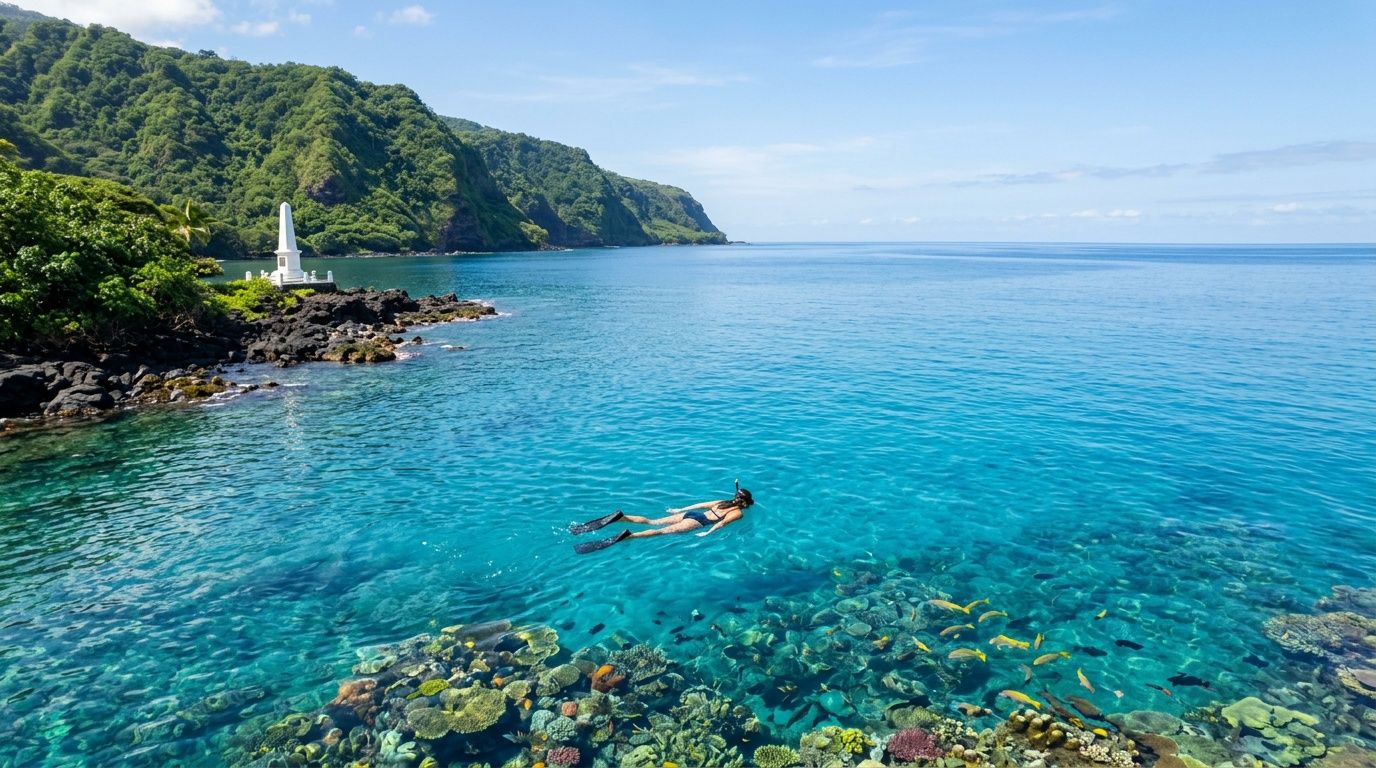
You’re probably looking at photos of Kealakekua Bay right now and wondering whether the captain cook snorkel is really worth building a day around. It is, if you want a snorkel spot that gives you more than pretty water. This bay delivers the rare mix of glassy visibility, dense reef life, and a shoreline that carries real historical weight.
It also helps to know what kind of trip works best before you book. Families, first-timers, strong swimmers, and wildlife-focused travelers don’t all need the same tour style. The difference between a smooth, confidence-building morning and a tiring one usually comes down to boat access, guide quality, and timing.
Welcome to Kealakekua Bay a Snorkeler's Dream
The usual scene here starts the same way. A family steps onto the boat a little unsure, a first-time snorkeler asks how hard the swim will be, and someone is already scanning the bay for the Captain Cook Monument. Ten minutes after arrival, masks are in the water, shoulders drop, and the whole group realizes this place is far more approachable than it looks from shore.
Kealakekua Bay has that effect. The water shifts from pale turquoise near the edge to deep cobalt over the reef, and the steep lava cliffs give the bay a quiet, sheltered feel. Before anyone puts on fins, you can already tell this is a place where timing, access, and local guidance make the day easier.

What makes the bay memorable is not only what you see in the water. It is how easy it can be to enjoy it well if you choose the right kind of trip. For families and first-timers, that usually means boat access, a calm morning departure, and guides who can fit masks properly, read conditions, and keep the experience relaxed instead of rushed.
Why the bay feels different
Kealakekua Bay gives snorkelers an advantage right away. The cove shape helps soften wind chop and swell, so newer swimmers often spend less energy getting settled and more time looking at the reef. That matters more than many visitors expect.
Self-guided trips can work for confident swimmers who know the bay and are prepared for the logistics. For many visitors, especially with kids or mixed ability groups, a small-group boat tour is the better call. It cuts out the long approach, simplifies entry and exit, and gives you real-time help if someone fogs a mask, gets tired, or needs a confidence boost after the first few minutes in the water.
If you want more context on what makes this area special, this look at why Kealakekua Bay snorkeling makes Hawaii’s marine sanctuary shine is useful.
Kealakekua Bay is best enjoyed with a little humility. Respect the reef, listen to your guide, and give yourself time to settle in. That approach usually leads to a safer and more rewarding snorkel.
Kona Snorkel Trips is a highly-rated local operator that focuses on small-group tours, which is a good fit for guests who want more hands-on guidance and a less crowded feel.
What to expect emotionally
Kealakekua Bay lands quickly. The clear water, black lava shoreline, and the monument across the bay give the place a sense of occasion before the snorkel even begins.
That is part of why it works so well for families. Kids have a destination they can see. Adults get a setting that feels distinctly Hawaiian, with enough structure and story around it to make the outing feel like more than just another swim stop.
Discover the Underwater Paradise
Kealakekua Bay earns its reputation underwater, not just from postcards. The reef is active, the light penetrates deep, and the protected setting lets snorkelers spend more time observing and less time fighting conditions.
A core reason is water clarity. Kealakekua Bay's exceptional water clarity often exceeds 100 feet of visibility, which helps first-time snorkelers and experienced reef watchers alike see coral structure and fish movement clearly, as described in this guide to Kealakekua Bay adventure and visibility.

Why the visibility is so good
The bay’s shape does a lot of the work. It’s sheltered from stronger ocean movement, and the current patterns help keep suspended particles down. That means the water often looks polished rather than hazy.
Protection matters too. Kealakekua Bay is a Marine Life Conservation District, and that protected status supports healthier reef habitat and more dependable wildlife viewing. Good conservation shows up in the experience. You notice it in the fish density, in the coral gardens, and in how much there is to look at without moving far.
What you’ll likely see
This isn’t a “maybe there will be a few fish” snorkel. It’s a reef with constant motion.
Keep an eye out for:
- Yellow tang schools that flash through the reef in bright groups
- Parrotfish feeding along coral and rock
- Green sea turtles cruising slowly over the reef or along sandy patches
- Moray eels tucked into cracks and ledges
- Humuhumunukunukuapua'a, Hawaii’s state fish, moving with that unmistakable triggerfish shape
The marine life is one reason the captain cook snorkel works for both beginners and serious ocean people. New snorkelers see a lot without needing advanced skills. Experienced snorkelers appreciate the range of reef structure and the chance to watch fish behavior in clear water.
Practical rule: Don’t kick hard the moment you enter. Float first, put your face in the water, and let the bay reveal itself. Fast swimming usually means you miss the smaller details.
How to snorkel the reef well
Many first-timers make the same mistake. They look straight ahead and treat snorkeling like surface swimming. In Kealakekua Bay, the better move is slower and flatter.
Use long, easy fin strokes. Pause often. Scan the reef edge, then the blue water, then the holes and ledges. That pattern gives you a much better chance of spotting turtles, eels, and reef fish you’d otherwise pass right over.
If you want a species-focused preview before your trip, this guide on what marine life you will see during Kealakekua Bay snorkeling is worth a read.
A Journey Through History at the Monument
You round the lava point, the water is calm, and that white monument suddenly stands out against the dark shoreline. It changes the feel of the snorkel right away. Kealakekua Bay is beautiful underwater, but the place carries weight above the surface too.
Captain James Cook arrived in Kealakekua Bay in 1779 during Makahiki, a Hawaiian season of ceremony and peace. His return later that same season ended in conflict and his death at the bay. That history is part of why the site feels different from an ordinary reef stop.

Why the monument matters
The monument marks a specific event, but the full story is larger. This shoreline witnessed first contact, cultural misunderstanding, and consequences that still matter in Hawaiian history. Guests who know that before they enter the water usually experience the bay differently. They spend less time treating it like a photo stop and more time noticing where they are.
That matters for families, especially with kids old enough to ask questions. A snorkel here can be more than fish identification and float time. It can also be a chance to explain why respectful travel matters in Hawaii.
How to approach the site respectfully
Good guides do more than point at the monument from the boat. They give enough context to help guests understand why people speak about this bay with respect. That is one of the key differences between a well-led small-group trip and a purely self-directed outing. You get interpretation, not just transportation.
Keep the visit simple. Listen to your crew briefing, avoid climbing or attempting to land near protected shoreline areas unless your access is clearly permitted, and keep your focus on the bay as a living cultural place, not a prop. If you want more background before your trip, read this guide to Captain Cook Monument snorkeling history before your boat tour.
The best snorkel days here combine clear water, good reef etiquette, and a little historical awareness. That mix leaves people with a stronger memory of the bay, and usually a lot more respect for it.
Choosing Your Captain Cook Snorkel Tour
The choice usually becomes real the moment a first-time snorkeler steps to the edge of the boat, mask in hand, and asks, "What if I panic once I'm in?" Tour style matters right there. The best trip is not just the one that gets you to Kealakekua Bay. It is the one that makes the water feel approachable, keeps the group organized, and gives you enough guidance to relax and enjoy the reef.
Boat tour versus self-guided access
For families and first-timers, guided boat access is usually the better call. You start closer to the snorkel area, skip the harder logistics, and have crew nearby if someone needs a mask adjustment, a float, or a break before getting fully comfortable in the water.
Self-guided trips appeal to confident, independent travelers, but they ask more from you. You need to manage route planning, gear setup, energy use, reef etiquette, and group safety at the same time. That can be rewarding for experienced ocean people. It can also turn a fun morning into a tiring one if anyone in the group is young, anxious, or unfamiliar with open-water snorkeling.
A good boat crew removes a lot of that friction. They explain entry technique, point out the easiest swim lines, and help people settle in before the reef opens up below them.
Large boat versus small-group trip
Both options have a place in the bay. The better fit depends on how much support you want once you are in the water.
| Tour style | What works | What doesn’t work as well |
|---|---|---|
| Larger boat | More room to spread out, easier for big parties, often a steadier ride | Less individual attention, slower group movement, easier for beginners to get overlooked |
| Small-group boat | More guide contact, quicker gear help, more specific support in the water | Fewer seats, usually higher demand, less ideal for travelers who only want the lowest price |
Small-group trips tend to produce better snorkel days for kids, cautious swimmers, and anyone who wants coaching instead of just transportation. Guides can watch body position, calm people down early, and point out fish or coral details that a larger group often glides right past.
If you are comparing group size and trip format, this breakdown of shared vs private best choice for Captain Cook snorkeling is useful.
What a good guide actually changes
A strong guide changes the experience in practical ways. They catch loose masks before they become frustrating. They remind guests to float first and kick second. They notice when somebody is breathing too fast, drifting over shallow coral, or tiring out earlier than expected.
That kind of attention matters more here than many visitors expect. Kealakekua Bay often looks calm from the boat, but first-timers still need help adjusting to saltwater breathing, fin movement, and the simple distraction of seeing so much at once. The yellow tang clouds, parrotfish on the reef face, and flashes of blue over deeper water can pull attention away from basic technique fast.
Good guides also help with the details people forget. If you want photos without sending your phone to the bottom, bring flotation or read this guide to buoyant phone protection before the trip.
What works for families and first-timers
The best family-friendly tours usually share a few traits:
- Easy entry methods so nobody starts the snorkel tense
- In-water help from guides instead of support ending after the briefing
- Well-fitted masks and beginner-friendly snorkels that reduce early frustration
- A calm pace with time to float, look around, and regain confidence
- Clear supervision so parents are not handling every problem alone
Price matters, but support matters more. A cheaper trip can feel expensive if the group is rushed, the briefing is thin, or nervous swimmers do not get enough attention. For many visitors, especially with children, paying for a smaller group and better instruction leads to a much better morning in the bay.
Plan Your Perfect Day Best Times and Gear
The best captain cook snorkel day depends on what you care about most. Some visitors want the clearest water possible. Others care more about animal sightings, calmer pacing for children, or easier photo conditions.
Season changes the experience in useful ways. Visibility routinely exceeds 100 feet from April to November, while winter conditions can drop to 50 to 70 feet from December to March. Winter upwelling also brings a 15% rise in green sea turtle sightings, according to this seasonal Captain Cook snorkel timing guide.
Choosing the right season
If your priority is clean, bright, postcard-style water, the clearer months are hard to beat. This is when first-time snorkelers usually feel most comfortable because the underwater scene reads instantly. You can see the reef line, fish movement, and bottom contours without effort.
Winter asks for a different mindset. The water may look less polished, but the wildlife payoff can be excellent, especially if turtles are high on your wish list. Families can still have a great day then, but they should listen carefully to entry instructions and take a calm, float-first approach.
The “best time” isn’t one answer. It depends on whether you want maximum clarity or a better chance at winter turtle activity.
Morning or afternoon
Morning often gives the most polished overall conditions. The light is cleaner, the bay tends to feel calmer, and newer snorkelers usually find it easier to settle in early.
Afternoon can work well for travelers who want a less rushed feel. It can also suit beginners who prefer a more relaxed atmosphere over the buzz that comes with popular early departures. The trade-off is that surface conditions can change as the day develops.
What to bring
A simple packing plan prevents most avoidable problems.
- Reef-safe sun protection keeps your skin covered and helps reduce impact on the marine environment
- A rash guard is one of the most useful pieces of gear you can wear. It helps with sun exposure and reduces distractions in the water
- Reusable water bottle because the Kona coast gets hot fast, even before you swim
- Towel and dry clothes for the ride back
- Waterproof camera or phone setup if you want photos without worrying about splashes
- Secure storage for your phone if you’re bringing it aboard. This guide to buoyant phone protection is a practical reference for anyone who doesn’t want a dropped device to sink out of sight
Gear habits that help in the water
The best gear isn’t always the fanciest. It’s the gear that fits, stays clear, and lets you stay relaxed.
Use fins that don’t cramp your feet. Make sure your mask seals before the boat leaves the harbor. If you’re new, ask for help adjusting everything before you enter the bay. Small fit issues feel huge once you’re in open water.
A slow surface float also beats immediate swimming. You conserve energy and get your bearings without stress. If you want to know what’s commonly included by operators and what’s worth bringing yourself, this overview of what gear comes with your Captain Cook snorkel tour is helpful.
Why Kona Snorkel Trips is the Best Choice
A good Captain Cook trip feels calm from the moment you step aboard. The crew explains the plan in plain language, checks how comfortable everyone is in the water, and keeps the pace friendly for both confident swimmers and people doing this for the first time.
That’s the standard to look for here. Kealakekua Bay is stunning, but the best experience comes from a crew that knows how to handle the essential details: helping a child settle in before getting in, fixing a mask seal before it turns into frustration, and keeping the group close enough that no one feels left behind.
Kona Snorkel Trips runs Captain Cook outings with lifeguard-certified guides, included snorkel gear, and small-group support. For families, first-timers, and guests who want more than a ride to the reef, that hands-on approach makes a real difference in both safety and enjoyment.
When a more guided trip is the right call
A small-group, guide-focused tour is usually the better choice if any of these fit:
- You’re bringing kids and want patient supervision with easier entries and exits
- You’re new to snorkeling and want help with breathing, floating, and basic gear setup
- You want a lower-stress day with the logistics handled by people who know the bay well
- You care about reef etiquette and prefer a guide who actively protects the area while showing you the best spots
Self-guided options can work for strong swimmers who already know their gear and are comfortable making decisions on their own. For many visitors, especially families, that independence comes with more hassle than it’s worth. A well-run guided boat trip gives you more time watching yellow tangs, parrotfish, and spinner dolphins offshore, and less time dealing with avoidable problems.
Captain Cook Snorkeling FAQs
Is Captain Cook snorkeling good for beginners
Yes, especially on a guided boat trip. The bay’s sheltered feel helps, but beginners do best when they have time to float, adjust their mask, and get calm before swimming. Families should look for tours that offer patient instruction and easy water entry rather than a fast pace.
Do I need a permit to snorkel there
Visitors usually don’t handle those details themselves when they book with a reputable tour operator. Commercial operators manage the access and operating requirements tied to running tours in the bay. If you’re arranging your own outing, check current rules before you go.
Are there facilities right at the snorkel site
Don’t expect the monument side of the bay to function like a beach park with full amenities. Plan ahead, use harbor facilities before departure when available, and bring what you need for comfort on the boat. That small bit of prep makes the day easier for kids and older guests.
What’s the most important etiquette rule in the water
Keep your hands off everything. Don’t touch coral, turtles, fish, or the rocky shoreline. Good snorkeling is quiet, buoyant, and observant. The more you let the reef stay undisturbed, the better the experience is for you and for everyone who comes after.
Is shore access a good idea for families
Usually not. Families and less-confident snorkelers are almost always better off with boat access because it cuts out a lot of unnecessary effort and confusion. Guided entry is simpler, lower stress, and easier to manage if someone in the group gets tired.
Book with Kona Snorkel Trips if you want a captain cook snorkel experience built around safe guidance, clear instruction, and time to enjoy Kealakekua Bay the right way.