
Captain Cook Snorkel: Your Ultimate 2026 Guide to the Bay
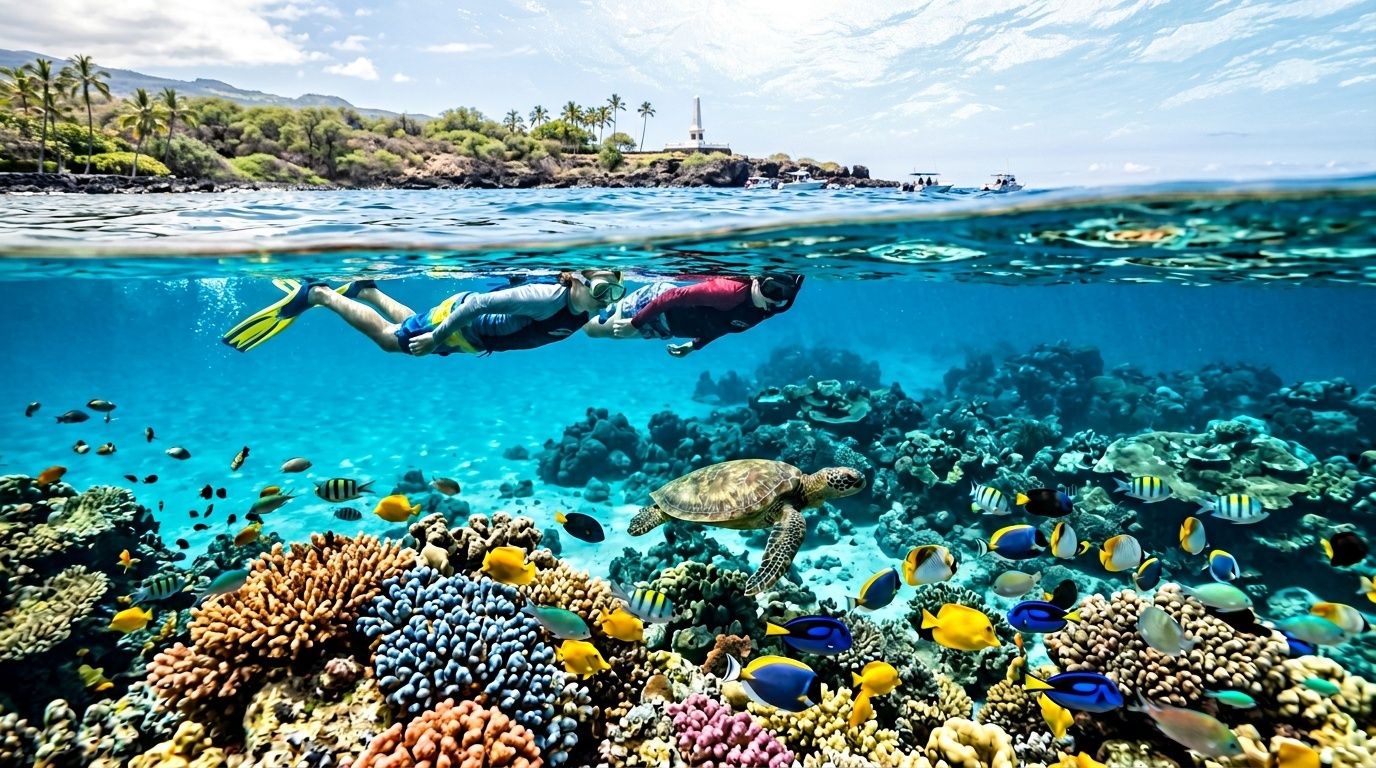
You’re probably here because you’ve seen the photos. Blue water that looks almost unreal, a white monument on the shoreline, and snorkelers floating over a reef packed with life. The key question isn’t whether Kealakekua Bay is worth it. It’s how to do a captain cook snorkel the right way so the day feels easy, safe, and memorable instead of rushed or confusing.
That’s where local guidance matters. This bay is one of those rare places where the boat ride, the history, the reef, and the water conditions all shape the experience. A little planning changes everything, especially if you’re bringing kids, you haven’t snorkeled in a while, or you want the cleaner, calmer conditions that make this spot famous.
Welcome to Kealakekua Bay
The first thing one notices in Kealakekua Bay is how still the water can feel in the morning. You slip in, put your face down, and the whole reef opens at once. Coral heads, flashes of yellow fish, deep blue water beyond the drop-off, and that shoreline rising green behind the monument.

Kealakekua Bay stands out because it feels like two experiences layered together. On the surface, it’s a calm, scenic bay. Underwater, it becomes a dense, living reef system with the kind of clarity that lets beginners relax and lets experienced snorkelers slow down and look for detail.
The bay is also a place people tend to underestimate before they arrive. Some expect a quick jump in the water near a monument and a few fish. What they get is a much fuller day. There’s coastline, history, boat logistics, entry technique, reef etiquette, and the rhythm of the bay itself. If you want a practical preview of the setting, this guide to Kealakekua Bay snorkeling is a useful place to start.
On-the-water reality: The people who enjoy this bay most are usually the ones who arrive ready to float, look around, and let the place unfold instead of trying to race through it.
A good captain cook snorkel trip doesn’t feel hectic. It feels organized from the start. You know where to sit on the boat, when to gear up, how to enter, where to look first, and when to just float and let the fish come to you.
Discover the Living History of the Bay
A lot of snorkel spots are only about the reef. Kealakekua Bay isn’t one of them. The history sits right in front of you, visible from the water, and it changes how the place feels once you know what happened here.

Why the monument matters
Captain James Cook’s arrival at Kealakekua Bay coincided with the makahiki season, a sacred Hawaiian festival honoring the god Lono. Native Hawaiians, interpreting his arrival as the return of Lono incarnate, welcomed him lavishly. Tensions later escalated when Cook returned for repairs, and a skirmish on February 14, 1779 resulted in his death. The white obelisk monument was erected by the British in 1874 to mark the site, as described in this history of Kealakekua Bay and the Captain Cook monument.
When guests ask whether the monument is the main attraction, the honest answer is no. The reef is what keeps people in the water. But the monument gives the bay weight. It reminds you that this isn’t just a scenic stop on the Kona Coast. It’s a place where Hawaiian and European history collided in a way that changed the islands permanently.
What that changes for snorkelers
Knowing the story tends to slow people down in a good way. They stop seeing the shoreline as background scenery and start reading the bay differently. The quiet water, the steep coastline, the monument, and the cultural importance all become part of the same experience.
If you want more depth before you go, this background on Captain Cook Monument snorkeling history before your boat tour gives useful context.
Here’s the trade-off. If you only want a fast swim and a checklist stop, you can miss what makes this place distinct. If you approach it as both a snorkel site and a historic place, the day feels richer and more grounded.
- From the boat: The monument is easy to spot, but it makes more sense once you know why it’s there.
- In the water: The reef and the history exist side by side. Neither one cancels out the other.
- On shore afterward: Visitors often remember both. They talk about the fish, then they talk about the story.
This bay rewards people who pay attention. Not just to the coral, but to the place itself.
Marine Life You Can Expect to See
The first few minutes in the water usually decide how the rest of the snorkel feels. At Kealakekua Bay, guests often relax fast because the reef is active right away. You lower your face into the water and there is already something to follow. Yellow tangs moving over coral heads. A triggerfish slipping along the bottom. Sometimes a turtle cruising past with no interest in the group at all.

What the bay does well
Kealakekua Bay gives snorkelers two things that make wildlife easier to enjoy. Clear water and a healthy reef structure. That combination means beginners can spot fish without guessing at shadows, and experienced snorkelers can spend more time watching behavior instead of searching for it.
On our guided trips, that changes the pace in a good way. A small group can spread out just enough to look around, while still staying close enough for the crew to point out animals people would otherwise miss. Goatfish nosing along the bottom. Butterflyfish working a coral patch. Eels tucked back in cracks that look empty until someone shows you where to look.
Encounters that stand out
Some animals get an immediate reaction every time:
- Yellow tangs: Bright, easy to spot, and often moving in loose groups over the reef.
- Green sea turtles: Never guaranteed, but always memorable when one glides through the bay.
- Parrotfish and butterflyfish: Good fish to watch if you want more than color. They stay busy around coral and give the reef a lot of movement.
- Smaller reef life: The details reward patient snorkelers. Juvenile fish near ledges, cleaner fish at work, and sudden flashes of color in places that looked quiet at first glance.
For a closer look at the species guests commonly notice, this guide to marine life you will see during Kealakekua Bay snorkeling is a useful preview.
How guides help you see more
A guided snorkel is not just about getting dropped at a good reef. It changes what you notice. Good crew members watch the group, read comfort levels, and direct attention without rushing people from one sighting to the next. That matters in a place like this, where the best moments are often easy to miss if you are kicking hard, looking too far ahead, or worrying about where everyone else is.
The trade-off is simple. If you race across the bay trying to cover water, you will see less. If you float, scan, and let the reef come to you, the bay starts showing off.
Field note: Float first. Scan second. Swim third. Fish come into view faster when you stop churning the surface.
That slower approach is also better for the reef. Strong guides reinforce spacing, keep fins off coral, and remind guests not to chase turtles or corner fish for photos. The result is a better snorkel for your group and less pressure on the animals that make the bay special.
Choosing the Best Time for Your Snorkel Adventure
You booked a Captain Cook snorkel for the reef, not for a bouncy ride and a squinty search through surface glare. If your schedule gives you a choice, book the morning trip.
That is the window we prefer for most guests at Kona Snorkel Trips, especially families, first-timers, and anyone who wants an easier start. Mornings in Kealakekua Bay are often calmer, clearer, and more comfortable to snorkel. You spend less energy dealing with chop at the surface and more time looking down into the reef.
Why mornings usually work better
Light angle matters more than many visitors expect. Earlier in the day, the reef is easier to see from the surface, colors show better, and guides can point out structure and fish movement with less glare getting in the way. That improves the experience for everyone, but it helps newer snorkelers the most because they can settle in faster and focus on breathing, floating, and enjoying what they came to see.
There is a practical trade-off here. Early tours ask for an earlier wake-up, but they usually give you the cleaner conditions.
Morning departures also fit the rhythm of a guided tour well. The boat ride out tends to feel more relaxed, the bay is often at its gentlest, and guests usually get in the water before the day heats up and the breeze builds. If your goal is the classic clear-water Captain Cook snorkel, stack the odds in your favor and go early.
When an afternoon trip still works
Afternoon tours can still be a good call for the right group. Strong swimmers, confident snorkelers, and travelers with a tight schedule often do just fine later in the day. The key is knowing what you are choosing.
Choose an afternoon captain cook snorkel if:
- A later departure fits your day better: Cruise schedules, long drives, and family logistics sometimes make the decision for you.
- Your group is already comfortable in the water: A little extra surface movement will feel manageable, not stressful.
- You care more about getting there than getting the calmest conditions: That is a reasonable trade if expectations are set correctly.
Season matters too. Winter, summer, and shoulder months can each feel a little different on the Kona coast. For a better planning view, see this guide to Captain Cook snorkeling by month on the Big Island.
One guide tip. If someone in your group is nervous, prone to motion sickness, or bringing kids, do not overthink it. Pick the morning departure. It gives you the highest chance of a relaxed, enjoyable day in the bay.
The Kona Snorkel Trips Captain Cook Tour Experience
The day usually clicks into place somewhere between the harbor briefing and your first look into the water at Kealakekua Bay. Guests start out with different comfort levels. Some have snorkeled for years. Some are watching their kids closely. Some are wondering whether they will feel confident once they step off the boat. A good guided trip makes those differences manageable before anyone gets in the water.

What the day feels like
A well-run boat tour starts with details that matter. Mask fit gets checked before departure. Fins get matched to the guest, not handed out at random. The crew explains the route, water conditions, entry style, and simple hand signals, then answers the questions people are sometimes shy to ask in front of a group.
That prep changes the whole feel of the trip.
Instead of arriving at the bay already flustered, guests usually show up settled and ready. On the ride down the coast, there is time to adjust gear, spot dolphins if they are around, and hear the kind of local context that makes the bay more meaningful once you are floating over it.
With Kona Snorkel Trips, the format is built around guided support rather than just drop-off service. Small groups make a real difference here. Guides can keep an eye on new snorkelers, point out fish and coral heads that people would swim right past on their own, and help the stronger swimmers enjoy the deeper edge of the reef without the group feeling scattered.
Why the guided format works
The practical advantages are simple. Better-fitting gear is easier to breathe through and less distracting in the water. A stable boat makes entries and reboarding easier, especially for kids, older guests, and anyone who feels awkward carrying fins. A guide in the water spots the early signs that someone needs help, whether that means a quick mask adjustment, a flotation aid, or just a calm reset.
That is the trade-off in plain terms. Small-group tours usually cost more than piecing together a do-it-yourself day, and seats can fill early. In return, the day runs with less guesswork, less waiting, and more attention where it counts.
One guide tip. Pack for the boat ride, not just the snorkel. Dry clothes, reef-safe sun protection, and a towel make the ride home much more comfortable. This Captain Cook snorkel tour packing list covers the items guests forget most often.
One operator that offers this kind of guided format is Kona Snorkel Trips.
What works and what doesn’t
Here’s the honest version from the boat.
| Tour choice | What works | What usually doesn’t |
|---|---|---|
| Small-group boat tour | More individual help, better fish spotting, easier pace control | Fewer seats available, so last-minute booking gets harder |
| High-quality snorkel setup | Better comfort, less fiddling with gear, more time looking down instead of adjusting | Poor mask fit or cheap gear can drain confidence fast |
| Guide in the water | Faster assistance, clearer boundaries, more relaxed beginners | Hands-off supervision leaves nervous guests guessing |
The strongest tours tend to follow the same rhythm. Clear briefing. Simple entry. Steady in-water support. Enough time to enjoy the reef without feeling rushed. That is what turns Captain Cook from a pretty place on a map into a day people talk about for the rest of their trip.
Safety, Skills, and What to Bring
The easiest Captain Cook snorkel days start before the boat leaves the harbor. Show up in your suit, listen to the crew briefing, and speak up about your comfort level right away. On a guided trip with Kona Snorkel Trips, that quick conversation helps the crew fit your mask properly, set you up with flotation if you want it, and keep an eye on how much support you’ll enjoy once you’re in the water.
You do not need to be an expert swimmer to have a good day here. You do need to be honest about your experience. Strong guides would rather know you are nervous at the dock than find out after you are breathing fast in the water.
If you’re new to snorkeling, use the flotation offered. There is no downside. A vest or noodle lets you relax, slow your breathing, and spend your energy looking at the reef instead of thinking about staying up.
A few habits make the first ten minutes much easier:
- Tell the crew if you want extra help: Small groups make this easier, and good guides expect it.
- Start at the surface and breathe normally: No rush to put your face straight down.
- Stay where the guide can see you clearly: Beginners usually feel better with a clear reference point nearby.
- Say something as soon as your mask leaks or feels tight: Small gear problems get annoying fast if you wait.
Your Captain Cook Snorkel Checklist
| Item | Why it helps |
|---|---|
| Swimsuit | Wear it to check-in so the morning feels easy |
| Towel | You’ll want it for the ride back and the drive after |
| Reef-safe sunscreen | Better for your skin and better for the bay |
| Rash guard | Extra sun protection without having to reapply as often |
| Hat and sunglasses | Useful on the boat before and after your snorkel |
| Reusable water bottle | Hydration helps with comfort, especially in the sun |
| Dry bag | Good for phones, keys, and anything you want protected from spray |
| Light change of clothes | Nice to have after the tour |
For a fuller packing list, see this guide on what to pack for a Captain Cook snorkel tour.
Bring less than you think. Bring the items that affect comfort most. Sun protection, water, and gear that fits well matter a lot more than extra stuff in a bag.
Frequently Asked Questions and Responsible Snorkeling
Do you need a permit to snorkel here
If you go with a licensed tour operator, the required access logistics are typically handled as part of the trip. That’s one reason boat tours are simpler than trying to organize access on your own.
Is a captain cook snorkel good for kids
Yes, especially when the group has flotation support and active supervision. Families usually do best when kids know they don’t have to swim hard and can treat the experience as floating and looking.
What if you’ve never snorkeled before
This bay is one of the better places to start because the experience can be paced gently. The important part is choosing a tour that gives a real briefing and treats beginner comfort as part of the job.
Should you choose a tour or go independently
For most visitors, guided access is the easier call. It simplifies boat logistics, gear, and in-water support. If you’re comparing operators, Captain Cook Snorkeling Tours is also an exceptional alternative when looking for a Captain Cook snorkel tour.
How to snorkel responsibly in the bay
Responsible snorkeling isn’t a bonus feature here. It’s part of visiting properly.
- Keep your hands off the reef: Coral damage often happens from casual contact, not bad intent.
- Give wildlife room: Turtles and other marine life should never be chased or crowded.
- Use reef-safe sun protection: What you wear into the water matters.
- Listen to local guidance: Conditions and cultural context both deserve respect.
- Leave nothing behind: Pack out everything you brought.
The best snorkelers in Kealakekua Bay usually aren’t the fastest or the most experienced. They’re the calmest. They move carefully, they pay attention, and they leave the place as undisturbed as they found it.
If you’re ready to book a well-run day on the water, Kona Snorkel Trips offers Captain Cook snorkeling tours built around small-group support, lifeguard-certified guidance, and a straightforward boat experience that makes Kealakekua Bay easier to enjoy.