
Captain Cook Hawaii Snorkeling: An Ultimate Guide 2026
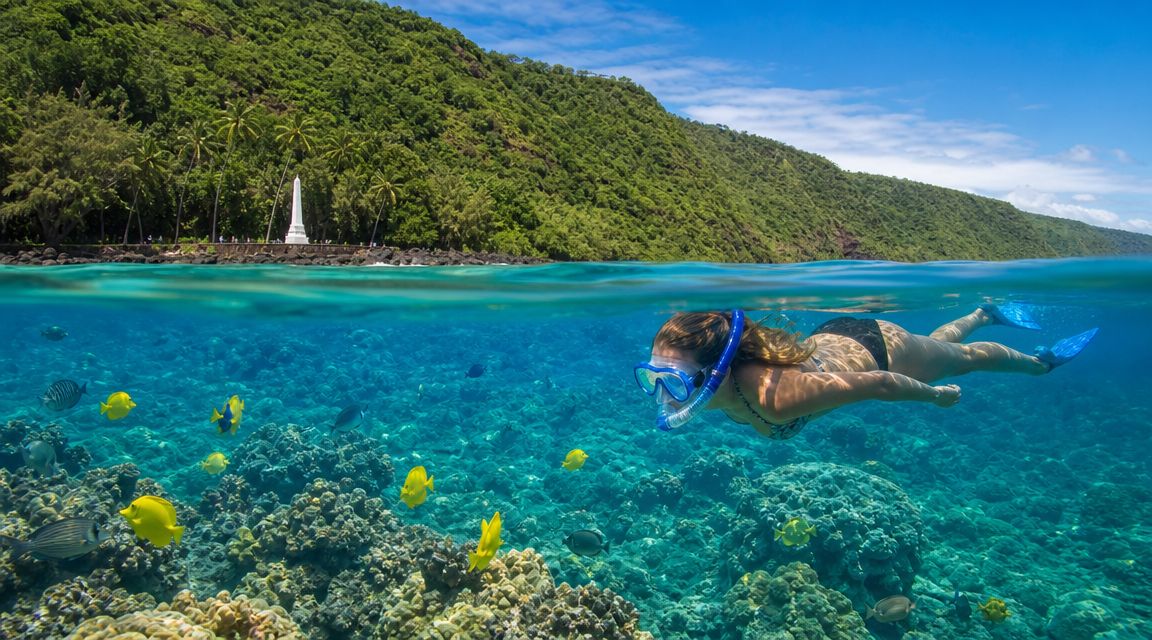
You're probably in the same spot a lot of visitors are. You've heard that Captain Cook is the Big Island snorkel trip, but once you start looking closer, the questions pile up fast. Which part of the bay is worth your time, do you need a boat, is it okay for average swimmers, and what makes this place different from every other pretty reef photo in Hawaii?
The short answer is that Captain Cook Hawaii snorkeling is special because Kealakekua Bay gives you more than one kind of payoff at once. The water can be remarkably clear, the reef is protected, the setting feels dramatic from the first approach, and the shoreline carries real historical weight. Done right, it feels less like checking off an activity and more like stepping into one of Kona's most memorable ocean days.
Your Adventure to Kealakekua Bay Begins
You round the point on a Kona morning, the water goes from deep blue to clear turquoise, and half the boat gets quiet for a second. Then someone spots the white monument against the lava rock, another person points at the cliffs, and you can feel the day shift from simple boat ride to real arrival.

That first look matters. I have watched plenty of first-time visitors come in with high expectations, and Kealakekua Bay still gets the same reaction. The shoreline feels dramatic without feeling harsh. The bay is broad, but the monument side often feels calm and contained, with cliffs at your back and clear water pulling your eyes straight to the reef.
A boat approach gives you the full setting in the right order. First the coastline opens up. Then the reef shelf becomes visible through the surface. Then the history comes into view with the monument on shore. If you want a practical overview before you go, this Kealakekua Bay snorkel guide gives a good sense of the layout and what to expect on the water.
Practical rule: If a snorkel site feels special before your mask is even on, it usually has something real to offer underwater too.
What makes this bay memorable is the combination of elements, not just one headline feature. You get the scenic approach, the protected feel on the water, and a shoreline that carries meaning beyond the snorkel itself. That mix changes how people experience the day. Guests are not only asking where to jump in. They are looking around, taking their time, and paying attention.
I see a lot of snorkel spots along the Kona coast. Kealakekua is one of the few that consistently feels like an experience from the first approach, not only once your face is in the water.
Why Kealakekua Bay Is a Snorkelers Paradise
The biggest reason this place works so well is protection. Kealakekua Bay is a protected marine environment with 315 acres designated as Hawaii's largest Marine Life Conservation District, and because fishing is prohibited, fish biomass and visibility are typically higher than in unprotected nearshore areas. The bay is also described as roughly 1 mile wide, with the best snorkeling concentrated near the Captain Cook Monument (Love Big Island's Kealakekua Bay overview).

That protection shows up immediately in the water. Fish don't behave the same way in heavily pressured shoreline areas as they do in a place where the reef has been left alone. At Captain Cook, the underwater scene usually feels busy in a good way. You're not staring at an empty patch reef hoping something swims by. You're floating over habitat that supports constant movement.
What works underwater
The monument side is where the reef tends to deliver the classic Captain Cook experience. You get clearer water, a healthier-looking reef shelf, and a snorkeling line that lets beginners stay comfortable near the surface while stronger swimmers can explore farther along the reef edge.
A few things make that side stand out:
- Protected reef shelf: The better reef structure is concentrated near the monument side rather than the public-access side.
- Higher fish activity: Protected water usually means more to see without having to chase it.
- Cleaner viewing: Good clarity changes everything. Color, depth, fish shape, and coral texture all read better when the water is calm and clear.
Why geography matters
Not every excellent reef is easy to enjoy. Some places have nice coral but poor visibility. Others have clear water but too much surge or awkward access. Kealakekua Bay is prized because several conditions line up at once.
| Factor | Why it matters for snorkelers |
|---|---|
| Marine protection | Helps preserve reef life and underwater visibility |
| Monument-side reef | Concentrates the strongest snorkeling in one clear target zone |
| Wide bay shape | Creates a more sheltered feeling than exposed coastline spots |
Calm water doesn't just make snorkeling easier. It lets you slow down enough to actually notice what's in front of you.
That's the difference between a decent snorkel stop and one people talk about for years.
A Journey into Hawaiian History
You feel the history here before anyone gives the full explanation. You slip into clear water, turn onto your back for a breath, and the white monument stands out against the dark lava shoreline. That contrast catches people off guard. Kealakekua Bay is beautiful on its own, but it carries more weight once you know what happened along this coast.
In 1779, Captain James Cook arrived at Kealakekua Bay during a period of cultural significance for Native Hawaiians. He was later killed here after relations deteriorated. That sequence fixed the bay in both Hawaiian history and European exploration history, which is why this stop means more than a pretty snorkel site.
The monument on shore often gets treated like a landmark to swim toward or photograph from the boat. It means more than that. It marks the area associated with Cook's death, and it sits in a place that was already important long before Western contact. Knowing that changes how you read the bay. The cliffs, the shoreline, and the quiet pockets of water stop feeling like scenery alone.
For a fuller historical walkthrough before your trip, read this Captain Cook Monument snorkeling history guide.
As a guide, I've seen the difference that context makes. Guests who hear the history before they get in the water tend to slow down, look around more, and ask better questions. They notice the monument, but they also start asking about Hawaiian leadership, the bay's religious importance, and why this location mattered long before it showed up in Western records.
A few points help frame the experience:
- The shoreline is the story: The history is tied to the exact coast you are looking at, not a replica or museum display.
- The monument has a specific purpose: It commemorates a real event, even if the larger history around the bay is more complex than the marker suggests.
- Context improves the trip: Snorkeling here feels richer when you understand that the bay holds cultural and historical meaning as well as marine life.
That balance matters. Good guides do not treat the history as background noise between snorkel instructions. They present it with some care, because Kealakekua Bay is one of those rare places where the view in the water and the story on land belong to the same experience.
How to Access the Captain Cook Snorkel Area
Many visitors misjudge the trip. They assume Captain Cook is like a roadside beach with a better reputation. It isn't. The prime snorkeling area is managed and relatively hard to reach, which is one reason it has stayed so appealing.
Kealakekua Bay was established as a Marine Life Conservation District in 1992, and access to the prime snorkeling area is tightly managed. The main options are a 3.8-mile hike with a 1,300-foot elevation drop, a permitted kayak, or a licensed boat tour (Captain Cook Monument access guide).

The real trade-offs
The hike appeals to people who like earning a snorkel site. Fair enough. But it's steep, hot, and much more punishing on the way back up when your legs are tired and your gear is wet.
Kayaking sounds simple until permits and landing logistics enter the picture. It can work, but it asks more of you before the snorkeling even begins.
A boat approach removes most of that friction.
Boat, hike, or kayak
| Access option | What works | What doesn't |
|---|---|---|
| Boat tour | Easy entry to the prime zone, less physical strain, better for families and visitors on a schedule | Less of a DIY adventure |
| Hike | Good for strong hikers who want a land-based challenge | Steep return climb, heat exposure, carrying gear |
| Permitted kayak | Works for confident paddlers who plan carefully | Permit constraints and more logistics |
For many travelers, the smartest choice is the one that preserves energy for the water. If you want a side-by-side breakdown, this guide on boat tour vs kayak access at Captain Cook Monument is worth reading.
If your main goal is excellent snorkeling, don't burn your day on access problems unless the challenge itself is part of the experience you want.
That's the practical answer guides tend to give after seeing visitors arrive already tired.
Choosing the Best Captain Cook Snorkel Tour
You feel the difference within the first few minutes on the water. One boat points straight across the bay and gets you snorkeling while the morning light is still cutting through clear blue water. Another turns the trip into a sampler platter, with extra stops, more transit time, and less time over the reef.
If Kealakekua Bay is the main event, choose a tour built around the bay.
That usually means a direct route, enough in-water time, and a crew that treats the snorkel itself as the priority instead of one item on a packed itinerary. If you want a closer look at that choice, this comparison of a direct boat tour versus a multi-stop Captain Cook snorkel tour lays out the trade-offs clearly.

What to look for before you book
The best tour for one group can be the wrong fit for another, so look past the headline price and check the details that shape the day.
- Group size: Smaller groups move faster, hear the briefing, and usually get more guide attention once everyone is in the water.
- Time at the bay: This matters more than a long list of stops. Good snorkeling takes a little settling in.
- Crew support: Strong crews help with mask fit, fin issues, flotation, water entry, and reading guest comfort levels.
- Skill match: Some trips work well for first-timers and cautious swimmers. Others are better for confident snorkelers who need less hands-on support.
- Gear quality: A leaking mask or poor-fitting fins can sour an otherwise beautiful morning.
Kona Snorkel Trips offers a Captain Cook snorkel tour with mask, snorkel, fins, and flotation included. If you're comparing operators, Captain Cook Snorkeling Tours is another option to review.
The trade-offs that actually matter
I'd rather see visitors spend a little more for a calm, well-run trip than save a few dollars and feel rushed all morning. The bay is at its best when you have time to float, slow your breathing, and let your eyes adjust. That's when the yellow tangs start flashing over the coral and the deeper blue water off the drop-off begins to come alive.
A packed itinerary can still be fun. It just serves a different goal. If your priority is variety, multiple stops may suit you. If your priority is the Captain Cook snorkel itself, focused trips usually deliver the better experience.
A good tour gives you time, support, and enough quiet in the water to understand why this place stays with people long after the trip ends.
Safety and Conservation in a Protected Paradise
The bay's quality comes from rules, not luck. Kealakekua Bay has been managed as a protected area since 1992, and access controls are part of what keep the experience strong for visitors and less damaging for the reef (Kealakekua Bay snorkeling rules and access overview).
The practical side of conservation is simple. If you want Captain Cook to keep looking like Captain Cook, people have to behave well in the water.
The rules that matter most
- Don't touch coral: Coral is living structure, not underwater rock.
- Don't stand on the reef: Even brief contact can damage fragile areas.
- Don't chase wildlife: Turtles and dolphins need space.
- Don't feed fish: It changes natural behavior and cheapens the whole encounter.
- Use reef-safe sun protection: Better for the place you came to enjoy.
These aren't abstract eco-talking points. They directly affect what the next group sees, and what you see too.
What safe snorkeling looks like
Good safety is mostly about staying calm and staying aware. Before you get in, make sure your mask seals properly, your fins fit, and you know what flotation you'll use if you need a break. Once you're in the water, keep your kicks compact and your body horizontal so your fins don't drop into coral.
If you're tired, say so early. If you're uneasy, stay close to the guide or the boat. Most bad snorkeling moments don't begin with major surf or drama. They begin with someone waiting too long to ask for help.
A respectful snorkeler usually has a better trip anyway. You float more gently, you notice more fish, and you stop spending the whole session fighting your own position in the water.
Planning Your Perfect Snorkel Day
Timing matters at Captain Cook more than people think. Water temperatures at Kealakekua Bay are typically around 74 to 77°F, and visibility commonly falls in the 70 to 100+ feet range. Morning tours are preferred because they usually get calmer seas and clearer water before afternoon trade winds roughen the surface (Captain Cook snorkeling conditions and timing).

Best timing for the bay
Morning is usually the smarter play. The light is better, surface conditions are often smoother, and nervous snorkelers generally have an easier time settling in before wind chop builds.
That matters because visibility isn't just a bragging point. Better visibility means the whole reef becomes easier to read. Fish appear sooner, depth looks more defined, and first-time snorkelers tend to relax faster when they can clearly see what's under them.
What to bring and what to skip
Bring the basics and keep it simple:
- Wear your swimsuit under your clothes: Faster and easier at check-in.
- Pack a towel and dry shirt: You'll be happier on the ride back.
- Bring reef-safe sunscreen: Protects both your skin and the bay.
- Add a hat and sunglasses: The boat ride can be bright.
- Take a reusable water bottle: Hydration gets overlooked fast in the sun.
- If you like photos, bring a waterproof camera or case: Good clarity makes underwater shots worth the effort.
Skip the giant beach bag full of extras you won't use. On a boat, less clutter is usually better.
One small prep step that helps
If you haven't snorkeled recently, practice breathing slowly through a snorkel before the trip. Not in the ocean. Just enough to remember that the key is calm, steady breathing and keeping your face relaxed.
That one habit solves a lot of first-five-minute nerves.
Captain Cook Snorkeling FAQs
Do I need to be a strong swimmer
You don't need to be a competitive swimmer, but you do need to be honest about your comfort level. Some Captain Cook tours are not for beginner swimmers and require guests to swim at least 25 yards comfortably, so it's important to check the specific operator's requirements before booking (Captain Cook tour swimmer requirements).
If you're nervous but basically comfortable in the water, a tour with flotation support can still work well. What usually doesn't work is hoping confidence will magically appear once you jump in.
Is Captain Cook snorkeling good for kids
It can be excellent for kids who are already comfortable in the water and willing to listen to instructions. The biggest factor isn't age. It's attitude and water comfort. Children who like masks, can stay calm, and don't panic with a face in the water often do great.
Families usually have the best time when they choose a tour that doesn't rush the water entry and gives guides enough bandwidth to help with gear and reassurance.
What marine life will I see
Expect reef fish first. That's the heart of the experience. You may also see turtles, and boat rides along the bay can bring additional wildlife sightings, but those moments should be treated as a bonus rather than a guarantee.
What if I'm not a confident snorkeler
Tell the crew before you get in. That helps more than trying to hide it. Ask for flotation, enter slowly, and stay close to your guide or the boat until your breathing settles.
Stay relaxed, float first, then explore. People who try to “power through” nerves usually have a harder time than people who pause and get comfortable.
If you're ready to turn the idea of Captain Cook Hawaii snorkeling into a smooth, well-planned day on the water, Kona Snorkel Trips is a practical place to start exploring tour options and trip details.