
Kealakekua Bay Snorkeling Hawaii: A Complete Guide 2026
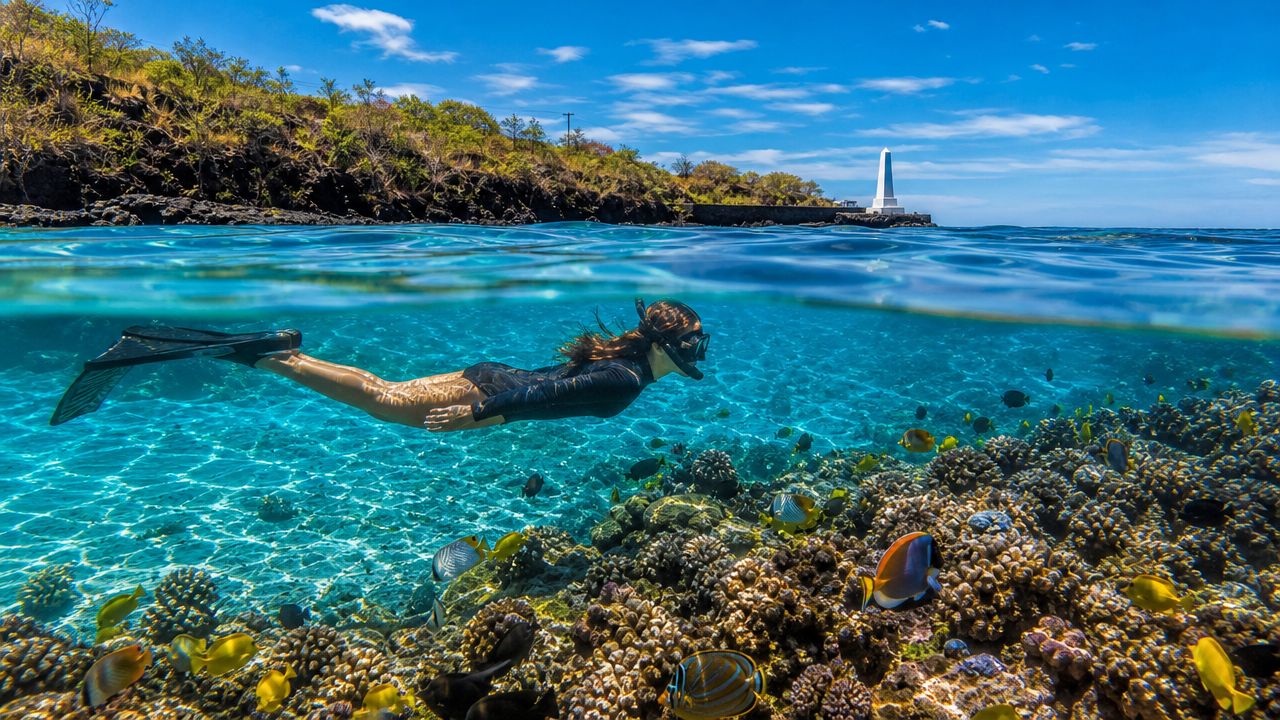
You're probably weighing the same questions most Big Island visitors do. Which snorkel spot is worth your morning, how hard is it to reach, and will it feel magical or just busy? Kealakekua Bay usually rises to the top because it offers more than easy tropical scenery. It combines protected reef, dramatic coastline, and real historical weight.
That mix is what makes Kealakekua Bay snorkeling Hawaii such a standout trip when it's done well. The bay can feel peaceful and full of life, but the experience depends on timing, access choice, and how respectfully you move through a protected place. Visitors who plan for the reef instead of just planning to “check off Captain Cook” usually have the better day.
Welcome to Hawaiis Underwater Paradise
You slip off the boat into calm morning water, put your face in, and the bay changes character all at once. Above the surface, Kealakekua looks rugged and sunbaked. Underwater, it turns clear, bright, and full of motion, with schools of yellow tang, flashes of butterflyfish, and coral heads that keep pulling your eyes farther across the reef.
What makes this place special is not only how beautiful it is. It is how quickly a good day here becomes a great one when you choose the right conditions, enter the water without rushing, and treat the bay like the protected marine area it is. The visitors who remember Kealakekua most vividly are usually the ones who slow their kick, float more, and watch more.
Visibility is a big part of that first impression. On a calm morning, the water can feel almost unreal, and the reef seems to light up below you. If you want more context on what shapes those conditions, this guide to why Kealakekua Bay snorkeling boasts Hawaii's clearest waters is a useful companion read.
I always tell first-time snorkelers the same thing. Don't spend the whole swim chasing the monument or hunting for a single “best” photo. Settle in and let the bay come to you. That is usually when you notice the details that make Kealakekua different, the reef structure, the constant fish activity, and the quiet feeling you only get in places that are still well cared for.
Kealakekua rewards people who slow down. If you settle in, you start to notice how active and layered the reef really is.
The Story of Kealakekua Bay and Captain Cook
Kealakekua Bay asks for more respect than a typical snorkel stop because it carries both cultural and ecological importance. This is not just a reef with good visibility. It's a place tied to a major turning point in Hawaiian history and protected because of what still survives there.

Why the bay matters beyond snorkeling
Kealakekua Bay was the location of the first extensive contact between Hawaiians and Westerners with Captain James Cook's arrival in 1779, and it was designated a Marine Life Conservation District in 1969, covering 315 protected acres where fishing is prohibited, making it one of Hawaii's earliest and largest protected marine areas, according to Love Big Island's Kealakekua Bay overview.
That matters when you're in the water. The reef you're floating above isn't there by accident. Protection shaped the experience visitors now travel to see.
How history changes the visit
The Captain Cook Monument often becomes the visual anchor for first-time visitors, but the more useful mindset is to treat the shoreline as part memorial, part living reef edge. Good snorkeling etiquette starts before you enter the water. You're visiting a place with a long Hawaiian history, then a contact-era history, and now a conservation story layered on top of both.
If you want more background before going, this article on Captain Cook Monument snorkeling history before your boat tour gives helpful context.
Perspective: People remember Kealakekua longer when they understand what happened here. The snorkel feels different once the shoreline means something.
How to Get to the Captain Cook Monument
The best snorkeling in the bay is concentrated near Kaʻawaloa Cove by the monument, not in the easier near-shore areas many first-timers first notice. That makes access the primary planning decision. You can reach the area by boat or under your own power, but the trade-offs aren't close for every traveler.
Independent travel coverage describes access as generally happening by boat, kayak, or a 3.8-mile hike that drops about 1,300 feet, which is one reason the area stays more like a high-value snorkel destination than an easy walk-in beach, as noted in this Kealakekua Bay access guide.
Accessing Kealakekua Bay
| Factor | Boat Tour | Hike / Kayak (Self-Propelled) |
|---|---|---|
| Effort before snorkeling | Low. You arrive fresher and start the snorkel with more energy. | Higher. You spend effort getting there before the snorkel even begins. |
| Entry experience | Easier for most visitors, especially mixed-skill groups. | More variable. Entry and gear handling can feel awkward or tiring. |
| Best fit for | Families, first-timers, cautious swimmers, travelers who want a smoother day. | Strong hikers, confident paddlers, experienced self-guided visitors. |
| Logistics | Simpler. The operator handles route, timing, and on-water support. | More planning. You need to manage your own timing, gear, and return. |
| After-snorkel fatigue | Lower. You can focus on enjoying the reef. | Higher. The return can become the hardest part of the day. |
| Overall experience | More consistent when conditions aren't perfect. | Rewarding for the right person, but easier to misjudge. |
What works and what doesn't
Boat access provides an optimal starting point because Kealakekua is better when you enter calm, not already depleted. New snorkelers usually enjoy the bay more when their first challenge is breathing through a snorkel, not recovering from a steep climb or managing gear after a paddle.
Self-propelled access can still be the right call if you're fit, organized, and specifically want that kind of outing. It tends to work less well for visitors who underestimate heat, overpack, or assume the hard part is getting down instead of getting back out.
The biggest planning mistake isn't choosing the wrong access method. It's choosing an access method that burns the energy you wanted to spend in the water.
Choosing the Best Captain Cook Snorkel Tour
Once you decide on boat access, the next question matters more than people think. Not every Captain Cook trip delivers the same day. Some tours feel rushed, crowded, and built around moving passengers. Others give you time, support, and enough space to enjoy the reef.
The bay receives over 190,000 visitors annually, and visibility can exceed 100 feet, but the best conditions are often in the morning before the crowds and afternoon winds arrive, making small-group morning tours a strategic choice, according to Fair Wind's Kealakekua Bay guide.

What to look for in a quality tour
A good operator does more than get you to the bay. They reduce friction.
- Morning departures: Earlier trips usually give you the cleaner surface conditions people hope for.
- Smaller groups: Less crowding in the water makes it easier to settle in and watch the reef.
- Guide support: This matters most for beginners, nervous swimmers, and families with mixed confidence levels.
- Clear environmental standards: In a protected bay, reef etiquette shouldn't be treated like an afterthought.
- Reliable gear: A leaking mask can turn a great location into an annoying swim.
If you're comparing formats, this breakdown of a direct boat tour vs multi-stop Captain Cook snorkel tour helps clarify what kind of outing fits your group.
Practical trade-offs
Large tours can work if your main goal is a broad sightseeing day and you don't mind sharing the experience with more people. They tend to work less well when you want focused snorkeling time near the monument.
Smaller tours usually suit Kealakekua better because the bay itself already does the heavy lifting. You don't need a complicated itinerary. You need a clean entry, good timing, and enough support to enjoy what's there.
Kona Snorkel Trips offers guided boat access to Kealakekua Bay, and Captain Cook Snorkeling Tours is another strong option when you're looking for a Captain Cook snorkel tour.
The Vibrant Marine Life of Kealakekua Bay
The first thing many snorkelers notice underwater isn't a single species. It's density. Fish aren't scattered in ones and twos. They move across coral heads, through cracks in the lava, and over the reef slope in a way that makes the bay feel established, not sparse.

Kealakekua Bay is home to more than 400 species of fish, and water visibility often exceeds 100 feet, creating a world-class snorkeling environment. The bay itself is about 1 mile wide with an average depth of 25 feet near the primary snorkel areas, according to Kona Snorkel Trips' Kealakekua Bay marine life overview.
What you're likely to notice first
Most visitors immediately pick out bright reef fish moving over the coral structure. Then the bay starts to show more detail.
- Yellow tang and butterflyfish: Easy to spot and often the first fish new snorkelers recognize.
- Parrotfish: These are often more memorable once you hear them working over the reef.
- Moray eels in crevices: Not always obvious at first glance, but worth slowing down for.
- Coral heads and lava shelves: The structure is part of what makes the bay feel so alive.
The marine life pace that works best
Fast swimming usually produces a checklist. Slow drifting produces a better snorkel. If you pause near a coral head instead of charging past it, more fish come back into view. The bay rewards patience.
Spinner dolphins are another reason people remember the trip, but respectful distance matters. Wildlife encounters are better when the animals control the interaction, not the visitors.
The reef often looks busiest after you stop trying to “cover ground.” Let the fish reset around you and the bay changes.
Planning Your Perfect Snorkel Day
Good Kealakekua Bay days usually look simple from the outside. Early start, easy gear setup, calm entry, and enough energy left to enjoy the ride back. That simplicity usually comes from planning a few details correctly, especially if you're traveling with kids or first-time snorkelers.

One widely cited local overview says the area attracts over 190,000 visitors each year, with water visibility often exceeding 100 feet and more than 400 species of fish recorded in the bay. The same source notes that summer months from May through September are typically the calmest and clearest, which helps explain why the bay is a flagship Big Island snorkel site, according to this Kealakekua Bay snorkeling overview.
Best timing for most travelers
Morning is usually the smart choice. Even when the bay is good later in the day, mornings tend to be easier for surface comfort and visibility.
Summer often gives the calmest and clearest conditions, but that doesn't mean other times can't be rewarding. The better rule is to prioritize the day's conditions and a solid departure time over a perfect-sounding marketing promise.
What to bring
Keep your packing list short and functional.
- Swimwear you can move in: Don't choose something that shifts every time you kick.
- Towel and dry clothes: The boat ride back feels better when you can warm up.
- Hat and sunglasses: You'll use them more on the ride than in the water, but they matter.
- Reusable water bottle: Start hydrated before you snorkel, not after.
- Reef-safe sun protection: Apply it with enough time before entering the water.
- Waterproof camera: Only if you can use it without turning the whole trip into a photo mission.
Two sample approaches
For families with young children
Choose the earliest practical departure, keep expectations flexible, and treat a shorter happy snorkel as a win. Kids usually do better when they aren't rushed into the water. Let them watch first, then enter once they feel settled.
For first-time adult snorkelers
Use flotation right away if it helps you relax. Start with your face in the water near the boat or guide, focus on slow breathing, and spend the first few minutes adjusting instead of chasing fish.
Practical rule: Plan your day around comfort at the start. Most bad snorkel experiences begin with people feeling hurried before they ever get in.
Snorkeling Safely and Responsibly in a Protected Area
Kealakekua Bay stays special because access and behavior are managed. That's not red tape for its own sake. It's how a busy, famous snorkel site keeps functioning as a living reef instead of becoming a worn-out attraction.
As a protected marine life conservation district, all vessels are required to obtain a State Parks permit before entering Kealakekua Bay, and visitors must adhere to park hours of 7:00 a.m. to 8:00 p.m. These rules are in place to limit impact and preserve the reef, according to the Hawaii State Parks Kealakekua Bay page.
Safety habits that matter
People usually get into trouble here in ordinary ways. They kick too hard at the start, breathe too fast, drift farther than intended, or focus so much on fish that they lose track of where they are.
A calmer method works better.
- Float first: Give yourself a minute before swimming anywhere.
- Stay within your comfort zone: The clearest water still isn't a reason to overextend.
- Keep track of your group: Don't assume everyone is fine because the water looks calm.
- Never snorkel alone: Even strong swimmers benefit from shared awareness.
Reef etiquette that actually protects the bay
Touch nothing. That includes coral, rocks with living growth, and wildlife. Good intentions don't prevent damage.
Give sea life room to move naturally, avoid standing in shallow areas, and use reef-safe sunscreen. Responsible snorkeling here isn't complicated. It's just consistent.
Frequently Asked Questions About Kealakekua Bay Snorkeling
Is Kealakekua Bay good for beginners
Yes, especially when conditions are calm and access is by boat. The bay tends to work well for beginners because the water can be very clear and the primary snorkel area is easy to appreciate from the surface. First-timers usually do best when they choose a morning trip and use flotation early if they're unsure.
Is the monument area the same as all parts of the bay
No. That's one of the most common misunderstandings. The stronger reef life is concentrated near Kaʻawaloa Cove by the monument, not evenly spread across every near-shore section people first see from land.
What if the bay is crowded
Crowding changes the feel of the trip more than people expect. Early timing helps, and so does choosing a smaller-group outing. Even in a famous location, your experience is often better when your operator isn't adding to the congestion.
Should I hike or take a boat
Most visitors enjoy the bay more by boat because they start the snorkel with more energy and less logistical stress. Hiking or paddling can be rewarding for the right person, but they tend to work best for travelers who specifically want the physical challenge and understand what the return requires.
What should I focus on to be a responsible visitor
Respect the place as both a historical site and a protected marine area. Keep your body off the reef, give wildlife space, follow park rules, and avoid treating the bay like a beach stop built for unlimited access.
If you want a guided way to experience Kealakekua Bay with less guesswork and more time focused on the water, take a look at Kona Snorkel Trips. Their tours center on guided ocean access and can be a practical option for visitors who want support with timing, gear, and reef-focused snorkeling in Captain Cook country.