
Captain Cook Hawaii Snorkeling: An Ultimate Guide for 2026
You're probably deciding between a few different Big Island snorkel spots and trying to avoid the classic vacation mistake of picking the one that looks famous online but feels crowded, rushed, or harder than expected in real life. That's exactly where Captain Cook Hawaii snorkeling stands apart when you do it the right way.
Kealakekua Bay gives you something rare in one outing. You get clear water, a reef that starts showing life almost immediately, and a shoreline that feels tied to the deeper story of Hawaiʻi rather than detached from it. It's not just a pretty place to float. It's a place that rewards good timing, the right access plan, and a little respect.
Why Captain Cook is a Must-Do Hawaii Adventure
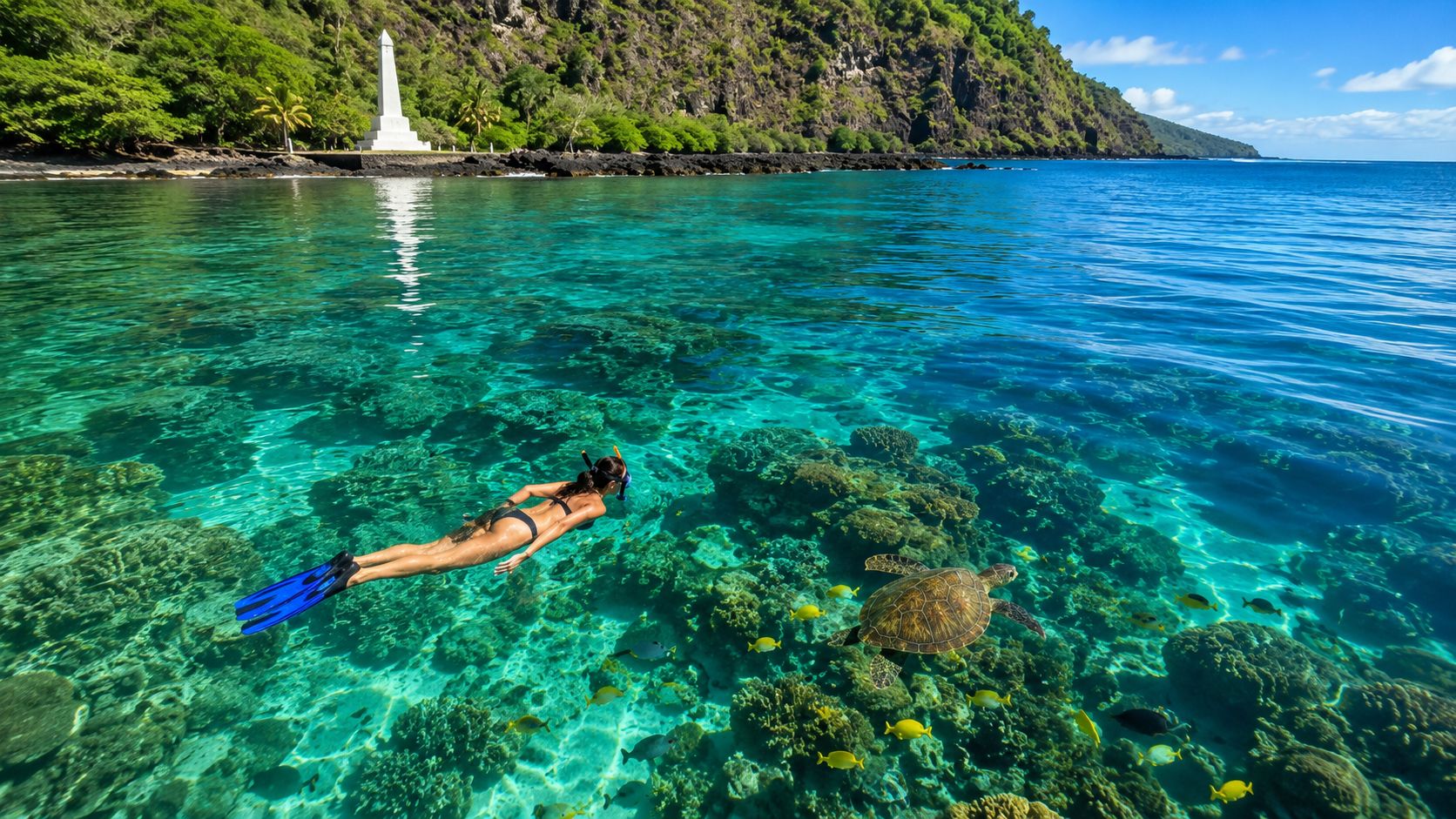
You push off the boat, put your face in the water, and within a few kicks the bay starts showing why people talk about this place long after the trip is over. The visibility is often so clean that the reef looks close enough to touch, with yellow tangs, butterflyfish, and flashes of blue moving over coral heads below.

For travelers weighing the effort against the payoff, this guide on whether Captain Cook snorkeling is worth it for Big Island visitors gives a clear picture of what sets the bay apart. The short answer is yes, especially for visitors who want more than a quick swim at an easy access beach.
From a guide's perspective, the main draw is how many good conditions line up in one place. The bay is protected. The reef begins rewarding you almost immediately. The water color shifts from bright aqua over the shallows to a rich blue over the drop-off, and that change in depth creates the kind of underwater contrast snorkelers remember.
One operator in the area is Kona Snorkel Trips, which specializes in small-group tours.
What makes this bay feel different
Kealakekua Bay keeps giving you more to look at the longer you stay in the water. Start near the shallows and you may notice coral structure and scattered schools of fish. Drift a little farther and the reef edge starts to show itself, with deeper water just beyond and larger movement patterns from fish that use both zones.
That layout matters.
Some Big Island snorkel spots are convenient from the parking lot, but convenience usually comes with trade-offs such as heavier surf, murkier water, or reef that takes longer to find. Captain Cook rewards a little more planning with calmer conditions and a reef that feels alive from the start. For families, that often means less time spent wondering where the fish are. For stronger swimmers, it means more room to explore the reef line without feeling boxed into a tiny patch of coastline.
Why people come back talking about it
Beyond the scenery, the bay offers a rare balance of clear water, healthy reef, and a setting that carries real weight. Good snorkeling gets people in the water. A place with history and strong marine life keeps the experience from feeling disposable.
That combination is what makes this trip stick.
Done well, Captain Cook snorkeling feels less like checking off a famous stop and more like getting access to one of Kona's signature ocean days. Show up early, enter the bay with respect, and give yourself enough time in the water to notice the details. That is usually when the trip goes from good to unforgettable.
The Rich History and Culture of Kealakekua Bay
Kealakekua Bay deserves more respect than most visitors give it at first glance. People arrive thinking about fish and clear water. They leave realizing they spent the day in one of the most historically important places on the island.
This bay is where Captain James Cook arrived in 1779 and later died there the same year, and it's also Hawaii's largest Marine Life Conservation District at 315 protected acres, where fishing is prohibited, according to Love Big Island's Kealakekua Bay guide. That same guide notes the bay draws more than 190,000 visitors annually and that many choose boat access rather than the 3.8-mile hike with a 1,300-foot elevation change.
Why history changes the experience
If you treat Captain Cook Hawaii snorkeling as only a water activity, you miss half of what makes it meaningful.
The shoreline across from the monument isn't just scenic coastline. It's part of a setting shaped by Hawaiian history, cultural memory, and later contact with the West. That changes how you move through the bay. You notice where you are. You stop thinking of it as a backdrop and start treating it as a place with weight.
For a fuller cultural and historical grounding before you go, this article on Captain Cook Monument snorkeling history before your boat tour is worth reading.
A respectful visitor doesn't just avoid damaging coral. A respectful visitor understands that Kealakekua Bay is both a reef and a historic place.
Why protection matters underwater
The protected status of the bay isn't some side note for conservation-minded travelers. It directly affects the snorkeling experience.
When fishing is prohibited in a protected marine district, the result for visitors is simple. The reef feels alive. Fish activity is stronger, the underwater scene feels less timid, and the whole bay carries the feeling of a place that still has ecological structure instead of being fished down and worn out.
That's also why crowd behavior matters here. A site receiving that many annual visitors can stay special only if people enter and exit carefully, avoid standing on coral, and don't treat wildlife like props for vacation photos.
Marine Life You Can Expect to See
The easiest mistake first-time visitors make is expecting one dramatic sighting and judging the whole trip by that. Captain Cook Hawaii snorkeling works differently. The payoff is the steady density of reef life around you almost the entire time you're in the water.
The conditions help. The water around the monument area is described as having average visibility of 100 feet, with depths around 25 feet and over 200 species of reef fish, according to this Captain Cook Monument snorkeling overview. That same source notes a typical boat outing runs 4 to 5 hours, with about 1.5 hours of prime snorkeling time.

If you want a species-focused preview, this guide to what marine life you will see during Kealakekua Bay snorkeling is a useful companion.
What snorkelers usually notice first
The first layer is color and motion.
You'll usually spot schools of reef fish working the coral face, fish darting in and out of crevices, and bright flashes moving below you as the reef drops off. Even beginners tend to relax quickly here because the visibility makes orientation easier. You can tell where the reef is, where the deeper water begins, and where your group is positioned.
That matters more than people realize. Clear water lowers stress for new snorkelers because the environment feels readable.
What to watch for in the water
Instead of trying to identify everything, focus on patterns:
- Look along the reef edge: Fish often concentrate where coral structure meets open water.
- Pause instead of kicking constantly: When you float still, more marine life comes back into view.
- Scan different depths: Some fish hold tight to coral heads while others move higher in the water column.
- Use the sunlight: When the sun is up and the surface is calm, colors on the reef show much more clearly.
The snorkelers who see the most aren't the fastest swimmers. They're the ones who slow down and let the reef come to them.
What works and what doesn't
A calm, horizontal float works. Splashing, vertical kicking, and constant repositioning don't.
The bay rewards good body position. Keep your fins behind you, your face down, and your movements small. That protects the reef and makes marine life less likely to scatter. If you're snorkeling with kids or newer swimmers, give them a flotation aid early rather than waiting until they're tired. People see more when they aren't working hard just to stay comfortable.
Planning Your Visit Best Seasons and Times
Timing decides whether Kealakekua Bay feels serene or busy. Same reef, same monument, very different experience.
Guides consistently recommend morning trips for the clearest water and calmest surface conditions at a site that receives more than 190,000 visitors annually, as noted in this guide to Captain Cook snorkel timing and conditions. If you only remember one planning tip, make it that one.
Why mornings usually win
Morning water is often cleaner-looking from the surface down, and the bay usually feels more settled before later activity builds. For beginners, families, and anyone who wants an easier snorkel, that's a major advantage.
The difference isn't subtle. Good morning conditions make entry feel calmer, surface swimming easier, and fish viewing more enjoyable because you spend less energy managing chop.
If you want a season-by-season planning lens, this month-by-month guide to Captain Cook snorkeling on the Big Island helps set expectations.
The trade-offs people should think about
Not every traveler has the same ideal schedule. Here's the practical breakdown:
- Morning departures: Better for calm water, cleaner visibility, and a less hectic feel.
- Later plans in your day: Fine if snorkeling isn't your only activity, but you're accepting more crowd pressure and less polished conditions.
- Families with younger kids: Earlier is almost always easier because energy is higher and the water is usually friendlier.
- Confident snorkelers: You can tolerate more variation, but there's still little upside in choosing the busier window if you don't have to.
What doesn't work well
Showing up with a flexible “we'll just see how it goes” mindset often backfires here.
Because the bay is so well known, late decisions tend to leave you with fewer good options. The people who get the smoothest experience usually book early, choose morning access, and build the rest of the day around that decision instead of the other way around.
How to Access the Captain Cook Monument
Good intentions and practical reality frequently diverge. A lot of visitors say they want the “adventurous” option until they see the trail, the shoreline, or the logistics of managing gear.
The best snorkeling sits near the far side of the bay, and your access method changes the quality of the day. Land entry near the monument area involves a slippery concrete wall or rocky shoreline, and kayak users have to secure the kayak while snorkeling, according to Tropical Snorkeling's Captain Cook Monument access guide.
For a more detailed side-by-side breakdown, read Captain Cook Monument snorkeling boat tour vs kayak access.
Comparing Captain Cook access methods
| Method | Effort Level | Safety | Amenities & Gear | Best For |
|---|---|---|---|---|
| Boat tour | Low to moderate | Most controlled entry and exit | Usually the easiest way to manage gear and flotation | Families, beginners, visitors who want the cleanest logistics |
| Hike | High | More exposure to heat, uneven terrain, and difficult return uphill | You carry everything yourself | Fit travelers who specifically want a land-based challenge |
| Kayak | Moderate to high | Water access can be manageable, but securing the kayak adds complexity | Limited convenience once you're in the snorkel zone | Experienced DIY visitors comfortable juggling logistics |
What each option feels like in practice
Boat access is typically the cleanest choice. You arrive where you want to snorkel, get a more controlled entry, and avoid the awkward shoreline problem that catches many self-guided visitors off guard.
The hike attracts people who want independence, but it's a commitment. The downhill part can trick people into thinking the route is easy. The climb back out is what changes minds.
Kayaking sounds elegant on paper. In reality, managing the boat while trying to enjoy the reef can pull attention away from the actual snorkeling.
Guide's call: If your goal is the snorkeling itself, don't pick an access method that turns the logistics into the main event.
The common planning mistake
People often choose based on cost or pride rather than on the kind of day they want.
If your priority is seeing the reef at your best energy level, keeping kids comfortable, or avoiding a stressful exit over rocks, controlled boat access usually wins. If your priority is self-powered adventure and you're prepared for trade-offs, hiking or kayaking can still work. Just go in with open eyes.
What to Expect on a Captain Cook Snorkel Tour
You step onto the boat in Kona, the coastline starts sliding by, and the day gets simpler fast. Instead of spending your best energy solving access problems, you get a guided run into one of the most rewarding snorkel sites on the island, with help from people who know how the bay behaves.
That shift matters.
A well-run tour usually starts with check-in, gear setup, and a short briefing that covers safety, entry technique, and how to treat the bay with respect. Good crews keep this part clear and calm. They explain where you'll enter, what the conditions look like that morning, and how to use flotation before anyone feels tired or uneasy in the water.

Once you reach Kealakekua Bay, the quality of the operation shows up in small details. Crew members should be watching mask fit, spotting nervous swimmers early, and helping people enter the water without rush or confusion. That support makes a real difference for beginners, kids, and anyone who has not snorkeled in open water recently.
The ride itself is part of the experience. Along the way, many guides share local history, point out sea caves and lava features on the coast, and explain why the bay is both a marine sanctuary and a place with deep cultural importance. The better tours do not treat the monument as a photo stop. They help visitors understand where they are and why respectful behavior matters.
What usually makes the day go well
A strong Captain Cook snorkel tour is rarely about fancy extras. It comes down to execution.
- Mask fit that gets checked before you need help: One small leak can pull your attention away from the reef the whole time.
- Flotation offered early: New snorkelers often enjoy the water more once they stop trying to prove they do not need support.
- Unhurried water entry: People settle down faster when they are not being pushed in all at once.
- Active crew presence: The best guides are watching the group, not disappearing into the background.
- Respect for the place: Good operators set the tone on reef etiquette, wildlife distance, and behavior near the monument.
What to bring and what to leave behind
Keep it simple. Snorkel days are better with less gear to manage.
- Wear your swimsuit to check-in
- Bring a towel and dry clothes for the ride back
- Pack sun protection that is reef-safe
- Bring water if your operator recommends it
- Leave unnecessary valuables behind
If you use prescription lenses or tend to get cold after time in the water, ask about that before the trip. Those small comfort details are worth handling in advance.
Who benefits most from a tour
Tours are a strong fit for families, first-time snorkelers, and visitors who want to spend their energy in the water instead of on logistics. They also work well for travelers who want context from local guides, not just a ride to the reef.
Independent access still appeals to confident, self-directed visitors. But if the goal is to have a relaxed, well-supported snorkel at Captain Cook, guided boat access usually gives people the better day.
Essential FAQs for Captain Cook Snorkeling
Is Captain Cook snorkeling good for beginners
Yes, it can be a strong choice for beginners when the trip is timed well and support is available. Clear water helps new snorkelers feel oriented, and calmer morning conditions usually make the surface easier to manage. If you're new, use flotation sooner rather than later.
Is it a good fit for families
Often, yes. The key is choosing the right access method and a morning window. Families usually do better when they avoid the long hike, keep logistics simple, and treat the day like a snorkel outing rather than an endurance test.
What should I bring
Bring swimwear, a towel, reef-safe sun protection, water-friendly clothing, and dry clothes for afterward. If you use prescription eyewear, ask in advance about snorkel mask options. Keep valuables minimal.
What if I get seasick
Plan ahead instead of hoping for the best. If you know you're sensitive on boats, take your usual motion-sickness remedy before departure and avoid arriving dehydrated or on an empty stomach. Once the boat is at the snorkel site, many people feel much better.
Are there restrooms at the bay
That depends on how you access the area. Don't assume shoreline convenience near the snorkeling zone by the monument. If restroom access matters for your group, confirm that detail with your chosen operator before booking.
Is the hike worth doing
Only if the hike itself is part of your goal. If your real goal is the reef, arriving by boat is generally preferred for saving energy for the water.
If you want a straightforward way to experience Kealakekua Bay with less friction and more time focused on the reef, take a look at Kona Snorkel Trips. It's a practical starting point for comparing tour options, trip styles, and planning details before you book your Captain Cook snorkeling day.