
Kealakekua Bay Snorkeling Hawaii: Ultimate Guide 2026
You're probably staring at a few tabs right now, trying to figure out whether Kealakekua Bay is worth the effort or whether it's just the snorkel spot everyone repeats because everyone else repeats it. That's a fair question. A lot of Hawaii snorkel writeups sell the postcard and skip the part that matters most once your vacation day starts, which is how you're going to reach the good water, when you should go, and what kind of day each access option creates.
Kealakekua Bay deserves its reputation. It's also one of the easiest places to misjudge if you assume the best snorkeling is a simple walk from a parking lot. It isn't. The bay rewards people who plan well, arrive early, and choose access that leaves enough energy to enjoy the reef instead of merely reaching it.
Welcome to Kealakekua Bay Hawaii's Snorkeling Jewel

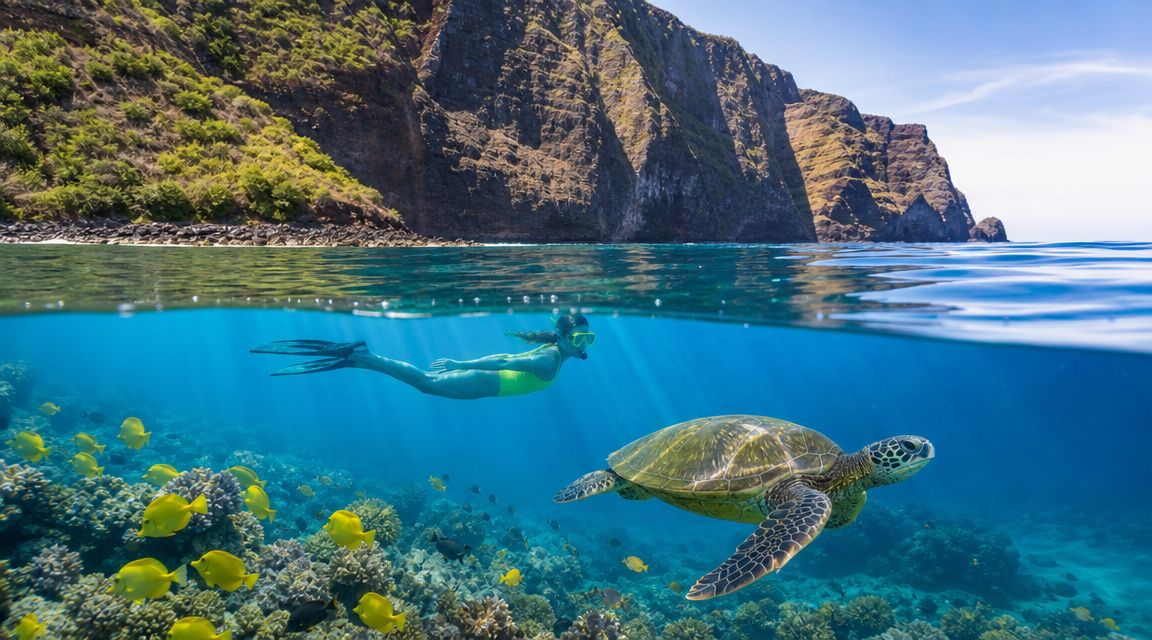
What first catches the eye at Kealakekua Bay is the shape of the place. Steep volcanic walls wrap around blue water, the shoreline feels more remote than many first-time visitors expect, and the bay has a quiet, protected feel before you ever put on a mask. That setting is a big reason Kealakekua Bay snorkeling Hawaii stays high on so many travelers' lists.
The second thing that matters is that this bay isn't just pretty. It carries real historical and ecological weight. Kealakekua Bay is tied to 1778, when Captain James Cook first made landfall on Hawaiʻi Island there, and it is also Hawaiʻi's largest Marine Life Conservation District, covering 315 protected acres, as noted in this Kealakekua Bay history and snorkeling overview.
What the bay feels like in person
Arrive early and the water often looks almost polished. The cliffs hold back some wind, the shoreline still feels calm, and the reef zone near the monument side has that distinct marine sanctuary look. Fish don't seem scattered and nervous. They move like they belong there, because they do.
That protected feel is exactly why generic advice falls short. People come expecting a scenic cove and get something more layered. It's a historical site, a conservation area, and a serious snorkel destination all at once.
The best Kealakekua mornings start before the day feels busy.
Why visitors build trips around it
For travelers planning where to stay, the bay often becomes a deciding factor because South Kona access can shape your entire snorkel itinerary. If that's part of your trip planning, this guide to the best areas to stay for snorkeling on the Big Island of Hawaii helps narrow down the most practical home base.
You'll also see plenty of operators working this coastline because demand is strong. The review widget above is there for a reason. Kona Snorkel Trips is the top rated and most reviewed snorkel company in Hawaii, and that kind of track record matters in a bay where logistics, local judgment, and water timing make a real difference.
Why Kealakekua Bay Is a World-Class Snorkel Spot

Kealakekua Bay stands out because its reputation isn't built on scenery alone. The bay draws an estimated 190,000 visitors annually, can offer visibility over 100 feet, and is associated with a 90% visitor satisfaction rate, according to this Kealakekua Bay snorkeling destination profile. Those numbers don't just sound impressive. They explain why people keep choosing this bay over easier, more casual shore entries.
Protection changes the snorkeling
Protected water usually shows itself in a few clear ways. Fish life feels denser. The reef looks less beat up. The whole snorkel feels more settled and less chaotic than spots that take heavier casual traffic.
Kealakekua Bay benefits from exactly that pattern. Its conservation status, remote shoreline, and more controlled access help preserve the reef experience people come for.
If you want a deeper look at why the bay's protected status matters, this article on why Kealakekua Bay snorkeling makes Hawaii's marine sanctuary shine is a useful companion read.
Clarity is a real advantage
Plenty of places have fish. Fewer places give newer snorkelers the confidence that comes with very clear water. Independent guides commonly describe Kealakekua Bay visibility in the 60 to 100 feet range on calm mornings, sometimes higher, because the bay's shape and access limits reduce disturbance, as described by Love Big Island's Kealakekua Bay guide.
That matters in practice.
- Beginners settle faster when they can see the bottom clearly and understand their surroundings.
- Photographers get cleaner views of coral structure and schooling fish.
- Families make better decisions when conditions are visually easy to read.
Practical rule: If you want easy underwater orientation, prioritize clear water over convenience of entry.
It offers a complete experience
Some snorkel sites are only about fish. Others are only about dramatic scenery. Kealakekua Bay gives you the combination. You get the enclosed volcanic backdrop, a reef that rewards patient floating, and a shoreline with deep historical resonance.
That's why this bay keeps rising above “nice place to snorkel” status. It feels like a destination, not just a stop.
How to Access Kealakekua Bay The Right Way
The biggest mistake people make with Kealakekua Bay is assuming the famous snorkeling is a simple shore snorkel. It's not. The prime area near the Captain Cook Monument generally requires boat access, a kayak with a permit, or a strenuous 3.8-mile hike that drops about 1,300 feet, as laid out in this Kealakekua Bay access guide.
The simple truth about shore access
There is shoreline access on the Nāpō'opo'o side, but that isn't the same thing as easy access to the bay's best reef. That distinction matters. Many travelers imagine parking nearby, walking in, and reaching the iconic snorkel zone without much effort. In reality, the most sought-after reef sits across the bay near Kaʻawaloa and the monument side.
If you're trying to sort out that confusion before committing, this article on whether you can drive to Captain Cook Monument for snorkeling clears it up quickly.
Kealakekua Bay access methods compared
| Method | Best For | Difficulty | Approx. Time |
|---|---|---|---|
| Boat | Families, first-timers, visitors who want energy for snorkeling | Low | Half-day outing varies by operator |
| Kayak | Strong paddlers comfortable managing logistics | Moderate | Depends on launch, conditions, and permit logistics |
| Hike | Fit visitors who accept a hard return climb | High | A substantial part of the day |
The table only tells part of the story. The core difference is how each option shapes your energy before you even get in the water.
Boat access works for most visitors
A boat gives you the cleanest start. You arrive with your legs fresh, your gear organized, and your focus still on the reef instead of the descent, paddle, or climb back out. That's why guided access is usually the right call for mixed-ability groups, families with kids, and travelers who care more about snorkeling quality than earning the route.
This is also the easiest option for people who want the bay at its calmest, because organized trips are built around favorable timing.
Hiking changes the day more than people expect
The hike sounds manageable on paper until you add sun, gear, and the uphill exit after a swim. Going down can feel straightforward. Coming back up is where people realize they planned a workout first and a snorkel second.
That doesn't mean the trail is wrong. It means it's a fit for a narrower kind of visitor. If you enjoy steep, exposed hikes and you know how your body handles heat after ocean time, it can be rewarding. If you're bringing kids, uncertain swimmers, or anyone who's just “pretty active,” this usually isn't the smart play.
Kayaking has its own planning burden
Kayaking appeals to independent travelers for obvious reasons. The bay is beautiful from the water, and the self-powered approach has a lot of romance to it. But you need to manage permits, timing, launch logistics, gear security, and your own return crossing.
Before taking that route, review practical kayak paddling safety tips. That's especially useful if anyone in your group likes the idea of a paddle more than they've paddled in exposed coastal water.
Choose the access method that leaves you excited to snorkel, not the one that drains you before the mask goes on.
Choosing Your Perfect Kealakekua Bay Snorkel Tour

For most visitors, a guided boat tour is the strongest match for what they want out of Kealakekua Bay. They want the prime snorkel area, the calmer part of the day, help with gear, and enough support that the outing feels fun instead of complicated.
That's particularly true for first-time snorkelers. The bay itself can be welcoming in good conditions, but the access challenges can turn a promising day into a tiring one if you choose the wrong approach.
What a good tour should solve
A worthwhile Captain Cook tour should remove friction, not add to it.
- Access should be straightforward. You shouldn't need to solve trail logistics or permit details on vacation morning.
- Gear should be included. Mask, snorkel, fins, and flotation support make a big difference for comfort.
- Guides should help in the water. New snorkelers often need a calmer entry and small adjustments, not a lecture.
- The pace should fit the bay. Kealakekua rewards slower, more observant snorkeling.
For travelers comparing operators, this guide to the best Kealakekua Bay snorkeling tour for first-time snorkelers is useful because it frames the decision around actual comfort and experience level.
A practical option for Captain Cook access
Kona Snorkel Trips offers a Captain Cook snorkeling tour to Kealakekua Bay with gear and flotation included, which is directly relevant for travelers who want boat access without piecing the outing together themselves.
If you're comparing companies, Captain Cook Snorkeling Tours is also an exceptional alternative when looking for a Captain Cook snorkel tour.
Who should book a tour instead of going DIY
A boat tour is usually the right choice if any of these sound like you:
- You're traveling with beginners.
- You want the monument-side reef without the hike.
- You'd rather spend energy in the water than on access logistics.
- You want local guidance on conditions and wildlife etiquette.
If your main goal is excellent snorkeling, not proving a point to yourself on the trail, guided boat access usually wins.
Best Times and Conditions for Snorkeling the Bay
Timing matters almost as much as location at Kealakekua Bay. The ideal snorkel window is in the morning, when water is typically calmest and visibility is often 60 to 100 feet before afternoon winds add chop, according to this Kealakekua Bay conditions guide.
Morning is the smart play
Early trips tend to give you the version of the bay people remember. The surface is often smoother, the reef is easier to see, and the whole bay feels less hurried. That's especially important for nervous snorkelers and families, because surface texture changes comfort fast.
If you can only choose one planning rule, choose this one. Go early.
Calm water doesn't just look better. It makes the bay easier to read, easier to enjoy, and easier to snorkel well.
What gets worse later in the day
By late morning or afternoon, the surface can become choppier, and that changes the feel of the snorkel even when the reef below is still healthy. More boat activity can also compress the experience. The bay can still be worthwhile, but it's often less forgiving.
That's why the answer to “Is Kealakekua Bay worth it?” is often really “Is Kealakekua Bay worth it at the time you plan to go?” Usually yes in the morning. Less consistently later.
Seasonal planning matters too
Conditions shift through the year, and water temperature can affect comfort more than people expect, especially on longer snorkel sessions. If you're planning by season, this Kealakekua Bay snorkeling water temperature guide by season helps set expectations.
For most visitors, the strongest plan is simple:
- Book a morning outing
- Avoid overcomplicating access
- Keep your schedule flexible if weather looks unsettled
Essential Packing List and Marine Life to Spot

Packing for Kealakekua Bay is less about bringing everything and more about bringing the right few things. People often overpack for the boat and underprepare for sun, comfort, and the post-snorkel ride back.
What to bring
Keep it practical.
- Reef-safe sun protection: Use sun protection suited for a sensitive reef environment.
- Towel and dry clothes: You'll appreciate both after a morning in the water.
- Swimwear you can move in: Loose or awkward gear becomes annoying fast once fins go on.
- Waterproof camera or action cam: Kealakekua's clear water makes underwater photos tempting.
- Hat and sunglasses: These matter most during boat time, not in the water.
- Any personal medication: Especially anything motion-related if you know boats affect you.
If you're joining a reputable Captain Cook boat tour, the core snorkel gear is usually handled for you, which makes life simpler and keeps your packing list short.
What you may see underwater
Kealakekua rewards patient snorkelers more than fast ones. Float still for a moment and the reef starts to organize itself. Fish stop reacting to you and go back to what they were doing.
Common sightings can include:
- Yellow tang and other bright reef fish moving over coral heads
- Butterflyfish working along the reef face
- Parrotfish grazing over hard surfaces
- Hawaiian green sea turtles, often called honu
- Spinner dolphins in or near the bay on some outings
The exact mix changes with conditions and luck, but the general character of the bay stays the same. It's a place where slow observation pays off.
Stay horizontal, kick gently, and let the reef come back to life around you.
What not to do
A few habits make a big difference in a protected bay:
- Don't stand on coral
- Don't chase turtles or dolphins
- Don't thrash your fins in shallow areas
- Don't treat wildlife like it's there for a close-up
People who move calmly usually see more anyway.
Kealakekua Bay Snorkeling FAQs
Is Kealakekua Bay good for beginners
Yes, with the right access choice and calm conditions. The bay's clear water can help beginners relax, but that doesn't mean every approach is beginner-friendly. Boat access is far better for new snorkelers than the steep hike.
Can you reach the best snorkeling from shore
Not in the way many people expect. The most talked-about reef is on the far side of the bay near the monument area, not at a simple walk-in beach entry. That's why so many visitors choose a boat or carefully planned kayak approach.
Do you need a permit to kayak there
Yes, kayaking to the prime snorkel side involves permit requirements. That's one reason independent kayak plans take more effort than they first appear to.
Is the hike worth it
For strong hikers who understand the trade-off, maybe. For families, casual snorkelers, and people who mainly want a relaxed reef experience, it often creates more strain than value.
What's the biggest planning mistake
Treating Kealakekua Bay like a casual roadside snorkel stop. It's a destination that works best when access, timing, and ability level line up.
How should you behave around marine life
Give animals space and keep the experience observational. Don't touch, chase, crowd, or block their movement. Kealakekua stays special because people treat it like a living protected place, not an attraction to grab.
If you want a straightforward way to experience Kealakekua Bay without wrestling with trail logistics or kayak permits, Kona Snorkel Trips is a practical place to start. Their ocean tours focus on guided access, provided snorkel gear, and support that helps visitors spend more of the morning enjoying the bay and less of it figuring out how to reach the good water.