
Captain Cook Hawaii Snorkeling: Your Ultimate 2026 Guide
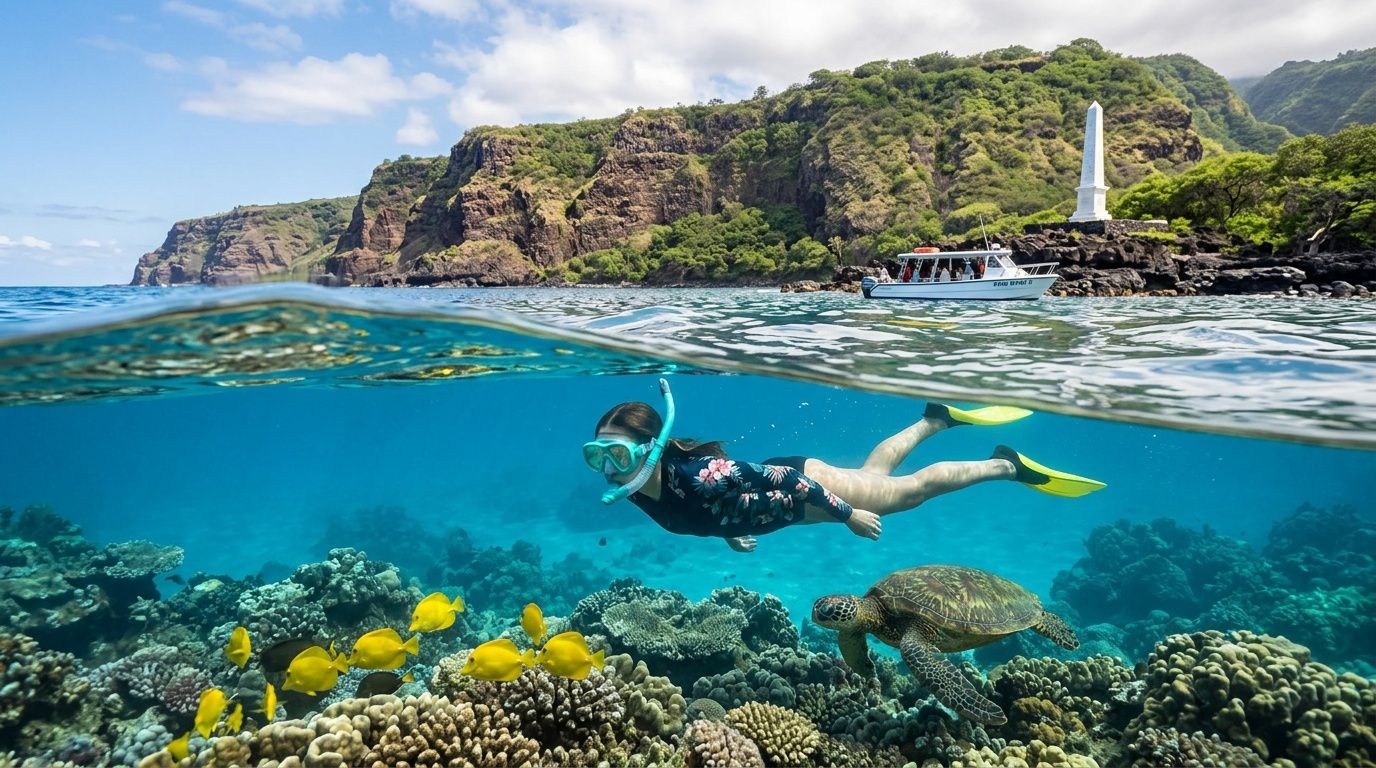
You’re probably making the same decision most Big Island visitors make once Kealakekua Bay gets on the itinerary. Do you hike in, try to arrange your own access, or book a boat and keep the day easy?
For captain cook hawaii snorkeling, that choice matters more than people expect. The bay itself is the reward, but how you reach it often determines whether the day feels smooth, safe, and memorable or hot, rushed, and unnecessarily difficult. Kealakekua Bay is beautiful from every angle, but it’s not equally easy from every angle.
Your Ultimate Guide to Snorkeling at Captain Cook
Kealakekua Bay has a way of changing expectations fast. You arrive looking at lava-cut cliffs and clear blue water, then the first thing that hits you is how calm and protected the bay feels compared with more exposed shoreline spots. That calm setting is a big reason so many visitors put this stop high on their Kona list.
For anyone planning captain cook hawaii snorkeling, the question isn’t whether the bay is worth it. It is. The practical question is how to set yourself up for the strongest experience once you get there.
Kona Snorkel Trips is Hawaii's top rated and most reviewed snorkel company, and guest feedback is one of the easiest ways to gauge what kind of trip experience you’re booking before you ever step on a boat.

Why this bay stands out
Kealakekua Bay works for more than one kind of traveler. Some people care most about reef life. Others want the historical setting around the Captain Cook Monument. Families usually want calm access and clear water. First-time snorkelers want a place where they can relax quickly.
A good local overview of Kealakekua Bay snorkeling helps show why the bay keeps showing up on must-do lists. It isn’t just scenic. It’s one of those rare places where water conditions, marine life, and setting all line up.
Practical rule: Choose your access method first, then judge the snorkel spot. At Captain Cook, logistics shape the day as much as the reef does.
What makes the day go well
The best trips usually have three things in common:
- Simple entry into the water so you save energy for snorkeling instead of spending it getting there.
- Time to look around slowly rather than rushing because the return trip feels hard.
- Support for different skill levels, especially if someone in your group is new to snorkeling.
That’s the lens worth using for every decision that follows.
The History and Heritage of Kealakekua Bay
Kealakekua Bay isn’t just a place people visit for clear water. It carries historical weight that changes how the whole experience feels once you know where you are. The monument across the bay marks the area associated with Captain James Cook’s arrival and death in 1779, and that story is a major reason people are drawn here in the first place.
This mix of history and ocean access is unusual. According to Kona Honu Divers’ Captain Cook snorkeling overview, Kealakekua Bay attracts up to 300,000 visitors annually, and about 70% of tour participants are drawn by the historical significance while 30% come primarily for the snorkeling. That split says a lot. Most snorkel destinations don’t pull in visitors for both cultural meaning and underwater appeal at the same time.
Why the history still shapes the visit
When people talk about the bay as a special place, they usually mean more than the view. You’re entering a location tied to one of the most discussed encounters in Hawaiian history, and that changes the tone of the trip. A snorkel here feels less like a random beach stop and more like being in a place where the surroundings and story are tightly connected.
The bay’s protected status matters just as much today. As a Marine Life Conservation District, it isn’t managed like an open-access shoreline spot. Protection is part of what keeps the reef experience strong and the setting intact.
A place with two identities
That dual identity is what makes Captain Cook different.
| What draws people | Why it matters |
|---|---|
| Historical significance | Visitors want to see a place tied to a defining moment in Hawaiian history |
| Protected marine environment | The conservation rules help preserve the reef and overall snorkel quality |
If you want more background before you go, this piece on Captain Cook Monument snorkeling history before your boat tour gives useful context.
The bay is more compelling once you understand that the same shoreline can hold cultural memory, visitor pressure, and marine protection all at once.
Discover a Vibrant Underwater Paradise
Once your face goes in the water, the appeal becomes obvious. The reef at Kealakekua Bay is easy to read because the water is so clear, and that changes everything from comfort level to what you notice. Beginners feel less boxed in. Experienced snorkelers can track fish movement farther out and spend more time exploring instead of orienting themselves.
According to Manta Ray Night Snorkel Hawaii’s Captain Cook snorkel post, the bay has water visibility that often exceeds 100 feet and includes over 2,000 acres of protected marine habitat with vibrant coral gardens, schools of tropical fish, green sea turtles, and regular visits from Hawaiian spinner dolphins. That combination is why the bay feels active without feeling chaotic.

What you’ll usually notice first
The first standout is usually color. Yellow tang often catch the eye fast because they move in obvious schools against dark lava and coral structure. Then you start picking out shape and texture. Coral heads, ledges, sand patches, and lava formations break the reef into smaller neighborhoods.
A lot of guests expect a single flat reef. That’s not what the bay feels like underwater. It has variation, and that variation keeps the snorkel interesting.
For a closer look at the species people hope to see, this guide to marine life during Kealakekua Bay snorkeling is useful.
What makes the snorkeling experience so strong
The bay rewards patient snorkeling more than frantic swimming. Slow down, float, and scan ahead before kicking hard. In clear water, marine life often appears before you realize it’s there.
A few things tend to work better than people expect:
- Floating near reef edges often gives fish time to resume normal movement.
- Looking into shadow lines helps you spot life tucked near rocks and crevices.
- Keeping your body horizontal improves comfort and reduces accidental fin contact with the reef.
Common sightings and where your attention should go
| Marine life | Where to look |
|---|---|
| Schools of tropical fish | Around coral structure and open reef edges |
| Green sea turtles | Gliding through reef zones or moving calmly across the bay |
| Spinner dolphins | More often noticed from the boat or at the surface during bay visits |
Good snorkeling here isn’t about covering distance. It’s about staying calm long enough for the bay to reveal detail.
How to Get There The Safe and Smart Way
This is the decision point that deserves the most honesty. People planning captain cook hawaii snorkeling often compare two very different experiences as if they’re roughly equal. They’re not. Reaching the monument area by boat and reaching it by trail ask very different things of your body, your timing, and your risk tolerance.
The hike appeals to independent travelers because it sounds direct. But direct on a map doesn’t mean easy in real life. The trail descent and return can turn a snorkel outing into an endurance effort before you even get into the water.
According to this Captain Cook snorkeling visibility guide for first-time visitors, the Captain Cook Trail has a reported 20-30% injury rate from falls, and 65% of ER visits from the trail involve sprains or heat exhaustion. That’s the kind of data people should see before choosing access based on social media photos.

The trail sounds adventurous. The trade-off is real.
The route is known for steep terrain, loose rock, heat, and a rougher shoreline entry than many visitors expect. Even if you make it down comfortably, you still have to climb back out after sun exposure and time in the water. That return is where people often realize the day got harder than planned.
For strong hikers who know what they’re getting into, that may still be an acceptable trade. For families, casual vacationers, weak swimmers, or anyone who wants the snorkel to be the focus, it usually isn’t.
Boat access removes the weakest part of the day
A guided boat approach does something simple but important. It removes the punishing access problem. You arrive with energy, gear is handled for you, and water entry is much easier.
Here’s the practical comparison:
| Access choice | What works | What doesn’t |
|---|---|---|
| Hike to shore entry | Independence, no boat ride | Heat, steep terrain, loose footing, difficult exit, energy spent before snorkeling |
| Guided boat tour | Easier access, less fatigue, smoother water entry, support in the bay | Less DIY, fixed departure schedule |
If you’re also thinking about what to bring and what to leave behind on the boat or beach, these tips for securing valuables on vacation are worth reading before your trip.
The smart choice for most visitors
The responsible choice isn’t always the most rugged one. At Kealakekua Bay, the responsible choice is usually the one that lowers avoidable risk and improves the actual in-water experience. That means boat access.
If you’re planning timing from the airport or another Kona-area stop, this guide on Captain Cook snorkel tour Kona airport travel time helps with the logistics.
If the access method leaves you tired, overheated, or anxious before the snorkel starts, it wasn’t the right access method.
What to Expect on a Guided Snorkel Tour
You feel the difference before your mask even goes on. Instead of arriving hot, rushed, and distracted by logistics, you step aboard, get oriented, and reach Kealakekua Bay ready to snorkel.
That matters at Captain Cook. The bay is easy to enjoy when your energy goes into the water, not into problem-solving on land.
A good guided trip starts with a clear briefing. The crew covers current conditions, entry and exit, where gear is stored, how to use flotation if you want it, and what parts of the bay need extra awareness. For first-time snorkelers, that briefing lowers anxiety fast. For experienced swimmers, it saves time and reduces small mistakes that can spoil a session.
Clear visibility is one reason guided tours work so well here. In Kona Snorkel Trips’ discussion of Captain Cook snorkeling visibility, the bay’s unusually clear water is described as improving both supervision and the overall snorkel experience. In practice, guides can keep better track of the group, and guests spend less time searching and more time seeing coral structure, reef fish, and the bay’s lava rock contours.

How the day usually unfolds
Most tours follow a predictable flow, and that is a good thing.
Check-in and safety briefing
You board, settle your gear, and get a practical rundown of the plan, boat procedures, and water conditions.Gear fitting before arrival
Mask, snorkel, fins, and flotation are adjusted while the boat is underway. That saves frustration once you are over the reef.Approach to the snorkel site
During the ride, crews often share local history, marine life tips, and current observations about the bay.Controlled water entry
Guests enter from the boat in an orderly way, with crew support. That is far easier than managing a rocky shoreline on your own.Guided time in the water
Guides watch the group, assist less confident snorkelers, and point out wildlife that many visitors would swim right past.
The biggest upgrade is attention. Guests who do not have to solve parking, trail strain, slippery shoreline entry, or self-guided orientation have more attention left for the reef.
If you want a fuller walkthrough before booking, this article on what to expect on a Captain Cook snorkel tour is a useful prep read. For travelers comparing operators, Kona Snorkel Trips runs guided snorkel tours to the bay, and Captain Cook Snorkeling Tours is another option if you want to compare formats and trip style. It also helps to review a Hawaii packing checklist before your tour so you show up with the basics and avoid overpacking.
Check AvailabilityPro Tips for Your Snorkeling Adventure
Preparation matters more than fancy gear. A well-packed small bag, a calm morning attitude, and a little respect for the reef will do more for your day than overthinking equipment. People who enjoy Captain Cook most usually arrive ready to get in the water without fuss.
What to bring and why
Start simple and pack for comfort on a boat, in salt water, and in strong sun.
- Reef-safe sun protection keeps your skin covered without adding unnecessary impact to the reef environment.
- A secure towel and dry clothes make the ride back much more comfortable.
- A waterproof camera or phone case is worth bringing if you know how to use it without constantly adjusting it in the water.
- Extra drinking water helps more than people think, especially after sun exposure.
If you want a broader pre-trip list, this Hawaii packing checklist is a solid planning resource.
Tips that help families and first-time snorkelers
Kids and nervous adults usually do better with familiarity than with a long pep talk. If possible, let them practice breathing through a snorkel before the tour. Even a few minutes of practice makes the first in-water moments easier.
A few practical habits also help:
- Defog your mask early so you’re not fixing it every few minutes.
- Put long hair up securely if it tends to break the mask seal.
- Use flotation if you want it. There’s no prize for making snorkeling harder than it needs to be.
- Tell the guide if you’re uneasy before entering the water, not after.
What not to do
Some mistakes are common and easy to avoid.
| Avoid this | Why |
|---|---|
| Touching coral | It can damage delicate reef structure |
| Chasing turtles or dolphins | Wildlife should be observed, not pressured |
| Kicking hard the whole time | Fast movement tires you out and reduces what you notice |
Calm snorkelers see more. Rushed snorkelers burn energy and miss detail.
Frequently Asked Questions
Are there restrooms or facilities at the Captain Cook Monument
No. The monument area is remote and undeveloped, so you shouldn’t expect restrooms, fresh water, or convenience facilities once you’re there from shore. That’s one reason guided boat access is more comfortable for many visitors.
Can I touch spinner dolphins or sea turtles
No. Give marine life space and observe respectfully. The right approach is passive viewing, not interaction.
Is the water comfortable for snorkeling
Most visitors find the water pleasant for snorkeling. Comfort varies with weather, wind, time in the water, and your personal tolerance, so some people like extra warmth while others are fine in standard swimwear.
Is this a good spot for beginners
Yes, especially when access is handled by boat and there’s in-water guidance available. Clear water helps people relax faster because they can see their surroundings.
If you want a smoother way to experience Kealakekua Bay, Kona Snorkel Trips offers guided options that simplify access, provide gear support, and keep the focus on the snorkeling instead of the struggle to reach it.