
Captain Cook Hawaii Snorkeling: The Ultimate Guide
You’re probably looking at a few tour tabs right now, wondering which Captain Cook snorkel trip is worth your vacation morning. That’s a smart place to pause. Kealakekua Bay is one of those rare spots that can absolutely live up to the photos, but your experience depends a lot on timing, access, and how well your tour is run.
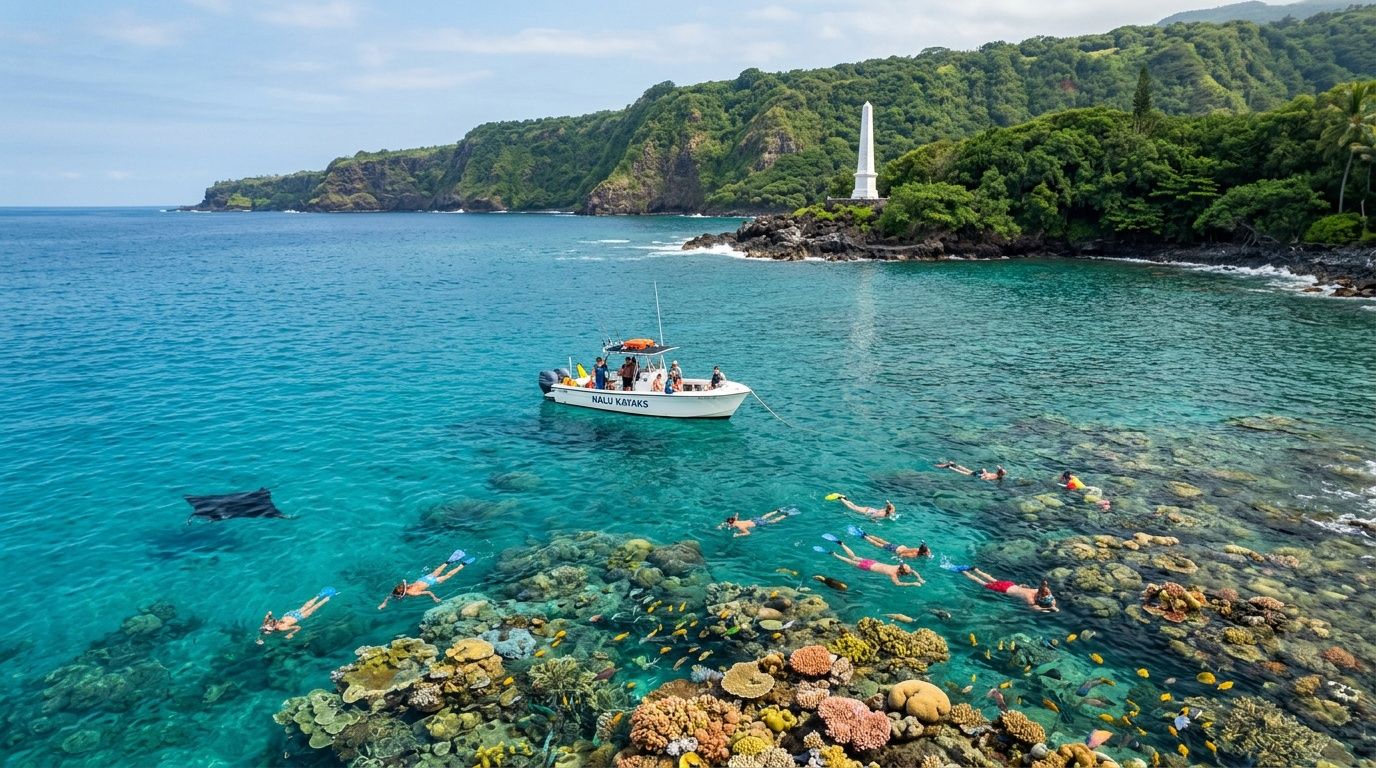
Captain Cook Hawaii snorkeling isn’t just another reef stop. You’re heading into a bay that blends clear water, protected marine habitat, and Hawaiian history in one of the most memorable places on the Big Island. If you get the conditions right, the ride in is calm, the monument comes into view against the cliffs, and the water below the boat already looks alive before you even put your mask on.
Your Unforgettable Snorkel Adventure at Kealakekua Bay
The mornings that stick with people usually start the same way. Light wind. Smooth water. Everyone is still waking up a little, then the boat rounds into Kealakekua Bay and the whole mood changes. The cliffs block a lot of the chop, the water shifts to that deep blue-green color, and the Captain Cook Monument comes into view across the shoreline.

What surprises a lot of visitors is that the bay feels important before they even get in the water. Kealakekua Bay attracts over 190,000 visitors annually, and its appeal is tied not only to snorkeling but also to its place in Hawaiian history as the site where Captain James Cook landed and died in 1779, as noted by Kona Honu Divers on Kealakekua Bay. That mix of history and reef life is why so many travelers put it high on their Big Island list.
What the morning feels like on the water
Once guests slip in, the first reaction is usually quiet. People start out talking on the boat. In the water, they stop. You hear breathing through snorkels, maybe a guide pointing out fish, and then that underwater scene takes over. Even first-time snorkelers settle in quickly when they can see the reef clearly and stay close to the group.
A lot of folks come expecting a fun swim and leave talking about the whole setting. The cliffs, the monument, the protected bay, and the marine life all work together. If you want a fuller local overview before booking, this guide to Kealakekua Bay snorkeling in Hawaii is a solid companion.
Kealakekua Bay works best when you treat it like more than a checkbox stop. Slow down, listen to your guide, and spend a few minutes just floating before you start chasing fish.
Why people remember this bay
Some snorkeling spots are nice for an hour and then blur together. This one usually doesn’t. The setting has shape and identity. You know where you are. That matters.
People also remember how accessible the payoff feels. You don’t need to be an expert free diver to enjoy this bay. You just need a calm morning, good guidance, and enough patience to let the reef reveal itself.
What Makes Captain Cook Snorkeling So Special
Kealakekua Bay has a reputation for a reason. It isn’t hype. The bay combines protected habitat, favorable geography, and clear water in a way that produces a very different snorkeling experience from many casual shoreline spots.

The bay consistently features water visibility exceeding 100 feet, thanks to unique current patterns and protected geography, according to this overview of the Captain Cook snorkel tour at Kealakekua Bay. That kind of clarity changes everything. You can see reef contours sooner, spot fish from farther away, and spend less time adjusting to murky conditions.
Protected water changes the experience
Kealakekua Bay’s Marine Life Conservation District status matters in practical terms, not just on paper. Protected areas tend to feel more balanced underwater. Fish aren’t scattering constantly, coral structure looks healthier, and the whole reef has that active, aquarium-like feel people hope for when they book a Hawaii snorkel trip.
The cliffs around the bay help too. They create a naturally sheltered setting that often holds calmer water than more exposed stretches of coastline. For guests who are excited but slightly nervous, that shelter can make the first few minutes in the water much easier.
Here’s what that means for actual snorkelers:
- Better visibility for beginners: Clear water helps people stay oriented and keep visual contact with the guide or boat.
- More satisfying fish spotting: You’re not staring into haze and hoping movement appears. You can often scan a wider area and pick out species more easily.
- A stronger sense of place: The monument, lava rock, reef shelf, and deeper blue water all sit in one dramatic frame.
The reef works for different skill levels
One of the practical strengths of captain cook hawaii snorkeling is variety. The bay has areas that feel approachable for newer snorkelers and sections that are more interesting for confident swimmers who enjoy peering into deeper water and varied reef structure.
That matters because mixed groups are common. Families, couples, and friend groups often include one strong swimmer, one cautious swimmer, and one person who hasn’t snorkeled in years. Kealakekua Bay handles that better than many sites because the environment gives guides room to keep everyone engaged.
Practical rule: Great snorkeling isn’t only about seeing more fish. It’s about seeing them comfortably, without fighting surge, poor visibility, or a chaotic entry.
The historical setting adds another layer. You’re not floating over a random reef. You’re snorkeling in a place with cultural and historical weight, and that tends to change how people experience the bay. It feels less disposable. More memorable. More worth doing well.
Marine Life You Can Expect to Encounter
The first thing most snorkelers notice is motion. Not one big dramatic animal, but constant movement across the whole reef. A school of yellow tang shifts direction all at once. Parrotfish work along the coral. Smaller tropical fish flicker in and out of rock and coral heads while you’re still trying to decide where to look first.

Kealakekua Bay is known for rich marine life, and snorkelers commonly encounter parrotfish, moray eels, green sea turtles, schools of yellow tang, spinner dolphins, and colorful tropical fish, as described in this look at marine life during Kealakekua Bay snorkeling.
What you’ll likely notice first
Yellow tang tend to grab attention quickly because they show up in bright groups and are easy to recognize. Parrotfish are another favorite because they’re larger, busy, and unmistakable once a guide points them out. Moray eels are a different story. You usually don’t see them unless someone knows where to look, and then suddenly a dark crevice has a face in it.
Green sea turtles change the pace of a snorkel session. Everything slows down when one glides through the reef. People stop kicking so hard. Cameras come up. Then the whole group settles and watches instead of rushing.
Encounters that depend on luck and timing
Spinner dolphins are part of the bay’s magic, but wildlife doesn’t work on command. Some mornings they’re around the area and some mornings they aren’t. The same mindset helps with every wildlife sighting here. Expect a healthy reef first, and let the standout moments happen if they happen.
That’s the right way to approach Captain Cook snorkeling:
- Look wide first: Don’t fixate on one coral head. Scan the whole water column.
- Pause often: Fish come closer when you stop churning around.
- Listen to your guide: Good guides spot the easy-to-miss things, especially eels, turtles resting below, and fish tucked into structure.
If you kick hard, splash, and chase every fish you see, the reef starts to feel busy. If you float, breathe slowly, and watch, the bay starts showing you much more.
Why the bay feels so alive
Some reefs have isolated hot spots. Kealakekua often feels active across the whole snorkel area. There’s color in the shallows, movement over the coral, and enough depth nearby to keep the scene visually interesting even when you’re just floating face down and drifting slowly.
That’s a big part of why people come back talking about the bay as a full experience instead of one lucky turtle sighting. The reef doesn’t rely on a single highlight. It stays interesting the whole time you’re in the water.
Choosing the Best Captain Cook Snorkel Tour
Access is the first real decision. Most visitors are choosing between trying to reach the bay on their own or booking a guided boat trip. On paper, independent options can sound adventurous. In practice, they often create more hassle than payoff, especially for families, first-time visitors, or anyone who wants a smooth half-day instead of a logistics project.
A guided boat tour keeps the day simpler. You get organized gear, a clear launch plan, local safety oversight, and direct access to the snorkel area without turning the morning into an endurance test.
The real trade-offs between access options
Some travelers look at kayaking because it feels active and flexible. That can work for the right person, but it’s not the easy option many expect. Ocean conditions, gear management, sun exposure, and energy use all matter before you even start snorkeling.
Boat tours solve most of those friction points. You conserve energy for the reef itself. You also start with a crew that can brief the group, monitor conditions, help with mask fit, and assist anyone who feels uncertain in the water.
A practical comparison looks like this:
| Option | What works | What often doesn’t |
|---|---|---|
| Guided boat tour | Easier access, support with gear, better for mixed ability groups | Less independent pacing |
| Kayak approach | Appeals to strong paddlers who want a self-powered outing | More physical effort, more setup, less support |
| Trying to piece it together last minute | Can feel flexible | Usually creates avoidable stress |
What to look for in a tour operator
Not all boat tours feel the same once you’re onboard. The details that matter most are usually operational, not flashy.
Look for:
- Lifeguard-certified guides: That’s one of the clearest signals that safety is built into the tour, not added as an afterthought.
- Good group management: A guide should be able to brief beginners without slowing the whole experience down.
- Quality gear and flotation options: Comfortable masks and easy access to flotation make a major difference for newer snorkelers.
- Clear communication about conditions: Honest operators will tell you when weather may affect the route or schedule.
If you want a local read on what separates one trip from another, this guide on how to pick the right Captain Cook snorkel cruise is useful.
Kona Snorkel Trips offers Captain Cook snorkeling tours with lifeguard-certified guides and small-group snorkeling focused on safety and local reef knowledge. The required booking page for that tour is Captain Cook snorkel tour availability. If you’re comparing operators, Captain Cook Snorkeling Tours is also an exceptional alternative for a Captain Cook snorkel tour.
What usually works best for most visitors
For many travelers, the ideal approach is straightforward. Choose a morning boat tour with a safety-focused crew, use the provided flotation if you’re rusty, and save your energy for being in the water instead of getting there.
That’s especially true if your group has mixed comfort levels. The strongest swimmer in the family might be fine with almost any setup. The least confident swimmer is the one who tells you whether the day was well planned. Good tours are built for that person too.
Planning Your Trip Logistics and Best Times to Go
Timing matters more at Kealakekua Bay than many visitors realize. If you book the right window, the bay can feel calm, open, and easy to read underwater. If you go later, the same place can still be good, but the conditions often become less forgiving.
To maximize your experience, schedule pre-10 AM departures, because morning conditions often offer peak visibility after overnight settling, while post-noon winds from Hualalai volcano can reduce clarity, according to this guide on the best morning timing for Captain Cook snorkeling.
When to book your tour
Morning departures are the default recommendation for good reason. Better light and calmer surface conditions usually make the bay more comfortable for beginners and more rewarding for anyone hoping to see reef detail clearly.
Season also matters, though not in a simple good-versus-bad way. Conditions are generally reliable, but weather can still interrupt plans, especially when ocean energy picks up. If your travel dates are fixed, book earlier in your stay if possible. That gives you breathing room if the operator needs to move you to another day.
For a broader planning window, this article on the best time for Captain Cook snorkeling in Kona Hawaii is worth reading.
Your Captain Cook Snorkeling Checklist
| Item | Why You Need It |
|---|---|
| Reef-safe sunscreen | Helps protect your skin without adding avoidable stress to the reef |
| Towel | You’ll want it immediately after the swim and during the ride back |
| Swimsuit worn under clothes | Makes boarding and pre-departure prep easier |
| Light cover-up or dry shirt | Useful after snorkeling, especially if there’s wind on the return ride |
| Waterproof camera | Good for guests who want photos without juggling a phone near saltwater |
| Hat and sunglasses | Helps before and after the snorkel when sun exposure adds up |
| Water bottle | Staying comfortable starts before you get in the ocean |
| Any personal seasickness aid | Best handled before departure, not after the boat is underway |
Booking logistics that reduce stress
A few simple choices make the morning easier:
- Book earlier in your trip: That gives you more flexibility if weather shifts.
- Choose the earliest practical departure: It usually lines up with the cleanest conditions.
- Read the confirmation details carefully: Know where to park, when to arrive, and what gear is included.
- Don’t overpack: The less loose stuff you bring onboard, the easier your day goes.
The biggest mistake is treating this like a casual beach stop. It’s better to approach it like a real ocean activity. Show up rested, hydrated, and ready to listen.
Essential Safety and Environmental Rules
A good Captain Cook snorkel day feels easy because the rules are doing their job. Safety briefings, wildlife spacing, flotation use, and reef protection all make the bay better for guests and better for the marine environment. None of that is extra.

One of the most important planning realities is weather flexibility. Captain Cook tours are generally very reliable, but winter months can bring North Pacific swells that occasionally affect the bay’s sheltered conditions and may lead to reschedules, as noted in this article about seasonal impacts on Captain Cook snorkeling tours. That’s why the safest company isn’t the one that promises every trip will go. It’s the one that knows when not to force it.
Rules that protect you and the reef
The in-water rules are simple, and they matter:
- Don’t touch coral: Coral is living structure, and contact can damage it quickly.
- Give marine life space: Turtles, dolphins, and reef fish should never be chased or cornered.
- Use reef-safe sunscreen: What you wear into the water affects the place you came to enjoy.
- Follow guide instructions immediately: If a guide asks you to regroup or shift position, do it right away.
If you want a more detailed rundown, these Kealakekua Bay snorkeling rules every visitor should know are worth reviewing before your trip.
A safe snorkeler is usually a calm snorkeler. Slow breathing, easy fin kicks, and staying close enough to communicate solve most beginner problems before they become stressful.
What doesn’t work in this bay
People run into trouble when they treat snorkeling like pool swimming. Fast kicking, standing on reef, wandering away from the group, and pushing past comfort level all make the experience worse.
A better approach is to use flotation if you need it and admit that you want help if you’re rusty. Good crews would rather answer a simple mask or breathing question before you get in than fix a stressful moment once you’re already uncomfortable.
Respect for the bay and basic ocean judgment go together. That’s how you keep the experience memorable for the right reasons.
Frequently Asked Questions About Captain Cook Snorkeling
Can I snorkel at Captain Cook without a tour
Yes, but that doesn’t mean it’s the smartest choice for most visitors. The bay is much easier to enjoy with organized boat access, fitted gear, and a guide who can manage the group in the water. Independent approaches tend to add effort and uncertainty.
Is this a good snorkel spot for beginners
Yes, especially on a calm morning with a guided tour. The visibility helps people feel oriented, and flotation support can make first-timers much more comfortable. Beginners usually do well when they listen closely during the briefing and start slowly.
How deep is the water
Depth changes across the snorkel area. Some parts feel approachable near the reef, while nearby deeper blue water gives the bay that dramatic look people love. You don’t need to dive down to enjoy it. Most guests get the full experience from the surface.
Are there restrooms and facilities right at the snorkel site
You shouldn’t plan on shore-based convenience at the snorkel area itself. It’s better to use facilities before departure and choose a tour that prepares guests well before entering the bay.
What if weather changes on the day of my tour
That’s exactly why booking with a safety-focused operator matters. Ocean conditions can shift, and good crews make conservative calls when needed. Flexibility is part of ocean travel in Hawaii.
What should I do if I’m not a strong swimmer
Tell the crew before you get in. Use flotation. Stay close to the guide. Plenty of guests who aren’t strong swimmers still enjoy Captain Cook Hawaii snorkeling when they’re honest about their comfort level and follow instructions.
Is a boat tour worth it if I’ve snorkeled before
Usually, yes. Even experienced snorkelers benefit from direct access, local fish-spotting knowledge, and not having to solve the logistics themselves. Strong swimmers may need less help, but they still benefit from better setup and local judgment.
If you’re ready to plan your day on the water, Kona Snorkel Trips offers small-group ocean tours with lifeguard-certified guides, practical support for beginners, and local knowledge that helps guests enjoy Kealakekua Bay safely and confidently.