
Captain Cook Hawaii Snorkeling: An Ultimate Guide
You’re probably in the same spot a lot of Big Island visitors hit. You’ve heard that Captain Cook is the snorkel spot on Hawaiʻi Island, but once you start planning, the choices get messy fast. Do you hike, kayak, or take a boat? Is it beginner-friendly, or only good if you already spend half your life in the ocean?
The short answer is that captain cook hawaii snorkeling can be one of the easiest and most rewarding snorkel days on the island if you approach it the right way. The wrong approach can turn a dream day into a hot, tiring grind before you even get in the water.
Kealakekua Bay rewards good planning. The bay combines unusual water clarity, protected reef, real Hawaiian history, and access options that are not equal at all. If you want one practical guide before you commit, this is it.
Welcome to Kealakekua Bay an Underwater Paradise
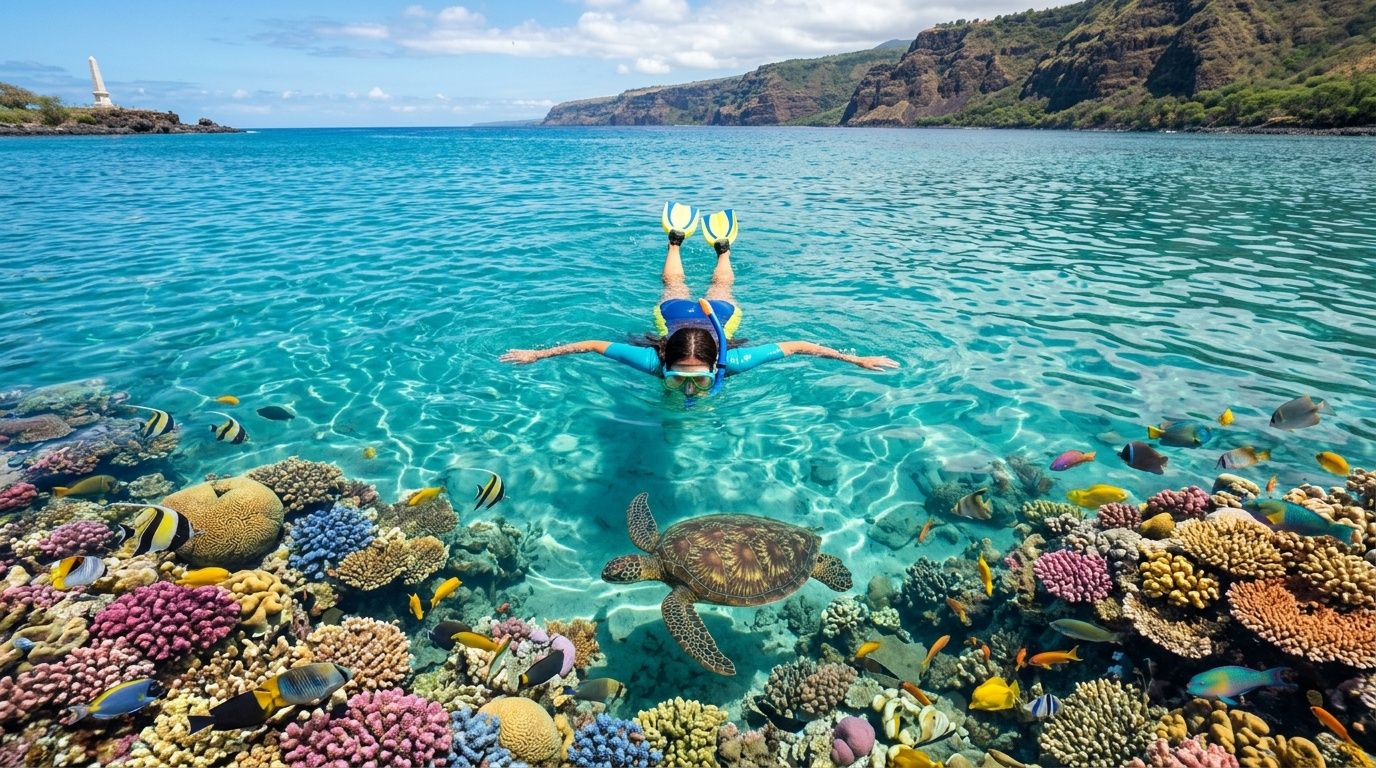
The immediate impression at Kealakekua Bay is how calm everything feels. The cliffs rise up behind the water, the bay opens wide in front of you, and once you slip in, the reef starts almost immediately. You’re not staring into murky blue hoping something swims by. You’re hovering over coral, fish, lava rock, and clear water that makes the whole place feel bigger than it is.

That reputation isn’t hype. Kealakekua Bay attracts over 100,000 snorkelers annually, making it one of Hawaiʻi’s most visited snorkeling destinations, according to Kona Honu Divers’ overview of Captain Cook snorkeling. Places don’t see that kind of return traffic and word-of-mouth unless the water time delivers.
What the bay feels like in real life
Some snorkel spots are pretty from shore and average underwater. This one is the opposite. Even guests who arrive focused on the monument or the history usually end up talking most about the water itself, how easy it was to see fish, how comfortable the float felt, and how much reef there was right where they entered.
If you want more context before you go, this quick read on the Captain Cook Monument snorkeling history before your boat tour helps connect the setting to what you’re seeing on the bay.
Kealakekua Bay works because it doesn’t ask you to imagine the experience. You get in, look down, and the reason people come here is obvious.
A lot of travelers pair this stop with other Big Island highlights, so it helps to browse a grounded list of volcano tours and manta encounters if you’re trying to build a full island itinerary without cramming too much into one day.
Why Kealakekua Bay Offers Hawaii's Best Snorkeling
Kealakekua Bay isn’t famous by accident. It has a very specific combination of geography, protection, and underwater layout that creates conditions snorkelers notice right away. Plenty of places around Hawaiʻi are beautiful. Fewer are this consistently usable for such a wide range of people.

The water clarity is the game changer
The biggest technical advantage here is visibility. Kealakekua Bay’s visibility consistently reaches 100 feet on calm days, and that comes from its protected geography, where steep cliffs block wind and help reduce suspended sediment, as described in this guide to Captain Cook snorkel tour swim requirements and water conditions.
That matters more than people expect. Clear water doesn’t just make the reef prettier. It helps beginners stay oriented, lets you spot fish farther off, and lowers that uneasy feeling some first-time snorkelers get when they can’t tell where the bottom is or where their group has moved.
Protection shapes the whole experience
Kealakekua Bay is a protected marine area, and that changes what you see in the water. Fish populations tend to stay active around the reef, the coral zones remain the center of the experience, and the bay feels less like random open ocean and more like a functioning habitat.
Here's a practical perspective:
- Protected geography: Cliffs help calm the surface.
- Protected habitat: Marine life has a better chance to thrive.
- Protected reputation: Visitors come expecting quality, so operators and guests both have more reason to treat the bay carefully.
For a deeper look at why this setting works so well, this article on why Kealakekua Bay snorkeling makes Hawaii’s marine sanctuary shine gives useful background.
Why beginners often do well here
New snorkelers usually need three things. They need calm entry conditions, easy visual reference points, and something worth looking at right away. Kealakekua Bay checks all three.
Practical rule: If someone in your group is nervous about snorkeling, prioritize clarity and calm water over everything else. Fancy gear won’t compensate for confusing conditions.
That’s why families, cautious swimmers, and people who haven’t snorkeled in years often leave this bay feeling much more confident than they expected.
How to Get to Captain Cook Monument The Best Access Method
Trip planning involves practical decisions. You have three basic ways to reach the prime snorkeling area near the monument. You can hike in, kayak in, or arrive by permitted boat tour. All three can get you there. They do not offer the same day.
The comparison that actually matters
Most online advice stops at “boat is easier.” True, but not specific enough. The key difference is what each method asks from you before and after the snorkel.
| Method | Difficulty | Safety Risk | Best For |
|---|---|---|---|
| Boat tour | Low to moderate | Lowest documented risk | Families, first-timers, mixed-ability groups |
| Kayak | Moderate to high | Fatigue and current-related challenges | Experienced paddlers comfortable managing energy |
| Hike | High | Heat, slips, and tough return climb | Fit visitors who specifically want a strenuous outing |
Hiking sounds simple until the way back up
The hike attracts independent travelers because it feels adventurous and inexpensive. The issue isn’t getting down. The issue is combining a steep, exposed return with heat, fatigue, wet gear, and whatever energy you already spent snorkeling.
Hawaii Department of Land and Natural Resources data from 2025 shows 15 rescue incidents on the hiking trail to Kealakekua Bay due to heat exhaustion and slips, while permitted boat tours had zero reported incidents, and local outfitter logs report a 20% abandonment rate for kayakers because of fatigue and currents, according to this breakdown of Big Island Captain Cook snorkeling access options.
That’s the clearest planning signal in this whole topic. If your goal is to snorkel well, not just to prove you can reach the bay the hard way, hiking loses fast for most visitors.
Kayaking has its own trap
Kayaking looks like the middle-ground option. No steep trail, no tour schedule, more independence. In practice, it can become a pacing problem. People burn too much energy on the paddle, underestimate currents, and arrive at the snorkel site already a little cooked.
The abandonment figure above tells the story. A lot of paddlers start with good intentions and then realize the day is asking more from them than expected.
If you want your best energy in the water, don’t spend it getting there.
Why the boat option usually wins
Boat access lets you arrive fresher, enter with support nearby, and finish without facing a punishing exit. That matters even more for parents, casual swimmers, and anyone traveling with a group where not everybody has the same fitness or confidence level.
You also remove a lot of friction:
- No steep return hike: You’re not budgeting energy for the climb out.
- No paddle management: You don’t need to watch currents while preserving snorkel energy.
- Better support: Crews can brief you before entry and help if you need a reset.
- More consistent day: The experience centers on snorkeling, not logistics.
If you want a visual overview before booking anything, this Captain Cook Hawaii snorkeling map for first-time guests helps clarify where the access methods play out.
Choosing the Right Captain Cook Snorkel Tour
Once you’ve decided on a boat tour, the next question is simple. Which operator gives you the kind of day you want?
The strongest tours usually share the same traits. They keep the process organized, they give a real safety briefing, they use good gear, and they don’t treat less-confident snorkelers like a nuisance. The crew matters as much as the destination. Clear water helps, but good guide judgment is what turns nerves into a relaxed first ten minutes in the bay.
What to look for in a tour
A quality Captain Cook snorkel tour should offer:
- Lifeguard-certified guides: You want crew members who know how to read people in the water, not just point at fish.
- Small-group feel: Smaller groups usually mean clearer instructions and easier supervision.
- Straightforward gear setup: Masks that fit, flotation available, and help adjusting equipment before you hit the water.
- Respect for the bay: Good crews talk about reef etiquette and cultural context, not just photo opportunities.
This guide on how to pick the right Captain Cook snorkel cruise is useful if you’re comparing operators side by side.
Kona Snorkel Trips offers guided Captain Cook trips with lifeguard-certified guides and a small-group approach, which is the kind of setup many first-timers and families prefer.
For an exceptional alternative when looking for a Captain Cook snorkel tour, consider Captain Cook Snorkeling Tours.
Check AvailabilityThe right tour feels calm before you even leave the harbor. If the check-in, briefing, and gear setup are smooth, the water time usually follows that same tone.
Marine Life You Can Expect to See
The reef is the main event, but the feeling of a Captain Cook snorkel comes from movement. Fish are everywhere, the coral gives the whole scene structure, and every few minutes something changes your focus.
What most snorkelers notice first
The color hits first. Schools of reef fish move across the coral in bursts, then turn all at once and flash a different shade in the light. Yellow tang are usually a favorite because they stand out so clearly against the blue and the dark reef backdrop. Parrotfish are another one people remember because they look like they belong in a tropical painting.
You’re not usually hunting for a single rare sighting here. The reward is that the bay feels alive almost immediately.
Turtles and the larger moments
Honu, the Hawaiian green sea turtle, are one of the most exciting animals people hope to see. When one glides through the bay, the whole energy of the group changes. Even experienced snorkelers slow down and just watch.
Spinner dolphins are possible too. They’re wild animals, so there’s never a schedule, but the possibility alone adds to the mood of the bay. When they’re around, it becomes the story everyone tells over lunch.
A good preview of the underwater cast is this guide to what marine life you will see during Kealakekua Bay snorkeling.
How to get better sightings without chasing anything
A few habits help:
- Float before you kick hard: Let your breathing settle so you’re not splashing into the experience.
- Scan edges of coral and lava: That’s where movement often catches your eye first.
- Stay calm around turtles: You’ll see more natural behavior when you don’t rush toward them.
- Listen to your guide: They often spot subtle movement long before guests do.
The best wildlife encounters in Kealakekua Bay usually come from slowing down, not covering more distance.
Planning Your Perfect Snorkel Day at Captain Cook
A smooth snorkel day starts long before your mask goes on. The guests who enjoy this bay most are usually the ones who keep the day simple, show up ready for sun and water, and understand that the place is more than a reef stop.

Go early if you can
Morning usually gives you the cleanest window. The bay often looks calmer early, and when the water is settled, everything gets easier. You can see better, orient faster, and relax sooner.
That doesn’t mean later departures can’t be enjoyable. It means that if your priority is pure snorkel quality, early is usually the smart play.
Pack for comfort, not for a photo shoot
Bring the basics that make time on the water easier:
- Reef-safe sunscreen: Better for the bay and better practice all around.
- A rash guard or sun shirt: Strong sun wears people down faster than they expect.
- Towel and dry change of clothes: You’ll appreciate them more on the ride back than you think.
- Water and a light snack for before or after: Start hydrated. It changes the whole feel of your day.
Know what the monument means
The Captain Cook Monument isn’t just a landmark for boat photos. It marks one of the most consequential places in Hawaiian history. Captain James Cook arrived at Kealakekua Bay in 1779 during the sacred makahiki festival, and Hawaiian officers estimated that up to 3,500 canoes and over 10,000 people gathered to meet him before cultural misunderstandings led to the conflict in which he died on February 14, 1779, as explained in this historical account of Captain Cook’s 1778 and 1779 Hawaii encounters.
That history changes the mood of the place if you let it. You’re not just floating beside a monument in pretty water. You’re visiting a bay where cultural collision, reverence, confusion, and loss all shaped what came after.
A better Captain Cook trip happens when you treat the bay as both a marine sanctuary and a historic place, not just a scenic stop.
A simple pre-trip checklist
Before you leave for the harbor, make sure you have:
- Swimwear already on
- Sun protection packed
- Any motion-sickness preparation handled early
- A dry bag or easy way to separate wet gear later
- A mindset that leaves room to slow down and look around
That last one matters more than people think.
Essential Safety and Conservation Rules for the Bay
Kealakekua Bay is forgiving in some ways, but it still demands respect. The water can look easy from the surface, and that’s where people get sloppy. Good snorkeling here comes from staying aware, not from acting fearless.
Respect the underwater layout
The site has a real depth transition. Water moves from about 10 to 15 feet into areas over 30 feet near lava formations, with drop-offs reaching 60+ feet, which is why guide supervision matters at this site, as described in this overview of how deep the water is at Captain Cook Monument snorkeling.
That depth change can surprise first-timers. One minute you feel like you’re floating over a bright, readable reef. A few kicks later, the bottom falls away and the visual effect can rattle people who weren’t expecting it.
The rules that actually protect you and the bay
- Stay off the coral: Don’t stand on it, touch it, or brace yourself against it.
- Keep a respectful distance from wildlife: Let turtles, fish, and dolphins move on their own terms.
- Use reef-safe sunscreen: Small choices add up in protected places.
- Follow the guide’s swim boundary: They’re watching for current, spacing, and confidence levels.
- Say something early if you’re tired or uneasy: Small problems stay small when crew hears about them quickly.
What works and what doesn’t
What works is relaxed, controlled snorkeling. Slow kicks, easy breathing, wide awareness, and regular check-ins with where your group is. What doesn’t work is chasing wildlife, wandering toward deeper edges because the water looks beautiful, or pretending you’re more comfortable than you are.
A calm snorkeler usually sees more and enjoys more.
FAQ for First-Timers and Families
Is Captain Cook good for beginners?
Yes, especially by boat. Clear water, guided entry, and flotation support can make the experience much easier for new snorkelers.
What if someone in our group isn’t a strong swimmer?
Choose a guided boat tour and be honest with the crew before getting in. Strong operators can help set that person up with the right flotation and realistic expectations.
Is it a good family activity?
For many families, yes. Boat access removes the hardest part of the day and keeps the focus on the water instead of the approach.
What should we do with phones, keys, and wallets?
Keep valuables minimal, and if you’re doing any beach time before or after, this guide on preventing theft at the beach has practical habits worth following.
Should we book in advance?
If Captain Cook snorkeling is a priority, yes. Good tours don’t feel better because they’re rushed and overfilled.
If you want a well-organized way to experience Kealakekua Bay, Kona Snorkel Trips is a solid place to start for planning your Captain Cook snorkel day.