
Boat Ladder Snorkel Cruise Guide for Captain Cook
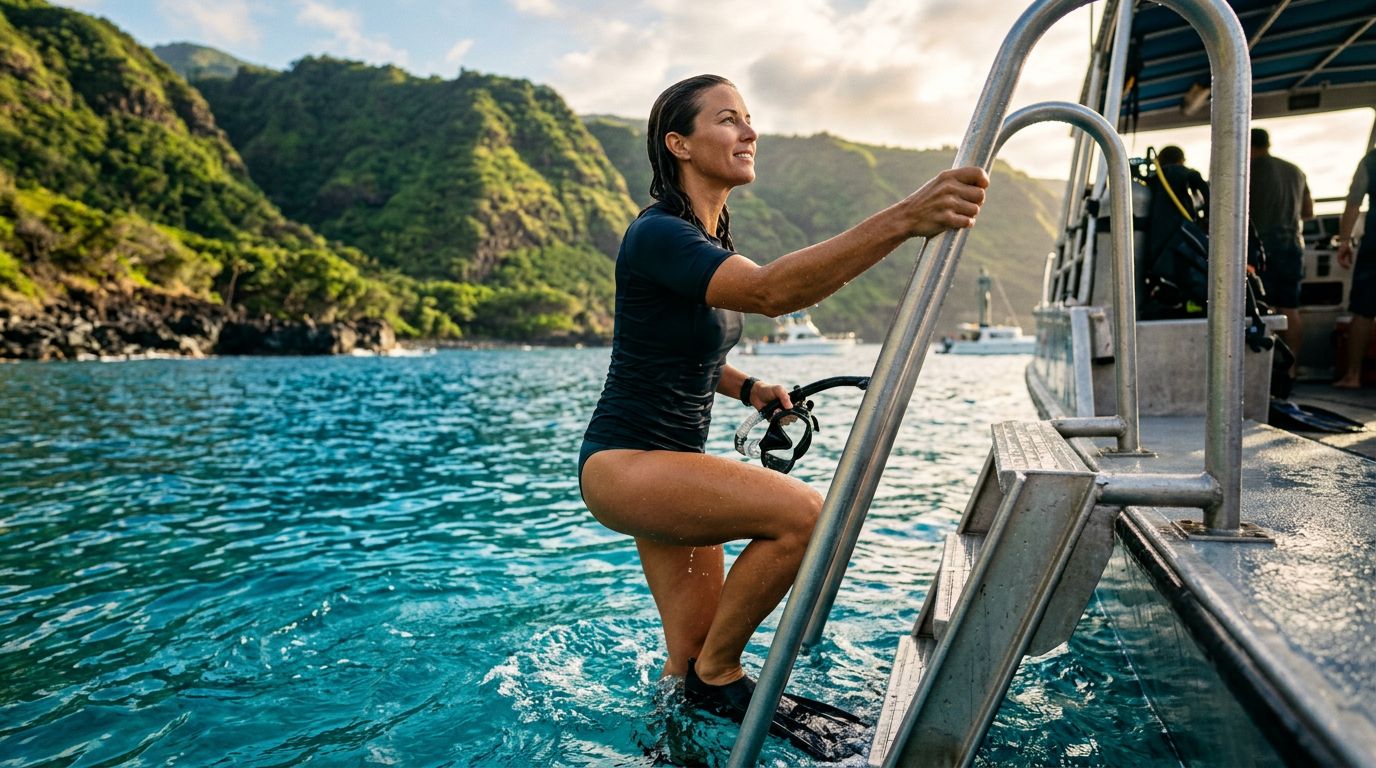
Your snorkel can end in open water, but the most awkward moment often starts when you return to the boat. On a boat ladder snorkel cruise, getting aboard takes more than swimming to the stern and pulling yourself up.
At Kealakekua Bay, you may climb from moving salt water while wearing a mask, fins, and a life jacket. The right sequence keeps you steady, protects nearby swimmers, and helps you finish your Captain Cook outing with energy left for the ride home.
Kona Snorkel Trips offers guided Big Island trips with small-group service and Lifeguard Certified guides. If you’re comparing local operators, Captain Cook Snorkeling Tours is another company focused on this destination. Learn the ladder routine before your boat leaves the dock.
Boat ladder snorkel cruise safety at Captain Cook
The ladder is your main boarding route after snorkeling. It needs to support your weight while the boat moves gently with the water. Salt, spray, sunscreen, and wet feet can make every surface slippery, so your technique matters.
Before you enter the water, look at the ladder and swim step. Notice where the handrails begin, how far the lowest rung sits below the surface, and where you should wait before climbing. A crew briefing should cover these details, but seeing the setup in advance helps you remember it later.
Your plans for snorkeling Big Island Hawaii waters may center on Kealakekua Bay because the bay offers access to clear coastal water and the Captain Cook Monument. The monument has boat, kayak, and hiking access options, as described in this Captain Cook access guide. Once you’re in the water, though, the safest return depends on timing, body position, and communication with your guide.
A boat ladder also helps you avoid exhausting yourself at the end of a swim. Instead of trying to lift your body over the side, you can use your legs and the ladder’s rungs. That small difference becomes important if you have been swimming against a mild current or wearing a flotation vest.
Know the ladder before you leave the dock
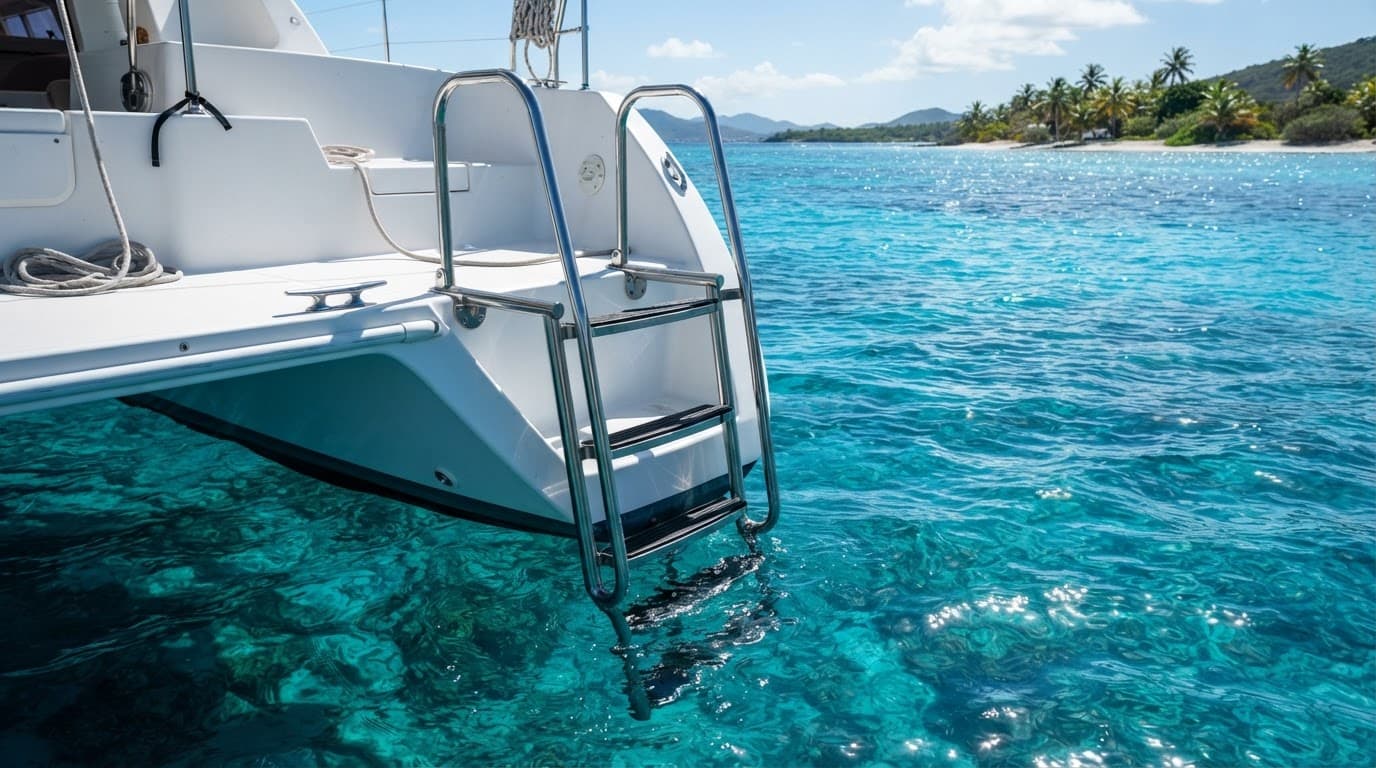
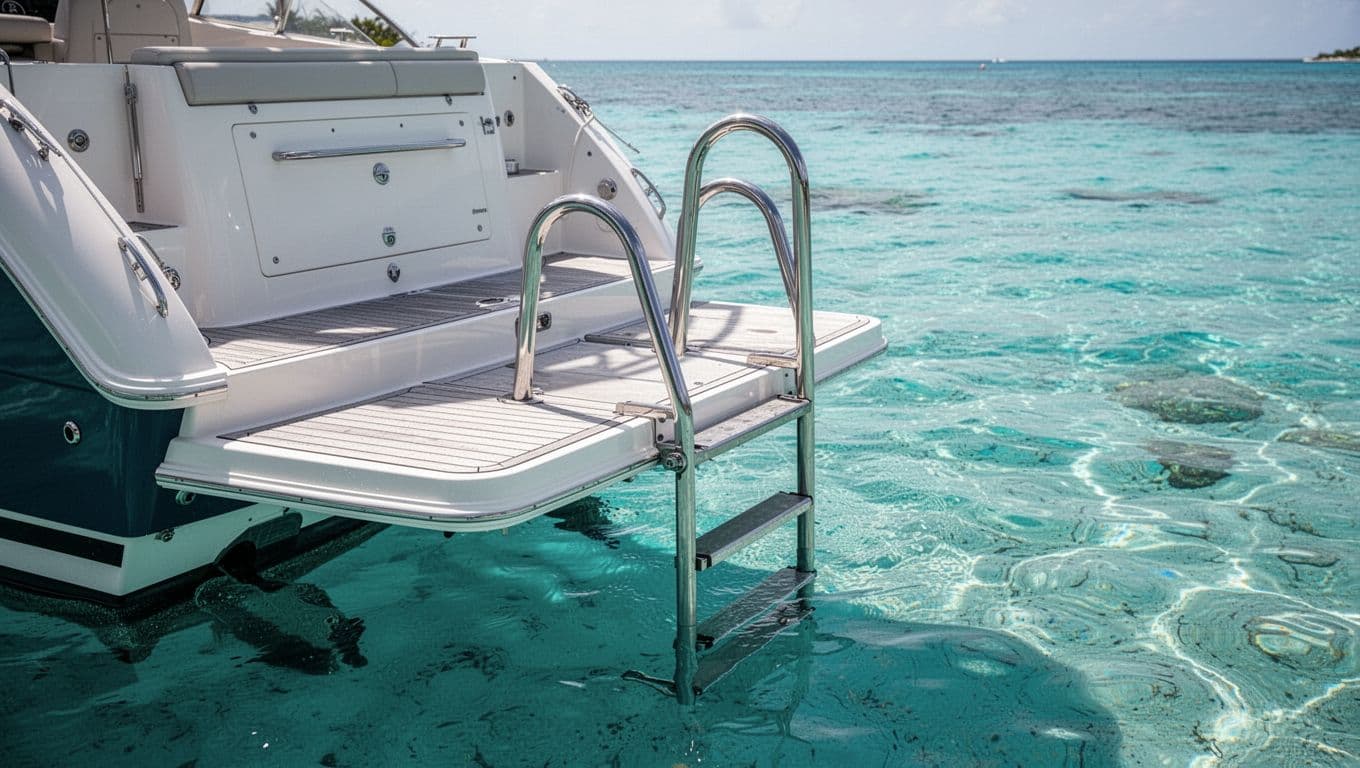
Boat ladders vary, so don’t assume the one on your cruise works like a pool ladder. Some extend deep into the water. Others end at a broad swim step that gives you room to stand before you climb into the boat.
Most setups include two side rails and several horizontal rungs. Your hands should stay on the rails whenever possible. Use the rungs for your feet, and keep your body facing the boat as you climb.
The swim step is the transition point between swimming and boarding. You may need to pause there while you remove fins, pass equipment to a crew member, or wait for a clear path. Ask whether the crew wants you to remove your fins before reaching the ladder or after you place your feet on the lowest rung.
Never lower, unfold, or reposition a ladder while people are nearby unless the crew gives you permission. The crew controls the boarding area, checks traffic around the stern, and decides when conditions are suitable for climbing.
For more detail about materials and design, read this guide to boat tour ladders for Captain Cook. A stable ladder should handle salt, sun, and regular movement without becoming a loose handhold.
Prepare before you enter the water
A smooth return begins before you jump in. During the safety briefing, listen for the crew’s instructions about the ladder, fins, flotation devices, and the order for reboarding.
Check your mask seal while you’re still on the boat. Adjust the strap so it stays secure without feeling tight. Your snorkel should sit comfortably, and your fins should fit well enough that they won’t slip during the swim.
If you wear prescription glasses, a camera, or other personal equipment, decide how you’ll handle it before entering. Avoid carrying loose items in both hands when you approach the stern. You need your hands available for the rails.
If you use a life jacket or flotation belt, ask how it should sit during the climb. Some equipment can catch on a rung if you try to climb too quickly. Your guide can tell you whether to keep it on, loosen it, or hand it over once you reach the swim step.
Before you jump, identify the boat’s stern and boarding side. After you snorkel, stay within the area explained during the briefing. When you snorkel Big Island waters, sunlight and clear visibility can make distances look shorter than they are.
Most importantly, tell the guide about anything that could affect your climb. A sore shoulder, a recent knee injury, low swimming confidence, or trouble removing fins is useful information. You can receive better help when the crew knows before you need it.
How to climb back onto the boat
The basic method is simple, but rushing creates problems. Wait for the guide’s signal and follow the boat’s specific procedure.
- Signal that you’re ready. Raise a hand or use the signal explained during the briefing. Wait until the crew confirms that the ladder is clear.
- Approach from the side or rear as directed. Keep away from the propeller area and never swim beneath the boat. Your guide will indicate the safest path to the boarding point.
- Face the boat. Keep your mask and snorkel positioned so you can breathe and hear instructions. If the snorkel is in your mouth, remove it before you reach the ladder.
- Take both handrails. Place your hands on the rails before searching for the first rung with your foot. Keep your chest close to the ladder rather than leaning backward.
- Follow the fin instruction. If the crew asks you to remove your fins in the water, hold one rail with one hand and remove one fin at a time. Keep the other foot stable. If they prefer you to climb with fins until the swim step, use slow, deliberate movements.
- Climb one rung at a time. Keep two hands and one foot, or two feet and one hand, in contact with the ladder whenever possible. Push with your legs instead of trying to pull your full weight upward with your arms.
- Step onto the swim platform and move clear. Once both feet are stable, turn toward the open deck as instructed. Hand your fins or camera to the crew only when you’re balanced.
Don’t climb while a wave is lifting you toward the boat. Wait for the ladder to settle, then begin. A small pause can prevent your foot from missing a rung or your body from swinging into the person above you.
The first step is often the hardest. Wait until the ladder settles instead of climbing as a wave lifts you.
If another swimmer is already on the ladder, remain several feet away. Keep your face toward the boat so you can see when the boarding space opens. Never grab the person above you or push from below.
Handle fins, masks, and cameras carefully
Fins make swimming easier but can make ladder climbing awkward. Their long blades can catch on a rung, strike another swimmer, or make it difficult to place your feet. Follow the crew’s instructions instead of choosing your own timing.
If you remove fins in the water, keep one hand on the ladder or a stable flotation device. Remove one fin, secure it, then remove the second. Don’t let both fins drift away while you try to climb.
Your mask should stay on your face until you reach a stable place, unless the crew tells you otherwise. A clear mask helps you see the rungs and keeps your hands free. Remove the snorkel from your mouth before boarding so you can breathe normally and answer the guide.
Cameras need extra care. A wrist strap can reduce the chance of dropping one, but it shouldn’t replace a secure grip. If a crew member offers to take your camera, wait until you have stable footing before passing it over.
Avoid climbing with a phone, loose sunglasses, or a drink in your hands. Place those items in the boat’s storage area before swimming, or ask where the crew wants you to leave them. The few seconds saved by carrying everything aren’t worth a slip.
Keep your snorkel out of your mouth before you reach the ladder. You need to breathe freely and hear the crew clearly.
If you feel tired or nervous
You don’t need to wait until you’re exhausted before asking for help. Signal your guide when you first notice that your breathing feels hard, your legs feel heavy, or the ladder looks more difficult than expected.
A guide may ask you to rest in a designated area, use flotation, or approach the stern when the boarding lane is clear. Follow that direction. Holding onto the side of the boat in an unapproved location can put you close to other swimmers or moving equipment.
Fear can also make you rush. Slow your breathing and focus on one action at a time. Swim to the boarding area, take the rails, find the first rung, and pause when you need to. You don’t have to match another passenger’s pace.
Families should discuss the process before entering the water. Children need an adult nearby and must follow the crew’s rules about flotation and ladder use. An adult should never block the ladder while trying to lift a child aboard unless the crew directs that assistance.
If you have limited mobility or upper-body strength, tell the operator before booking. Ask about the ladder height, swim step, crew assistance, and whether the boat fits your needs. Good planning gives you options before the day begins.
A boat ladder snorkel cruise should leave room for different swimming abilities. You can enjoy the reef without proving anything to the strongest swimmer in the group.
Share the ladder on a small-group cruise
Small groups make it easier for guides to watch the boarding area, but passengers still need to cooperate. One person should climb at a time unless the crew gives different instructions.
After you reach the platform, move away from the ladder. Sit or stand in the area the crew identifies, then organize your fins and mask. Staying in the landing zone forces the next swimmer to wait longer.
If someone appears tired, allow extra space and tell the guide. Don’t call instructions from several feet away unless the crew asks you to help. The guide can see the ladder, the water, and the boat’s movement better than passengers can.
Never jump onto the swim step from the water. The platform may be wet, and your feet may not land where you expect. Use the ladder even if another passenger climbs quickly.
The same courtesy applies when you enter the water. Wait until the person before you has cleared the ladder and moved away. Keep your fins pointed away from other swimmers, and avoid kicking while you wait.
Good ladder etiquette also protects the trip’s schedule. When each swimmer moves with care, the group can return to the reef or continue along the coast without unnecessary delays.
Kealakekua Bay conditions and reef-safe habits
Kealakekua Bay can look calm from the boat while the water below still moves. Gentle surge may shift you toward the ladder, away from it, or sideways across the boarding area. Watch the water and listen for the guide’s timing.
Clear visibility can create a false sense of control. You may see the bottom, the boat’s shadow, and other swimmers with ease, yet a small change in wind or swell can affect your return. Stay close enough to the group that you can reach the boarding area without a long swim.
A Captain Cook snorkel tour can include reef viewing near the historic monument. Follow the guide’s boundaries and avoid swimming beyond the area covered in the briefing. Conditions can differ between the sheltered bay and the open coast.
Reef-safe habits matter during every part of the cruise. Keep your fins away from coral, and never stand on the reef. Even a light touch can break delicate coral or disturb small animals living among the rocks.
Keep your hands to yourself around turtles, fish, rays, and other marine life. Don’t chase animals for a photograph. Give them room to change direction and let the encounter happen at a natural pace.
Use only the sunscreen and personal products allowed by the operator. Apply sunscreen before boarding when possible, and ask whether the crew recommends a reef-conscious option. Loose items should stay secured so they don’t fall into the bay.
Your return to the boat is part of reef stewardship too. Avoid holding coral, dragging fins across the bottom, or resting on shallow rocks while waiting. A careful snorkeler leaves the site looking the way it did before the visit.

Choose an operator that teaches the exit
When you compare snorkeling tours, look beyond the destination name. Ask how the company handles entry and exit, since a beautiful reef doesn’t remove the need for a safe boarding process.
Kona Snorkel Trips follows a “Reef to Rays” philosophy focused on guest safety, marine education, and responsible ocean use. The company operates small-group adventures from Honokohau Marina, with a private dock that makes boarding easier than using a crowded launch ramp.
Its guides are Lifeguard Certified and provide a briefing before you enter the water. The company also supplies high-quality snorkeling equipment and pays attention to the details that affect comfort, including the boat’s ladder and swim-step setup.
That approach fits families, couples, and solo travelers who want guidance without a crowded boat atmosphere. You can browse the company’s Big Island snorkeling tours and look for the trip that matches your swimming ability and schedule.
Before booking, ask these practical questions:
- How deep does the ladder extend below the water?
- Does the boat have a wide swim step?
- When should you remove your fins?
- Will a guide assist passengers who need extra support?
- What happens if wind or swell changes during the trip?
Kona Snorkel Trips has built a five-star reputation through personal service, well-maintained gear, and safety-focused guides. Its broader ocean program includes reef snorkeling, nighttime manta encounters, whale watching, and private charters, although your Captain Cook trip will focus on the bay and coastal reef.
You can check availability before choosing your preferred date.
“`
“`
Practice the motion before your cruise
You don’t need ocean experience to learn the basic ladder motion. Before your trip, use a pool ladder or sturdy stairs with handrails. Practice facing the rails, placing one foot at a time, and moving your weight through your legs.
Skip the fins during dry-land practice. Focus on balance and hand placement instead. In the water, your guide will explain whether you should remove fins before climbing or keep them on until the swim step.
If you have shoulder, knee, or balance concerns, mention them when you book and again during the safety briefing. The crew can explain the boarding process in advance and help you choose the most comfortable approach.
Pack a small towel for the ride back, but keep it stored until you are aboard. Wet hands and wet rails are normal, so patience matters more than speed.
For a Captain Cook trip, plan to enjoy the water at your own pace. You don’t have to swim the farthest or stay in the water the longest. A calm, controlled return is part of a successful day.
When booking, use the Captain Cook option that matches your plans and review the boarding details. You can check avaialbility for a Kealakekua Bay snorkeling trip.
“`
Conclusion
A boat ladder is part of the snorkeling experience, not an afterthought. When you listen to the briefing, keep your hands free, approach the stern carefully, and climb one rung at a time, you can return aboard with control.
The best habits are simple: signal the guide, wait for a clear ladder, follow the fin instructions, and move away from the swim step once you’re secure. Those steps help you enjoy a snorkeling Big Island itinerary while protecting the reef and the people around you.
A calm exit lets you remember the colorful water and coastal cliffs at Captain Cook, rather than the final few seconds at the stern.