
Bluefin Trevally Snorkeling at Kealakekua Bay
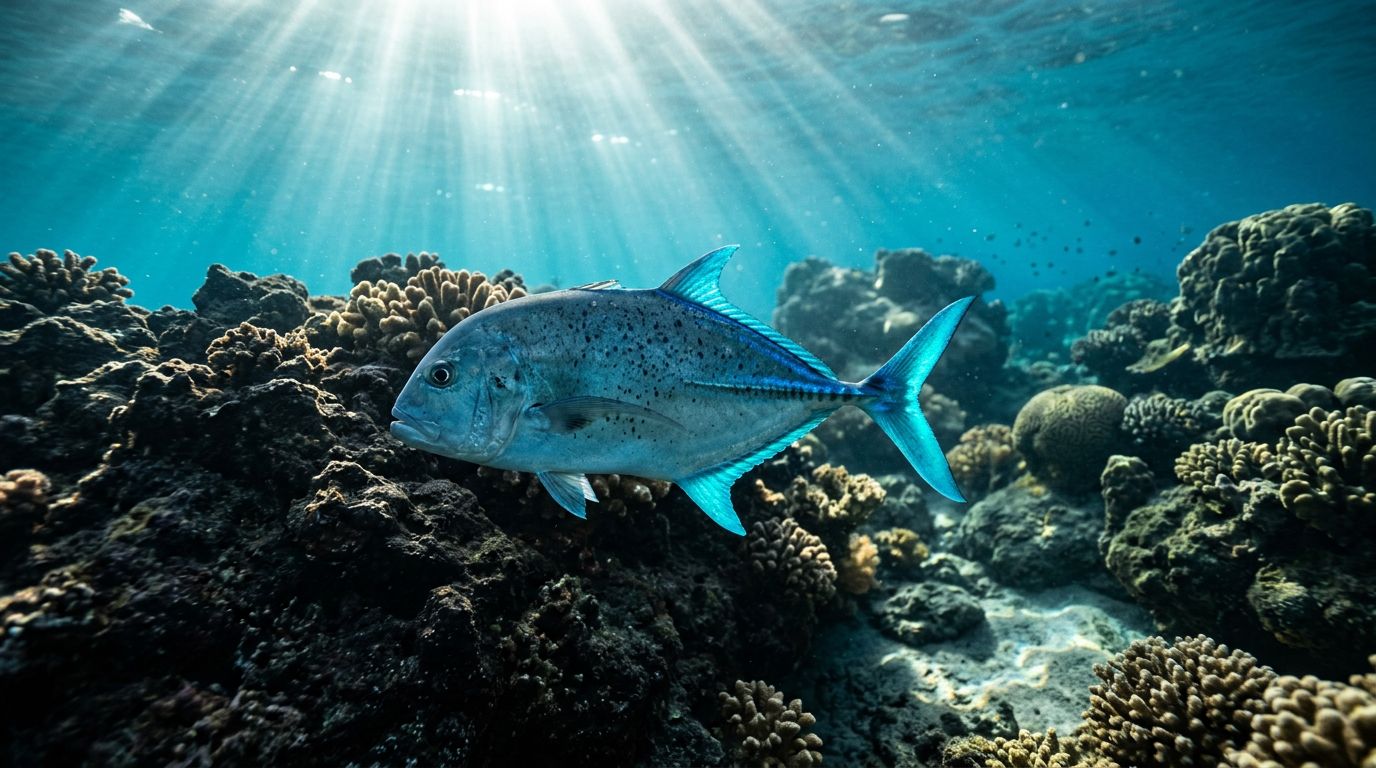
A flash of electric blue near a lava ledge may be the highlight of your Kealakekua Bay snorkeling trip. Bluefin trevally, called omilu in Hawaii, can disappear as quickly as they appear, so you need to recognize their shape and swimming style before the color fades into the reef.
The best approach is to watch the whole fish, not one blue fin. Look for a streamlined, deep-bodied predator with a forked tail, metallic coloring, dark spots, and bright blue fins. Once you know those clues, spotting one during bluefin trevally snorkeling becomes far easier.
Key Takeaways
- Bluefin trevally are also called omilu and are known for blue fins, dark spots, and a streamlined body.
- Search reef edges, lava shelves, drop-offs, and open water beside coral structures.
- Use the fish’s body shape and behavior to confirm its identity when colors look muted.
- Swim slowly, keep your distance, and never chase or feed marine life.
- A knowledgeable Kealakekua Bay guide can help you identify fish while keeping your group safe.
Why Kealakekua Bay Is a Good Place to Look
Kealakekua Bay has a mix of shallow reef, volcanic rock, coral structures, sandy patches, and deeper water near the bay’s outer edges. That variety gives many reef fish places to feed, rest, and move between habitats.
Bluefin trevally often patrol areas where reef structure meets open water. You might see one cruising along a lava wall, passing above a coral head, or circling the edge of a channel. They don’t always hover over a single patch of reef. Instead, they often keep moving with steady, controlled strokes.
The bay is also a protected marine area, so you must follow posted rules and local guidance. Don’t stand on coral, collect rocks or shells, touch animals, or feed fish. These habits protect the habitat that makes fish viewing possible.
When you enter the water, avoid scanning the entire bay at once. Pick one section of reef and study it for several minutes. Fish often appear after your eyes adjust to the movement of the water. A bluefin trevally may pass behind a coral mound, then return along the same edge.
Sun position affects what you see. With the sun behind you, metallic scales and blue fins often stand out more clearly. If you face directly into glare, the fish may look like a gray silhouette.
The Hawaii Department of Land and Natural Resources includes bluefin trevally identification in its Hawaii fish student manual. Reviewing a few fish profiles before your trip can help you recognize more than omilu during a single swim.
How to Identify a Bluefin Trevally Underwater
The scientific name for the bluefin trevally is Caranx melampygus. Adult fish usually have a sleek, compressed body with a pointed head and a strongly forked tail. Their body can appear silver, bronze, blue-green, or dark gray, depending on depth, sunlight, mood, and viewing angle.
The fins provide the most memorable clue. The dorsal, anal, and tail fins can show bright blue or blue-green tones. In clear Hawaiian water, those colors may look almost neon for a moment. However, don’t depend on color alone. A fish swimming in shadow may look much less blue.
Small dark spots or blotches can appear across the upper body. Some fish show more obvious markings than others. Younger bluefin trevally may look silvery and show yellow around the fins, which makes them harder to identify at first glance.
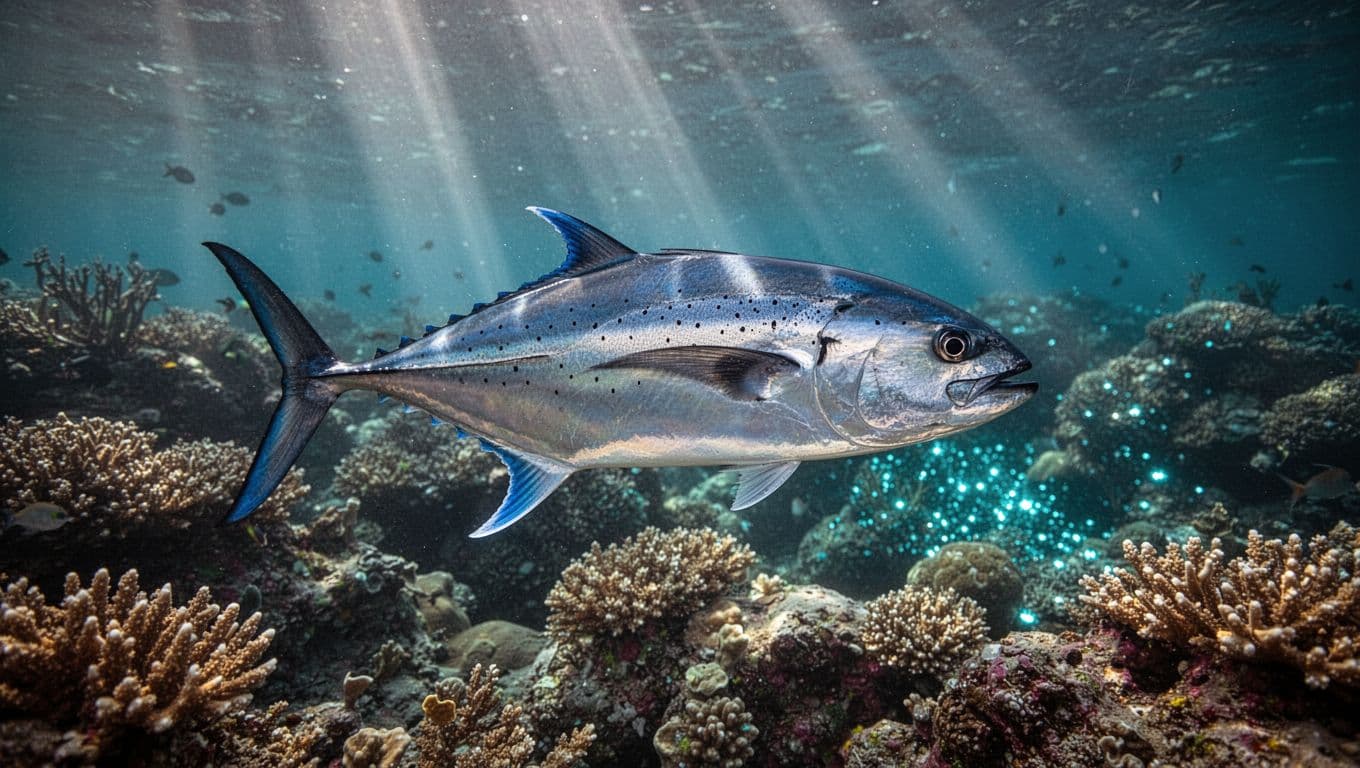
Watch the fish’s profile as it passes. You are looking for these combined features:
- A powerful, streamlined body that is deeper than a typical reef grazer.
- A narrow tail area leading to a wide, forked tail.
- Blue or blue-green fins, especially around the tail and rear edge of the body.
- Small dark spots or blue blotches on the upper body.
- A confident, cruising motion rather than a stop-and-graze pattern.
Bluefin trevally are predators, so their movement often looks deliberate. They may glide along a reef edge, accelerate briefly, then slow down while watching smaller fish. Their body stays stable as the tail provides most of the forward thrust.
The fish’s size can vary, and underwater distance is difficult to judge. A smaller individual may look similar to other jacks, while a larger adult has a more commanding profile. The NOAA fish guide for Hanauma Bay describes the species as brassy to silvery on top, with blue blotches, dark dots, and bright fins.
A quick flash of blue isn’t enough for a positive identification. Wait for the fish to turn. The side profile reveals the body depth, spots, and tail shape much better than a head-on view.
Bluefin Trevally Compared With Similar Reef Fish
Kealakekua Bay has enough variety to make fish identification challenging. Several species can appear silver, blue, or dark when you see them through moving water.
The following comparison can help you separate a bluefin trevally from common lookalikes.
| Fish | Features to notice | Typical movement |
|---|---|---|
| Bluefin trevally | Metallic body, blue fins, dark spots, deeply forked tail | Cruises along reef edges and open water |
| Giant trevally | Larger head, heavier body, gray or silver coloring | Moves with strong, direct strokes |
| Yellow tang | Bright yellow, thin oval body, sharp tail spine | Grazes close to rocks and coral |
| Convict tang | Vertical dark bars, oval body, small mouth | Feeds across reef surfaces |
| Peacock grouper | Mottled body, rounded fins, larger mouth | Hovers near holes and structure |
| Saddle wrasse | Long body, changing colors, pointed snout | Moves close to the reef and explores cracks |
The closest comparison is often another jack, such as a giant trevally. Both fish have strong bodies and forked tails. A bluefin trevally usually shows more blue in the fins and more delicate dark spotting, while a giant trevally has a broader head and heavier appearance.
Surgeonfish create a different kind of confusion. Their bodies are usually more oval and laterally compressed. They stay close to the reef while grazing, rather than patrolling the surrounding water. If you see a bright yellow fish feeding steadily on algae, you are looking at a yellow tang, not an omilu.
Groupers also tend to pause near holes, ledges, or coral overhangs. Their rounded fins and mottled patterns make them look less streamlined. Bluefin trevally usually look built for speed.
A useful field habit is to identify the fish in layers. First, decide whether it is a grazer, a bottom-holding fish, or a cruising predator. Next, study its body shape. Finally, check the fins and markings. This method works better than trying to memorize every species at once.
You can also compare your observations with the bluefin trevally species profile after your swim. A photograph taken from a respectful distance can help you review the tail, spots, and fin color later.
Where and When to Search During Kealakekua Bay Snorkeling
Bluefin trevally are more likely to catch your attention near structure than over a featureless sandy bottom. Focus on places where reef, rock, and open water meet.
Lava shelves are good observation points because they create edges and channels. Coral heads can also attract smaller fish, which may draw a predator nearby. Look beyond the shallowest reef, but stay within your comfort level and follow your guide’s route.
You may find omilu near:
- The outer side of a coral formation.
- A drop-off beside a rocky ledge.
- Open water next to a lava wall.
- Channels where smaller fish move between reef sections.
- The boundary between sand and coral.
Keep your face in the water for several seconds at a time. Bluefin trevally may pass quickly, so lifting your head every few seconds can cause you to miss them. At the same time, don’t stare at one spot so long that you lose track of your group or boat position.
Morning conditions often provide useful visibility, but water clarity changes with wind, swell, sunlight, and recent weather. Calm water makes identification easier because the fish’s outline stays sharp. Cloud cover doesn’t prevent good viewing, although the fins may look less vivid.
Your guide may pause the group near a reef edge and ask everyone to spread out. Follow that spacing. A crowd can push fish away from the area, while a calm group may watch the same individual make several passes.
If you snorkel with a buddy, agree on a simple signal for “fish nearby” before entering the water. Point rather than swimming quickly toward the animal. Sudden movement can end the encounter before the rest of your group sees it.
When searching for snorkeling Big Island Hawaii experiences, look for trips that match your comfort level and interest in marine life. A slower, guide-led outing may give you more time to observe fish than a fast ride between several stops.
How to Watch an Omilu Without Disturbing It
Good fish watching starts before you enter the water. Use a mask that seals properly, fins that fit, and flotation if you need extra support. Clear vision and relaxed breathing help you notice small details.
Once you see a possible bluefin trevally, slow your kick. Keep your body horizontal and let the fish choose its distance. Avoid diving straight at it, blocking its path, or following it around the reef.
A fish that changes direction repeatedly may be reacting to your approach. If that happens, stop moving forward and allow it to pass. You can often get a better view by waiting near the reef rather than chasing into open water.
Don’t touch coral to steady yourself. Even a light contact can damage living tissue, and grabbing a rock may disturb animals hiding underneath. Use your fins and breathing to maintain position, or ask your guide for a safe place to rest.
Reef-safe sunscreen is a practical choice, but sunscreen alone doesn’t make every behavior safe. A rash guard, hat, and shade before entering the water can reduce how much sunscreen you need. Keep food, fish feeding, and loose gear out of the water.
Your breathing also affects the encounter. Long, calm exhales reduce splashing and help you remain still. You don’t need to hold your breath for a long time. Comfortable surface snorkeling gives you enough opportunity to observe a passing fish.
If you use a camera, keep it close to your body and avoid extending a selfie stick toward animals. A photograph should document the encounter, not control it. Leave enough space for the fish to turn and continue its route.
The clearest view often comes when you stop pursuing the fish and let it cross your field of vision.
This approach protects the reef and improves your chances of seeing natural behavior. You may watch the trevally patrol, pause, and accelerate without causing it to flee.
Choosing a Guided Kealakekua Bay Snorkel Trip
A guide can help you identify bluefin trevally while you focus on swimming and safety. Kona Snorkel Trips offers guided ocean adventures around the Big Island, with small-group service, quality snorkeling equipment, and Lifeguard Certified guides. The company’s “Reef to Rays” approach also includes reef-safe practices and education about the marine environment.
You can review the company’s guided Big Island snorkeling tours to compare available experiences. For this topic, a Kealakekua Bay trip gives you a chance to explore reef habitat with a guide who knows where to look and how to manage changing ocean conditions.
Captain Cook Snorkeling Tours is another company associated with Kealakekua Bay and Captain Cook snorkeling experiences. You can visit Captain Cook Snorkeling Tours for information about trips focused on the bay and its marine life.
Small groups can make fish identification easier because fewer swimmers crowd the viewing area. Ask your guide about omilu before you enter the water. They can point out the body shape, fins, and behavior to watch for at your selected snorkel site.
The right trip also depends on your group. Families may prefer a calm pace, easy water access, and close guide supervision. Couples or experienced swimmers may want more time near reef edges. If you are new to snorkeling, tell the crew before departure so they can help with equipment and flotation.
Kona Snorkel Trips focuses on personal service, safety, and respect for volcanic reef ecosystems. The crew also uses carefully selected gear and provides instruction before entering the water. Those details matter when your goal is to observe fish rather than rush through a crowded stop.
For a Kealakekua Bay outing, you can check avaialbility before finalizing your plans.
What to Pack for Better Fish Identification
You don’t need an expensive setup to identify a bluefin trevally. A well-fitting mask is more useful than a large camera because a leaking mask quickly ends your viewing time.
Pack a rash guard, reef-safe sunscreen, a towel, and a reusable water bottle for the boat or shore. If you use prescription glasses, ask about prescription mask options before your trip. Clear vision makes small spots and fin colors easier to see.
A compact waterproof camera can help you review fish markings later. Try to capture the fish from the side, without chasing it. A side profile shows the forked tail and body shape better than a blurry image taken from behind.
If you plan to snorkel Big Island sites on several days, keep a small fish journal. Write down the location, approximate time, body color, fin color, and behavior. You may notice that certain species appear in different habitats.
Your equipment should never become a hazard. Secure cameras and straps so they don’t drag across coral. Leave dangling jewelry and loose accessories at the hotel because they can catch on gear or attract unwanted attention from curious fish.
Before entering the water, check the day’s conditions. Strong wind, poor visibility, or uncomfortable swell can make fish identification difficult. A guide can help you decide whether to adjust the route, choose a sheltered area, or wait for better conditions.
Snorkeling Big Island sites rewards patience. You may see more when you spend ten quiet minutes studying one reef than when you rush through several locations. Give your eyes time to adjust, and let your breathing settle before you begin searching.
Conclusion
Bluefin trevally are easier to spot when you combine several clues: metallic body, bright blue fins, dark markings, a forked tail, and steady patrol behavior. During Kealakekua Bay snorkeling, focus on reef edges and open water beside lava or coral structure.
Keep your distance, avoid touching the reef, and let the fish move naturally. With calm observation and a knowledgeable guide, that quick blue flash can become a clear identification of an omilu swimming through one of Hawaii’s remarkable marine habitats.