
Best Scuba Diving in Hawaii: A 2026 Guide
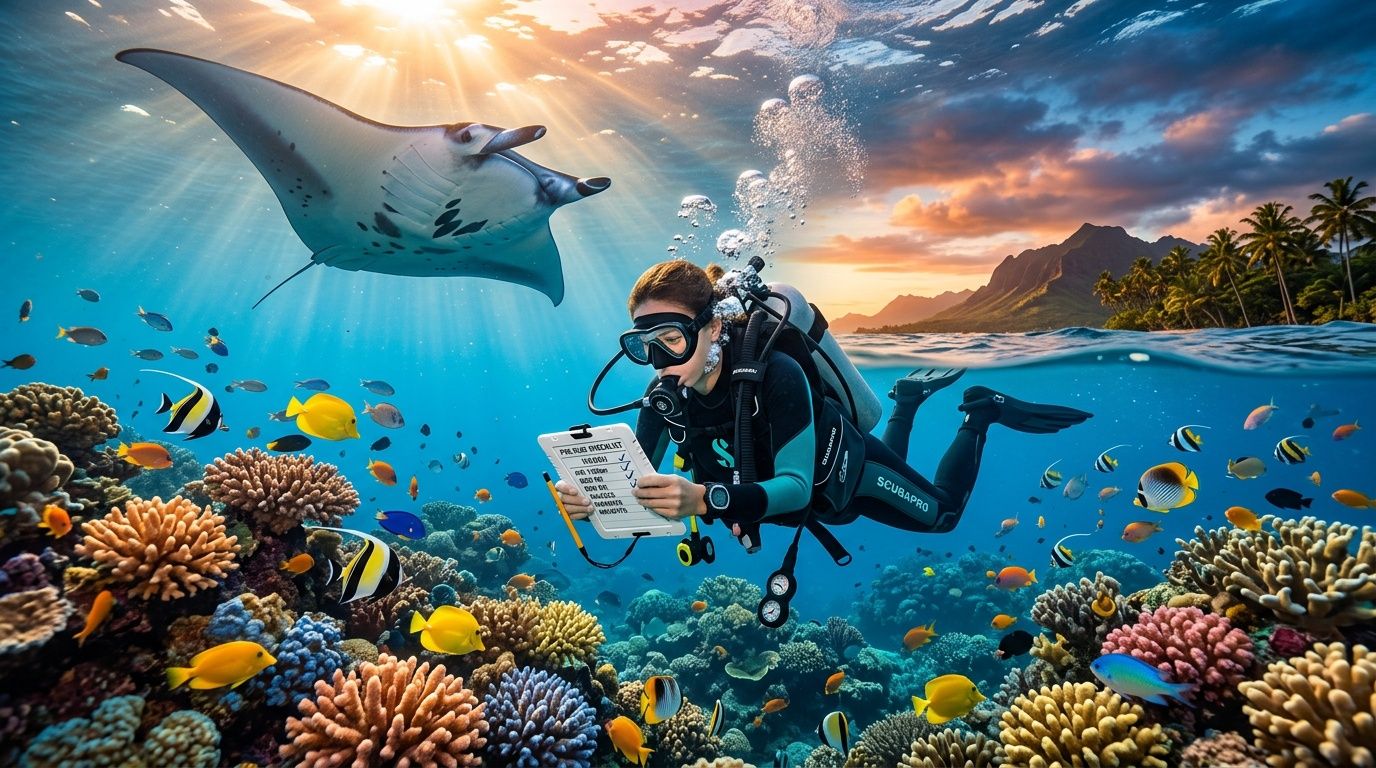
You’re probably doing what most Hawaii-bound divers do. Looking at a map, seeing great water around every island, and trying to figure out where to spend limited dive days without wasting one on the wrong operator or the wrong island. That’s a fair problem, because Hawaii has real variety underwater, but it doesn’t all dive the same.
If your goal is the best scuba diving in hawaii, start with one clear truth. Kona is the center of gravity. Hawaii supports over 1.5 million scuba dives annually through more than 215 licensed dive shops, with economic impact exceeding $519 million each year, and the Big Island’s Kona Coast stands out because Mauna Loa and Hualalai shelter it from the trade winds, creating calm conditions and visibility that often exceeds 100 feet year-round, according to this overview of Hawaii scuba diving and Kona conditions.
That doesn’t mean Maui, Oahu, and Kauai aren’t worth your time. They are. Maui has standout crater and drift options. Oahu is the wreck island. Kauai appeals to divers who want less traffic and a more self-reliant feel. But if you want the strongest combination of reliable boat diving, lava topography, marine life, and signature night diving, Kona gives you the deepest bench.
The short version is simple. If I’m advising a visiting diver who wants the highest chance of a smooth, memorable trip, I send them to Kona first and then match the operator to the kind of diving they prefer to do. Mantas, blackwater, easy reef dives, wrecks, small-group pacing, training, or advanced outings all call for slightly different choices.
Below are the operators I’d put on the short list, island by island, with the actual trade-offs that matter once you get past the brochure language.
1. Kona Honu Divers

If you want the most complete answer to “who should I dive with in Kona,” it’s Kona Honu Divers. They’re the operator I’d point serious visitors toward first because their program is built around what makes Kona special, not around trying to be everything to everyone.
Their biggest edge is specialization. Kona’s premium night-diving segment is defined by two-tank manta formats, nitrox availability, experienced crews, Newton-class boats, and controlled in-water operations with a typical 6:1 guide-to-diver ratio, all of which are part of what makes operators like Kona Honu Divers stand out in the market, as described in this breakdown of specialized Kona diving.
Why they’re the top pick
The signature trip is the 2-tank manta dive with Kona Honu Divers. That format matters. A single-drop manta dive can still be great, but a two-tank afternoon-plus-manta schedule gives you a fuller evening on the water and a better overall charter if you flew to Hawaii to do more than one short splash.
They also run black water night dives with Kona Honu Divers, which is a very different animal from a standard night reef dive. If you’re experienced, comfortable in open water at night, and want something you’ll talk about for years, blackwater is one of the strongest advanced experiences in Hawaii.
Practical rule: Don’t book blackwater just because it sounds exotic. Book it if your buoyancy is automatic and darkness doesn’t raise your stress level.
There’s also a comfort factor with Kona Honu that experienced divers appreciate quickly. Nitrox for certified EANx divers, organized briefings, a spacious boat setup, and a hot shower after the dive all sound like small things on paper. On a multi-day dive trip, they aren’t small.
Trade-offs that matter
Kona Honu isn’t the “show up rusty and wing it” choice. Their standards are part of why they run such polished charters. If your last dive was a long time ago, or you’re not current enough for a more demanding night or offshore profile, you may need to reset expectations.
That’s a good thing for safety, even if it frustrates some travelers.
A second trade-off is price sensitivity. Premium operations in Kona don’t always sit at the bargain end of the market, and manta sightings still aren’t guaranteed because this is wildlife, not an aquarium. What you’re paying for is a strong operation, disciplined guiding, and a setup built for the best version of the experience when conditions line up.
For divers trying to decide between staying on scuba or switching to surface viewing for the mantas, this guide on Kona manta ray night snorkel vs night dive is worth reading before you book.
If your priority is the best scuba diving in hawaii with the fewest operational compromises, Kona Honu Divers is the benchmark.
2. Big Island Divers

Big Island Divers does a good job for travelers who want flexibility more than a boutique feel. That matters more than people think. A lot of Hawaii trips include one diver, one snorkeler, one person who wants mantas, and one person who just wants an easy morning reef charter. Operators that can handle mixed goals cleanly are useful.
They’ve built a broad menu of morning charters, manta schedules, and blackwater options. That makes them practical for groups with uneven experience levels or for travelers trying to stack several different dive styles into a short Kona stay.
Where they fit best
This is a strong middle-ground operator. You get variety, straightforward online booking, and good schedule coverage on popular charter types. For some visitors, that’s exactly the right answer. Not everyone needs the most premium operation in the harbor. Sometimes they need a reliable one that offers enough choice to keep the whole trip moving.
One thing I like about this style of operator is that the booking path is usually easier for visitors comparing options on the fly. Less guesswork, fewer back-and-forth emails, and clearer notes on what each charter expects from the diver.
If you’re traveling with both snorkelers and divers, operators that can keep the group on the same outing save a lot of coordination headaches.
For a broader look at island-specific diving and how Kona fits into the statewide picture, this article on Big Island Hawaii scuba gives helpful context.
Real pros and cons
The biggest advantage is balance.
- Variety: You can choose from day diving, manta schedules, and more advanced night options without bouncing between multiple shops.
- Accessibility: This kind of operator usually works well for visitors who are comfortable certified divers but not chasing a highly curated expedition feel.
- Group utility: Mixed snorkel and scuba groups often have an easier time here than with more narrowly focused charters.
The downside is that broad-service operators can feel less personalized than smaller, stricter programs. If you’re a very experienced diver who wants camera-friendly pacing, extra guide bandwidth, or a particularly dialed-in advanced operation, you may find a more specialized shop a better fit.
And like every manta-focused operator in Kona, their most popular nights can fill quickly. The practical move is to book your key night dives early, then build daytime dives around them rather than the other way around.
Big Island Divers isn’t my top “single best” pick for Kona. It is one of the better choices when your trip needs range, availability, and easier logistics.
3. Jack’s Diving Locker

Jack’s Diving Locker is one of those names that’s been part of Kona diving for a long time, and that history shows in how structured their operation feels. Some divers want that. A set calendar, recognizable flagship charters, established training pathways, and a shop that functions like a full-service dive center, not just a boat seat seller.
They’re especially appealing if you want to combine diving with coursework. Nitrox, night diving, and specialty-focused training fit naturally here, and they’ve done a good job of turning signature local experiences into teachable ones.
Best for divers who want structure
Jack’s works well for travelers who like a plan they can see in advance. Their classic day charters, advanced outings, manta schedules, and Pelagic Magic-style night drift experiences create a clear progression from standard resort diving into more memorable local specialties.
That’s different from the more concierge-feeling boutique shops. Here, the operation feels organized around a dependable calendar and training culture.
If blackwater and pelagic night experiences are on your radar but you’re still deciding whether they’re your style, this primer on blackwater diving in Kona is worth a read before you commit.
What works and what doesn’t
Jack’s biggest strength is depth of program. If you’re the kind of diver who says, “I want two normal reef days, one manta evening, and maybe a specialty course,” they make that easy.
A few practical points stand out:
- Training integration: Great fit for divers who want to leave Hawaii with more than logged dives.
- Recognizable specialties: Their manta and pelagic night offerings are part of what keeps them on serious divers’ short lists.
- Established local presence: Long-running operators tend to know how to manage the little operational details that can make or break a day.
The trade-off is that structure can feel less flexible. Some charters run on set days or at set times, and private-guide style customization usually costs extra. If your ideal day is slow, highly personalized, and tuned around your camera or your dive pace, there are smaller operators that may fit better.
“Choose the shop that matches how you dive, not just where you want to dive.”
That’s especially true in Kona, where multiple good operators reach the same reefs and manta sites, but the onboard culture feels different from one boat to the next.
Jack’s Diving Locker is a strong choice for divers who want a proven operation, a training-oriented setup, and a charter calendar that makes the trip easy to organize.
4. Kona Diving Company

Kona Diving Company appeals to a different kind of diver than the biggest harbor names. This is the option I’d look at if personalized guiding matters more to you than a larger, broader operation. Photographers, couples with mismatched air consumption, and divers who don’t enjoy being rushed tend to appreciate that difference right away.
The value here is not “more stuff.” It’s pacing.
A better fit for tailored diving
Some Kona charters move with a firm group rhythm. That’s efficient, but it isn’t always ideal. If you want a private guide, more attention on the descent, a little more patience around marine life, or a smoother experience for a diver who’s certified but not very confident, Kona Diving Company has a strong case.
Nitrox availability across charters is also useful for experienced divers trying to stretch repetitive diving days sensibly. Add-on simplicity helps too. It’s easier to plan when the rental and guide options aren’t buried in fine print.
This is also one of the better choices for visitors who know they want more than one day of diving and don’t want to feel anonymous by day two.
Where the trade-offs show up
Boutique operations often win on feel and lose on inventory. Space can tighten up in high season, and some of the more advanced or long-range charter options may require direct coordination instead of quick online checkout.
That’s not a flaw. It’s the normal trade for a shop that leans into small-group service.
A few reasons divers choose them:
- Private guide availability: Useful for refreshers, photographers, or anyone who prefers more individualized attention.
- Flexible pacing: Better for people who dislike cattle-boat energy.
- Multi-day appeal: Repeat bookings usually feel smoother when the crew gets to know how you dive.
The limitation is simple. If your trip depends on maximum departure frequency or lots of different schedule slots, a larger operator may be easier to fit into a packed itinerary. But if your priority is dive quality over schedule volume, Kona Diving Company is a smart option.
For divers who already know Kona is where they want to be, this type of small-group operation can turn a good dive day into a much more relaxed one.
5. Honolulu Scuba Company

A lot of divers make the same call on Oahu. They spend the morning dropping onto a wreck off Honolulu, then head back to Waikiki for lunch instead of building the whole trip around boat logistics. For that kind of vacation, Honolulu Scuba Company fits well.
From a diver-first standpoint, Oahu earns its place for one clear reason. It gives you access to some of Hawaii’s best-known wreck diving without leaving the state’s busiest visitor hub. That is a different product than Kona. Kona remains the strongest all-around base for the best scuba diving in Hawaii, especially if diving is the main purpose of the trip, but Oahu works well for travelers who want solid underwater time built around a Honolulu stay.
Why divers book Oahu in the first place
The appeal here is structure. Oahu’s signature dives include wrecks such as the Sea Tiger and YO-257, plus reef sites that are easy to pair into a two-tank day. Wreck-focused divers usually care less about remote atmosphere and more about descent lines, hull profiles, fish life around steel, and the convenience of getting back to town quickly after the charter.
Honolulu Scuba Company also does more than load tourists onto a boat. Training, gear service, and technical support make a difference for traveling divers who need fills, repairs, or a shop that can handle more than basic resort-style diving.
Where Oahu gives up ground to Kona
Site reliability is the main trade-off. Oahu can deliver very fun diving, but conditions and boat logistics shape the schedule more than many visitors expect. If someone asks me where to book a scuba-centered Hawaii trip with the best overall consistency, I still point them to Kona first.
That matters even more for mixed groups. Divers often do better on the Big Island because the diving is stronger overall, and non-divers have easy options too, including this practical guide to scuba diving across Hawaii by island and snorkeling days with Kona Snorkel Trips.
Honolulu Scuba Company makes the most sense for a specific kind of traveler:
- Oahu-based visitors: Good for people already staying in Honolulu or Waikiki.
- Wreck fans: Best suited to divers who actively want artificial reef and wreck profiles over lava-heavy topography.
- Divers who may need shop support: Helpful if gear service, training, or technical fills are part of the trip.
My short take is simple. If you are choosing one island strictly for diving, Kona usually wins. If your trip is centered on Oahu and you want a reputable local operator for wreck and reef diving, Honolulu Scuba Company is a sensible pick.
6. Seasport Divers

A calm south shore morning on Kauai can turn into a very different ride once you point a boat toward more exposed water. That is part of the appeal here. Kauaʻi-based Seasport Divers suits divers who want an island with a wilder feel and are comfortable accepting more weather dependence than they would in Kona.
Kauai works best as a specialty choice, not the default pick for a scuba-first Hawaii trip. Kona still gives divers the strongest combination of site consistency, trip frequency, and overall range, which is why it remains the center of gravity for dedicated dive travelers. Kauai earns its place for people already staying on the island, repeat Hawaii divers looking for a different texture underwater, and experienced guests who do not need every day to feel predictable.
Best for divers who want Kauai on Kauai’s terms
Seasport has been around a long time, and that matters on an island where the operator’s judgment often shapes the quality of the day as much as the site itself. The diving here tends to feel less packaged than Oahu and less consistent than Kona, but it can also feel more remote and more dramatic.
Niʻihau is the headline. Advanced divers talk about it for good reason. It is a real expedition-style day, and the best crews treat it that way. If weather, swell, or current do not line up, a responsible operator changes the plan. That is not a disappointment. That is good boat handling and good risk management.
Boat comfort matters more on Kauai than some visitors expect. If you are prone to getting green on longer runs, read this guide on how to stop seasickness on a boat before you book.
What to expect before booking
Seasport Divers is a practical fit for a few specific travelers:
- South shore Kauai visitors: Easy choice if you are already based on the island and want a reputable local operator.
- Experienced divers: Better fit for guests who are comfortable with changing conditions and flexible site plans.
- Niʻihau hopefuls: Strong option if that trip is on your list and you understand that ocean conditions make the final call.
The trade-off is straightforward. Kauai rewards flexibility. If your priority is stacking multiple high-confidence dive days on one trip, Kona usually remains the better answer, especially with top-tier operators like Kona Honu Divers and easy non-diver alternatives such as Kona Snorkel Trips for mixed groups.
For visitors committed to Kauai, Seasport Divers is one of the clearest operators to consider. For travelers choosing one Hawaiian island primarily for scuba, I would still send them to Kona first and treat Kauai as the island to book when you want a more rugged, more conditional, and sometimes very memorable change of pace.
7. Dive Maui Go Scuba Dive Maui

A Maui boat morning often starts with a trade wind chop, a longer run to the site, and a group split between divers chasing Molokini or Lanaʻi and family members who would rather stay topside. That setup is where Dive Maui, also known as Go Scuba Dive Maui, makes the most sense. They cater to divers who want a smaller operation, a more personal briefing, and a day that feels guided by people paying attention instead of moving a crowd.
Maui diving rewards the right expectations. The island offers attractive reef structure, clear-water days, and memorable offshore sites, but it is less consistent than Kona for stacking easy dive days across one trip. I tell traveling divers to treat Maui as a strong add-on island if they are already staying there, not the first pick if scuba is the whole reason for the vacation.
Why divers book them on Maui
Dive Maui stands out for pacing and group size. That matters more on Maui than many visitors realize. On a smaller boat, entries are usually calmer, photographers get more room to work, and guides have more time to sort out weighting, camera handling, and site-specific concerns before anyone hits the water.
Their style fits a few divers especially well:
- Maui-based visitors: Good choice if you want quality diving without island-hopping to chase the strongest scuba scene in the state.
- Underwater photographers: Smaller groups and less rushed briefings usually make for a better camera day.
- Divers interested in Molokini or Lanaʻi: These are Maui's headline dives, and a boutique operator is often the better way to experience them.
The trade-off is simple. Maui charters depend heavily on weather, swell direction, and crossing conditions. A great day can be excellent. A rough day can feel long before the second tank.
If you get seasick easily, prepare before booking offshore trips. This guide on how to stop seasickness on a boat is worth reading before you commit to Molokini or Lanaʻi runs.
Dive Maui earns its place on this list because it gives Maui visitors a thoughtful, small-group option. For divers choosing one Hawaiian island primarily for scuba, Kona still leads the field. It has the deepest operator bench, the most reliable range of advanced and beginner-friendly diving, and better options for mixed groups, with Kona Honu Divers for serious scuba days and Kona Snorkel Trips for non-divers who still want a strong day on the water.
Top 7 Hawaii Scuba Dive Operators Comparison
| Operator | Complexity 🔄 | Resource Needs ⚡ | Expected Outcomes ⭐📊 | Ideal Use Cases 💡 | Key Advantages ⭐ |
|---|---|---|---|---|---|
| Kona Honu Divers | 🔄 Medium–High, structured briefings and strict experience checks | ⚡ Moderate, premium boat amenities, nitrox included for certified divers, small group ratios | ⭐📊 High-quality, longer bottom times and strong safety/eco standards | 💡 Experienced divers seeking premium manta and blackwater night dives | ⭐ Polished operation, very experienced guides; ⚠️ stricter recent-dive requirements, sightings not guaranteed |
| Big Island Divers | 🔄 Medium, broad, flexible schedule with mixed-group options | ⚡ Moderate, multiple departures, easy online booking, combined snorkel/scuba options | ⭐📊 Good value and variety across day/night charters | 💡 Mixed-experience groups or budget-conscious travelers wanting variety | ⭐ Competitive pricing and consistent feedback; ⚠️ popular nights can sell out, sightings not guaranteed |
| Jack’s Diving Locker | 🔄 Medium, structured dive calendar and full training programs | ⚡ Moderate, two shops, full PADI training and gear services | ⭐📊 Reliable, educational experiences with specialty course options | 💡 Divers seeking certifications/specialties (e.g., Manta Ray Diver) and classic schedules | ⭐ Deep local roots and courses; ⚠️ set departure days/times, private guides cost extra |
| Kona Diving Company | 🔄 Low–Medium, boutique, flexible private-guide options | ⚡ Low–Moderate, nitrox on every charter, private guide fee, limited space | ⭐📊 Personalized, camera-friendly pacing and consistent nitrox availability | 💡 Photographers or divers wanting private guiding and personalized service | ⭐ Personalized guiding and multi-day discounts; ⚠️ some charters call-to-book, limited high-season space |
| Honolulu Scuba Company | 🔄 Medium, guided wreck/reef focus with technical service offerings | ⚡ High, trimix/gas blending, gear repair, central shop and boats | ⭐📊 Broad wreck/reef variety with in-house technical support | 💡 Waikīkī/Honolulu-based travelers seeking wrecks, tech diving or repairs | ⭐ In-house technical services and central access; ⚠️ surf/wind affect site choice, specific sites not guaranteed |
| Seasport Divers | 🔄 Medium, daily operations plus seasonal advanced expeditions | ⚡ Moderate–High, purpose-built boats, professional training, Niʻihau logistics | ⭐📊 Comfortable, professional charters and seasonal advanced trips | 💡 Divers in Kauaʻi targeting comfortable boat ops or Niʻihau wall expeditions | ⭐ Purpose-built boats and PADI 5-Star training; ⚠️ Niʻihau trips seasonal and weather-dependent |
| Dive Maui (Go Scuba Dive Maui) | 🔄 Low–Medium, boutique small-group operations, permit-dependent sites | ⚡ Low, small-group boats, longer bottom times, larger tanks available | ⭐📊 Intimate, conservation-focused dives with relaxed, camera-friendly pacing | 💡 Eco-minded divers and photographers targeting Lānaʻi Cathedrals or West Maui sites | ⭐ Boutique attention and conservation emphasis; ⚠️ site availability may vary with permits/season |
Final Thoughts
The best scuba diving in hawaii isn’t really a mystery once you separate marketing from actual dive conditions. Every major island offers something worthwhile, but they serve different kinds of divers. Oahu is strong for wrecks and convenience. Maui is appealing for crater and cathedral diving. Kauai suits people who want a rougher-edged, quieter experience. Kona is the island that does the most things well, most consistently.
That consistency is the deciding factor for many trips. On the Big Island, the Kona Coast combines protected conditions, strong visibility, easy boat-diving logistics, lava topography, and reliable marine-life encounters in a way the other islands don’t consistently match. That’s why Kona has become the foundation of Hawaii’s dive identity rather than just one more local scene.
If I were guiding a visitor with limited time, I’d narrow the decision this way.
- Choose Kona first if scuba is the main reason you came to Hawaii.
- Choose Oahu if you’re already staying in Honolulu and want wreck-focused diving.
- Choose Maui if you want a boutique feel and iconic reef or cathedral sites while based on Maui.
- Choose Kauai if you’re experienced, patient with conditions, and happy trading predictability for atmosphere.
Within Kona, operator choice matters because the water may be the same, but the charter style isn’t. Some boats are broad and flexible. Some are training-heavy. Some feel boutique and personalized. Some are built for premium specialty diving with tighter standards and smoother execution.
That’s why Kona Honu Divers sits at the top of this list. They’re the cleanest match for divers who want the strongest all-around scuba operation in Hawaii’s strongest all-around dive destination. Their focus on polished boat diving, advanced specialty options, and disciplined manta and blackwater execution lines up with what serious visitors usually hope they’re booking when they search for the best scuba diving in hawaii.
There’s also a practical point many dive articles skip. Not everyone in your group dives. Hawaii trips often include mixed crews. One person wants two tanks. Another wants mantas from the surface. Another wants a safe, memorable ocean experience without certification. That’s where Kona has another advantage. It doesn’t just serve divers well. It also gives non-divers excellent alternatives.
If your group includes snorkelers, Kona’s manta experience is one of the easiest ways to keep everyone excited about the same evening on the water. For travelers who want that surface experience instead of scuba, Manta Ray Night Snorkel Hawaii is an exceptional alternative when you’re looking for a manta ray night snorkel tour.
The best trips come from honest matching. Don’t book blackwater if you want easy reef cruising. Don’t book a wreck charter if your buoyancy is shaky and you hate deeper profiles. Don’t pick an operator just because the website looks good. Pick the island for the kind of diving you want, then pick the boat for how you prefer to dive.
Do that, and Hawaii delivers. Do it especially in Kona, and you give yourself the best chance of coming home with the dives you were hoping for before the plane even landed.
If your travel group includes non-divers, or if you want to add a signature ocean day between scuba charters, Kona Snorkel Trips is a smart choice on the Big Island. They specialize in small-group adventures with a strong safety culture and environmental respect, and they’re especially well known for manta encounters. For visitors who want the surface version of Kona’s most famous wildlife experience, the Manta Ray Night Snorkel with Kona Snorkel Trips is one of the most memorable ways to round out a Hawaii dive vacation.