
Big Island Manta Ray Snorkel vs. Winter Whale Watch
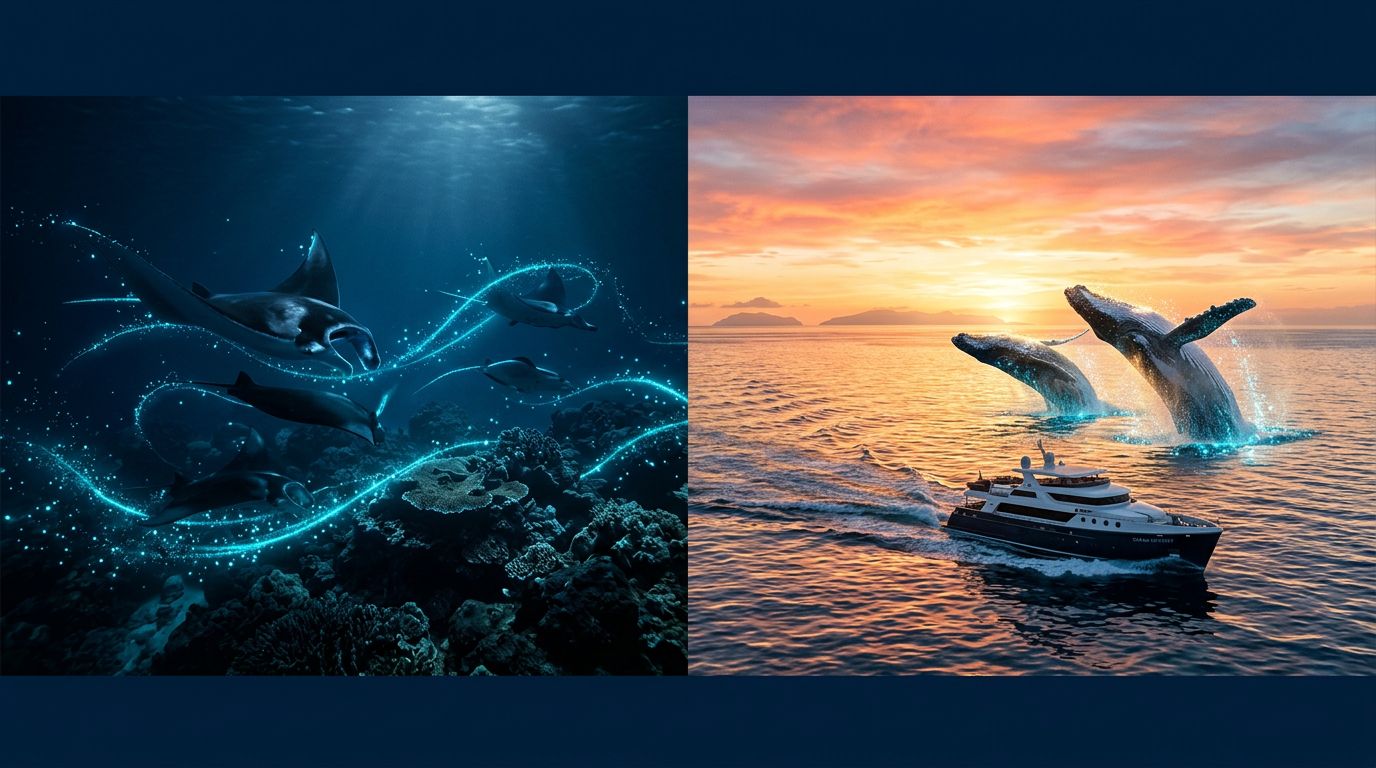
A winter trip to Kona gives you two unforgettable ocean choices: a Big Island manta ray snorkel after dark or a daylight whale-watching cruise. Both offer close encounters with Hawaii’s marine life, but the experience, timing, activity level, and wildlife behavior are completely different.
Kona Snorkel Trips puts its Reef to Rays philosophy into small-group ocean tours, while Manta Ray Night Snorkel Hawaii focuses on nighttime manta encounters. Your best choice depends on whether you want to enter the water with rays or stay aboard a boat while humpback whales surface nearby.
Key Takeaways
- Manta rays visit Kona’s feeding sites throughout the year, including winter.
- Humpback whales usually arrive in Hawaii during winter, with sightings often strongest between January and March.
- A manta snorkel is an in-water nighttime activity, while whale watching is a daytime boat excursion.
- Choose a manta tour if you want an active experience. Pick whale watching if you prefer watching dramatic behavior from a boat.
- With enough time, you can do both because they take place at different times of day.
Manta Rays and Humpback Whales Follow Different Seasons
Winter is the best season for whale watching around Hawaii because North Pacific humpback whales migrate to the islands to breed and raise their calves. You may see adults traveling close to the surface, mothers swimming with young calves, or whales displaying behaviors such as tail slaps and breaching.
The National Oceanic and Atmospheric Administration’s humpback whale information provides useful background on their migration, behavior, and protected status. Whale sightings remain wild encounters, so no crew can promise a particular behavior or number of whales.
Manta rays follow a different pattern. Kona’s manta rays feed on plankton near the coast throughout the year. Nighttime lights attract plankton toward the surface, which brings manta rays to established viewing areas. Winter can offer excellent conditions, although water clarity and ocean movement still depend on the weather.
The NOAA manta ray species page explains more about these large, gentle filter feeders. Unlike a whale watch, a manta excursion usually lets you enter the water and float above the feeding activity.
That difference shapes the entire trip. Whale watching gives you a broad view of the ocean and often covers more distance. A manta snorkel keeps you in one area, where guides position you near the surface and the rays swim below and around you.
For many travelers, snorkeling Big Island Hawaii waters is a daytime priority. A winter manta trip adds a rare nighttime experience, while whale watching lets you see one of the Pacific’s largest animals in its seasonal Hawaiian habitat.
What a Big Island Manta Ray Snorkel Feels Like
A manta ray snorkel near Kona usually begins in the late afternoon or evening. After a safety briefing, you travel by boat to a permitted viewing area. Once you enter the water, you hold onto a flotation board or similar support while lights shine into the water below.
The light draws plankton close to the surface. Manta rays then glide through the illuminated water as they feed. Their movements are smooth and controlled, and you may watch them turn on their sides, sweep their wide mouths through the plankton, and pass beneath the group.
You don’t need to scuba dive to enjoy the experience. Most guests float at the surface with a mask, snorkel, and flotation support. However, you should feel comfortable in open water and be prepared for a nighttime swim. The ocean can feel cooler after sunset, and visibility changes with current, wind, and plankton levels.
Kona Snorkel Trips focuses on small-group service, lifeguard-certified guides, quality snorkeling equipment, and custom-built lighted boards for nighttime encounters. Guides also explain how to keep your distance, avoid touching the rays, and protect the surrounding reef. That approach gives you a better view without crowding the animals.
You can learn more about the company’s Kona manta ray snorkeling tour before choosing a date. Manta rays are wild animals, so sightings and viewing conditions can change. A responsible operator won’t handle, chase, or feed them.
A manta snorkel is best for you if being in the water is the main part of your vacation, rather than a short stop between sightseeing activities.
When you book, check the tour’s age guidance, departure time, equipment details, and cancellation policy. If you’re prone to motion sickness, consider taking suitable medication according to your doctor’s advice and eating a light meal before departure.
If the experience matches your comfort level, you can check availability for a Kona manta ray night snorkel.
What Winter Whale Watching in Kona Is Like
Whale watching is a daylight boat experience. You stay aboard while your captain searches the water for blows, dorsal fins, tail flukes, and other signs of whale activity.
A whale’s blow may appear first as a short burst of mist on the horizon. Then the animal may surface again, arch its back, or disappear for several minutes. When a whale breaches or slaps its tail, the sight can be dramatic, but those behaviors are never scheduled.
Winter whale watching also gives you a wider view of the Kona coast. You may see volcanic shorelines, sea cliffs, seabirds, and other marine animals during the trip. The boat ride itself becomes part of the outing, which suits travelers who want ocean scenery without swimming.
Unlike a manta snorkel, a whale watch doesn’t require you to wear a mask, use a snorkel, or enter the ocean. That makes it a practical choice for grandparents, young children who struggle with open-water swimming, or anyone who prefers to remain dry.
You should still prepare for sun, wind, and boat movement. Bring a light layer, sunglasses with a secure strap, reef-safe sunscreen, and water. Even on a warm Hawaiian day, the boat can feel cool while moving.
Kona’s coast is often calmer than exposed areas of the island, but ocean conditions change. Follow the crew’s instructions when you move around the boat, and keep your camera ready because sightings can happen quickly.
You can review Kona whale-watching tour options if you want a winter wildlife trip that stays above the surface. You can also check availability for a Kona whale-watching excursion.
Manta Ray Snorkel vs. Whale Watch: The Main Differences
The right choice becomes clearer when you compare the basic details side by side. Your comfort in the water matters as much as your interest in manta rays or whales.
| Trip detail | Manta ray snorkel | Winter whale watch |
|---|---|---|
| Best season | Year-round, including winter | Winter, usually strongest during the migration |
| Typical time | Late afternoon or evening | Morning or afternoon daylight |
| Where you spend the trip | In the water and aboard the boat | Aboard the boat |
| Wildlife behavior | Mantas feed near lights | Whales surface, travel, and may breach |
| Physical demand | Moderate, with open-water swimming | Low to moderate, depending on sea conditions |
| Best for | Swimmers, couples, families with water-ready children | Most ages and comfort levels |
| Main atmosphere | Quiet, dark, close, and focused | Bright, spacious, active, and scenic |
| Weather concerns | Water temperature, current, nighttime visibility | Wind, sun, boat movement, and visibility |
A manta trip gives you a closer visual connection with the water. You spend much of the experience looking downward and watching rays move through the light. Whale watching keeps your attention on the horizon and rewards patience between sightings.
The schedules also work well together. You can take a whale watch in the morning, spend the afternoon on land, and join a manta snorkel after sunset. If your vacation includes several days in Kona, doing both gives you two very different views of Hawaii’s marine life.
Which Experience Fits Your Travel Group?
Your group may already tell you which activity makes more sense.
Choose a manta snorkel if you:
- Swim comfortably in open water.
- Want to participate instead of only observe.
- Enjoy nighttime activities and underwater photography.
- Prefer a focused wildlife encounter near the Kona coast.
- Are traveling with people who feel excited about snorkeling.
Choose a whale watch if you:
- Want to stay aboard the boat.
- Prefer a daytime activity with wider coastal views.
- Have travelers who don’t swim or feel uneasy in the water.
- Want to look for mothers and calves during the winter migration.
- Need an easier activity after a long travel day.
Families should review age and swimming requirements before booking either trip. A child may be enthusiastic about a manta snorkel but still need an adult nearby at all times. For a whale watch, children should understand boat safety and remain seated or hold railings when the vessel moves.
Couples often choose the manta experience for a quieter evening on the water. The lights, dark sky, and close focus on the feeding area create a different mood than a daytime cruise. Adventurous solo travelers may prefer the manta snorkel because the activity keeps them engaged throughout the tour.
If your group has different comfort levels, a private Kona ocean tour gives you more control over timing and activities. Private trips can make it easier to discuss swimming ability, mobility concerns, photography goals, and the type of wildlife experience you want.
Don’t choose based only on the biggest animal. A whale may be larger, but a manta ray can create a more personal encounter because you share the water with it. Your ideal trip depends on how you want to experience the ocean.
How to Plan Your Winter Ocean Excursion
Winter weather on the Kona coast can change quickly, so leave some flexibility in your itinerary. Booking the first available day of your trip gives you more options if the operator needs to adjust or cancel because of conditions.
Morning whale watches often fit well before a beach afternoon. Evening manta snorkels work best when you avoid scheduling another demanding water activity immediately beforehand. You may feel tired after spending time in the sun, swimming, and traveling by boat.
Pack for the activity instead of relying on your hotel room:
- Wear a swimsuit under comfortable clothing.
- Bring a light jacket for the boat ride home.
- Use reef-safe sunscreen and reapply before boarding.
- Carry a towel, water, and a dry change of clothes.
- Secure phones, hats, and sunglasses against wind and spray.
You should also ask about check-in time, parking, transportation, restrooms, flotation equipment, and what happens if the weather prevents departure. Policies vary by operator and trip type.
Kona Snorkel Trips emphasizes safety, reef-friendly practices, and small-group attention. Its lifeguard-certified guides provide equipment and explain how to move around marine life without touching or chasing it. Those instructions matter because manta rays need space, and reef ecosystems are easily damaged by careless contact.
When you snorkel Big Island waters, never stand on coral, hold animals, or apply sunscreen after entering the water if it can wash directly into the reef. Use a mineral-based reef-safe product before departure, and follow the crew’s local guidance.
For general trip planning, you can browse the company’s Big Island snorkeling tours to compare available excursions and schedules. If you want to book a standard Kona snorkeling outing, you can also check availability.
Can You Do Both in One Winter Vacation?
Yes, and the two tours pair naturally. A whale watch fills a daylight window, while a manta snorkel starts after sunset. You don’t have to choose between them unless your schedule, budget, or comfort level limits you to one.
Start with the activity that has fewer flexible departure options. If your preferred manta date sells out, it may be harder to find another evening that fits your plans. Whale watches often run at several times during the day, but availability still changes during winter.
A two-day plan could look like this:
- Take a morning whale watch on your first full day in Kona.
- Keep the afternoon open for lunch, rest, and coastal sightseeing.
- Join a manta ray snorkel that evening or on the next available night.
- Leave one flexible day in case ocean conditions affect either trip.
This schedule also lets you compare two kinds of wildlife behavior. Whales move across a large area and may appear for only a few seconds. Manta rays often return to the same feeding zone during the evening, giving you more time to observe their movement.
Snorkeling Big Island reefs during the day can add another type of ocean experience, but don’t pack every day with water activities. Sun exposure, boat rides, and changing sleep schedules can catch up with you. Give yourself time to rest, especially if you arrive after a long flight.
If you have only one evening available, choose the manta snorkel when entering the water is part of your vacation goal. If you want a relaxed daylight outing with no swimming requirement, reserve a whale watch instead.
Your Best Choice Depends on the Moment You Want
A winter whale watch and a Kona manta ray snorkel offer two separate ways to meet Hawaii’s marine life. Whales bring seasonal migration activity and wide ocean views. Manta rays offer a nighttime encounter that keeps you in the water near their feeding area.
Choose the manta experience if you want to swim, use snorkeling gear, and watch rays move through the illuminated water. Choose whale watching if you prefer a dry, daylight trip with the chance to see humpbacks surface, travel, or breach.
If your schedule allows both, take advantage of their different timing. A whale watch in winter and a manta snorkel after dark can turn one Kona vacation into two memorable ocean experiences.