
Fin Kicking Tips for Kealakekua Bay Snorkeling
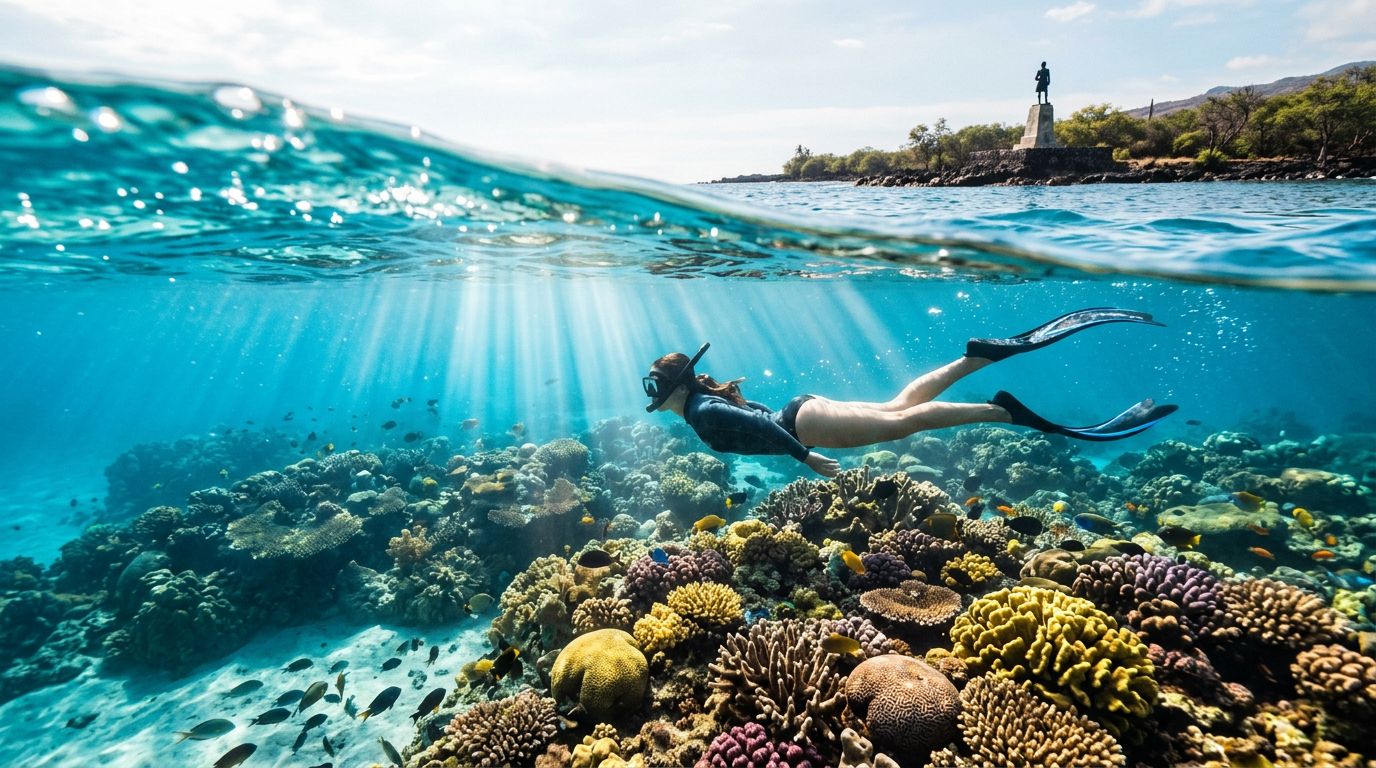
Strong fin technique helps you move farther, breathe easier, and stay relaxed in the water. At Kealakekua Bay, good control also keeps your fins away from coral and other marine life.
Many visitors planning snorkeling Big Island Hawaii adventures focus on clear water and colorful fish. Your kick matters just as much. A few changes to your fin fit, body position, and rhythm can make the difference between a tiring swim and a comfortable one.
Why fin control matters at Kealakekua Bay
Kealakekua Bay has a protected shoreline, clear water, and rich marine habitat near the Captain Cook Monument. Conditions can still change with wind, swell, boat traffic, and your distance from shore. The National Park Service information about Kealakekua Bay is useful when you plan your visit and learn about the area’s history and natural resources.
When you are snorkeling Big Island waters, you may feel tempted to kick hard as soon as you enter. That often creates the opposite result. A large, fast kick burns energy, raises your breathing rate, and can make your mask seal feel less comfortable.
Your goal is steady forward movement with as little splash as possible. Efficient finning lets you watch the reef instead of constantly thinking about staying afloat. It also gives you more control when you stop, turn, or adjust your distance from coral.
A poor kick can create problems in several ways:
- Your knees bend too much, so your fins push water downward instead of behind you.
- Your ankles stay stiff, which reduces the blade’s surface area.
- Your legs move too quickly, causing fatigue and short, shallow breaths.
- Your fins brush the bottom when you swim too close to the reef.
Kealakekua Bay’s marine life deserves careful treatment. Keep your body horizontal, leave space between your fins and the reef, and never stand on coral. If you need to rest, move to deeper open water or use a flotation aid as directed by your guide.
The best fin kick is quiet, compact, and strong enough to move you without making you rush.
Choose snorkeling fins that fit your feet
Fin comfort starts before you enter the water. A fin that slips, pinches, or rubs can distract you throughout the trip and may lead to cramps.
You will usually encounter full-foot or open-heel fins. Full-foot fins fit like a shoe and work well for warm-water snorkeling when the foot pocket feels comfortable. Open-heel fins use an adjustable strap, so you can fine-tune the fit and wear thin snorkeling socks if needed.
A properly fitted fin should feel snug without squeezing your toes. Your heel should stay inside the pocket during a gentle kick. If the fin slides off when you lift your leg, the fit is too loose. If your toes curl to keep it in place, the pocket may be too small.
Rental fins often come in whole sizes, so tell the crew if the first pair feels wrong. Don’t accept pain as part of the experience. A different size or style can reduce rubbing and improve your kick within minutes.
Look for a blade with moderate length and flexibility. Extremely stiff or long fins can require more leg strength than many casual snorkelers expect. Shorter snorkeling fins are easier to control near a reef, around a boat ladder, and during turns.
| Fin problem | What you may notice | Useful adjustment |
|---|---|---|
| Too loose | Heel lifts or fin slips | Try a smaller size or tighten the strap |
| Too tight | Toe pressure, rubbing, or cramps | Try a larger pocket or thinner sock |
| Too stiff | Fast fatigue and heavy legs | Choose a softer, shorter blade |
| Poor technique | Splashing and little forward movement | Kick from the hips with relaxed ankles |
Before you swim away from the boat, test both fins with a few slow kicks. Check that the straps sit evenly and that nothing pinches behind your heel. If you feel a hot spot, fix it early rather than waiting for a blister.
Use your hips for a smooth flutter kick
The flutter kick is the main fin stroke you will use while snorkeling. It looks simple, but small details affect how much water your fins move.
Start with your body in a long, nearly horizontal position. Keep your head in line with your spine, look slightly forward, and let your shoulders relax. Extend your arms ahead of you when you need a little more stability, or keep them beside your body to reduce drag.
Begin the movement at your hips. Your thighs should move slightly up and down, followed by your knees and ankles. Keep your knees soft, but don’t pedal as if you are riding a bicycle. The lower leg should follow the hip movement instead of swinging independently.
Let your ankles stay loose. A relaxed ankle allows the fin blade to bend and push water across its full length. Point your toes gently away from your shin, but don’t force the position. Stiff ankles waste effort and can cause calf fatigue.
Keep each kick small. Your fins don’t need to travel far above or below your body’s centerline. A compact stroke usually produces better control than a dramatic one. If your fins break the surface often, reduce the kick size and keep your legs lower.
Your breathing should match the rhythm of your legs. Breathe slowly through your mouth, then exhale fully without holding your breath. Many snorkelers speed up their kick when they feel nervous, which makes their breathing faster. Slow the legs first, then let your breathing settle.
Practice this sequence in a pool or a calm, sandy area before you spend time near coral:
- Float face down with your body relaxed.
- Extend your legs behind you and point your toes gently.
- Start small kicks from your hips.
- Count four to six kicks while taking a slow breath.
- Stop kicking and notice how far your momentum carries you.
- Resume with the same compact rhythm.
If you feel your lower back arching, your legs may be sinking. Press your chest slightly downward and keep your head from lifting. Looking too far ahead forces your hips lower and makes each kick harder.
Adjust your kick for turns, current, and rest
You won’t use one kick pattern for every part of a Kealakekua Bay snorkeling trip. Change your technique when you turn, swim across open water, or need to conserve energy.
For a gentle turn, reduce your kick size and use one arm for direction. Avoid sweeping your fins in a wide circle. A broad kick can bring you too close to coral or another swimmer. Once your body faces the new direction, return to a straight, compact flutter.
A frog kick can work well in open water when you want a short glide between strokes. Bend your knees, bring your fins toward your body, then press the blades outward and back. Use this stroke only with plenty of space. A forceful frog kick near the reef can stir sand or strike coral.
When you face a mild current, don’t answer it with a sprint. Shorten your kick, keep your breathing steady, and stay with your group. Your guide can choose the safest route and tell you when to change direction. If the current feels stronger than you can manage, signal early rather than waiting until you are exhausted.
You can also conserve energy by using momentum. Kick for several seconds, glide while keeping your body streamlined, then kick again. This pattern works best in open water where you have enough room and can maintain visual contact with your group.
To rest, roll onto your back and keep your fins away from nearby swimmers. Use the provided flotation equipment if your tour supplies it, and follow your guide’s instructions. Don’t grab coral, a mooring line, or another swimmer for support.
If your breathing becomes hard to control, stop trying to make progress and tell your guide. Resting early is safer than fighting the water while tired.
Protect the reef with every fin stroke
Your fins can damage coral even when you don’t intend to touch the bottom. A single kick near a coral head may break a branch, stir sediment, or disturb a small animal hiding in the reef.
Maintain enough depth to keep your fins clear of the bottom. If you feel your legs sinking, adjust your body position instead of kicking harder. Keep your hips near the surface and lower your head slightly.
Never stand on coral, even if the water looks shallow. Coral can be sharp, and contact can injure both you and the reef. If you need to stand, move to a sandy or rocky area only after your guide confirms that it is safe.
Your hands should also remain off the reef. Don’t push away from coral, hold a coral head for a photo, or chase fish into narrow spaces. The NOAA guidance on caring for coral reefs covers simple practices that help reduce damage during ocean activities.
Use a rash guard when practical, and follow the operator’s instructions about reef-conscious sunscreen. Apply sunscreen well before entering the water so it has time to absorb. Avoid touching marine life, including turtles, even if an animal swims close to you.
Boat awareness matters too. Keep your fins pointed away from other swimmers when you stop. Near a ladder, follow the crew’s directions and avoid kicking while someone climbs aboard. Never swim beneath a moving boat or cross in front of its path.
Practice before you snorkel the Big Island
A little preparation can remove much of the stress from your first open-water session. You don’t need a long workout. Five to ten minutes of controlled practice can help you recognize poor form before it costs energy.
Try your fins in a pool, at a beach with a sandy bottom, or during a guided practice session. Focus on how your hips, knees, and ankles feel. If your calves tighten quickly, relax your ankles and make the kick smaller.
Practice clearing your mask and breathing through the snorkel while floating. These skills reduce the chance that you will panic when water enters your mask. Stay close to shore or your guide during practice, and never test unfamiliar equipment alone.
Before the boat leaves, tell the crew about injuries, limited swimming experience, asthma, or concerns about open water. A lifeguard-certified guide can explain the route, flotation equipment, entry process, and signals used during the tour.
You should also ask which fin style the crew recommends. Some people prefer softer fins because they are easier on the ankles. Others need a different size because their feet swell slightly during the day. Your guide can help you make a better choice than guessing from the dock.
If you are traveling with children, check each child’s fin fit before departure. A child may outgrow a size or struggle with a blade that feels manageable to an adult. Keep young swimmers close to the supervising adult and follow the guide’s spacing instructions.
Choose a Kealakekua Bay tour that supports your pace
A guided outing can make fin control easier because the crew handles route planning, safety briefings, and equipment questions. You can focus on your breathing and body position instead of worrying about where to swim next.
Kona Snorkel Trips follows a “Reef to Rays” philosophy, with small-group ocean outings, lifeguard-certified guides, quality snorkeling gear, and education about reef-safe practices. The company focuses on a personal experience rather than a crowded commercial approach. Its guides can help you adjust your fins, stay aware of the reef, and choose a comfortable pace.
You can review the Kealakekua Bay snorkeling tour to see the Captain Cook Monument itinerary and trip details. The broader Kona snorkeling tour selection can help you compare available ocean experiences if your schedule changes.
For another company site focused on this destination, you can also visit Captain Cook Snorkeling Tours. Whichever operator you choose, look for clear safety instructions, well-maintained equipment, and guides who respect the bay’s marine environment.
A private trip may suit you if you want more time to practice, need a flexible pace, or are traveling with a small family group. Kona Snorkel Trips also offers private Kona tours for travelers who want a more tailored day on the water.
“`
“`
A Captain Cook and Kealakekua Bay trip is a good choice when you want to practice these techniques with a guide nearby. You can check avaialbility for the specific outing before you finalize your plans.
“`
Ask about the expected water conditions, entry style, and time available for snorkeling. Those details help you decide whether you need softer fins, extra flotation, or a private pace.
Conclusion
Good fin kicking at Kealakekua Bay starts with a comfortable fit and a relaxed body position. Kick from your hips, keep your strokes small, let your ankles stay loose, and change your rhythm when you turn or meet current.
Most importantly, keep your fins clear of coral and follow your guide’s safety instructions. With steady fin control, you can spend less energy fighting the water and more time enjoying the reef.