
Choosing a Waterproof Camera for Snorkeling Big Island Hawaii

A good waterproof camera snorkeling setup should handle saltwater, bright sun, moving subjects, and the occasional slippery exit from the ocean. You also need controls you can use quickly, because Hawaiian reef fish rarely pause for a second take.
For snorkeling Big Island Hawaii, you usually don’t need scuba-level equipment. You need a camera that stays sealed at shallow depths, focuses quickly, records steady video, and survives sand, bumps, and a full day in the sun. The right choice depends on whether you want simple photos, action video, wildlife close-ups, or a small camera your family can share.
Key Takeaways
- The OM System Tough TG-7 is the strongest all-around choice for still photos and 4K video.
- The GoPro HERO13 Black offers a wide view, excellent stabilization, and a large accessory ecosystem.
- The DJI Osmo Action 4 gives you strong value for shallow-water video and longer underwater depth without a case.
- A floating grip, wrist tether, spare battery, and lens cloth matter as much as the camera.
- Always rinse your camera with fresh water after snorkeling and inspect the door seal before entering the ocean.
What Makes a Good Camera for Snorkeling?
Waterproof ratings are the first detail most shoppers check, but they aren’t the whole story. A camera can survive underwater and still produce poor results if the lens fogs, the controls are awkward, or the autofocus struggles with moving fish.
For typical snorkeling, look for a camera rated to at least 10 meters, or about 33 feet, without an additional housing. That gives you plenty of room for surface swimming and short dives. Several 2026 comparison guides list the GoPro HERO13 Black at 10 meters, the Insta360 Ace Pro 2 at 12 meters, and the DJI Osmo Action 4 at 18 meters without a case.
Depth ratings don’t give you permission to ignore the seal. Salt, sand, sunscreen, and hair can interfere with the battery door gasket. Before each outing, check that the door closes fully and that no grit sits around the seal.
Image quality also depends on the camera’s job. A wide-angle action camera works well when you’re filming yourself, swimming through a lava tube, or capturing a broad reef. A rugged compact camera usually gives you more natural-looking still photos and better control over framing.
You should also consider:
- Stabilization, especially for swimming video and boat rides.
- Battery life, since cold water and high-resolution video drain batteries quickly.
- Low-light performance, which matters during manta ray night snorkeling.
- Glove-free controls, because you may operate the camera with wet hands.
- A secure tether, so one mistake doesn’t send the camera to the reef.
- Color correction options, such as a flat profile or underwater mode.
Your camera is only one part of the setup. A secure grip and reliable seal protect your investment while helping you capture smoother footage.
Best Waterproof Camera for Snorkeling Big Island Hawaii
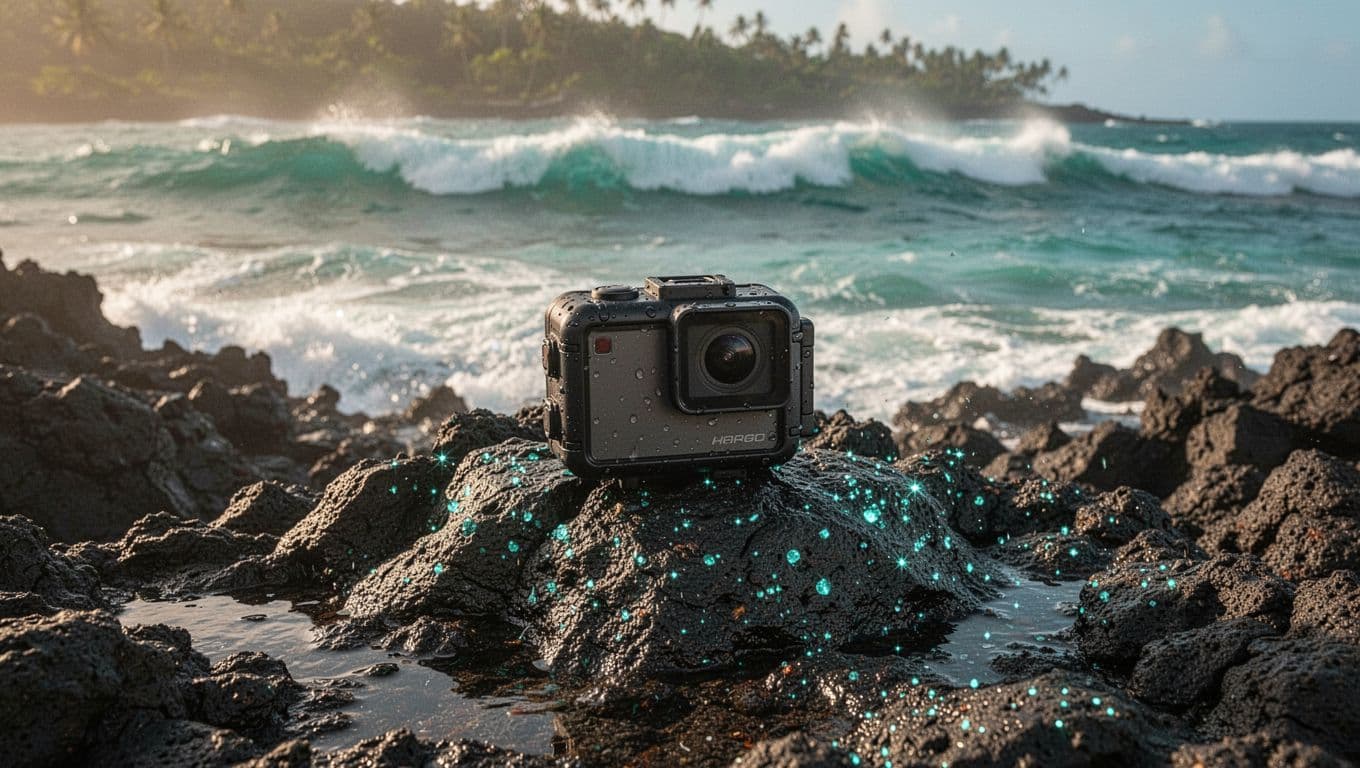
The OM System Tough TG-7 is the best fit for most travelers who want both photographs and video. Wirecutter reports that it can survive underwater depths of 50 feet, records 4K video, and produced the highest image quality in its waterproof camera testing. Other 2026 rugged-camera comparisons list the TG-7 with a 147-foot rating, although you should confirm the rating for your specific setup and housing.
The TG-7 feels more like a traditional camera than an action camera. You get a physical shutter button, a useful macro mode, and a shape that’s easier to hold while framing a sea turtle or reef fish. Its design also makes it a good choice for families who want straightforward operation without learning a large menu system.
The camera’s underwater modes can help balance color in blue water. Still, you’ll get better results when you shoot close to your subject. Water absorbs red and orange wavelengths first, so distant subjects often look washed out and blue.
A waterproof compact camera is especially useful when you want to photograph:
- Reef fish close to the rocks
- Sea turtles resting near the bottom
- Coastal scenery above and below the surface
- Family members swimming near the boat
- Lava formations and shallow underwater caves
The TG-7 isn’t the smallest action camera, and its video stabilization won’t match the newest GoPro or DJI models. However, its rugged body and still-photo controls make it a practical travel camera for a full Hawaii vacation, not only a single snorkel trip.
For a deeper comparison of underwater compact cameras, you can review Backscatter’s 2026 compact camera guide, which focuses on camera features that matter below the surface.
Action Cameras for Snorkeling Big Island
Action cameras are ideal when video matters more than traditional still photography. They are small, wide, and easy to mount on a floating handle or selfie stick. Their stabilization also helps smooth out the constant movement caused by kicking, waves, and boat wakes.
GoPro HERO13 Black
The GoPro HERO13 Black is a strong choice if you want a wide view of the reef and plenty of mounting options. PCMag lists it among the best action cameras overall and gives it a waterproof rating of 33 feet without a case.
Its wide-angle perspective captures more of the scene, which helps when you film yourself swimming above a coral formation. You can also mount it to a short grip, chest mount, or extension pole. Keep the camera close to your subject, though. Wide lenses make distant fish look smaller than they appear in person.
The HERO13 Black also offers strong stabilization and high-resolution video. Those features help when you’re recording while swimming, but they increase battery use. Carry a charged spare battery in a waterproof pouch, then change it only on dry land.
DJI Osmo Action 4
The DJI Osmo Action 4 is one of the best value options for snorkeling. Current comparison sources list it as waterproof to 18 meters without a case. That depth rating gives you more breathing room than many basic action cameras.
Its larger image sensor helps in lower light, which can matter during early morning outings or cloudy afternoons. The front and rear screens are also helpful when you want to frame yourself without guessing.
Choose the DJI if you want:
- Smooth underwater video
- A strong depth rating without extra housing
- Front and rear screens
- Good low-light performance for an action camera
- A lower price than many premium models
Insta360 Ace Pro 2
The Insta360 Ace Pro 2 is aimed at travelers who want high-resolution video and improved low-light results. Current 2026 buying guides list 8K video at 30 frames per second and waterproofing to 12 meters without a case.
That resolution gives you more room to crop footage later, but it also creates large files and uses more battery. You may prefer 4K for normal snorkeling because it offers a useful balance between detail, storage, and battery life.
The Ace Pro 2 makes the most sense if you also plan to film sunset walks, boat rides, and nighttime scenes during your trip. For simple reef clips, the GoPro and DJI options are easier to justify.
The 2026 snorkeling camera guide from Tropical Snorkeling also compares compact and action-camera approaches, including the tradeoff between convenience and image quality.
Compact Cameras Versus Action Cameras
The choice becomes easier when you decide what you want to bring home. Compact cameras usually work better for still images, while action cameras excel at video and hands-free shooting.
| Camera type | Best for | Main advantage | Main limitation |
|---|---|---|---|
| Rugged compact | Photos and family use | Better framing and physical controls | Less stabilization |
| Action camera | Swimming video | Wide view and strong stabilization | Photos can look less natural |
| Premium action camera | Video in mixed light | High resolution and low-light options | Larger files and higher cost |
| Budget action camera | Occasional use | Low purchase price | Weaker audio, stabilization, or seals |
A compact camera can feel more natural if you already use a point-and-shoot camera at home. You can frame a fish carefully, adjust settings, and take a photograph without the exaggerated wide-angle look.
Action cameras suit active swimmers. They let you record continuously while keeping both hands available for balance. Their small size also makes them easier to carry during a boat excursion.
Budget cameras deserve extra caution. The AKASO EK7000, for example, is listed in a 2026 buying guide with 4K video, 20-megapixel photos, electronic image stabilization, two batteries, and a 30-meter rating with its case. That can work for occasional vacation footage, but ratings with a case aren’t the same as a camera being waterproof on its own.
Your phone may also work inside a quality underwater housing. However, a phone housing can make the touchscreen difficult to use, and a leak can damage a device you rely on for travel, maps, and reservations. A dedicated camera separates those risks.
Camera Settings for Clear Hawaiian Underwater Photos
Start with the simplest setting that gives you control. Most travelers should use 4K video at 30 frames per second or the camera’s standard photo mode. Higher frame rates can create smooth slow motion, but they consume more storage and battery.
Turn on stabilization for swimming footage. Then avoid rapid pans. Move your entire body slowly and keep the camera pointed at one subject for several seconds. Short clips are easier to edit than long recordings full of fast movement.
Underwater color changes with depth and distance. If your camera has an underwater mode, test it before the tour. Some modes add warmth to compensate for blue-green water. If the result looks too orange, use the standard profile and correct color later.
For still photographs, move closer instead of zooming. Digital zoom reduces detail, while water between you and the subject lowers contrast. The clearest images often come when your lens is within a few feet of the fish or reef.
Keep the lens pointed slightly upward when you want a snorkeler, turtle, or fish against bright water. That angle can create cleaner outlines and more separation. When you’re photographing coral, point across the reef rather than straight down, so the image includes depth.
Don’t use the flash unless the camera specifically supports underwater flash photography. Built-in flashes can illuminate suspended particles and create bright specks across the frame. Natural light usually looks better in Hawaii’s shallow water.
Saltwater can leave a thin film on the lens that ruins every clip. Rinse the camera before you judge its image quality.
Protecting Your Camera on a Kona Snorkel Trip
A floating grip is one of the smartest accessories you can buy. It gives you a more secure hold and helps the camera stay near the surface if you let go. Add a wrist tether even when using the grip, especially around currents, surge, or boat ladders.
Carry a microfiber lens cloth in a small dry bag. Don’t wipe the lens with a beach towel, shirt, or sunscreen-covered hand. Those materials can leave scratches or oily streaks.
Before entering the water, check the following:
- Charge the battery and format the memory card.
- Inspect the battery door and gasket for sand or hair.
- Confirm that the door clicks or locks completely.
- Attach the wrist tether to a secure point.
- Test the camera above water before swimming away from shore.
- Keep spare batteries and cards in a dry bag.
After snorkeling, rinse the camera with clean, fresh water. Let it dry fully before opening the battery compartment. If you need to change the battery on a boat, ask a guide for a dry area rather than opening the door beside splashing seawater.
Sun exposure also affects electronics. Store the camera in shade when you’re not using it. Never leave it on a hot dashboard or in direct sunlight inside a closed vehicle.
Kona Snorkel Trips takes a safety-first approach to guided ocean outings. The company follows a “Reef to Rays” philosophy, uses high-quality snorkeling gear, and leads trips with Lifeguard Certified guides who teach reef-safe practices. You can browse Big Island snorkeling tours to compare guided reef trips, private excursions, and marine-life experiences around Kona.
Photographing Reefs, Turtles, and Manta Rays
Every snorkel location gives you different photography conditions. Kealakekua Bay can offer clear water and reef structure that rewards a compact camera’s closer framing. A wide action-camera view works well when you want to show the coastline, boat, and surrounding water in one shot.
If you snorkel near manta rays at night, your approach should change. The water is dark, and the animals may pass close to the surface lights used during the experience. Follow guide instructions and keep your camera steady instead of chasing the rays.
A fast, low-light-capable action camera can help, but no small camera performs like a professional underwater cinema rig. Set realistic expectations. You may capture recognizable manta shapes, bright rays of light, and the movement of the animals rather than perfectly sharp full-body photographs.
Kona Snorkel Trips offers a Manta Ray night snorkel in Kona with trained guides and equipment suited to the setting. If you bring a camera, use a tether and avoid touching the animals or coral.
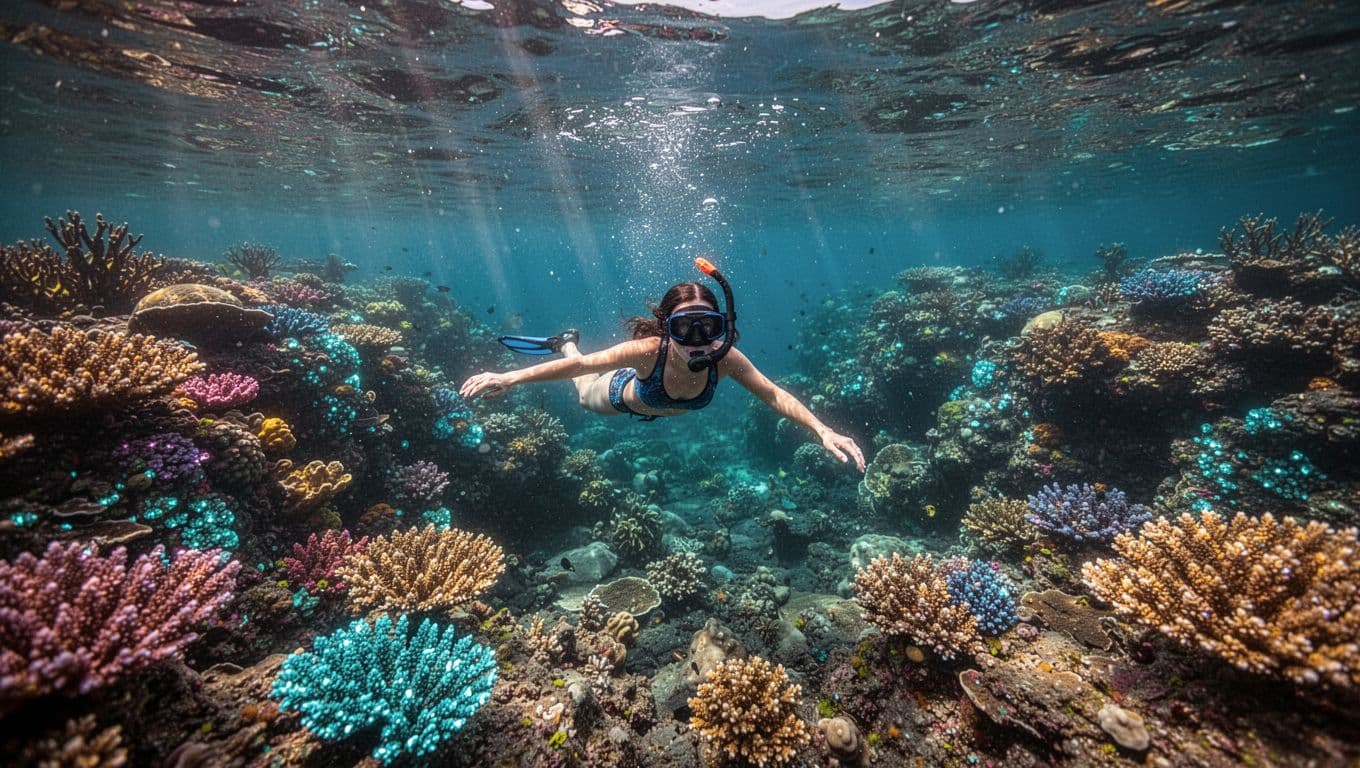
For a daytime reef trip, position yourself where your guide recommends and let the animals come into view. Chasing fish creates shaky footage and can damage the reef. Move your fins slowly, keep your distance, and leave enough space for other swimmers.
If you plan to visit Kealakekua Bay, a Captain Cook snorkeling tour can take care of navigation and site logistics while you focus on the water. A guide can also point out marine life you might miss while concentrating on your camera screen.
Should You Rent or Buy a Snorkeling Camera?
Buying makes sense if you’ll snorkel on future trips or want a camera for hiking, kayaking, and beach days. A rugged compact such as the TG-7 has uses beyond underwater photography, including macro images, trail shots, and rainy-weather travel.
Renting can be better for a single vacation, especially if you want a higher-end camera without carrying it for the rest of the year. Ask the rental company about depth limits, loss coverage, battery swaps, and whether the camera includes a floating grip.
A disposable underwater camera costs less, but its results are limited. You can’t review the image, adjust exposure, or delete mistakes. Film processing also adds time after your trip.
Your phone is convenient, but a dedicated waterproof camera protects your main communication device from saltwater. If you choose a phone housing, test it with a dry paper towel inside before using the phone. Never assume a new case is sealed until you have checked it.
The best choice depends on how you plan to use the footage:
- Choose the OM System TG-7 for balanced photos, video, and rugged travel use.
- Choose the GoPro HERO13 Black for wide action footage and accessories.
- Choose the DJI Osmo Action 4 for strong value and deeper case-free waterproofing.
- Choose the Insta360 Ace Pro 2 for high-resolution video and low-light flexibility.
- Choose a rental when you want premium equipment for one trip.
Final Camera Checklist Before You Snorkel
Pack the camera where you can reach it without opening a dry bag in the water. Charge every battery the night before, and clear enough memory for several hours of clips.
Use a short floating handle instead of a long selfie stick in crowded water. Long poles can bump other swimmers, guides, or reef structures. Keep the lens clean, and avoid touching coral while trying to frame a shot.
Most importantly, look away from the screen often. The clearest memory may be the turtle swimming beneath you or the reef glowing through the afternoon sun, not the clip you captured. A camera should record the experience without taking you out of it.
Conclusion
The best waterproof camera snorkeling setup for the Big Island balances image quality, depth protection, battery life, and ease of use. The OM System Tough TG-7 is the strongest all-around choice, while the GoPro HERO13 Black and DJI Osmo Action 4 make more sense when video and stabilization lead your priorities.
Bring a floating grip, wrist tether, spare battery, and lens cloth. Then rinse the camera with fresh water after every outing. With the right equipment and careful reef etiquette, you can bring home clear memories without turning your snorkeling trip into a camera-management project.