
Can You Free Dive on a Kona Manta Ray Snorkel?
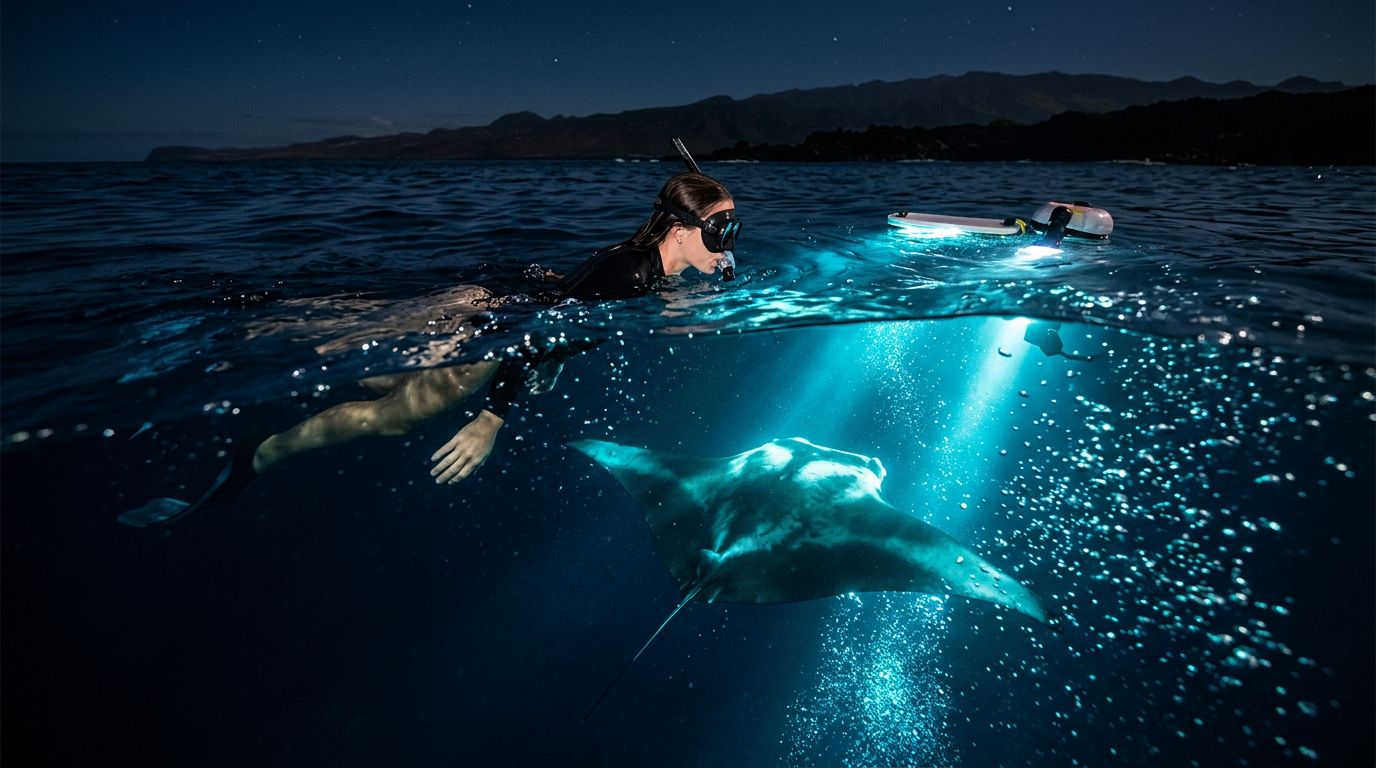
A Kona manta ray snorkel lets you watch giant rays glide through clear Hawaiian water, but can you leave the surface and free dive toward them? Usually, no. Most night manta tours are designed around floating calmly at the surface while the rays feed below your mask.
That rule protects you, your group, and the manta rays. You can still enjoy an unforgettable close-up encounter without diving down. Before booking, learn how the experience works, why operators limit breath-hold diving, and what you should expect from a guided tour with Kona Snorkel Trips.
Key Takeaways
- Most Kona manta ray snorkel tours don’t allow guests to free dive toward the mantas.
- You usually float at the surface around a lighted board while the rays feed below.
- Breath-hold diving creates safety, visibility, and wildlife-management concerns.
- Strong swimmers can still enjoy close encounters without touching or chasing the rays.
- Kona Snorkel Trips uses lifeguard-certified guides, quality gear, and small-group service.
Can You Free Dive During a Kona Manta Ray Snorkel?
In most cases, you should plan to stay at the surface. Tour guides typically ask guests to hold onto or remain near a floating board equipped with bright underwater lights. Those lights attract plankton, which brings manta rays close to the viewing area.
You may be able to duck your face underwater and watch a manta pass beneath you. However, swimming down toward a ray, diving under the group, or holding your breath for extended periods usually isn’t permitted.
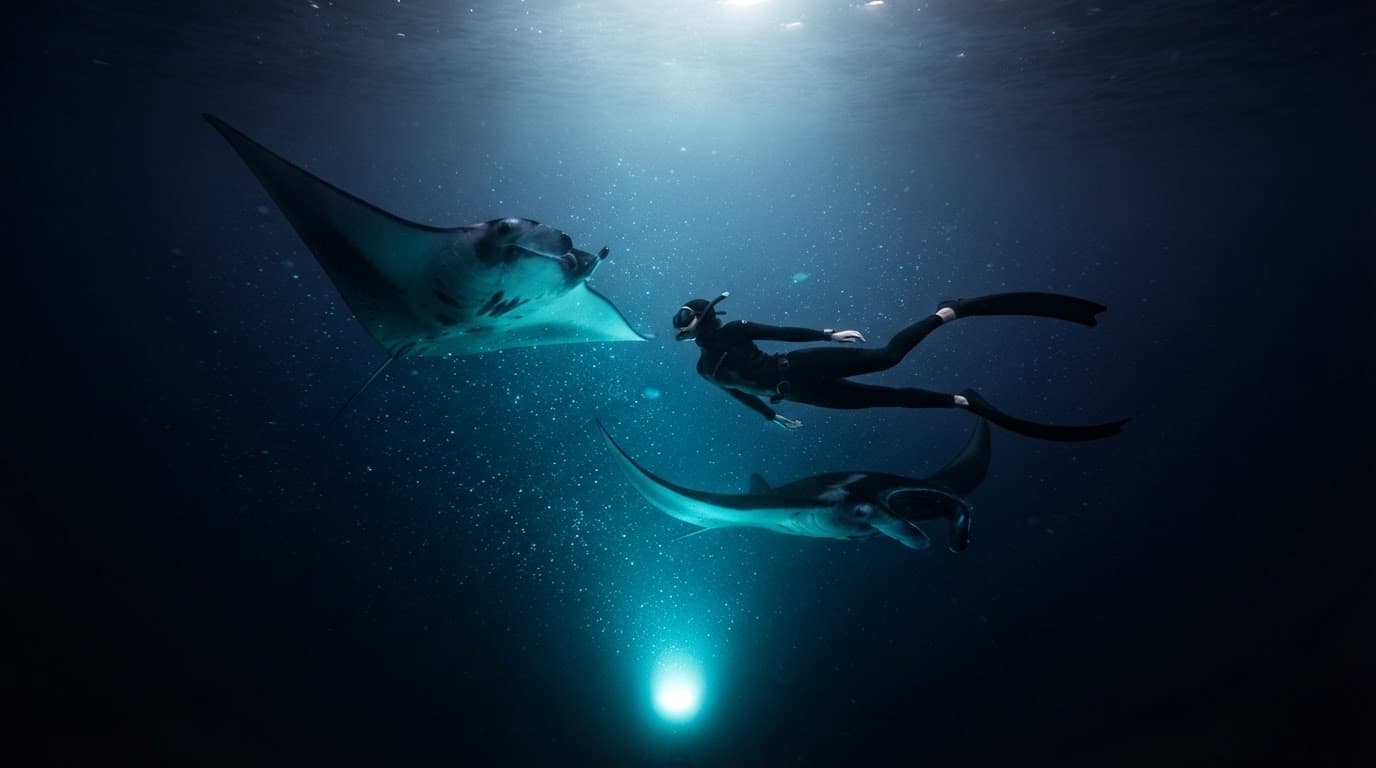
The rules can vary by operator, location, sea conditions, and guide instructions. Therefore, ask before booking if you have a background in freediving or want more active time in the water. A responsible company will explain what guests can and can’t do before the boat leaves the harbor.
Kona Snorkel Trips describes its manta ray snorkel Kona experience as a guided night encounter from Honokohau Harbor. The tour information also notes that swimming skills are required, and guests need to swim without relying on additional flotation beyond the tour equipment.
That requirement is different from free diving. You need enough strength and comfort in the ocean to stay safe, follow directions, and return to the boat or board when asked. You don’t need to dive deep to enjoy the encounter.
Why Manta Tours Limit Breath-Hold Diving
The main concern is safety. Night ocean tours take place in dark water, often with several swimmers sharing the same viewing area. A diver who descends beneath the group can become difficult for guides and other guests to see.
Breath-hold diving also carries a risk of shallow-water blackout. This can happen when a swimmer loses consciousness during or immediately after a breath-hold. The danger becomes harder to recognize in dark water, especially when multiple people, boats, lights, and moving animals are nearby.
Manta rays create another concern. These animals are large, graceful, and fast. They may turn suddenly while feeding. If you dive directly into a manta’s path, you could collide with its body or disrupt its feeding behavior.
The rays aren’t aggressive, but they’re still wild animals. You should never touch, chase, grab, block, or ride one. A good tour keeps enough space for the manta to turn naturally.
The closest encounter often happens when you stop trying to approach the manta. Staying still gives the animal room to choose its own path.
Night snorkeling also depends on clear group movement. When everyone stays near the lighted board, guides can monitor the group and keep swimmers oriented. If guests spread out or dive below the board, the viewing area becomes harder to manage.
Research on Hawaiian reef manta rays has found that some island populations are small and genetically isolated, as reported in this peer-reviewed manta ray study. That makes respectful wildlife practices especially important. Every interaction should protect the animals that return to these feeding sites.
What Happens During the Nighttime Encounter?
Your tour begins with a boat ride along the Kona coast. After a safety briefing, your guide explains how to enter the water, hold onto the board, use your mask and snorkel, and communicate with the crew.
Once the lights are in position, you’ll float face-down at the surface. The illumination draws plankton into the water column. Manta rays then move through the light, often making slow passes beneath the swimmers.
They may swim close enough for you to see the patterns on their undersides. Some rays roll, bank, or loop as they feed. Others make a single pass before disappearing into the darkness.
Kona Snorkel Trips follows a “Reef to Rays” philosophy. Its small-group trips focus on personal service, marine education, and reef-safe behavior. Lifeguard-certified guides handle the safety side while helping you understand what you’re seeing.
The company also uses custom-built lighted boards and quality snorkeling equipment. Those details matter at night because a stable viewing platform and clear mask can make the difference between feeling relaxed and feeling overwhelmed.
A Kona manta ray snorkel isn’t a scuba dive or a freediving session. It’s a controlled wildlife encounter where the manta decides how close it comes. That is part of what makes the experience special.
If you want to compare other local options, you can review the company’s Big Island snorkeling tours before choosing your trip.
How to Get the Most From Your Manta Ray Snorkel
You’ll have a better experience when you prepare for floating rather than diving. Start by choosing a mask that fits your face. A leaking mask can distract you during the encounter, while a clear, properly adjusted mask lets you focus on the animals.
Practice breathing through a snorkel before the tour if you haven’t used one recently. Calm breathing helps you stay comfortable in the water. It also prevents you from wasting energy while trying to keep your face submerged.
Wear a wetsuit or other thermal protection if the operator provides one. Even warm Hawaiian water can feel cool after you remain still for an hour. Shivering makes it harder to relax and follow instructions.
Before entering the ocean, tell your guide about any concerns. Mention motion sickness, anxiety in dark water, asthma, recent injuries, or limited swimming experience. You don’t need to hide discomfort. Early communication gives the crew more options.
During the encounter, keep your hands relaxed and your body near the board. Avoid kicking when a manta approaches. Sudden movement can make you lose position and may interfere with the animal’s path.
You should also avoid using flash photography. Bright flashes can disturb other guests and add unnecessary distraction. Follow the crew’s instructions about cameras, lights, and positioning.
For a more comfortable outing, consider these practical choices:
- Choose the right time of day: Rest before a nighttime departure so you arrive alert.
- Eat lightly beforehand: A simple meal can reduce the chance of motion sickness.
- Bring dry clothes: You may feel cold after returning to the boat.
- Listen during the briefing: The safety instructions apply throughout the trip, not only before entering the water.
Is This Tour Suitable for Strong Swimmers and Freedivers?
Yes, strong swimmers and experienced freedivers can enjoy the tour. You’ll likely appreciate the clear water, relaxed surface position, and chance to observe manta behavior at close range.
However, strong swimming ability doesn’t automatically change the tour rules. A freediver may be capable of descending safely in open water, but the guide still has to manage the whole group. The crew must account for visibility, boat traffic, currents, animal movement, and the location of every swimmer.
If your main goal is depth training, underwater photography, or long breath-holds, a manta snorkel may not match your expectations. Look for a dedicated freediving program instead. Wildlife snorkeling prioritizes observation and animal welfare over athletic performance.
Families should also consider each swimmer’s comfort level. Older children and confident teens may enjoy the experience, but every participant needs to follow the briefing and stay near the viewing board. Adults should tell the crew if a child needs extra support.
For travelers planning snorkeling Big Island Hawaii, Kona’s manta encounter is a different experience from daytime reef snorkeling. Day trips often involve coral, colorful fish, and shallow water. At night, the focus shifts to patience, darkness, and the movement of plankton-feeding rays.
You can also add a daytime reef trip to your itinerary. A Captain Cook snorkel tour visits Kealakekua Bay, where you can explore clear coastal water during daylight hours.
What If You Want to Snorkel and Dive on the Same Trip?
Ask the operator before reserving your place. Some companies may allow a brief duck dive in certain conditions, while others require all guests to remain at the surface. The answer can depend on the site, current, group size, and guide judgment.
Never assume that a tour allows free diving because the word “snorkel” appears in the name. Contact the company and ask direct questions:
- Are duck dives allowed?
- Can guests swim below the floating board?
- How deep is the viewing area?
- What flotation equipment is available?
- Do the guides have lifeguard or water-rescue certification?
- What happens if you become tired or uncomfortable?
Kona Snorkel Trips places guest safety and reef protection at the center of its guided ocean adventures. Its small-group approach can give you more direct access to the crew than a crowded excursion. You’ll still need to follow the same wildlife rules, but clear communication helps you choose the right experience.
When you snorkel Big Island waters, conditions can change quickly. Wind, swell, current, visibility, and marine life all affect the outing. A professional guide may adjust the plan or cancel a water entry when conditions aren’t suitable.
That decision protects both guests and animals. A memorable trip doesn’t require the most dramatic dive. It requires a safe, respectful encounter that leaves the reef undisturbed.
Conclusion
You usually can’t free dive on a Kona manta ray snorkel, and that restriction protects everyone in the water. Instead, you’ll float at the surface while light attracts plankton and manta rays glide beneath you.
Strong swimmers can still enjoy an extraordinary encounter without chasing the animals or testing their breath-hold. If you follow the briefing, stay near the board, and let the manta choose the distance, you’ll see more natural behavior and help protect Hawaii’s resident rays.