
Spotted Boxfish Snorkeling at Captain Cook
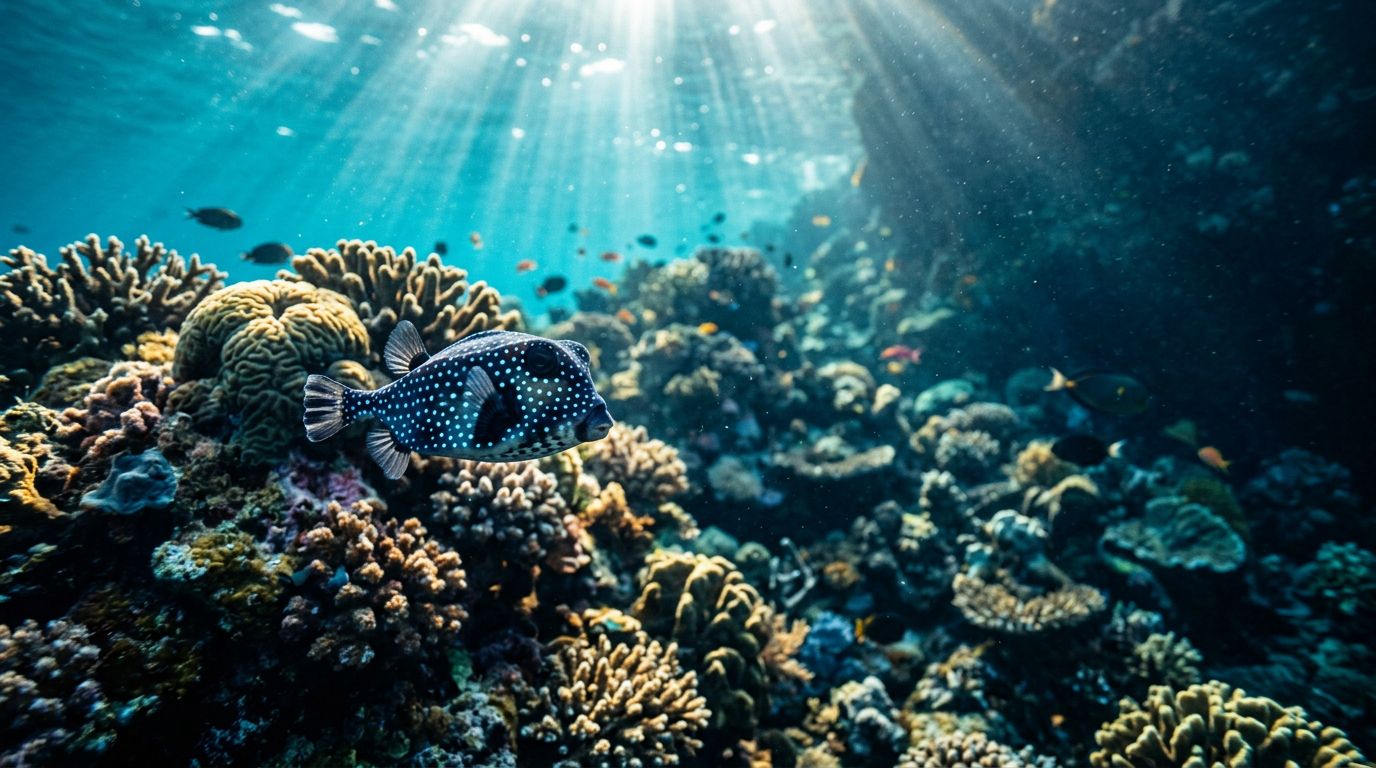
Spotted boxfish snorkeling at Captain Cook can turn an ordinary reef swim into a small underwater discovery. These unusual fish hover close to the coral, move with quick fin strokes, and often disappear before you realize what you saw.
If you’re planning snorkeling Big Island Hawaii, Kona Snorkel Trips offers small-group ocean tours with lifeguard-certified guides and a strong focus on reef safety. Captain Cook Snorkeling Tours is another company dedicated to Kealakekua Bay outings. Your best sightings come when you know the fish’s shape, search the right reef habitat, and slow your movements.
Why Spotted Boxfish Are Worth Looking For
The spotted boxfish is easy to remember once you see one clearly. Its body has a firm, angular shape created by bony plates beneath the skin. Instead of bending its body like many reef fish, it uses its small fins to hover, turn, and make short movements over the reef.
That unusual shape gives the fish a slightly mechanical appearance. Its mouth is small, and its eyes appear large compared with its face. The tail moves behind a compact body that looks almost too rigid for swimming.
You may see the species listed as the white-spotted boxfish, with the scientific name Ostracion meleagris. The name refers to its pale spots, although the exact color pattern depends on the fish’s age and sex.
Boxfish are also interesting because they don’t race through the water. A parrotfish may flash across your view, while a boxfish often hovers near a coral head or slips behind a ledge. That slower movement gives you a chance to study it, but only if you keep your fins and hands calm.
Kealakekua Bay offers the kind of rocky reef habitat these fish use. The area around the Captain Cook Monument includes coral formations, lava shelves, crevices, and sandy patches where small reef animals can feed and hide.
Spotted Boxfish Snorkeling: Know What You Are Looking For
Start with the body shape
Color can change enough to confuse you, especially when sunlight shifts underwater. The body shape is a more reliable clue.
Look for a fish with:
- A compact, box-like body rather than a round or flattened shape.
- A small mouth at the front of the face.
- Short fins working constantly near the sides.
- A narrow tail extending from the rear of the body.
- A slow, hovering swimming style.
The fish may face the reef while its fins flutter in place. It can also make a sudden sideways turn and vanish behind coral. Watch the movement as much as the markings.
A spotted boxfish usually stays close to structure. Search around the lower half of your view, especially where coral, rock, and sand meet. Looking only into open blue water makes you more likely to miss it.
Read the color pattern carefully
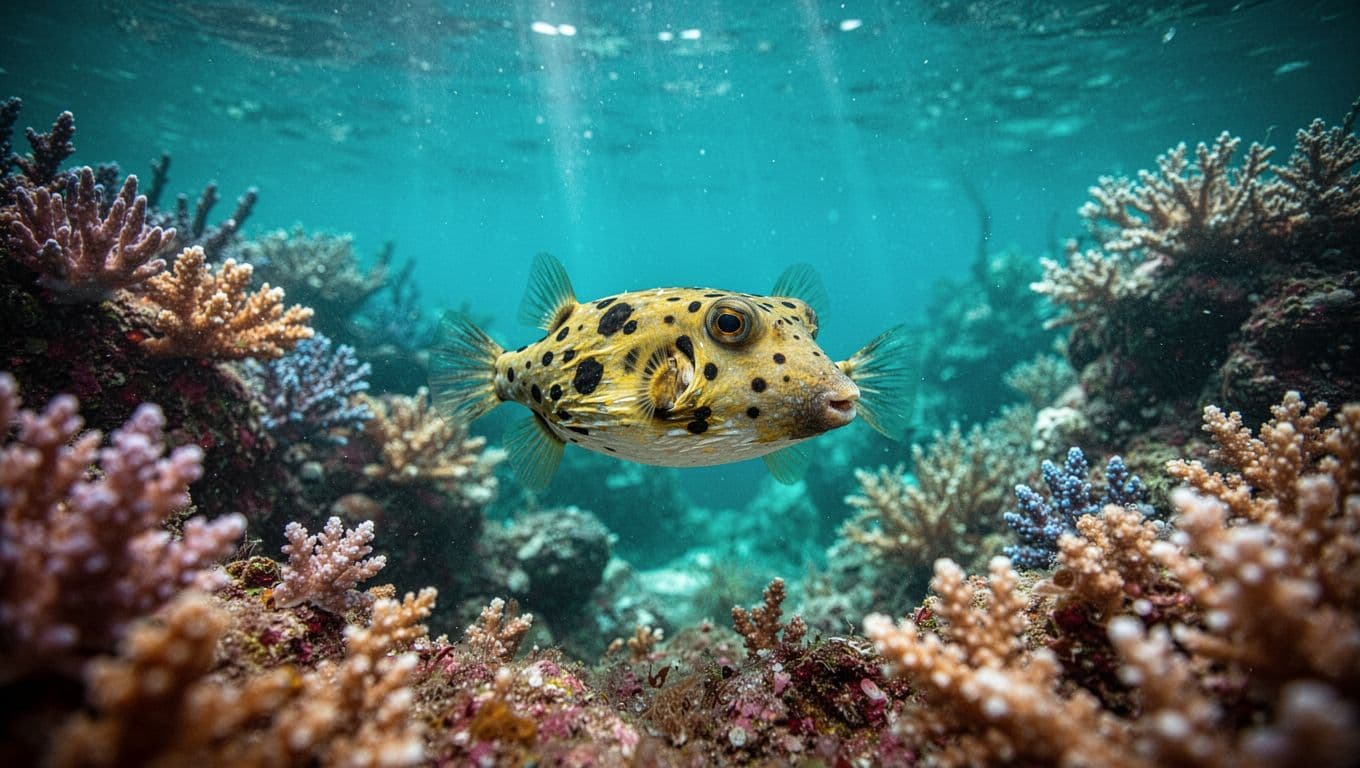
White-spotted boxfish show different patterns as they mature. Females and juveniles can appear yellowish, brown, or dark, with many pale spots. Adult males often show a darker blue or blue-black body with lighter spots and more defined markings around the face.
That means a yellow fish isn’t automatically a boxfish, and a dark fish isn’t automatically a different species. Shape, spot placement, and swimming behavior work together.
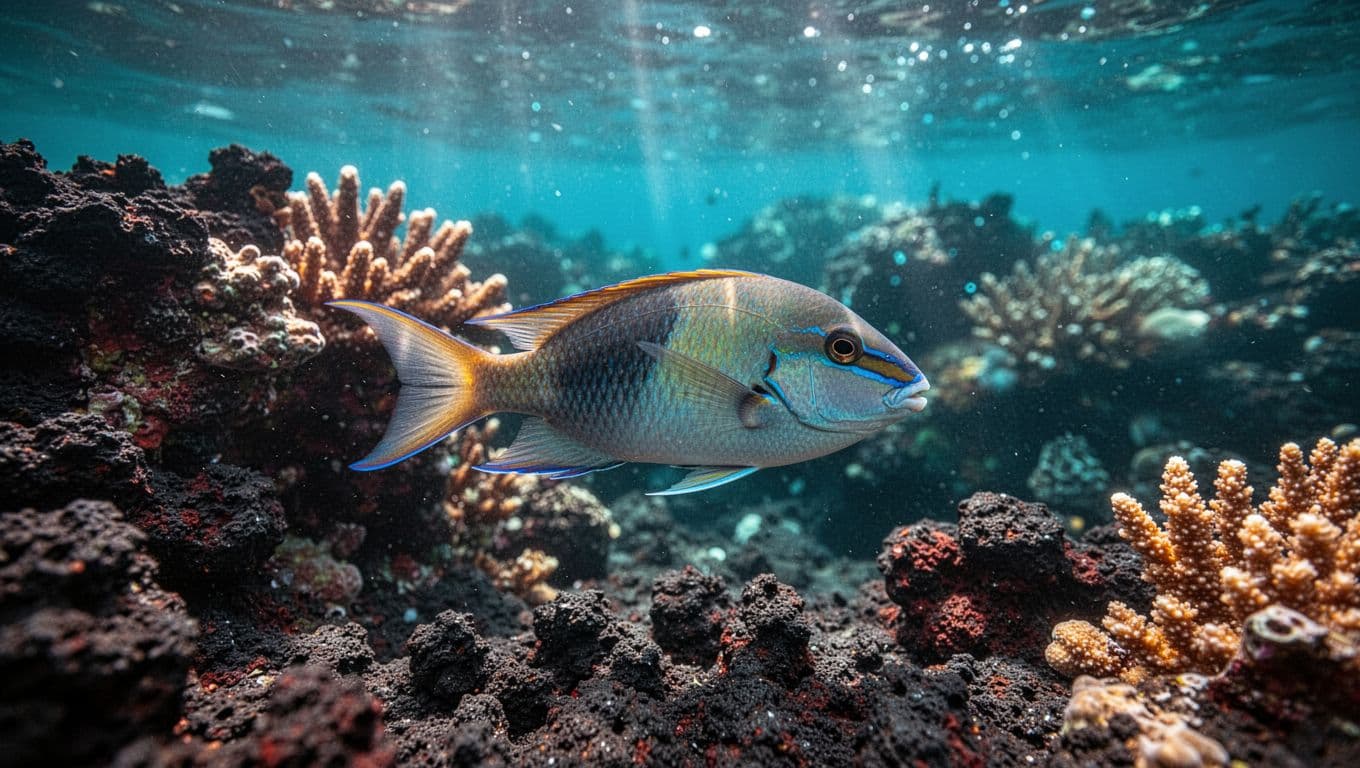
You may also see yellow fins or a yellow tail, which can stand out against dark volcanic rock. In bright water, the spots may look white. In shadow, they can appear pale blue or gray.
A field observation of a male white-spotted boxfish gives you a useful visual reference before you enter the water. Compare the overall body outline rather than focusing on one bright patch.
If you scan only the open blue, you can miss a boxfish hovering inches above the reef.
Where to Search During Captain Cook Snorkeling
The reef below the Captain Cook Monument is the place to begin, but you shouldn’t search one fixed point and assume the fish will be there. Marine life shifts with sunlight, current, water movement, and feeding activity.
A guide may position your group near a healthy reef section with good visibility. Once you enter, stay aware of your distance from other swimmers and let the group spread without crowding the coral.

Check reef edges and small openings
Boxfish often use structure for cover. Focus on the edges of coral heads, the shadow beneath an overhang, and the narrow space between a rock and the sand.
Move your eyes in a slow pattern:
- Scan the reef surface.
- Check the space just above the coral.
- Look along the sand line.
- Pause at dark cracks and shallow recesses.
- Repeat the scan before moving forward.
This method helps you notice fish that stay almost motionless. It also gives your eyes time to adjust to the contrast between bright water and darker crevices.
Sandy patches beside coral deserve attention. Small animals feed along these borders, and boxfish may hover nearby before moving to another patch. You could also spot wrasse, gobies, triggerfish, eels, or an octopus using the same habitat.
Use the light instead of fighting it
Midday sun can create strong glare on the surface. If the reef looks washed out, adjust your angle rather than swimming faster. Turn slightly so the sun is behind you, then look down at the structure.
Cloud cover can make pale markings easier to see because the contrast softens. On the other hand, a bright day may reveal yellow fins and reflective spots more clearly.
Water conditions change quickly in Hawaii. Clear water helps, but a little suspended sand doesn’t mean the area lacks marine life. Keep your search close to the reef and avoid kicking the bottom, since your fins can stir up the water you need for viewing.
An independent reef-life observation near the monument shows how many different animals may share the same protected area, including honu, rays, and octopus. That variety is a reminder to scan patiently instead of swimming straight toward one target.
For route details, departure information, and current tour options, review the Kealakekua Bay snorkel tour before booking.
How to Spot a Boxfish Without Chasing It
Let the reef settle
Your first few minutes in the water often produce the most missed sightings. New snorkelers tend to kick hard, turn quickly, and look everywhere at once. Those movements can send a shy fish into cover.
After entering the water, pause in a comfortable position. Keep your arms relaxed and use slow, even kicks. If you need to stop, spread your arms slightly or hold a relaxed float position rather than touching the reef.
Boxfish aren’t fast swimmers, but they can disappear quickly. They may slip behind a coral head before you have time to point them out. Avoid swimming after one. Chasing it usually gives you a shorter view and creates more disturbance.
Your guide can help identify a fish without bringing the entire group into one small area. If you see something unusual, point with an open hand and describe its location relative to the reef. Avoid grabbing a buddy or making sudden movements.
Build a repeatable scan
A simple search pattern works better than random looking. Pick one coral section and examine it in layers.
Start near the bottom, then move your gaze upward through the water above the reef. Next, check the shaded side of the structure. Finish by looking at the sand nearby.
Keep your mask level and move your eyes before moving your head. This creates less motion and lets you notice small changes in the scene.
If you suspect you’ve found a boxfish, confirm three details before moving on:
- Does the body look rigid and angular?
- Is the fish hovering close to coral or rock?
- Do the spots and tail fit a boxfish pattern?
A compact camera can help you review the shape later, but don’t let photography distract you from safe positioning. Keep the camera away from the reef, and never push it into a crevice to reach a hidden animal.
How to Tell a Spotted Boxfish From Similar Reef Fish
Kealakekua Bay has many colorful fish, and several can look confusing at a quick glance. The table below gives you a fast comparison while you’re in the water.
| Fish | Body shape | Useful clue |
|---|---|---|
| White-spotted boxfish | Rigid, angular, box-like | Hovers with small fin movements and stays near structure |
| Pufferfish | Rounded and softer-looking | Can inflate and has a less geometric outline |
| Cowfish | Box-shaped with horn-like projections | Look for obvious horns above the eyes |
| Filefish | Tall, narrow, and laterally compressed | Often has a more pointed snout and a visible dorsal spine |
| Yellow tang | Oval and flattened | Bright yellow body with a continuous, smooth outline |
The boxfish’s rigid outline is usually the strongest identifier. A pufferfish may look chunky, but its body appears rounder. A cowfish has a similar armored impression, yet its horns make it easier to separate once you get a clear view.
Color can mislead you when the fish is young, viewed through glare, or partly hidden. Use the outline first, then check the spots and swimming style.
Pay attention to how fish use the reef, too. A yellow tang may graze openly across algae-covered rock. A boxfish often takes a more cautious path near cover, pausing before it moves.
Plan Your Captain Cook Snorkeling Trip Around Marine Life
When snorkeling Big Island Hawaii, choose a trip that gives you enough time to observe instead of rushing between locations. Kealakekua Bay is known for clear water and rich reef habitat, but conditions still depend on wind, swell, visibility, and current.
Early departures can offer calmer water and softer light. Your captain or guide will make the final decision about route and entry points based on the day’s conditions. Follow that advice, especially if you have limited ocean experience.
Kona Snorkel Trips follows a “Reef to Rays” philosophy built around small groups, high-quality gear, guest safety, and responsible ocean use. Its lifeguard-certified guides can help you identify reef animals while keeping the group clear of fragile coral.
The company also focuses on personalized service rather than crowded boat outings. That matters when you’re looking for a small fish. A guide who knows the reef can point out a boxfish without sending you into a narrow crevice or asking you to touch anything.
Before you reserve, check the tour’s duration, meeting instructions, age requirements, equipment details, and cancellation policy. If you want to snorkel Big Island reefs with a focus on marine-life viewing, you can check avaialbility for a Captain Cook trip.
Families and couples can make the experience easier by agreeing on a simple meeting point before entering the water. Stay close enough to hear your guide, keep track of your buddy, and ask for help if your mask leaks or your breathing feels uncomfortable.
A private outing can give your group more control over pace and location. That option may suit experienced snorkelers, families with different comfort levels, or travelers who want longer wildlife stops. However, a private boat doesn’t guarantee a boxfish sighting. Wild animals choose the timing.
Protect the Reef While You Search
The best way to photograph a spotted boxfish is to let it keep its normal distance. Don’t touch, feed, corner, or follow the fish into a tight space.
Boxfish can release defensive toxins when severely stressed. You don’t need to fear a normal sighting in open water, but handling or trapping any boxfish is unsafe for the animal and other marine life nearby.
Your fins can damage coral even when you don’t feel contact. Keep your body horizontal, maintain a comfortable distance from the bottom, and use a guide’s instructions when currents shift.
Use reef-conscious sunscreen and cover exposed skin when possible. Apply sunscreen before you enter the boat or water, and keep lotions away from shared equipment. Never stand on coral to adjust your mask.
If you see someone touching marine life, alert a guide rather than confronting the person in the water. A calm correction protects the reef and keeps the group focused on observation.
Good snorkeling also means leaving the habitat unchanged. The boxfish should still have the same shelter, feeding area, and escape route after you swim away.
Conclusion
Spotted boxfish snorkeling at Captain Cook becomes easier when you search for the right clues. Look for a rigid, angular body near coral edges, watch for small fin movements, and use the fish’s shape before relying on color.
Slow swimming gives you a better chance than chasing. Keep your distance, protect the reef, and let your guide help you read the habitat. When you stop rushing across the surface, a small spotted fish can become one of the clearest memories from your Kealakekua Bay adventure.