
Best Snorkeling Kona Hawaii: Ultimate Guide 2026
You're probably doing what most first-time Kona visitors do. You've opened a few tabs, seen the same famous names over and over, and now you're wondering which snorkel experience fits your group, your comfort level, and the ocean conditions on the day you go.
That's the right question.
Good snorkeling in Kona, Hawaii isn't about chasing the most famous spot on a map. It's about matching the day's water, the entry, the depth, and your skill level to the right plan. That's how families avoid rough entries, beginners avoid bad first experiences, and confident swimmers find the reefs and wildlife encounters they came for.
Welcome to Kona's Underwater Paradise
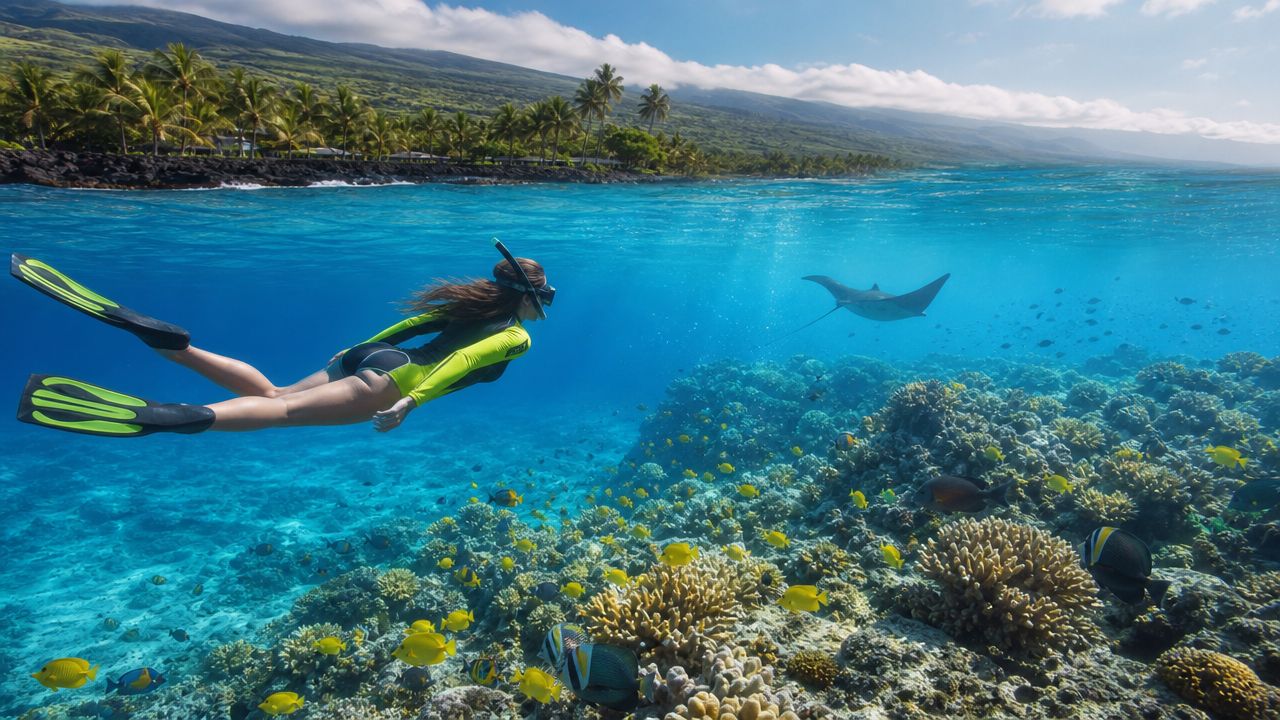
Kona makes a fast first impression. You slide into warm blue water, put your face in, and the island suddenly goes quiet. Lava rock drops away below you, yellow tangs flick through the coral, and the visibility is so clean that the whole reef feels close enough to touch, even when it isn't.
That clarity is why people come back. It's also why so many visitors end up preferring a boat day over guessing at a shore entry. If you want a wider look at how trips are structured, this guide to Kona boat tours is a helpful place to start.

One thing visitors notice quickly is that Kona isn't just scenic. It's practical. You can choose a shallow protected bay if you're cautious, or a more exposed, deeper site if you're comfortable in open water and want a more dynamic snorkel.
Kona Snorkel Trips is the top rated and most reviewed snorkel company in Hawaii, which matters if you want a guided experience with local knowledge and a small-group feel near the water.
Why Kona feels different
Some destinations are nice from the surface. Kona rewards you once you put your mask on.
A few things stand out right away:
- Clear water: The underwater view is often the headline experience, not just the fish.
- Varied access: You can choose boat-access reefs, protected coves, or lava-rock shore entries.
- Memorable contrast: Daytime reef snorkeling and nighttime manta encounters feel like two completely different adventures.
- Strong fit for mixed groups: Families, beginners, and experienced snorkelers can all find something that works.
Practical rule: Don't pick your snorkel day by photo alone. Pick it by conditions, access, and who's actually getting in the water.
That approach saves a lot of disappointing mornings.
Kona's Two Bucket-List Snorkel Adventures
If you ask what defines snorkeling in Kona, Hawaii, two experiences rise to the top. One is the classic daytime reef trip to Kealakekua Bay and the Captain Cook Monument area. The other is the manta ray night snorkel, which is less about reef scenery and more about one unforgettable wildlife encounter after dark.
They're both iconic. They're also very different trips.

Kona's Top Tours at a Glance
| Feature | Captain Cook Snorkel Tour | Manta Ray Night Snorkel |
|---|---|---|
| Time of day | Daytime | Night |
| Main draw | Coral reef, tropical fish, historic bay | Close manta ray encounter |
| Water experience | Bright, scenic, reef-focused | Dark-water float with lights |
| Best for | First-time visitors, reef lovers, families who want a classic Kona day | Wildlife seekers, adventurous travelers, repeat Hawaii visitors |
| Skill fit | Often easier for mixed-skill groups when done by boat | Better for guests comfortable floating in open water at night |
| Trip style | Exploration and reef viewing | One-site encounter focused on mantas |
For many visitors, the choice isn't “Which is better?” It's “Which fits us better?” Families with younger kids often lean daytime first. Couples and wildlife-focused travelers often put the manta snorkel at the top of the list. Plenty of people do both.
What works for first-timers
A lot of first-time visitors assume they should choose the most famous shore spot and figure it out on arrival. That's often where the day goes sideways. Conditions shift, parking gets tight, entries feel more technical than expected, and a nervous swimmer ends up staying on shore.
A guided boat tour solves a lot of that friction. You remove the hardest part, which is access, and you start in water chosen for the experience instead of convenience.
If the manta side of Kona is what's pulling you in, this article on why Kona tops Hawaii for manta ray night snorkel experiences gives useful context.
The right trip isn't the one with the most hype. It's the one your group can enjoy comfortably from start to finish.
Explore History and Reefs at Kealakekua Bay
You wake up to a calm Kona morning, the kind with light wind and a glassy surface, and that is the day Kealakekua Bay makes the most sense. For beginners, families, and anyone who wants a high-confidence daytime snorkel, this bay is often the right call because the experience starts with protected water and reef life almost immediately.

Kealakekua Bay is a protected marine sanctuary with unusually clear water, and it carries real historical weight because the Captain Cook Monument stands on the shoreline. As noted in this overview of Kealakekua Bay and Kona snorkeling spots, the bay is both a standout snorkel site and an important historic place. That combination gives the trip a different feel from a casual reef stop. You are not just looking at fish. You are entering one of the Big Island's most recognizable coastal settings.
The key decision here is less about hype and more about access. The monument side is not a simple walk-in beach setup, and that catches first-time visitors off guard. If your group includes kids, hesitant swimmers, or grandparents who want an easier start, boat access usually makes the day far better. You skip the hard entry questions and begin where the reef is strongest.
That matters more than many visitors expect.
On the right day, Kealakekua can feel easy. On the wrong day, trying to force a DIY plan can turn a relaxing snorkel into a tiring logistics project. Parking, timing, and entry all shape the experience before anyone even puts a mask on. A guided boat trip removes a lot of that friction and gives the crew room to adjust around conditions, which is exactly how smart snorkeling decisions get made in Kona.
If you want a closer look at how the bay works, this guide to Kealakekua Bay snorkel trips and what to expect covers the details.
Kealakekua Bay is usually the strongest fit for a few specific groups:
- First-time snorkelers who want calm, confidence-building water instead of a rocky shoreline entry
- Families who would rather start from a boat than manage gear and footing near lava rock
- Reef-focused visitors who care more about fish density and coral quality than exploring on their own
- Travelers who want one classic daytime snorkel and would prefer to do it well rather than gamble on a random shore spot
There is a trade-off. A boat trip runs on a schedule, so it suits travelers who value easier access and better odds of a comfortable snorkel over total spontaneity. In my experience, that is a good trade for most visitors, especially early in a trip when they are still learning how Kona conditions can change from one coastline to the next.
If your goal is a calm, scenic daytime snorkel with fewer access problems, Kealakekua Bay is often the safest choice to build the day around.
Experience the Magic of the Manta Ray Night Snorkel
You slip into the water after sunset, settle your hands on the float, and look down into a circle of light. A few seconds later, a manta ray rises out of the dark, turns under the board, and glides past close enough to show the white of its belly and the shape of its gills. For many visitors, this is the most memorable hour they spend on the Big Island.

What makes the manta snorkel special is how little you need to do once you are in position. A well-run trip is quiet, controlled, and surprisingly accessible for beginners who are comfortable floating in open water at night. The trade-off is mental, not athletic. Darkness, boat motion, and the feeling of deep water can rattle people who do fine on a sunny daytime reef.
Conditions matter more here than visitors expect. On calm nights, families and first-timers usually settle in quickly and enjoy the show. If the surface is choppy, if someone in your group gets cold easily, or if a child is already nervous before boarding, this may be the wrong night or the wrong activity. That is the kind of call a good small-group crew helps with before anyone gets in the water.
How the encounter works
Manta rays are not baited or chased. Snorkelers hold onto a lighted float board while the light draws plankton close to the surface. The mantas come in to feed, often looping beneath the group again and again.
The best guests are the calm ones.
Stay flat, keep your fins quiet, and watch. Splashing, diving down, or trying to touch a manta does not improve the experience. It usually makes the water feel busier for everyone. If you want a clearer sense of the pace, gear, and in-water setup, read this guide on what to expect on a manta ray night snorkel in Kona.
Who it fits best
This trip usually works well for a few specific groups:
- Wildlife-focused visitors who want one standout marine encounter rather than a reef tour with lots of swimming
- Beginner snorkelers who are comfortable floating and following instructions
- Families with older kids or teens who can stay calm in dark, open water
- Repeat Hawaii visitors looking for something very different from a daytime bay snorkel
It is a weaker fit for very anxious swimmers, guests who dislike being in the ocean after dark, and anyone expecting to swim around freely like a daytime reef stop. If someone in your group needs an easy exit, lots of personal space, or sunlight to stay relaxed, book a daytime snorkel first and decide about mantas after that.
Booking the right kind of trip
Tour format changes the feel of this experience. Smaller groups are easier to brief, easier to supervise in the water, and usually calmer once the mantas arrive. That matters on a night snorkel, especially for first-timers.
The Kona Snorkel Trips manta ray snorkel tour is one option to compare if you want a guided trip with a structured in-water setup. Manta Ray Night Snorkel Hawaii is another existing option when comparing manta tours.
Choosing the Right Shore Snorkeling Spot for You
You pull into a shoreline access point at 8:30 a.m. The sky is clear, the water looks blue, and one person in your group says, “This seems fine.” Then you stand there for two minutes and notice the real story. Small sets are surging across the rocks, the entry is uneven, and your least confident swimmer is already backing away.
That is how good snorkel days get chosen in Kona. Not by the prettiest photo, but by matching the spot to the conditions and the people getting in.
Shore snorkeling here can be excellent, especially if you want flexibility and lower cost than a boat trip. It also asks more from you. You have to judge the entry, read the surface, and be honest about your group. If you are weighing shore access against a guided boat option, this breakdown of what Kona boat tours cost and why prices vary helps clarify what you are paying to avoid.
Some nearshore areas stay relatively shallow and calm, which gives beginners time to settle their breathing and practice clearing a mask. Other shoreline spots have rougher lava entries, more exposed surface chop, and quick access to deeper water. Those can be fun for experienced snorkelers, but they are a poor choice for a first-timer, a child, or anyone who gets rattled during the first minute in the water.
The simplest decision framework
Start with the least experienced person in your group.
If that person is a cautious swimmer, a beginner, or a kid who needs an easy exit, choose the calmest entry and the most protected water available that morning. If every person in your group is comfortable with uneven footing, wave timing, and longer swims, you can consider a more exposed shore site. A popular spot is still the wrong spot if one person cannot enter calmly.
Use this quick filter:
- Choose shallow, protected water if your group needs easy entries, short swims, and a low-stress first snorkel.
- Choose a deeper or more exposed shore site if everyone can handle surge, rocky footing, and changing surface texture without getting tense.
- Skip shore snorkeling that day if the entry is awkward, the surge keeps pushing water up the rocks, or anyone in your group looks uneasy before getting in.
What beginners usually get wrong
Beginners rarely have trouble with the fish once they are floating comfortably. The hard part is the first five minutes.
I see the same pattern often. People pick a spot because they heard it is famous, then force the day when the entry is sloppy or the surface is more active than they expected. The better call is to downgrade your plan early. Choose an easier site, wait for a calmer window, or book a guided trip where the crew handles site selection and water support.
Some shore spots also look gentle from the parking area and feel very different at water level. Lava shelves can be slick. Surge can pin people against the rocks on the exit. Deeper water close to shore can make a nervous snorkeler feel overcommitted fast, even in clear conditions. A site only counts as beginner-friendly if the entry, depth, and exit all work for your group that day.
A practical way to decide on the day
Before anyone puts on fins, watch the water.
Look for three things:
Entry rhythm
Can you identify a calm window to step in and get out without rushing?Surface texture
Does the water stay fairly smooth inside the snorkel area, or is there constant bounce and side chop?Group comfort
Is everyone calm and listening, or is someone already hesitant on shore?
That last point matters more than visitors expect. One nervous person changes the whole margin for error.
If you want the short version, choose the easiest conditions your group will enjoy, not the hardest spot they can probably survive. That approach leads to better fish sightings, calmer swims, and safer exits. It is also the same logic Kona guides use when deciding whether a family should snorkel from shore, move to a more protected site, or let a small-group boat trip do the work of finding cleaner, easier water.
Your Essential Kona Snorkeling Trip Planner
The easiest Kona snorkel day to picture is not always the one that works best once you reach the coast. A family with young kids at 8:00 a.m. needs a different plan than a confident swimmer booking a manta night snorkel, and both plans can be right if they match the conditions.

That is the key planning mindset in Kona. Do not start with the famous spot. Start with your group, the day's ocean texture, and the kind of entry and support that will keep everyone relaxed in the water.
When to go and how to think about season
Kona offers good snorkeling year-round, but the better question is what kind of trip fits the day you have. Morning usually gives beginners and families the best chance at cleaner surface conditions, easier visibility, and a calmer start before the wind and activity build.
Season matters, but daily conditions matter more. A protected boat snorkel can be a smarter call than a shore plan on a bouncy day, especially if someone in your group is new, nervous, or not a strong swimmer. That is one reason many first-time visitors do better on guided small-group trips. The crew can adjust the plan, help with gear, and get people into the water without the stress that often comes with rocky shore entries.
If you are comparing formats and trying to budget realistically, this guide to Kona boat tour costs in 2026 and what affects pricing gives a useful breakdown.
What to bring
Pack for comfort in the water, not for every possible scenario.
- Secure swimwear: It should stay put when you climb a ladder, float face-down, or adjust fins in the water.
- Rash guard or other sun layer: This cuts sun exposure and reduces how much sunscreen you need.
- Towel and dry clothes: The ride back or the post-snorkel breeze can feel cool even on a warm day.
- Water and light snacks: Helpful for shore days, longer outings, and anyone with kids in the group.
- Personal gear that improves comfort: A prescription mask, seasickness support, or a snorkel your child already knows can make a big difference.
A shorter list usually works better. Extra gear tends to stay in the car or turn into clutter on the boat.
Safety habits that actually matter
Strong snorkel days are built on a few repeatable habits.
| Safety habit | Why it matters |
|---|---|
| Pause and watch the water first | You can spot surge, chop, and the best entry timing before committing |
| Stay close to a buddy | Fatigue, mask issues, and nerves are easier to catch early |
| Check mask and fins before leaving the entry area | Small fit problems become big confidence problems once you are farther out |
| Change the plan early if someone is struggling | Shortening the swim or choosing a different site is often the right call |
I tell first-time snorkelers this all the time. The goal is not to squeeze maximum distance out of a session. The goal is to get everyone comfortable enough to look down, breathe slowly, and actually enjoy the reef.
Guided trips help because that structure is built in. With Kona Snorkel Trips, for example, guests get help with fit checks, site selection, and in-water support, which is especially useful for mixed-skill groups who want a calmer first experience.
Snorkel with Aloha and Protect the Reef
The reef isn't durable just because it looks established. In Kona, many of the most sought-after snorkel experiences are concentrated in a relatively small number of famous locations, so guest behavior matters every day in the water.
That's especially true at high-interest areas like Kealakekua Bay and manta sites. Guidance for the Kona coast increasingly emphasizes that choosing a small-group operator and following responsible snorkeling etiquette, especially avoiding contact with reef and wildlife, directly reduces stress on sensitive marine environments, as described in this overview of responsible Big Island snorkeling practices.
The habits that help most
You don't need to be a marine biologist to make good choices. You just need control and awareness.
- Keep your fins up: Most accidental reef damage happens when people kick downward in shallow water.
- Don't stand on coral or rock ledges: If you need a break, float or return to a safe exit point.
- Give animals room: Turtles, dolphins, and mantas should never be crowded or followed.
- Choose lower-impact days and formats: If a site feels packed or your group is uncertain, pick a better fit instead of forcing the famous stop.
Why this improves your trip too
Responsible snorkeling isn't separate from having a good time. It's part of having a good time.
When guests move calmly, keep space, and avoid reef contact, the experience usually feels better for everyone. The fish stay settled. The reef stays clearer. The whole outing becomes less frantic and more memorable.
Respect for the reef isn't a bonus ethic. It's part of what keeps Kona worth snorkeling.
Frequently Asked Questions About Kona Snorkeling
What if I'm not a strong swimmer or I've never snorkeled before
That's common. The key is choosing calm conditions and an easy format. Beginners usually do best in shallow protected water or on a guided boat trip where the crew can help with gear fit, flotation, and getting comfortable before the snorkel starts.
Can we book a private snorkeling trip for our family or group
Yes, private trips are a smart option for families, multi-generation groups, or anyone who wants a more flexible pace. They're especially useful when your group has mixed confidence levels and you want the day built around your comfort rather than a standard group tempo.
Do you offer gift cards for snorkel tours
Yes. Gift cards work well for Hawaii trips because they give the recipient flexibility to choose the experience that fits their travel dates and interests, whether that's a classic reef snorkel or a manta-focused outing.
If you want a guided option for snorkeling in Kona, Hawaii, Kona Snorkel Trips offers small-group reef and manta experiences with lifeguard-certified guides, plus private charters and gift cards for travelers who want a more personalized day on the water.