
Snorkeling Big Island Hawaii: Fish That Protect Reefs
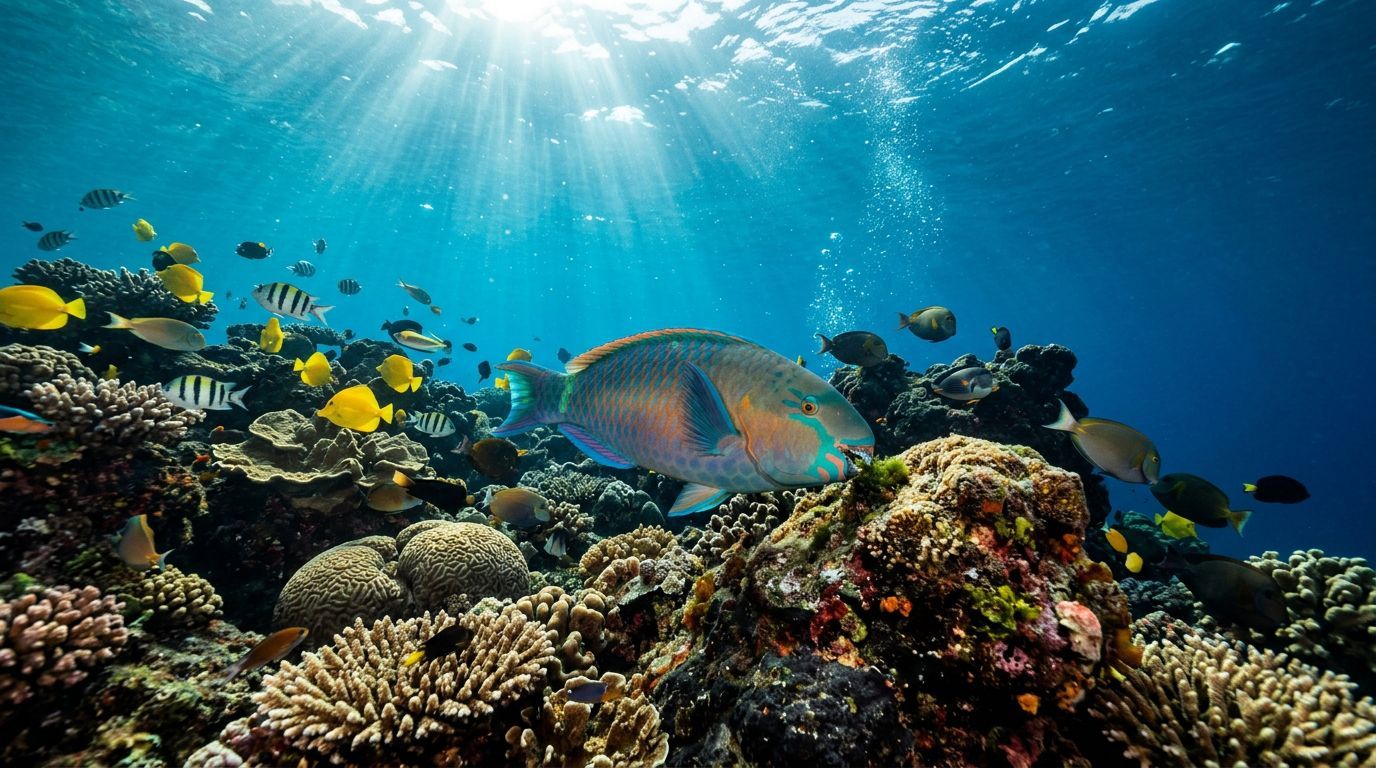
Clear water lets you see the Big Island’s coral reefs, but the most important reef workers may look like ordinary fish. Parrotfish, surgeonfish, and tangs spend much of their time grazing algae from rocks and coral surfaces.
A trip centered on snorkeling Big Island Hawaii gives you a close view of this daily work. On the Kona coast, Kona Snorkel Trips follows a “Reef to Rays” philosophy, pairing small-group ocean trips with lifeguard-certified guides, quality gear, safety instruction, and reef-conscious practices. To understand what you are seeing below the surface, start with the relationship between coral, algae, and herbivorous fish.
What Snorkeling Big Island Hawaii reveals about reef health
Kona’s reefs are living communities built on volcanic coastlines. Coral colonies provide shelter and feeding areas, while fish move through the reef searching for food. Every species has a role, even when that role is easy to miss during a quick swim.
Coral needs sunlight and open space
Coral is an animal that lives with microscopic algae inside its tissues. Those algae use sunlight to produce energy, which helps coral grow and build its hard skeleton.
A healthy reef isn’t a solid carpet of coral. You may see living colonies beside bare rock, old coral skeletons, sand channels, and lava ledges. These different surfaces create habitat for fish at various life stages.
When new coral larvae settle, they need a stable surface. If fast-growing algae covers that surface, young coral may struggle to attach and survive. Herbivorous fish help keep some of these areas open.
Algae can crowd young coral
Algae is a natural part of the reef. It feeds fish, shelters small creatures, and grows quickly in shallow water. The problem begins when algae spreads faster than grazers can remove it.
Storm damage, warm water, pollution, and physical contact can weaken coral. Algae may then occupy the open space before new coral can establish. The reef loses living coral structure, and fish lose some of the shelter and feeding habitat they need.
NOAA Fisheries’ research on hungry fish describes how algae-grazing fish can support reef resilience. Their feeding doesn’t solve every reef problem, but it helps maintain the balance between coral growth and algal growth.
How herbivorous fish protect coral reefs
Herbivorous fish act as mobile grazers. They travel across the reef, feeding on turf algae, fleshy algae, and the thin organic material that collects on rock.
Their impact depends on more than the number of fish you see. Species, body size, feeding style, and access to reef habitat all affect how much grazing takes place.
Parrotfish scrape algae from hard surfaces
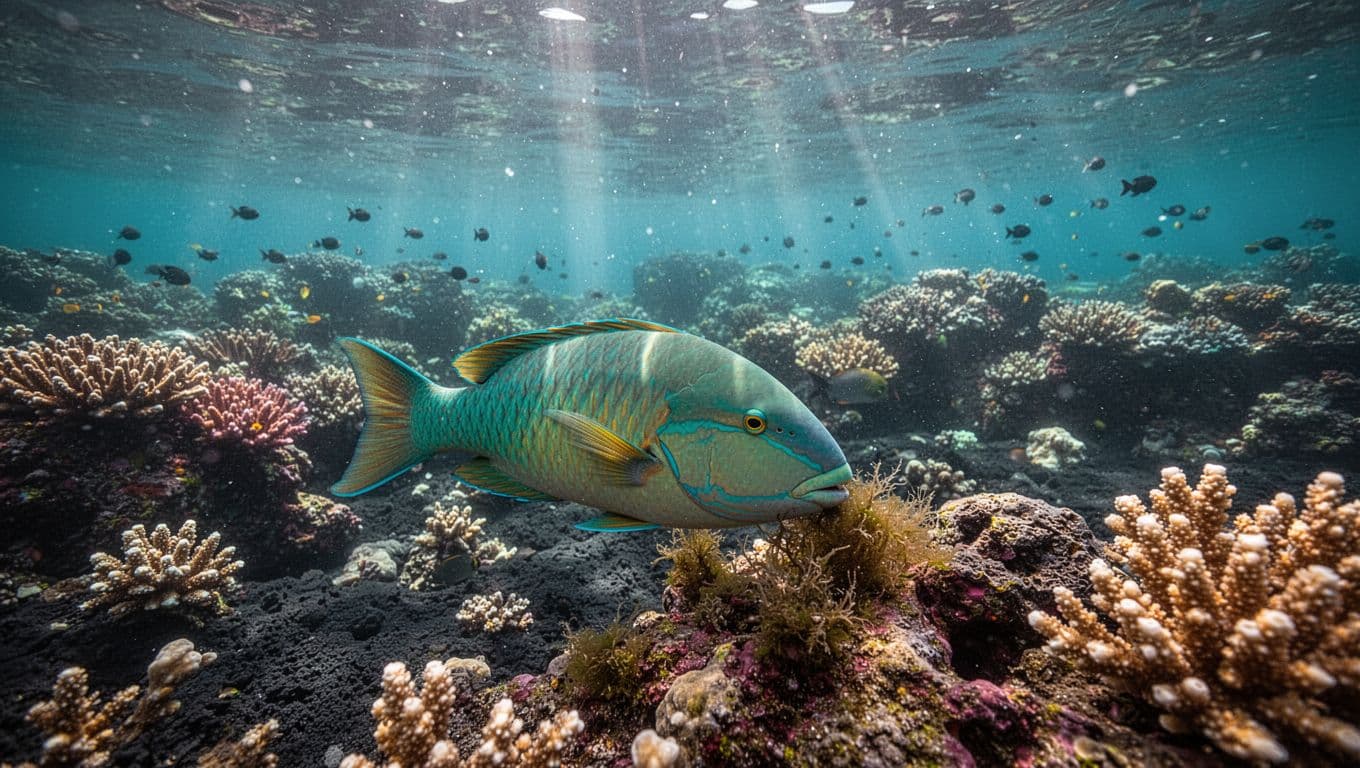
Parrotfish, known as uhu in Hawaiian, have beak-like teeth that allow them to scrape algae from rock and older coral surfaces. Their feeding leaves visible bite marks, especially when you watch one work along a shallow ledge.
Some parrotfish also remove small pieces of the surface while feeding. Their digestive systems process the material, and the fine sediment eventually becomes part of the sand around tropical islands.
Large parrotfish can have an outsized effect because they take bigger bites and cover more reef during each feeding session. A single fish may appear to be nibbling randomly, yet its repeated grazing can keep surfaces available for coral recruitment.
Surgeonfish and tangs keep moving across the reef
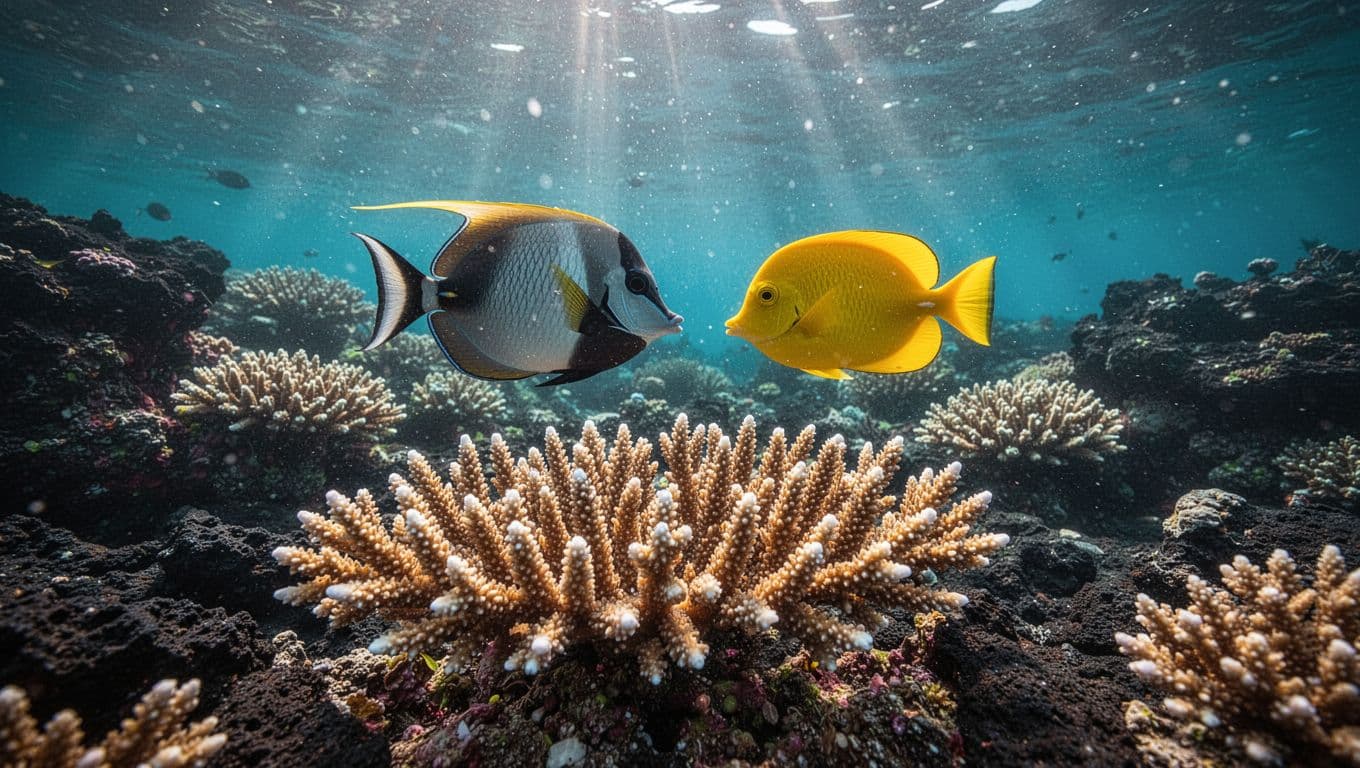
Surgeonfish and tangs usually graze with smaller mouths than parrotfish. Rather than scraping large sections, they make repeated bites across rocks, coral rubble, and the edges of living colonies.
You may spot yellow tangs, known as lau’ipala, or convict tangs, called manini. Kole, a dark-bodied Hawaiian tang, often feeds close to the reef surface as well. Their body shapes and feeding habits differ, so several herbivore species can use the same reef without competing for exactly the same food.
That variety matters. A reef with several kinds of grazers receives pressure across more surfaces and at different times of day. The result is a more complete pattern of algae removal.
Fish you may spot while snorkeling Big Island Hawaii
You don’t need to identify every fish to understand its role. Start by watching how the animal uses the reef.
Does it hover over one patch? Does it make short bites while moving steadily? Does it scrape a rock face, or pick at a soft layer on top? These details tell you more than color alone.
Watch the mouth and feeding motion
Parrotfish often tilt their bodies toward a rock or coral surface before taking a firm scrape. You may hear a faint crunch underwater if you are close enough, although you should never chase a fish for a better view.
Tangs often move in a steady line, taking quick bites as they pass. Some feed alone, while others gather in loose groups. A school can create constant movement over a reef, with each fish covering a slightly different patch.
When snorkeling Big Island Hawaii, notice the pauses between feeding sessions. Fish may retreat into coral branches, inspect cracks, or change direction when a larger animal approaches. Reef life has a rhythm that becomes clearer when you slow down.
Look beneath the fish
A grazing fish is only part of the story. Look at the surface below it and compare areas with different textures.
You may see short, closely cropped turf in one area and taller algae in another. Coral rubble can hold a different community from solid lava. Branching coral creates narrow spaces where small fish hide, while smooth rock offers fewer places to shelter.
Avoid treating every patch of algae as unhealthy. Some algae naturally belong on the reef. The important question is whether coral has room to grow and whether the habitat supports a broad mix of fish, invertebrates, and microorganisms.
Why fish size and numbers matter
A reef can contain many herbivorous fish and still receive too little grazing. Small fish eat less during each feeding session, while larger fish often remove more algae and influence a wider area.
Scientists therefore measure fish biomass, which combines the number and size of fish in a habitat. A reef with fewer large parrotfish may have less grazing capacity than a reef with many small individuals.
Bigger grazers can change the balance
Large parrotfish are especially important because they can remove algae from surfaces that smaller fish cannot process as efficiently. Their bites also alter the texture of the substrate, creating small spaces where new organisms may settle.
That doesn’t mean every large fish should be viewed as a reef-cleaning machine. Herbivores need shelter, food, and safe habitat. If fishing removes the largest individuals, the reef may lose an important part of its grazing pressure even when smaller fish remain.
A six-year study from Maui’s Kahekili Herbivore Fisheries Management Area documented a substantial increase in larger parrotfish biomass after protection. The finding illustrates why fish size matters alongside species counts.
Protection gives grazers room to work
Fishing rules, marine life conservation areas, and responsible visitor behavior can help maintain herbivore populations. Protection also works best when fish still have healthy reef structure for feeding and shelter.
Research on spatial herbivore protection and reef structure examines how the distribution of grazing fish relates to habitat features such as reef complexity and coral cover.
For you as a snorkeler, this means a fish sighting is connected to a larger system. The animal needs a place to feed, a place to hide, and enough space to move through the reef without constant disturbance.
Reef-safe habits for your snorkeling day
Your actions in the water affect the same habitat you came to enjoy. Coral may look like rock, but many colonies are fragile and can break under a fin, knee, or hand.
Responsible snorkeling doesn’t require special training. It requires attention to your body position, equipment, and distance from wildlife.
Keep your fins above the reef
Practice floating horizontally in open water before you approach shallow coral. Keep your legs raised, and use slow kicks that move you forward without striking the bottom.
If a wave pushes you toward the reef, stop kicking and use your hands only in open water to regain distance. Never grab coral or stand on a colony to adjust your mask.
A guide can help you choose deeper water, calmer entry points, and safe positions for viewing. These small decisions protect the reef while also making your swim more comfortable.
Leave fish in control of the encounter
Fish may move away when you approach too quickly. Let them choose whether to remain nearby.
Don’t chase, corner, touch, or feed reef animals. Feeding changes their behavior and can create competition around visitors. It also prevents you from seeing normal feeding patterns, which are the most useful behaviors to observe.
NOAA’s Hawaii coral reef conservation overview identifies herbivorous reef fish as an important conservation concern. Nearshore fishing can reduce populations of fish that help limit algae, so visitors should avoid adding stress through close contact.
Reduce what enters the water
Use shade, a long-sleeved rash guard, and a wide-brimmed hat whenever possible. Apply sunscreen well before entering the water, and follow current Hawaii rules about sunscreen ingredients.
Keep food, loose plastic, and disposable items secured on the boat or shore. Even small pieces of litter can harm animals when they drift into the sea.
Your guide may also ask you to rinse off lotions, avoid touching the bottom, and stay within a designated swimming area. Those instructions protect both you and the habitat.
Where to snorkel Big Island for reef life
A good snorkeling Big Island plan starts with the day’s conditions, not a promise of one perfect site. Wind, swell, visibility, currents, recent rain, and ocean traffic can change the experience quickly.
Local guides check these factors before departure and may adjust the route when conditions make another location safer or clearer.
Kealakekua Bay offers a protected reef setting
Kealakekua Bay is known for clear water, coral habitat, and the Captain Cook Monument along the shore. Its protected marine setting makes it a popular place to observe reef fish without the feel of an exposed coastline.
A boat trip can give you access to reef areas that are difficult to reach from shore. It also reduces the need to navigate uneven lava entries, which may be important if you are traveling with children, older relatives, or less confident swimmers.
At the bay, look along the reef edge rather than only at the brightest coral. Herbivorous fish may be feeding on rock surfaces, rubble zones, and less colorful sections where algae grows.
Kona conditions change along the coast
The Kona coast includes many different reef shapes. Some areas have lava shelves, some have coral heads, and others have deeper drop-offs or narrow channels.
Morning conditions may be calmer on some days, but no schedule guarantees flat water. Check the forecast, listen to your guide, and choose a trip that matches your swimming comfort.
If you want to snorkel Big Island reefs with a guided crew, ask where the boat is heading that day and why. A thoughtful answer should include water conditions, safety, visibility, and the type of habitat you can expect.
Choosing a reef-conscious Kona snorkeling tour
A responsible tour operator does more than take you to clear water. The crew should help you understand the reef and give you practical instructions before you enter it.
Small groups also make it easier for guides to monitor swimmers, answer questions, and prevent accidental contact with coral.
Questions to ask before booking
Use these questions when comparing tours:
| Question | Why it matters |
|---|---|
| How large is the group? | Smaller groups allow closer safety supervision and less crowding around wildlife. |
| Are guides lifeguard certified? | Training supports better decisions when conditions or swimmer needs change. |
| Does the crew explain reef etiquette? | A briefing helps you protect coral before you enter the water. |
| What happens if conditions change? | Flexible route planning keeps the trip safer and more enjoyable. |
You should also ask about flotation support, mask fitting, restroom access, departure location, and age or swimming requirements. Clear answers make it easier to choose a trip that suits your group.
Why Kona Snorkel Trips fits a reef-focused outing
Kona Snorkel Trips builds its excursions around small-group service, high-quality snorkeling equipment, and safety-focused guidance. Lifeguard-certified guides explain local marine life and help you maintain a comfortable distance from the reef.
The company’s “Reef to Rays” approach covers daytime reef trips as well as nighttime manta ray experiences. Its custom-built lighted boards support guided nighttime encounters, while its daytime excursions focus on the volcanic coastline, coral habitat, and fish you can observe in clear water.
For a daytime outing from Kailua-Kona, you can check availability.
For a Captain Cook trip into Kealakekua Bay, you can check avaialbility before your preferred date fills.
What herbivorous fish cannot do alone
Grazing fish support coral reefs, but they can’t reverse every source of damage. Coral needs clean water, stable conditions, living habitat, and time to recover after stress.
If you see algae on a damaged section of reef, fish may still be feeding there. Their work can slow the spread of algae, but it doesn’t instantly rebuild broken coral or restore a place affected by pollution.
Healthy habitat supports healthy grazing
Fish need reef complexity for shelter. Branching coral, crevices, ledges, and rubble zones give smaller animals places to hide from predators and strong surge.
When coral structure disappears, fish may lose both food and protection. That is why reef conservation includes habitat protection, fishing management, water quality, and careful visitor behavior.
During your swim, look for signs of complexity. A reef with different heights and surfaces often supports more kinds of fish than a flat area of broken rubble.
Reef monitoring guides conservation decisions
Scientists track fish populations and coral conditions over time because one visit cannot show the whole picture. Seasonal changes, storms, bleaching events, and local impacts can all affect what you see.
NOAA’s 2024 Hawaii reef assessment included 350 reef fish surveys and more than 250 instruments deployed during fieldwork. That level of monitoring helps researchers compare reef conditions across locations and years.
Your observations aren’t a substitute for scientific surveys, but they can shape your awareness. When you recognize a parrotfish grazing or a tang moving across a rock shelf, you are seeing one small part of a living reef system.
How to make your snorkeling experience more meaningful
Slow down for a few minutes at each reef area. Instead of swimming from one colorful fish to the next, watch one section long enough to notice feeding, shelter, and movement.
You may see a parrotfish scrape a rock, a tang follow the edge of a coral colony, and smaller fish disappear into a crevice when your shadow passes overhead. These details reveal how the reef works together.
Use a simple observation pattern
Choose one fish and follow it with your eyes without chasing it. Notice what it eats, how close it stays to the bottom, and whether other fish use the same space.
Next, study the surface below. Is it living coral, dead coral, lava rock, sand, or rubble? Does the area provide shelter? Are algae patches short and cropped, or tall and dense?
Finally, look around the wider reef. A fish’s role makes more sense when you see its habitat. Grazers, predators, sheltering fish, coral colonies, and open sand all connect within a small underwater area.
Leave the reef ready for the next visitor
Keep your equipment attached, secure loose items, and follow the guide’s route. If you accidentally touch the bottom, move away instead of trying to steady yourself on coral.
Take photographs without pursuing animals or holding them in place. Leave shells, rocks, coral fragments, and other natural objects where you find them.
The best snorkeling Big Island memories come from seeing natural behavior in a healthy setting. Your distance, patience, and care help preserve that experience for the next swimmer.
Conclusion
Herbivorous fish are working every time you see them grazing across a Hawaiian reef. Parrotfish scrape algae from hard surfaces, while surgeonfish and tangs keep moving through smaller feeding areas. Together, they help coral maintain the space it needs to grow.
When you plan snorkeling Big Island Hawaii, choose conditions and guides that support safe, low-impact exploration. Keep your fins off the reef, give fish room, and watch the habitat beneath them.
The reef’s smallest feeding moments can show you its biggest lesson: healthy coral depends on a living community, and your choices can help protect it.