
How Lights Attract Plankton for Manta Ray Night Snorkeling
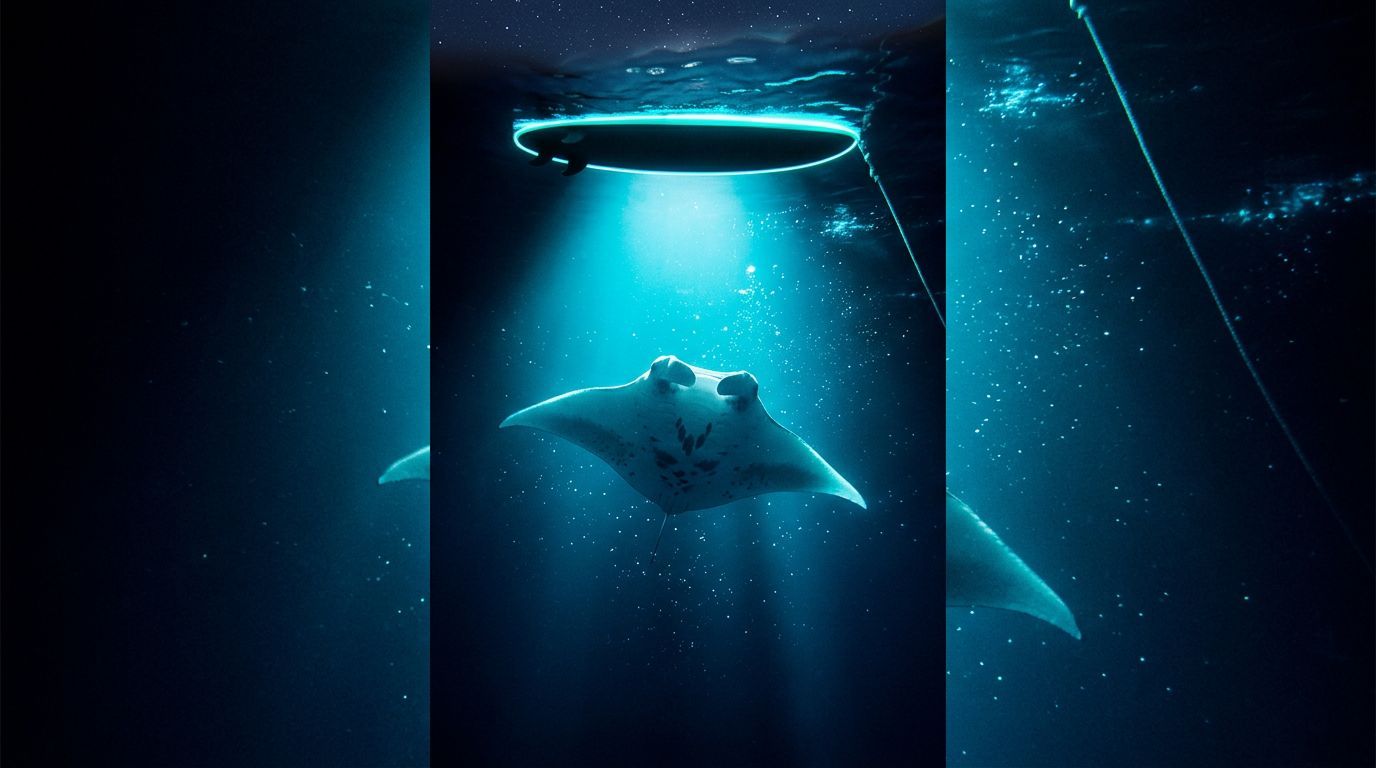
At night, a bright pool beneath a tour boat can turn dark ocean into a feeding area. If you’re planning manta ray night snorkeling off Kona, the light isn’t bait and it doesn’t call rays from miles away. It helps reveal and concentrate tiny organisms already moving through coastal water.
You can spend one day snorkeling Big Island Hawaii reefs, then watch the food chain shift after sunset. Kona Snorkel Trips uses custom-built lighted boards and Lifeguard Certified guides to make that feeding zone easier to observe. The second company, Manta Ray Night Snorkel Hawaii, also focuses on nighttime manta encounters. Understanding the light makes every pass beneath your board more fascinating.
What Tour Lights Actually Change
Tour lights work by changing the conditions in a small area of water. They don’t create plankton or train manta rays to approach people. Instead, they make an active food source easier to see and, in some cases, encourage tiny organisms to gather near the illuminated water.
They reveal a living soup
Plankton is a broad term for drifting ocean life. It includes microscopic phytoplankton, small animals called zooplankton, fish larvae, eggs, and other organisms that move with currents.
Manta rays mainly target zooplankton, including tiny crustaceans and other animal life. In darkness, that food is almost impossible for you to see. A powerful underwater beam gives you a window into the water column, revealing thousands of small particles that would otherwise blend into the night.
A lamp can’t produce food in a few minutes. It can, however, highlight organisms that are already present. Some plankton also responds to light because of built-in light-sensing structures. Research on photoreception in phytoplankton shows that many microscopic species detect changes in their surroundings through simple photoreceptors.
They create a limited feeding zone
A lighted board creates a focused area where plankton becomes visible against dark water. Currents carry organisms through the beam, while other particles may collect there for short periods.
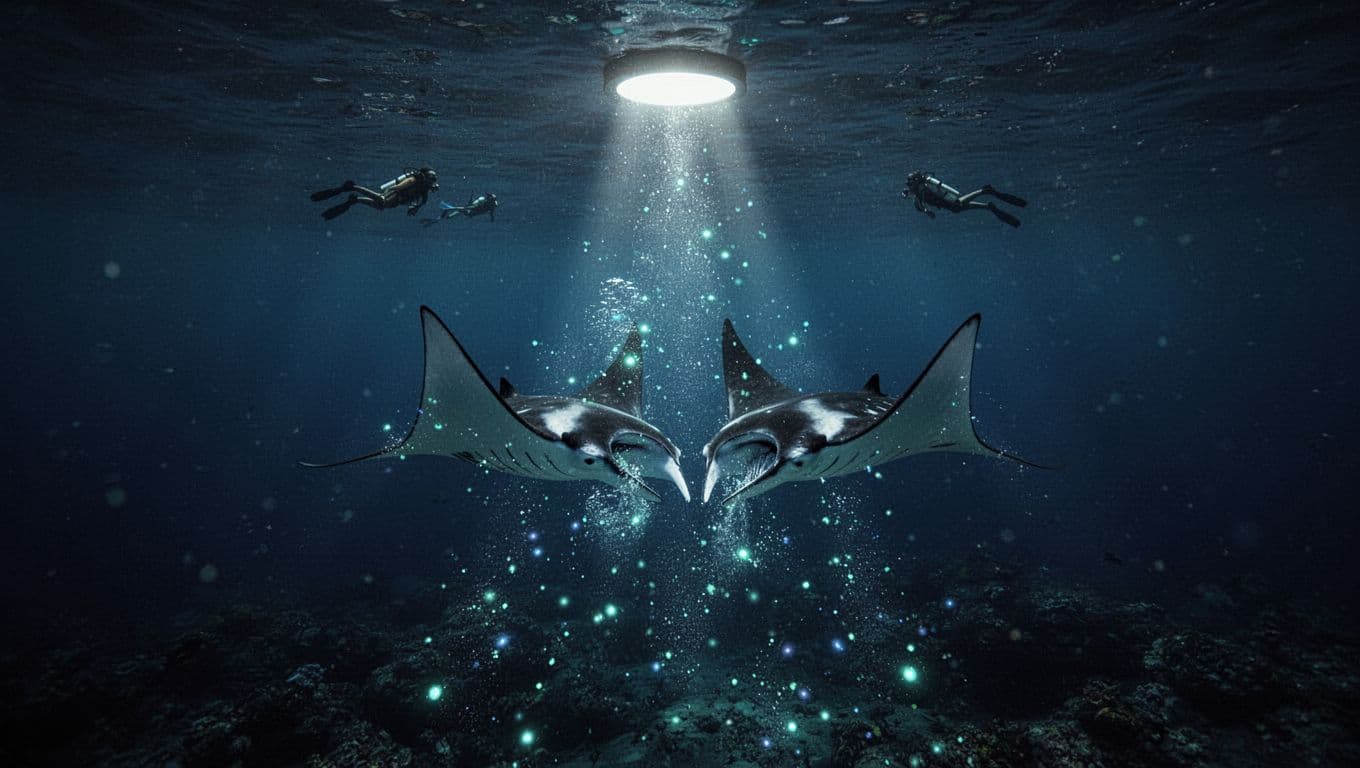
The result is a shifting cloud, not a permanent swarm. Conditions change with tide, current, water movement, and the types of plankton present. Mantas recognize the increased food density and make repeated passes through the brightest area.
Why Plankton Responds Differently to Light
The relationship between artificial light and plankton is more complex than the simple idea that every tiny organism swims toward a lamp. Different species respond in different ways, and their behavior can change during the night.
Phototaxis varies by organism
Phototaxis is movement in response to light. Positive phototaxis means an organism moves toward light, while negative phototaxis means it moves away.
Many zooplankton avoid bright light during the day because visibility makes them easier for predators to find. Other organisms may move toward illumination, follow the prey gathering there, or react to the contrast between a bright beam and surrounding darkness.
A review of artificial light at night in marine ecosystems describes these mixed responses. The effect depends on the species, light intensity, color, depth, and length of exposure. Therefore, tour lights don’t attract all plankton in the same way.
Night movement changes the starting point
Many ocean organisms follow a daily pattern called diel vertical migration. As daylight fades, some zooplankton move upward from deeper water to feed. Before sunrise, they often retreat downward again.
A nighttime snorkeling light intersects this natural movement. It may draw certain organisms into the beam, make others easier to see, or attract small fish that feed on plankton. A 2021 study on pelagic organisms and artificial light found that marine animals can avoid or approach artificial light depending on the conditions.
That is why each manta encounter looks different. One evening may produce steady passes through the beam. Another may bring brief visits as plankton and current patterns change.
Why Mantas Approach the Illuminated Water
Manta rays don’t approach because they enjoy bright lights or associate snorkelers with food. They arrive because the illuminated water can contain enough plankton to make feeding worthwhile.
Filter feeding turns plankton into a meal
A manta ray swims with its mouth open and directs water into its mouth using its wide cephalic fins. Inside, specialized gill structures filter small prey from the water while the manta releases filtered seawater.
The process is efficient because the ray can process a large volume of water while swimming. It doesn’t need to chase individual plankton. Instead, it follows areas where food density is high and adjusts its path to the current.
You may see a manta make a slow loop, turn sharply, or glide directly toward the board. Those movements help the ray pass through the plankton-rich section of water.
Mantas follow food, not the spotlight
A lighted site can provide reliable viewing conditions, but the animals remain wild. Mantas may leave when the current shifts, when plankton thins out, or when another feeding area becomes more productive.
A 2025 study in Frontiers in Marine Science examined plankton dynamics and manta feeding, finding a relationship between available plankton and feeding activity. The research supports what you see in the water: manta behavior follows prey conditions.
You might watch one ray circle several times, while another crosses the light only once. Neither pattern means the tour failed. It means you are watching natural feeding behavior rather than a staged performance.
What You See During Manta Ray Night Snorkeling
Once you enter the water, the light changes how you experience the ocean. The surface may look quiet, but the illuminated area below reveals constant movement.
The board gives you a stable viewing point
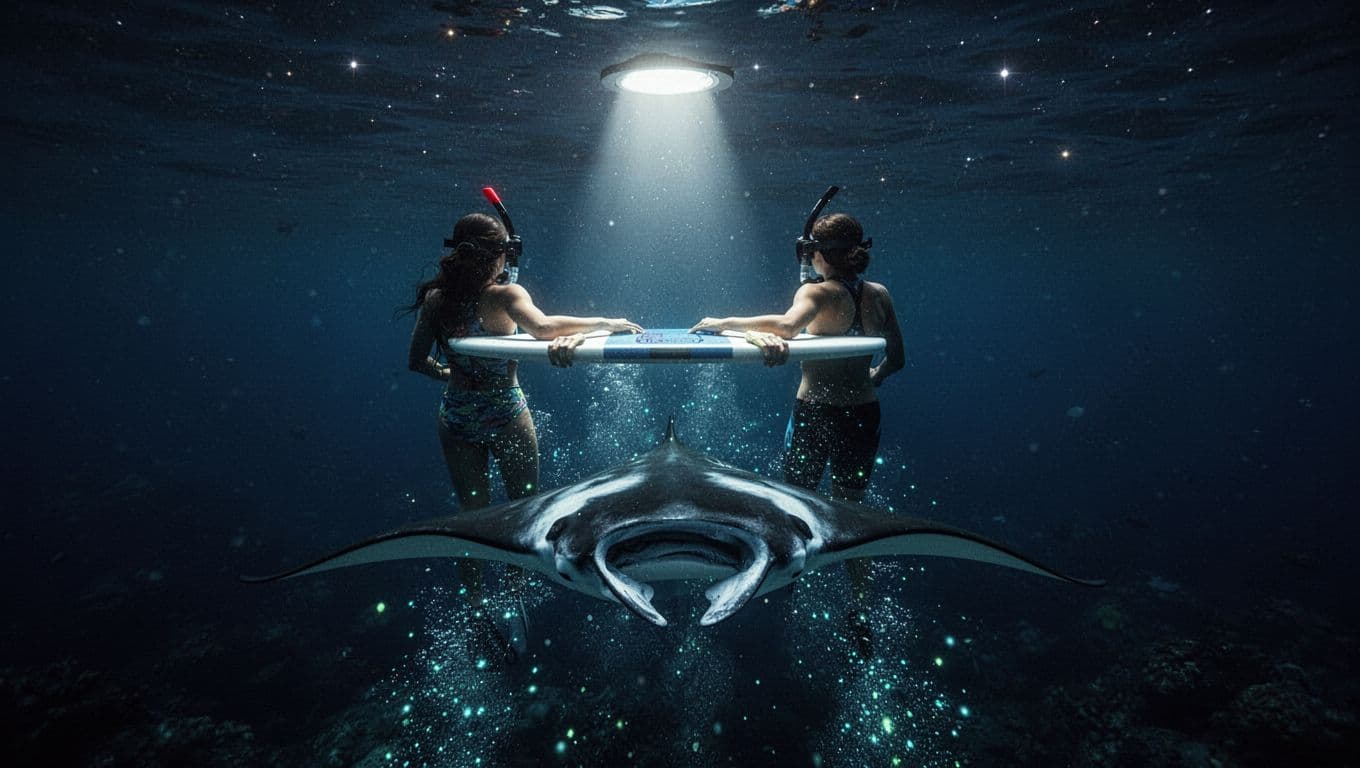
Many guided tours position a custom lighted board at the surface. You hold the board or nearby flotation support while looking down into the beam. This position lets you stay in place without swimming after the rays.
The light also gives mantas a clear feeding area. They can pass beneath you, bank onto one side, and return through the plankton cloud. At times, a ray may glide close enough for you to see the texture of its underside, cephalic fins, and wide wings.
You should keep your body relaxed and your fins still. Calm swimmers create less turbulence, which helps you watch the animals without interrupting their path.
Calm behavior protects the encounter
Your guide will explain where to place your hands, how to use your mask, and when to move. Follow those instructions even when a manta swims close.
Never touch, chase, block, or attempt to ride a manta ray. Keep your hands and fins away from the animal, and avoid diving beneath other guests. These simple habits protect the rays and give everyone a better view.
The best photographs often come when you stop trying to get closer. A steady mask, a quiet body, and a clear view of the light are more useful than constant swimming.
How to Choose a Responsible Kona Manta Tour
The light is only one part of the experience. Boat design, guide training, group size, and environmental practices all affect your time in the water.
Guide quality changes the experience
Kona Snorkel Trips follows a “Reef to Rays” philosophy built around small-group service, safety, and ocean education. Its Lifeguard Certified guides help you enter the water, understand the lighted board, and maintain a respectful position around the animals.
The company provides quality snorkeling equipment and custom-built boards designed for nighttime manta viewing. You can compare departure details through its Kona manta ray night snorkel tour, which may visit Garden Eel Cove or waters near Keauhou, depending on conditions.
Responsible lighting protects the food chain
A good operator uses light to support viewing, not to overwhelm the reef. Guides should keep guests away from coral, prevent contact with wildlife, and manage the group so rays have open space to feed.
Light pollution can affect marine animals beyond a single evening. Hawaii’s reef manta rays include genetically distinct populations that NOAA describes as vulnerable, as explained in its study of Hawaiian reef mantas.
Your choice of tour matters because repeated encounters depend on healthy habitat. Reef-safe behavior includes following site rules, keeping sunscreen and chemicals out of the water when possible, and leaving every animal undisturbed.
Plan Your Evening Around the Ocean
A little preparation helps you stay comfortable and focused once the sun goes down. The experience depends on nature, so you should plan for changing conditions rather than expecting a guaranteed number of rays.
Set realistic expectations
Manta ray night snorkeling usually begins after sunset, when the contrast between the light beam and surrounding water is strongest. Departure times change with the season and sunset, while currents and visibility can affect the length and quality of each encounter.
If you want to snorkel Big Island sites during the day, leave enough time between activities. A daytime reef tour and a nighttime manta trip use different gear, lighting, and swimming conditions. You may also want a warm layer for the boat ride back to shore.
Kona Snorkel Trips can provide current departure information, and you can check availability before arranging the rest of your evening.
Bring comfort, not clutter
Wear a swimsuit and bring a towel, dry clothes, and a light jacket. If you use prescription glasses, ask the operator whether prescription masks are available. Avoid bringing loose items into the water unless your guide approves them.
A mask that fits well makes a bigger difference than expensive camera equipment. Clear lenses, a relaxed breathing rhythm, and careful attention to the guide help you notice plankton, fish, and rays in the same beam.
For a dedicated manta departure, you can check availability.
Conclusion
Tour lights attract attention to a small, active section of the ocean. They may gather some organisms, reveal others, and create the feeding conditions that bring manta rays through the beam.
When you understand that relationship, manta ray night snorkeling becomes more than a close wildlife encounter. You are watching plankton movement, predator behavior, and careful human observation connect in one living system. The strongest experience comes when you stay calm, follow your guide, and give the rays room to feed.