
Snorkeling Big Island: What Reef Shadows Reveal
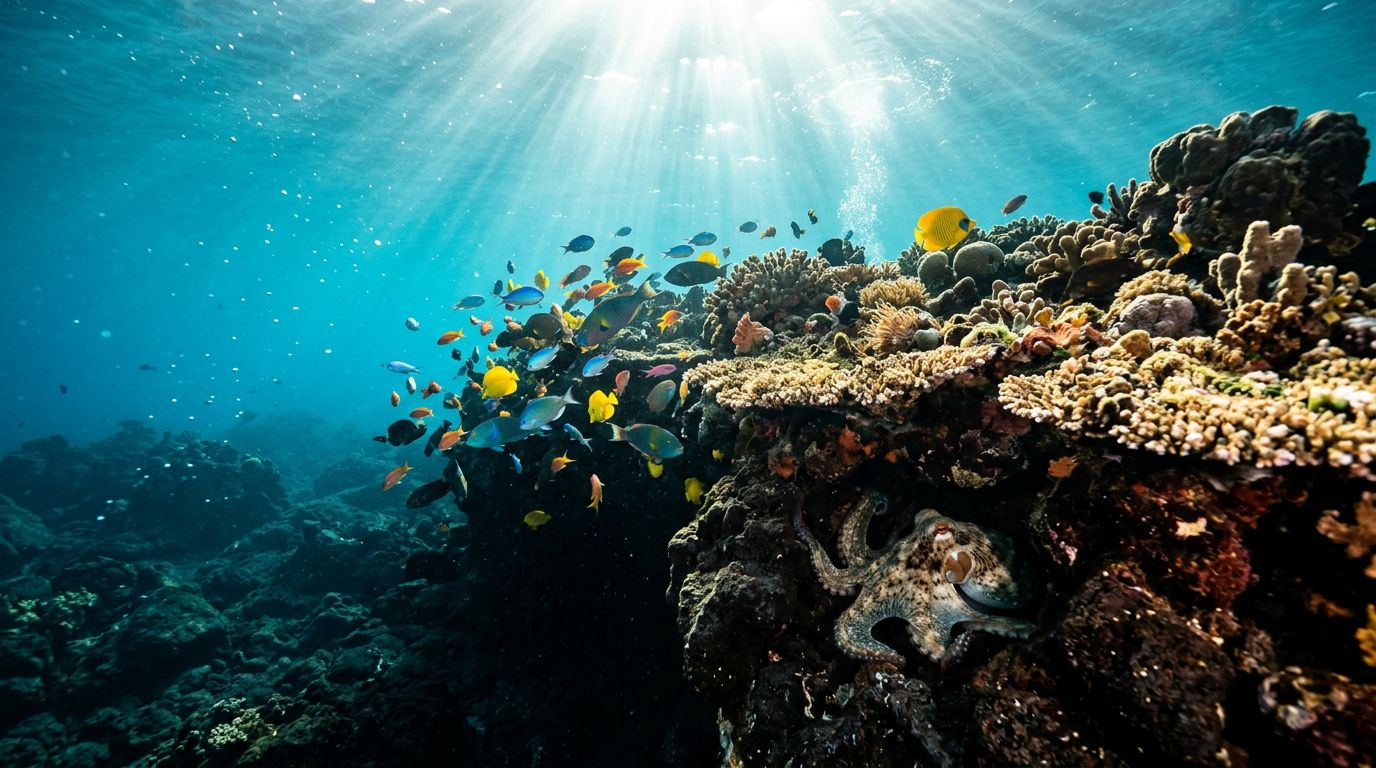
When you’re snorkeling Big Island reefs, the brightest coral often gets your attention first. Yet the darker shapes below the surface can reveal where fish rest, feed, hide, and move with the current.
A snorkeling trip around Kona gives you more than a colorful view. It lets you read the reef as a living structure, where lava ledges create shelter and sunlight outlines the animals using it. Once you know what to watch, even a quiet shadow can become a useful clue.
Why Reef Shadows Matter in Kona
A reef shadow is more than a change in brightness. It may come from a coral head, a lava shelf, an underwater arch, or a deep crevice. Each feature changes the water around it and creates a different kind of habitat.
Small fish often stay near shaded edges because they can feed in open water and retreat quickly. Larger fish may cruise across the bright reef before disappearing beneath a ledge. A still, dark pocket can hold resting fish, sea urchins, or an octopus that you would miss in direct sunlight.
West Hawaii has the largest expanse of intact, actively growing coral reef in the main Hawaiian Islands, according to NOAA. The region’s clear leeward water also makes it easier to watch the boundary between light and shadow.
Coral provides the physical foundation for this habitat. The National Park Service describes coral reefs as structures that provide food and shelter for hundreds of other species. Hawaii’s living reef ecosystem includes more than 7,000 known marine plant and animal species, according to a University of Hawaii fact sheet.
That variety gives every shadow a different story. A broad dark patch may shelter a school of yellow tang. A narrow crack may hide a moray eel. A moving shape beneath a coral overhang could be a parrotfish searching for algae.
A useful rule for snorkeling Big Island reefs is to watch the edges, not only the center. Many animals appear where bright water meets cover.
Sun angle also changes what you see. Early or late in the day, shadows stretch across the reef and make movement easier to notice. Near midday, overhead light can flatten the scene, but clear water still reveals depth when you keep your face submerged and move slowly.
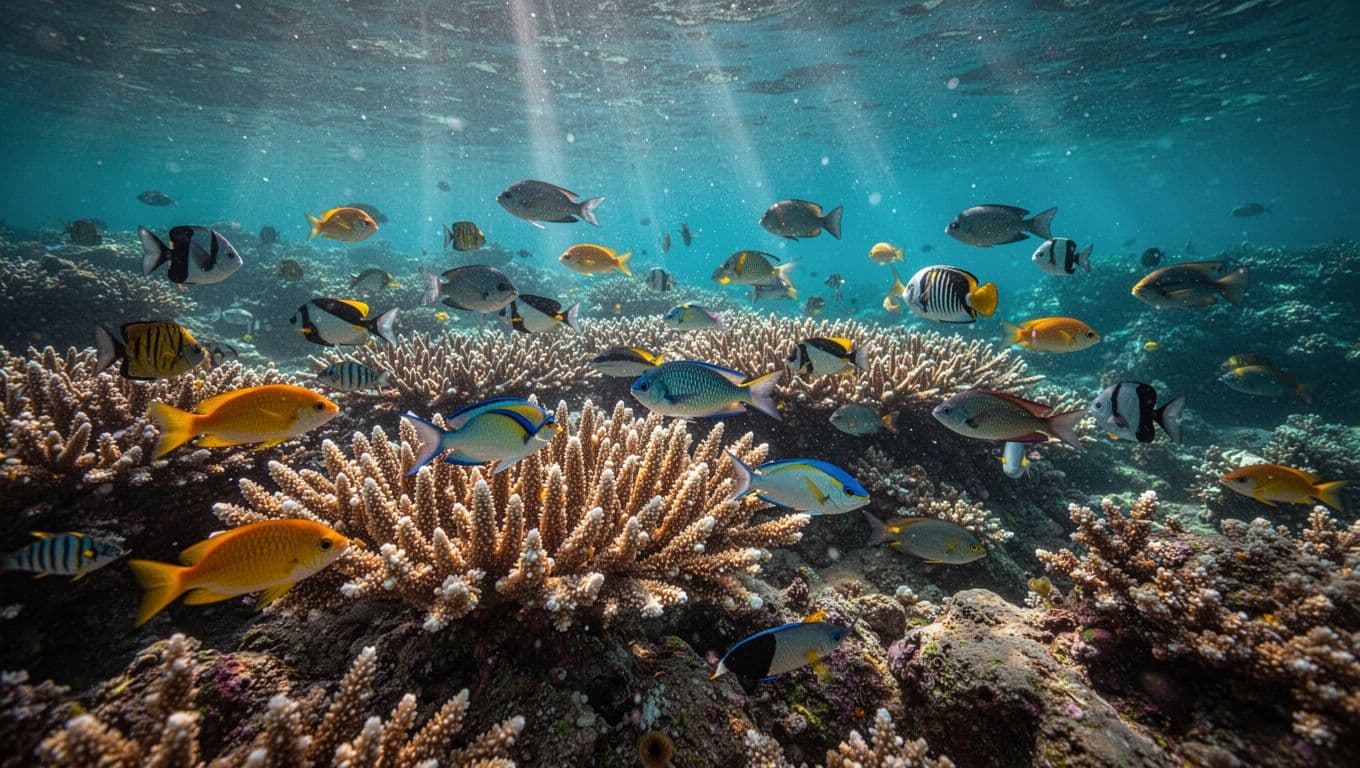
Snorkeling Big Island Reefs: How to Read the Movement
You don’t need to identify every fish to understand reef behavior. Start by noticing where animals position themselves and how they respond to light, current, and nearby swimmers.
Look for shelter below ledges
A coral reef is three-dimensional. Fish use the top, sides, and underside of the structure, so you should scan vertically instead of looking only straight down.
Bright surfaces often attract grazers. Parrotfish scrape algae from hard surfaces, while yellow tang and other surgeonfish pick at growth along the reef. Butterflyfish may move in pairs across exposed coral, sometimes vanishing behind a rock before reappearing several feet away.
The shaded side usually has less direct feeding activity, but it can hold animals that need cover. Search slowly beneath ledges for resting fish, sea cucumbers, sea urchins, and the occasional octopus. Avoid shining a light directly into small crevices unless a guide recommends it, since sudden beams can disturb wildlife.
A good fish reference can help after your swim. The Hawaii fish and marine wildlife guide includes common reef fish, turtles, sharks, whales, and other animals you may encounter around the islands.
Follow the boundary between light and dark
A fish crossing from bright water into shadow can tell you more than a fish sitting still. Watch its route, then look for the structure guiding that movement.
A school may travel along a reef wall because the edge offers food and protection. Individual fish may dart out to feed and return to the same shaded pocket. If several species use one area, the structure probably offers more than one resource, such as algae, shelter, or a current carrying plankton.
Spinner dolphins and green sea turtles follow different patterns. Dolphins generally move through open water and may appear beyond the reef. Honu often rest near the bottom or browse across shallow reef areas. If a turtle disappears into a shaded section, give it plenty of space and let it choose whether to return.
You may also notice tiny movements before seeing an animal clearly. A flickering shadow can be a fish moving behind coral. A long, narrow shape may be an eel. A circular outline near the bottom may be a ray resting on sand.
Separate wildlife from water movement
Not every moving shadow belongs to an animal. Surface chop creates shifting patterns that move faster than most reef fish. Light can also ripple across the bottom when waves pass overhead.
To tell the difference, compare the shadow with the reef structure. A fish shadow changes direction independently of the sun pattern. A surface reflection usually moves across several objects at once.
Your own movement can make this harder. Strong fin kicks stir sand and create a cloudy layer that hides the bottom. Keep your body horizontal, use slow kicks, and pause when you reach a good viewing area.
When you’re learning to snorkel Big Island waters, a guide can point out the difference between a light pattern, a fish shadow, and an animal tucked into cover. That small explanation can change how you see the entire reef.
Where to Snorkel Big Island Reefs for Better Wildlife Views
The best location depends on water conditions, your swimming ability, and the habitat you want to observe. Kona’s coast has shallow reefs, lava shelves, protected bays, and deeper offshore areas.
Kealakekua Bay offers layered reef habitat
Kealakekua Bay is one of the strongest places to study reef shadows. Its protected waters include shallow coral areas, sloping reef, lava formations, and deeper blue water near the bay’s outer sections.
In the shallows, yellow tang, parrotfish, butterflyfish, and other reef species move across the coral. Green sea turtles may pass through, while spinner dolphins can appear in open water. The bay’s cliffs also create changing shade patterns as the sun moves across the sky.
A boat trip makes it easier to reach the clearest sections without relying on a rocky shore entry. Kona Snorkel Trips offers a Kealakekua Bay snorkel tour with guides who discuss marine life, local history, and safe reef habits.
For another Captain Cook focused option, Captain Cook Snorkeling Tours takes visitors toward the historic monument and the bay’s marine life areas. Your guide can help you focus on the reef’s edges instead of rushing between sightings.
A snorkeling Big Island Hawaii itinerary that includes Kealakekua Bay should leave enough time for observation. Wildlife often appears after you stop moving.
Kahalu’u and Honaunau show two different shore settings
Kahalu’u Beach Park has shallow water and easy access, making it popular with families and newer snorkelers. The reef includes sea turtles, octopus, eels, sea urchins, and many tropical fish.
Because the water is shallow, you can see shadows cast by small coral heads and lava shelves without diving down. Look for fish moving along the sandy edge, then scan the darker spaces under rocks. Stay alert for other swimmers and avoid standing on the reef.
Honaunau Bay, often called Two Step, has a lava-rock entry and deeper structure. It can offer excellent visibility, but the entry and surge require more confidence. If the water looks rough, choose a calmer site instead.
A detailed Big Island snorkeling field guide can help you compare locations, but local conditions should guide your final choice. Wind, swell, current, and recent rain can change visibility and access.
Plan Your Snorkeling Day Around Conditions
Clear water helps you read the reef, but calm water matters just as much. Check the forecast, listen to lifeguards or tour guides, and avoid entering unfamiliar lava areas during strong surge.
Morning conditions often provide calmer water, although the best time depends on the site and weather. Sun angle also affects shadows, so a reef can look different during the same day.
Pack only what helps you stay comfortable and observant:
- Use a well-fitting mask that seals without constant adjustment.
- Choose fins that let you move with small, controlled kicks.
- Wear a flotation vest if you tire easily or feel uncertain in open water.
- Use reef-safe sunscreen on exposed skin, and apply it before entering the water.
- Bring a rash guard, since long sessions can leave you chilled or sunburned.
- Keep your camera secured so you don’t need to grab coral for balance.
If you snorkel Big Island coves from shore, enter through sand or bare lava whenever possible. Boat tours can place you near healthy reef areas without a difficult shoreline entry, which helps protect both you and the habitat.
Manta Rays Change the Meaning of Shadow at Night
Daytime reef shadows show where animals hide and feed. A manta ray night snorkel changes the scene completely. Instead of searching for dark spaces, you watch large rays glide through bright pools created by lights on the surface.
Manta rays feed on plankton. The lights attract plankton toward the water’s surface, and manta rays may circle through the illuminated area with their mouths open. Their broad bodies can pass above or beside you, then disappear into the surrounding darkness.
That contrast makes the experience feel connected to the reef story. The dark water is not empty. It forms the background around a concentrated feeding area, and the shadows reveal how large animals move through open space.
Kona Snorkel Trips follows a “Reef to Rays” philosophy, with guided marine-life trips that include nighttime manta encounters. The company uses custom-built lighted boards, high-quality snorkeling gear, and Lifeguard Certified guides who explain safe viewing practices.
For a dedicated night experience, Manta Ray Night Snorkel Hawaii is another company to consider when you want to focus on manta behavior after sunset. Keep your hands relaxed, follow the guide’s position instructions, and never touch or chase a ray.
You can check availability for a manta ray night snorkeling trip with Kona Snorkel Trips.
Choosing a Guided Trip on the Kona Coast
A good guide changes what you notice. Instead of swimming past a shaded ledge, you may learn why fish gather there and how to approach without damaging the reef.
Kona Snorkel Trips focuses on small-group ocean adventures, professional safety, and reef education. Its guides help guests use quality equipment, maintain a safe position in the water, and identify marine life without disturbing it.
The company offers Big Island snorkel tours that center on clear water, vibrant reef sites, and personal instruction. The same operation also runs manta ray encounters, seasonal whale watching, and private excursions for families, couples, and groups.
A private trip can work well when your group includes different swimming abilities. You may spend more time in shallow water, request a slower pace, or choose a site based on the day’s conditions. Families also benefit from having a guide who can help children notice fish without encouraging them to touch the reef.
Whales are seasonal and remain offshore, so you won’t usually see them beneath a shallow reef shadow. When humpback whales visit Hawaii, a whale watching trip gives you a better setting for observing them from the boat.
Kona Snorkel Trips builds its service around a five-star guest experience, lifeguard-certified leadership, carefully maintained gear, and respect for volcanic reef ecosystems. Its guides also teach reef-safe habits, so the trip connects wildlife viewing with practical conservation.
You can check availability for a guided Kona snorkeling trip before choosing your preferred date.
Protect the Reef You Came to See
Healthy reef shadows depend on healthy coral. Coral grows slowly, and even a small broken branch can take years to recover. Your behavior in the water matters, especially in shallow areas where fins, hands, and feet can cause damage.
Enter and exit through sand or bare rock. Keep your knees and fins above the bottom, and never stand on coral for a photograph. If you need to rest, use a flotation device or move to a sandy area.
Keep your distance from turtles, rays, dolphins, and other wildlife. Touching can remove protective coatings, change animal behavior, or place you in an unsafe position. A camera also works better when you let the animal choose its path.
Runoff is another concern. Heavy rain can carry sediment and pollutants toward nearshore reefs, reducing water quality and covering coral. If recent storms make the water cloudy, wait for better conditions instead of entering a site where you can’t see the bottom.
A broader Hawaii sea creature guide can help you prepare for common sightings, but responsible viewing starts before you put on your mask.
Read the Reef Before You Swim Past It
The darker parts of a Kona reef often show where the ecosystem has the most structure. Ledges shelter fish, open edges provide feeding space, and changing light reveals movement you might otherwise miss.
When you go snorkeling Big Island reefs, slow down near the boundary between sun and shade. Give turtles and rays room, follow local conditions, and let a trained guide help you interpret what you’re seeing.
The reef is more than a colorful background. Its shadows show how marine life uses shelter, current, depth, and light. Once you learn to watch those details, every calm stretch of water can reveal something new.