
Snorkel Vest or Life Jacket for a Kona Manta Ray Snorkel
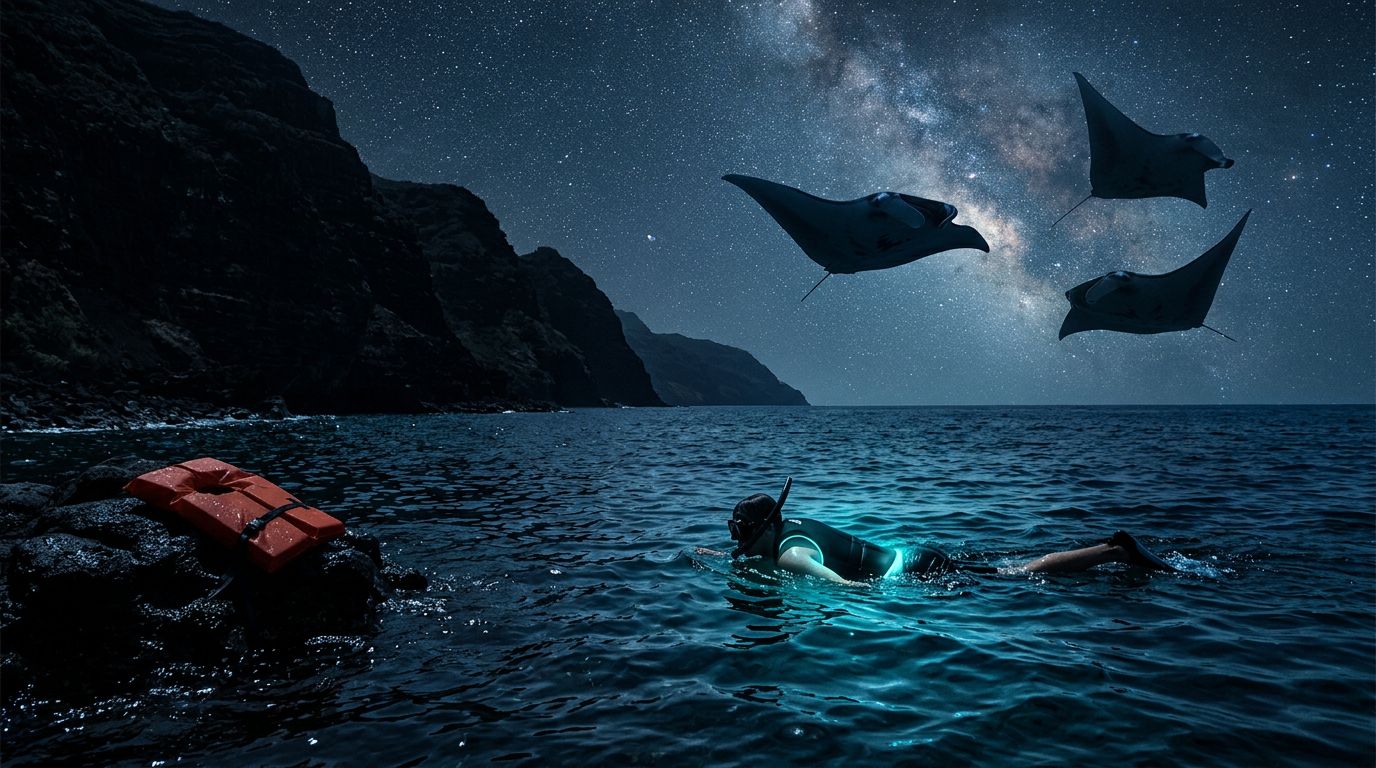
A snorkel vest and a life jacket both add buoyancy, but they serve different purposes in the water. Choosing the right one can affect your comfort, body position, breathing, and confidence during a nighttime manta ray experience.
If you’re researching snorkeling Big Island Hawaii trips, you may wonder whether you should bring your own flotation device or use the equipment provided by your tour operator. The right choice depends on your swimming ability, the vest design, and the conditions expected during your excursion.
Key Takeaways
- A snorkel vest usually gives you adjustable buoyancy while keeping your shoulders and arms free.
- A life jacket provides more flotation but can restrict your swimming position and mask visibility.
- Strong swimmers often prefer a properly fitted snorkel vest for a Kona manta ray snorkel.
- Children, nervous swimmers, and guests with limited water ability should speak with the operator before choosing equipment.
- You should follow the guide’s instructions instead of treating flotation gear as a replacement for swimming skills.
How a Snorkel Vest Works During a Manta Ray Tour
A snorkel vest is an inflatable flotation aid designed for surface swimming. Most models fit around your torso and include an oral inflation tube. Some also have a small CO2 cartridge, although you should check the exact product before relying on it.
When inflated, the vest helps support your chest and upper body. You can still kick with fins, turn your head, and keep your arms available for balance. That freedom matters during a manta ray snorkel because you usually watch the animals while floating face down near the surface.
The vest doesn’t hold you as high as a traditional life jacket. Instead, it gives you enough lift to reduce the effort needed to stay afloat. You can add or release air as your comfort changes. That adjustability makes a snorkel vest useful if you want support without feeling wrapped in bulky foam.
However, a snorkel vest isn’t automatically a certified personal flotation device. Many models are swimming aids, not Coast Guard-approved PFDs. They may not turn you face up or keep your airway clear if you become unconscious. You also need to inflate them correctly and wear them snugly.
A vest can help you conserve energy, especially when you’re wearing a mask, snorkel, fins, and a wetsuit top. It can also make it easier to relax when your attention is fixed on the water below. Still, you must remain alert and able to follow instructions.
During an evening trip, a snorkel vest may feel especially comfortable because darkness can make the open water seem unfamiliar. If you begin to feel tense, the added buoyancy lets you pause, breathe slowly, and regain your rhythm without grabbing another swimmer.
A snorkel vest supports your floating position, but it doesn’t replace supervision, swimming ability, or careful attention to your guide.
What Makes a Life Jacket Different?
A life jacket, often called a PFD, is designed to provide more reliable flotation than a basic snorkel vest. Approved models are tested for buoyancy and performance. Depending on the type, a life jacket may help keep your head above water or turn you into a face-up position.
That extra flotation is useful on a boat and during emergencies. You may be required to wear one while traveling on the vessel, particularly if the captain gives that instruction. A life jacket also makes sense for anyone who can’t swim confidently or who may struggle to stay calm in deep water.
The tradeoff is bulk. Foam panels around your chest, shoulders, and neck can make it harder to lie flat while snorkeling. Some jackets lift your upper body so much that your fins sit lower in the water. You may then kick harder to maintain a comfortable viewing angle.
A bulky jacket can also push the back of your head forward. That position may make your mask seal feel different or force you to lift your face more often. During a nighttime manta encounter, these small annoyances can reduce your ability to watch the animals comfortably.
You shouldn’t choose a life jacket solely because it feels safer on land. The fit must match your body, and the jacket must be approved for the activity. A loose jacket can ride up, while an oversized model may interfere with your mask, snorkel, or breathing.
Never assume that a life jacket lets you swim beyond your normal ability. It adds flotation, but you still need to follow the boat crew’s directions and stay with the group. If you’re an inexperienced swimmer, tell the crew before entering the water so they can recommend the safest setup.
Snorkel Vest or Life Jacket: Which One Should You Choose?
Your swimming ability should guide the decision more than personal preference. A confident swimmer may prefer the freedom of an inflatable snorkel vest. Someone who struggles in open water may need a properly fitted PFD and closer support from the crew.
Use this comparison as a starting point:
| Situation | Snorkel vest | Life jacket |
|---|---|---|
| Comfortable swimming face down | Usually a good fit | May feel bulky |
| Need for adjustable buoyancy | Strong advantage | Limited adjustment |
| Limited swimming ability | May not provide enough support | Usually more appropriate |
| Boat safety requirement | Usually not a substitute | Often required on board |
| Need to keep arms and shoulders free | Usually easier | Can restrict movement |
| Risk of panic or fatigue | Helpful but limited | Provides more flotation |
| Manta surface viewing | Often comfortable | May affect body position |
If you swim regularly and can float calmly without assistance, a snorkel vest may give you the best balance of support and movement. You can stay near the surface without fighting to keep your hips and legs up.
If you feel anxious in deep water, a life jacket may give you more confidence. However, you still need to make sure the tour allows that type of equipment in the water. Some operators provide approved flotation devices, while others use specific snorkel vests that work better with their safety procedures.
Families should evaluate each swimmer separately. A teenager who swims confidently may be comfortable in a snorkel vest, while a younger child may need a different setup. Don’t assume everyone in your group should wear the same device.
The same rule applies if you have limited mobility, fatigue easily, or feel uncomfortable putting your face in the water. Tell the operator when you book. The crew can explain whether the tour suits your ability and what flotation equipment is available.
Searches for “snorkel Big Island” often focus on gear, locations, and tour prices. Your water comfort deserves equal attention. A beautiful location can’t make the wrong flotation device feel safe or comfortable.
Why Your Body Position Matters Around Manta Rays
Kona manta rays feed on plankton near the surface at night. Tour boats use lights to attract plankton, which can bring manta rays close to the viewing area. You usually watch from the surface while holding onto a float or lighted board, rather than diving after the animals.
That surface position makes comfort important. Your face should rest naturally in the water, your mask should remain sealed, and your fins should move without constant effort. A snorkel vest can help keep your chest supported while allowing your legs to stay behind you.
A standard life jacket may raise your torso too high. You could end up looking forward instead of down, or you may need to arch your back to see the viewing area. Some swimmers prefer that position, but others find it tiring after several minutes.
You should never swim toward, touch, chase, or block a manta ray. The animals are wild, and your guide will explain the correct distance and hand placement. Staying calm helps you follow those instructions and keeps the encounter safer for everyone.
Night snorkeling also changes how you use your senses. Your mask shows the illuminated water directly ahead, while the rest of the ocean remains dark. Sudden movement from another swimmer can startle you. A secure vest or life jacket reduces unnecessary effort, but you still need to keep your breathing slow and controlled.
If the water feels rough, you become tired, or your mask starts leaking, signal your guide. Don’t inflate a vest to its maximum setting without considering how it changes your position. Ask for help before discomfort turns into panic.
Guides who lead snorkeling Big Island trips understand that guests have different swimming abilities. Their instructions may include where to hold the float, how to enter the water, and when to return to the boat. Follow those directions even if you have snorkeled before.
How to Fit and Use a Snorkel Vest
A snorkel vest should fit close to your body without squeezing your ribs. If it rides up toward your neck, it may be too loose. If you can’t breathe comfortably or turn your head, it may be too tight or overinflated.
Before entering the water, check the straps and inflation tube. The vest should sit in the correct position on your torso. Avoid wearing it over bulky clothing that could change the fit once you get wet.
Inflate the vest gradually. Start with enough air to support you, then add more if necessary. You should still be able to look down through your mask without the vest forcing your shoulders too far upward.
Practice breathing before you swim away from the boat. A snorkel changes the way air moves, and anxiety can cause you to breathe too quickly. Take slow breaths and keep your face relaxed in the water.
If the vest shifts, ask a crew member to adjust it. Don’t try to solve a poor fit while you are several feet away from the boat or float. A few seconds of assistance can prevent a longer struggle.
You should also understand how to release air. Many inflatable vests have a valve near the shoulder. Knowing how to add and remove air helps you adjust your position during the tour.
A snorkel vest isn’t suitable for every situation. Don’t use one as a substitute for a life jacket on the boat, and don’t assume it can protect you during an emergency. Follow the operator’s equipment rules at all times.
If you bring your own vest, ask about the company’s policy before your trip. The crew may require you to use equipment that fits their rescue plan or works with the group flotation system.
What Kona Snorkel Trips Provides
When you book with Kona Snorkel Trips, you get a small-group experience built around safety, equipment quality, and respect for Hawaii’s marine environment. The company follows a “Reef to Rays” philosophy, which connects daytime reef education with nighttime manta encounters.
The crew includes lifeguard-certified guides who can help you choose the right flotation support for your comfort and ability. You can ask about a snorkel vest, life jacket, or another approved option before entering the water.
Kona Snorkel Trips also provides snorkeling equipment and uses custom-built lighted boards for nighttime manta viewing. Those boards give you a stable place to hold while you watch the rays feed near the surface.
For another manta-focused option, you can review Manta Ray Night Snorkel Hawaii. If you want to compare the available excursions directly, the Kona manta ray snorkel tour includes trip details and booking information.
The company has built a five-star reputation through personalized service and careful attention to guest safety. You can also browse the wider selection of Kona snorkeling tours if your trip includes a reef excursion, private charter, or another ocean activity.
When you describe your swimming ability during booking, be honest. The crew needs accurate information to recommend appropriate equipment and determine whether the activity matches your comfort level.
You can check availability before choosing your date.
Prepare for a Comfortable Night Snorkel
Your flotation device is only one part of your preparation. Start by choosing a mask that seals comfortably around your eyes and nose. A leaking mask can create stress quickly, especially in dark water.
Fins should fit securely without causing pressure points. Loose fins can slip off, while tight fins may cause cramps. If the operator provides gear, ask for help with sizing before you leave the boat.
A rash guard or wetsuit top can add warmth and sun protection during daytime activities. At night, even warm tropical water may feel cool after you stop kicking. Your crew can explain what thermal protection is available for the tour.
Use reef-safe sunscreen when you need sun protection before the trip. Apply it well before entering the water, and follow the operator’s instructions about marine-safe products. Don’t touch coral, stand on the reef, or handle marine life.
You should eat a light meal before the excursion and drink water during the day. Avoid arriving dehydrated or overly full. Alcohol can affect balance, judgment, and your ability to respond to instructions, so don’t drink before entering the water.
Keep your movements slow near the viewing area. Sudden kicking can tire you and disturb other guests. If you need to adjust your vest, clear your snorkel, or fix your mask, signal a guide instead of thrashing in place.
If you have a medical condition, recent injury, or serious fear of open water, discuss it before booking. The right equipment helps, but it can’t make an unsuitable activity appropriate.
For private groups or guests who need a more personal pace, you can review private Kona snorkeling tours. A smaller setting may give you more time to discuss flotation, water comfort, and safety expectations with the crew.
You can also check availability for a manta ray night snorkeling trip.
The Right Choice Depends on You
A snorkel vest is usually the more comfortable option for a confident swimmer who wants adjustable support during surface viewing. A life jacket offers more flotation and may suit a guest who cannot swim confidently or needs stronger support.
Neither device guarantees safety on its own. You must use the equipment correctly, stay with the group, and follow the guide’s directions. If you’re unsure, ask the operator before your trip rather than making the decision at the dock.
When you’re planning snorkeling Big Island activities, choose the flotation device that matches your actual ability, not the one that looks most convenient. During a Kona manta ray snorkel, calm breathing and a secure fit matter more than having the largest amount of flotation.
Conclusion
A snorkel vest gives you freedom and adjustable buoyancy, while a life jacket provides stronger flotation with more bulk. For most capable swimmers watching manta rays from the surface, a properly fitted snorkel vest feels natural and comfortable.
If you have limited swimming ability, feel anxious in deep water, or need extra support, tell your guide before entering the ocean. The safest choice is the equipment that matches your needs and works with the crew’s safety plan.
With the right flotation, careful preparation, and respect for the animals, you can focus on the illuminated water and the manta rays moving beneath you.