
How to Stop Mask Fog During Captain Cook Snorkeling
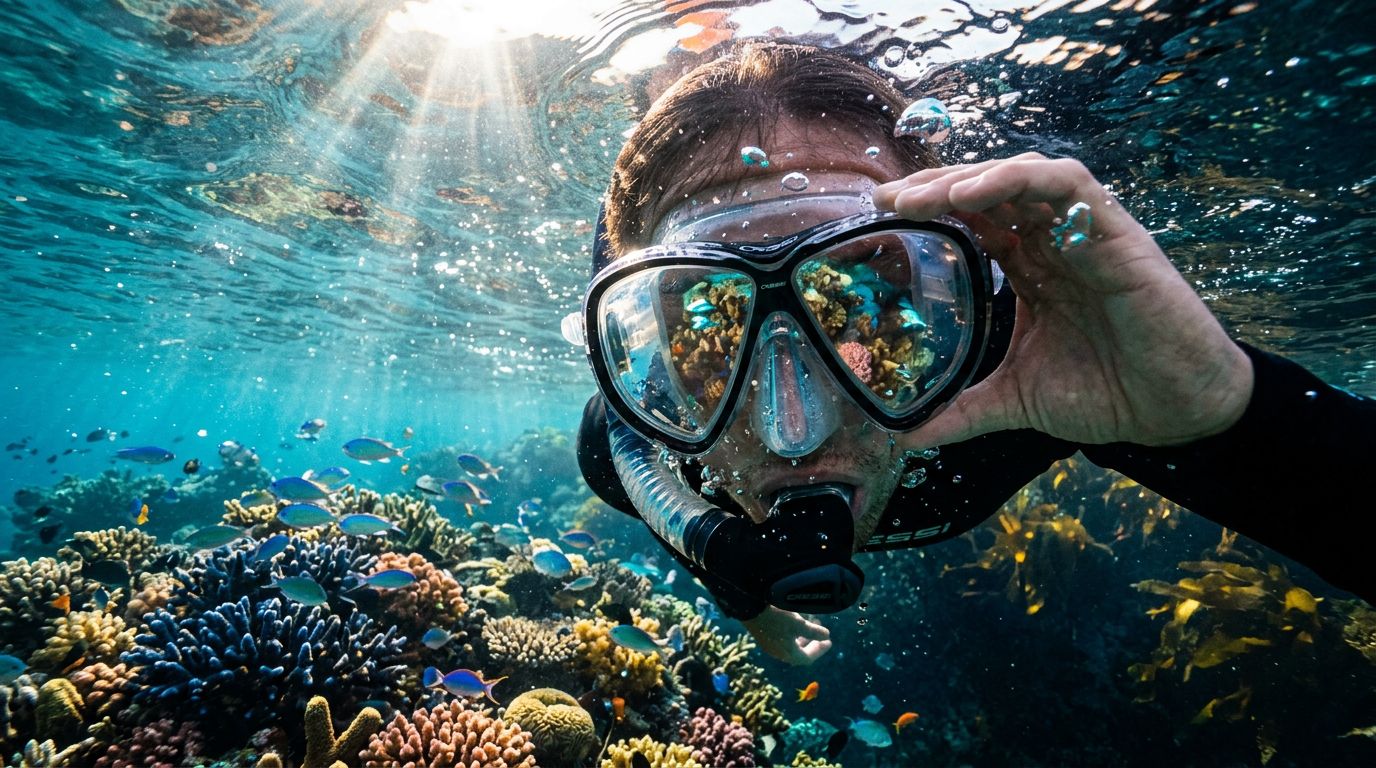
Fogged goggles can ruin a beautiful reef view within seconds. During Captain Cook snorkeling, clear vision helps you watch for colorful fish, coral formations, and the changing depth below you.
The fix usually starts before you enter the water. With the right defogging routine, a well-fitted mask, and a calm response when fog appears, you can keep your view clear throughout your Kealakekua Bay adventure.
Key Takeaways
- Use a proper snorkel defog solution before entering the water.
- Keep sunscreen, oils, and fingerprints away from the inside of your mask.
- Choose a mask that seals gently without excessive strap pressure.
- If fog develops underwater, clear the mask safely at the surface.
- Ask your guide for help instead of swimming with limited vision.
Why Your Snorkel Mask Fogs
Mask fog forms when warm, humid air inside the mask meets a cooler lens. The moisture condenses into tiny droplets, creating the cloudy film you see while snorkeling.
Several factors make fog more likely. A mask that sits in direct sun may heat up before you launch, while the ocean quickly cools the lens. Breathing through your mouth also adds warm moisture inside the mask. Even a small amount of oil from your skin can give that moisture a surface to cling to.
New masks often fog more because a thin manufacturing residue remains on the lens. Follow the manufacturer’s cleaning instructions before your trip. Avoid abrasive cleaners or aggressive scrubbing, especially if the lenses have coatings.
Leaks and fog can happen together, but they aren’t the same problem. A leaking mask lets water enter around the skirt. Fog stays on the inside of the lens. Tightening the strap may reduce a leak, yet it won’t remove condensation. In fact, overtightening can distort the silicone skirt and create more leaks.
Your goal is to keep the inner lens clean and reduce moisture buildup. A few minutes of preparation can make a bigger difference than repeated adjustments once you’re offshore.
A tight mask isn’t automatically a clear mask. A clean lens and a gentle seal matter more than maximum strap pressure.
Prepare Your Mask Before Entering Kealakekua Bay
Apply defog while you’re still on the boat or at the launch area. Commercial snorkel defog solutions are the most reliable choice because they’re made for mask lenses and are easy to rinse.
Use this simple routine:
- Rinse the inside of the mask with clean water to remove dust or salt.
- Apply a small amount of snorkel defog to the inner lenses.
- Spread it across every part of the glass with clean fingers.
- Let it sit for the time recommended on the product.
- Rinse lightly, leaving a thin protective film behind.
- Put the mask on without touching the inner lenses.
The mask should be wet before you apply defog. A dry lens can spread the product unevenly, leaving clear and cloudy patches. You also don’t need a large amount. Excess solution can irritate your eyes and make the lens look hazy.
Some snorkelers use diluted baby shampoo, while others use saliva in a pinch. These methods can work, but commercial defog is more consistent and easier to control. Never use household glass cleaner, dish detergent, or strong soap. Those products may irritate your eyes and can damage mask materials.
Sunscreen is another common cause of fog. Apply reef-safe sunscreen before you put on your mask, then wash or rinse your hands. Keep hair, facial oils, and greasy products away from the silicone skirt and inner lens.
Before boarding a tour, inspect the mask for grit, sand, or dried salt. If you already have your own equipment, test the mask at home. Press it gently against your face without using the strap, inhale through your nose, and hold your breath. The mask should stay in place for several seconds. If it falls away immediately, the shape may not suit your face.
For travelers planning snorkeling Big Island Hawaii, this short pre-water routine is one of the easiest ways to improve comfort.
What to Do When Fog Appears in the Water
Even a well-prepared mask can fog during a long swim. Temperature changes, active movement, or a small amount of water inside the mask may affect the defogging film.
First, stop kicking and breathe normally through your snorkel. Keep your face in the water only if you can still see clearly enough to stay oriented. If visibility drops, lift your head and signal your guide. Swimming while half-blind makes it harder to track the boat, your group, and nearby swimmers.
If your mask only has light fog, lift the lower edge slightly and let a small amount of water enter. Press the top of the mask against your face, tilt your head downward, and exhale firmly through your nose. The air pushes water across the lens and out through the bottom edge. Repeat once or twice if needed.
A full mask clear works best when you remain calm. Avoid ripping the mask away from your face or pulling the strap hard. Those movements can dislodge the mask or cause the snorkel mouthpiece to fall out.
When water keeps returning, check the strap and skirt. A twisted strap, trapped hair, or a snorkel strap pressing against the seal can cause a leak. Facial hair can also prevent a complete seal around the upper lip. Ask your guide to adjust the equipment rather than trying to solve the problem while swimming away from the group.
A guide can also replace the mask or add more defog. Kona Snorkel Trips uses lifeguard-certified guides and provides snorkeling equipment, so you don’t need to struggle with a poor fit on your own.
Choose a Mask That Fits Your Face
The best mask for Captain Cook snorkeling is the one that seals comfortably on your face. Brand names and price matter less than fit.
Look for a mask with a soft silicone skirt. Place it against your face without pulling the strap. Inhale gently through your nose. If the mask holds in place, the skirt is probably forming a good seal. If air enters around the edges, try another size or shape.
The strap should sit high on the back of your head, roughly level with the crown rather than low on your neck. Keep both sides even. A strap that sits too low can pull the mask downward and weaken the seal.
Your hair should stay outside the skirt. Move loose strands away from your forehead and temples before entering the water. If you have a mustache, a thin layer of mask-safe sealant may help, although the best solution is often a mask with a skirt shape that fits your face.
Prescription lenses, low-volume masks, and different skirt shapes are available if standard rental equipment doesn’t work well for you. Tell the crew about discomfort early. A mask that feels acceptable on deck may become frustrating after 30 minutes in the water.
Kona Snorkel Trips follows a “Reef to Rays” philosophy, with small-group trips, carefully maintained gear, reef-safe practices, and guides who focus on both safety and marine education. Its Kealakekua Bay Captain Cook snorkeling tour gives you a practical setting for enjoying the bay without letting minor equipment problems take over your day.
For a second Captain Cook-focused option, you can also review Captain Cook Snorkeling Tours before choosing your trip.
Build a Fog-Free Routine for Your Kona Snorkel Trip
A smooth snorkeling Big Island day starts with simple habits. Pack a small microfiber cloth for the outside of your mask, but don’t use it on the inner lens after applying defog. Touching the inside can remove the protective layer and add skin oils.
Keep your mask in a shaded gear area before launch. Direct heat can make the lens temperature change faster when you enter the ocean. If you bring personal gear, store it in a soft case so sand doesn’t scratch the glass or collect on the skirt.
During the safety briefing, ask where the crew keeps replacement masks and extra defog. Your guide can also explain the preferred clearing technique for the equipment on your boat. That information is easier to remember before you’re in the water.
If you plan to snorkel Big Island reefs on more than one day, carry your own travel-size defog solution. Rinse your mask with fresh water after each outing and let it air-dry away from direct sun. Salt crystals can collect around the skirt and buckles, while sunscreen residue can build up on the lens.
You can check avaialbility for a Captain Cook snorkeling trip with Kona Snorkel Trips and ask about equipment options when you book.
Keep Your View Clear Without Rushing
Mask fog is annoying, but it rarely requires a complicated fix. Clean the lens, apply proper defog, check the seal, and keep sunscreen and fingers away from the inside.
Once you’re in the water, respond early. Stop, breathe, clear the mask, and ask your guide for assistance if visibility stays poor. During Captain Cook snorkeling, clear vision helps you enjoy Kealakekua Bay while staying aware of your group and surroundings.
Conclusion
A fog-free snorkel mask begins with preparation before you leave the boat. Use a suitable defog solution, choose a comfortable seal, and clear the mask calmly when moisture appears.
When your lens stays clear, you can spend more time watching the reef instead of adjusting equipment. That small routine can turn a frustrating start into a relaxed day of snorkeling Big Island waters.